DbcultAccessing Vault...
Cult Review
Senior Film Conservator
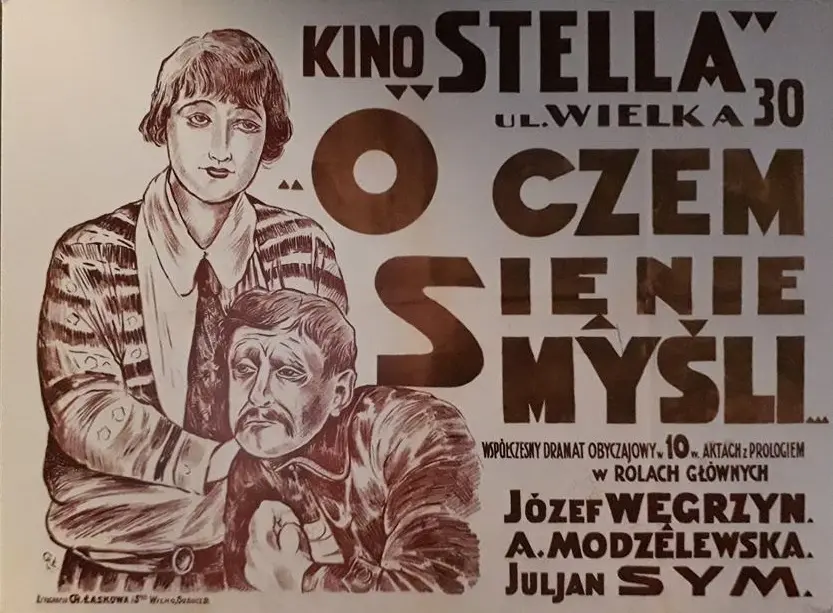
Is 'O czym sie nie mysli' a film that demands your attention in the 21st century? Short answer: yes, but with significant caveats. This early Polish talkie offers a fascinating window into cinematic history and a poignant, if melodramatic, love story that still resonates emotionally.
It is a film for ardent cinephiles, historians of pre-war European cinema, and those with a deep appreciation for romantic tragedies that grapple with societal taboos. However, it is decidedly not for viewers accustomed to modern pacing, pristine restorations, or a nuanced approach to sensitive subjects.
This film works because its central performances, particularly from Józef Wegrzyn and Mira Ziminska, carry a genuine emotional weight that transcends the period's technical limitations. The raw, operatic quality of its romantic tragedy, underscored by Jan Kiepura’s undeniable vocal talent, provides an unexpected depth.
This film fails because its pacing can be excruciatingly slow by contemporary standards, its treatment of sensitive social issues feels dated, and the technical limitations of early sound cinema sometimes hinder rather than enhance the storytelling.
You should watch it if you are prepared to engage with a historical artifact, appreciate the birth pangs of sound cinema, and are drawn to stories of star-crossed lovers battling overwhelming societal and personal adversities.
'O czym sie nie mysli', or 'What One Doesn't Think About', is a title that whispers volumes about the societal anxieties and unspoken tragedies at the heart of J.H. Skotnicki's 1930 Polish drama. This is not merely a film; it is a cultural document, a snapshot of a nation grappling with modernity, class division, and the looming shadows of conflict, all framed through the lens of a doomed romance.
At its core, the film presents a deeply conventional, almost archetypal, narrative of forbidden love. We are introduced to a talented musician, a man of refined sensibility and upper-class standing, who finds himself inexplicably drawn to a young woman of far humbler origins. This initial premise alone sets the stage for conflict, but the film quickly introduces a far more devastating obstacle: the girl suffers from a venereal disease, a condition whispered about in hushed tones, carrying immense social stigma in the era.
The film then escalates this personal tragedy with the intrusion of global conflict. The musician is called to war, captured, and faces execution, only to have his sentence commuted. Yet, he is believed lost, leaving his beloved in a state of agonizing uncertainty. It’s a narrative arc designed for maximum emotional impact, pulling at the heartstrings with a relentless efficiency that, while occasionally bordering on melodrama, ultimately serves its purpose.
The success of 'O czym sie nie mysli' hinges significantly on the strength of its lead performances, especially given the nascent stage of sound technology. Józef Wegrzyn, as the musician, embodies the tortured artist with a convincing blend of passion and despair. His portrayal isn't overtly theatrical; rather, it’s a more internalized struggle that resonates, particularly in moments where his character confronts the harsh realities of his love for the humble girl.
Mira Ziminska, as the afflicted young woman, delivers a performance that is both delicate and heartbreaking. Her character’s burden is immense, not just from the illness itself, but from the crushing weight of societal judgment. Ziminska conveys this with a quiet dignity, her eyes often speaking more than the dialogue allows, making her plight profoundly sympathetic. One particular scene, where she recoils from an accidental touch, subtly communicates the deep-seated shame and fear her character endures, a powerful moment that transcends the era's often overt acting styles.
Then there is Jan Kiepura. His presence alone is a significant draw, and his musical contributions are, quite frankly, the film's undeniable highlight. Kiepura, a globally renowned tenor, brings a vocal majesty that elevates the film's emotional landscape. His songs are not mere interludes; they are integral to the film's romantic fabric, expressing emotions that words alone might struggle to convey. The sheer power and beauty of his voice, even through early sound recording, is a testament to his talent and provides a crucial counterpoint to the film's pervasive sorrow. When he sings, the film momentarily transcends its narrative constraints and becomes pure emotional expression.
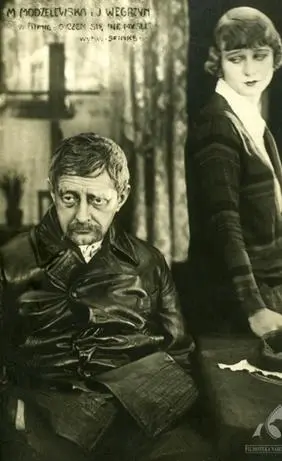
J.H. Skotnicki's direction is a product of its time, navigating the tricky waters of early sound cinema. The camera work, while not as fluid as later productions, demonstrates a growing understanding of how to integrate dialogue and musical numbers without sacrificing visual storytelling. There are moments of static framing, yes, but also intelligent use of close-ups to capture the actors' expressions, a vital choice when the script often relies on unspoken anguish.
The pacing, a common criticism of films from this period, is indeed deliberate. Scenes often unfold slowly, allowing for extended dialogue exchanges or musical performances. For modern audiences, this requires patience, but it also allows for a deeper immersion into the characters' emotional states. This slow burn, however, is a double-edged sword; while it builds atmosphere, it can also test the limits of contemporary attention spans. Skotnicki, in his defense, was working within the technical and narrative conventions of the early 1930s, where the novelty of spoken dialogue itself was a major draw.
The cinematography, though black and white and lacking the sophisticated lighting of later eras, effectively conveys the stark realities of the story. The contrast between the musician's opulent surroundings and the girl's humble abode is visually clear, reinforcing the class divide that underpins their struggle. A particularly striking shot captures the musician looking out a grand window, while a reverse shot shows the girl in a cramped, shadowed room, a simple but potent visual metaphor for their disparate worlds.
'O czym sie nie mysli' grapples with themes that remain tragically relevant: class inequality, societal judgment, the devastating impact of war, and the enduring power of love in the face of insurmountable odds. The film's portrayal of the venereal disease, while perhaps sensationalized by today's standards, reflects the genuine fear and social ostracization associated with such conditions in the early 20th century. It’s a harsh reminder of a less enlightened time.
However, it’s precisely in its handling of these sensitive themes that the film also shows its age. The melodrama, while effective in its own context, can feel heavy-handed. The dialogue occasionally veers into the overly dramatic, and some character reactions might strike modern viewers as exaggerated. This is not necessarily a flaw of the film itself, but rather a stylistic convention of the era that requires a certain level of understanding and acceptance from a contemporary audience. For example, the dramatic fainting spells or declarations of eternal suffering, while standard for the time, can elicit an unintended chuckle from an unprepared viewer.
One unconventional observation is how the film's very limitations in sound recording, particularly in its earlier iterations, inadvertently create moments of profound quietude. These silences, rather than being empty, often amplify the emotional weight of a scene, forcing the viewer to focus intensely on facial expressions and body language. It's an accidental strength born from technical constraints.
Absolutely, for the right audience. 'O czym sie nie mysli' is an essential piece of Polish cinematic history. It offers a glimpse into early sound film techniques and showcases remarkable performances from its lead actors, especially the vocal prowess of Jan Kiepura. It's a heavy film. But undeniably important.
If you are a student of film history, particularly interested in the transition to sound or pre-war European cinema, this film is a must-see. It provides valuable context for understanding the development of narrative and technical approaches in a crucial period of cinema. It's also an excellent example of how melodramatic storytelling was employed to tackle serious social issues.
However, if your primary interest lies in fast-paced plots, contemporary character development, or films with modern production values, you might find 'O czym sie nie mysli' a challenging watch. Its period sensibilities require a degree of patience and an appreciation for a different cinematic language. It’s not a casual viewing experience; it’s an engagement with history.
'O czym sie nie mysli' is far from a perfect film by today's metrics, but its imperfections are part of its charm and historical value. It is a challenging watch, demanding a specific kind of engagement from its audience. Yet, for those willing to meet it on its own terms, it offers a profoundly moving experience, a testament to the power of human emotion captured at the dawn of a new cinematic era.
The film's exploration of love across class divides, complicated by illness and war, feels both universal and deeply specific to its time. It’s a reminder that even in an age of nascent technology, filmmakers were tackling grand, human stories with ambition and a raw, undeniable passion. While it may not share the universal acclaim of something like The Last Laugh, its unique blend of opera, drama, and social commentary makes it an invaluable piece of cinematic heritage.
Ultimately, 'O czym sie nie mysli' is more than just a film; it's a historical artifact that still manages to stir the soul. It’s a film that asks us to reflect on the things we often choose not to think about – the hidden sorrows, the societal judgments, and the enduring strength of the human heart. Give it a chance, and you might find yourself surprisingly moved by its quiet, tragic power.
IMDb 6.6
1932
Community
Log in to comment.