DbcultAccessing Vault...
Cult Review
Senior Film Conservator
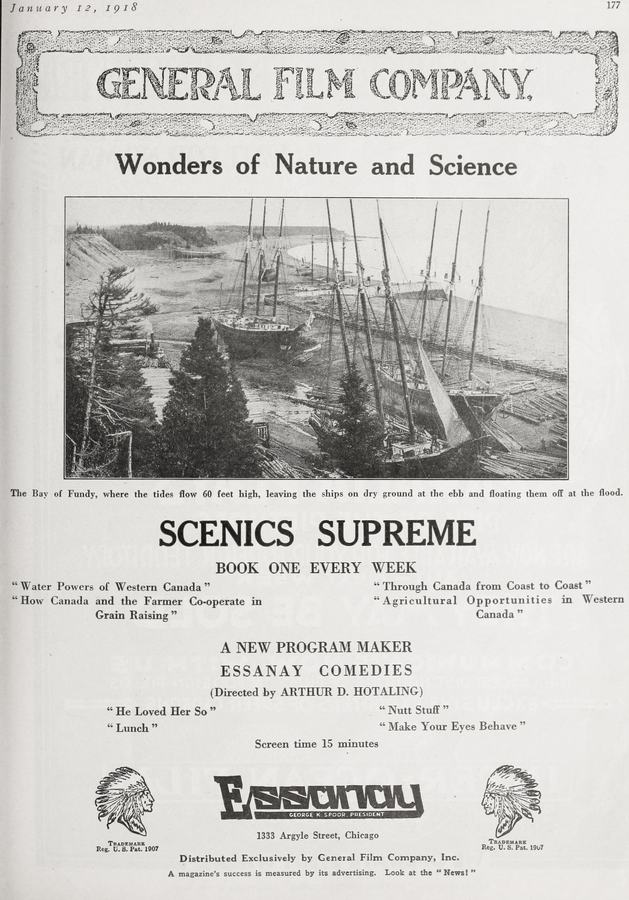
The annals of early cinema are replete with tales of grand ambition, fleeting success, and often, crushing failure. Yet, few narratives capture the latter with such unvarnished, almost darkly comedic brutality as "Nutt Stuff." This isn't merely a film; it’s a searing meta-commentary, a tragicomic descent into the very real, often unforgiving, machinery of artistic creation and commercial enterprise that defined the nascent motion picture industry. It presents a mirror, albeit a distorted one, to the precarious tightrope walked by countless filmmakers of the era, where a single misstep could unravel an entire endeavor, leading to financial ruin and, as the film starkly illustrates, personal degradation.
Our story orbits around a director, whose name remains unspoken but whose fervent conviction in his "whale of a melodrama idea" resonates with the kind of artistic certainty that often precedes spectacular downfall. This director, a figure perhaps emblematic of many early cinematic pioneers, possesses an unshakeable belief in his vision, a grandiose concept that, to his mind, promises to captivate audiences and secure his place in the firmament of film. He cajoles, he pleads, he likely spins dazzling promises of box office triumph, ultimately persuading his company to embark on this venture entirely on credit. This act alone speaks volumes about the financial precarity of the industry: studios were often shoestring operations, and a director’s charisma, coupled with the allure of a potentially lucrative hit, was frequently the only collateral. The gamble is immense, the stakes astronomical, particularly for a company trusting in an unproven or perhaps simply overzealous artistic temperament. The historical context here is crucial; the silent era thrived on melodrama, a genre that offered heightened emotions, clear-cut villains and heroes, and often, moralistic conclusions. Films like Camille, even in its numerous adaptations, or A Modern Thelma, exemplified the public's appetite for stories rich in pathos and dramatic twists. Our director, it seems, aimed to tap into this very vein, convinced he held the key to an even more potent distillation of the genre.
The director's creation, the film-within-a-film, is described as a "wild story." This evocative phrase conjures images of the frenetic pace and often exaggerated dramatics characteristic of early silent features. We are given tantalizing glimpses of its constituent parts: a "pretty girl," undoubtedly the archetypal ingenue or damsel in distress, whose innocence would serve as the emotional fulcrum of the narrative; a "black-mustached villain," a figure of pure, unadulterated malevolence, instantly recognizable by his sartorial signifier of villainy; a "broad-shouldered hero," the embodiment of strength, virtue, and eventual triumph; and "crooks that pass in the night," shadowy figures adding an element of danger and intrigue. These are not merely characters; they are stock figures, the very building blocks of popular entertainment during that period. One can imagine the director’s feature attempting to weave a tapestry as intricate as The Glorious Adventure, or perhaps a more rugged, morally unambiguous narrative akin to The Shooting of Dan McGrew, where good and evil were often starkly delineated. The ambition was not necessarily to innovate, but to perfect, to deliver a melodrama so potent, so archetypal, that it would transcend the crowded marketplace. The director, one can surmise, believed he had concocted a narrative that was both thrilling and commercially viable, a perfect storm of popular tropes designed to ensnare the viewer.
The moment of truth arrives when the director presents his masterpiece to a prospective buyer. This figure, often the gatekeeper of distribution and financial success, holds the power to make or break a film. The projection room becomes a crucible, an arena where artistic vision is subjected to the cold, hard calculus of market appeal. The buyer watches, presumably with the detached gaze of a seasoned professional, assessing not just the artistry but the commercial viability, the audience draw, the potential for profit. And then, the verdict: "it fails to strike the pleasure of the prospective buyer." This euphemism masks a profound rejection, a dismissal so absolute that it transcends mere critical disagreement. It suggests a fundamental miscalculation, a failure to connect, a product that simply does not meet the buyer's criteria, whatever they may be. The buyer's subsequent action is perhaps the most visceral and devastating blow: he takes the film, the physical manifestation of the director’s dreams, his efforts, his company’s investment, and throws it at him. This isn't just a rejection of the art; it’s a rejection of the artist, a contemptuous gesture that signifies utter worthlessness. The director, now literally entangled in the reel, the celluloid strips wrapping around him like a shroud, becomes a living, breathing symbol of his own spectacular failure. This image is potent, almost biblical in its depiction of humiliation and the binding consequences of hubris. It's a stark reminder that in the film industry, especially then, the artistic endeavor was inextricably linked to its commercial reception, and a lack of the latter could physically and emotionally crush its creator.
The director's journey back to his company is not merely a walk of shame; it’s a procession towards an even more profound catastrophe. Still ensnared by the discarded film, he embodies the very essence of his failed project. The path he treads, however, holds one more, utterly devastating twist of fate. The film, the very object of his ambition and his recent humiliation, catches fire. This accidental immolation is more than just a plot device; it's a potent metaphor, a literal burning of bridges, of dreams, of all tangible evidence of his creative output. The celluloid, highly flammable in those early days, transforms from a symbol of artistic aspiration into a fiery testament to its absolute destruction. The director watches, presumably helpless, as his "whale of a melodrama" turns to smoke and ash. This act of destruction, unplanned and beyond his control, mirrors the earlier, intentional destruction of his hopes by the buyer. It's an ironic, cruel twist: the film deemed worthless by the market is now physically annihilated, leaving nothing but memory and the lingering stench of failure. This scene could be interpreted as a commentary on the ephemeral nature of early cinema, where prints were easily lost or destroyed, and the fragility of artistic legacies. It’s a moment of profound finality, where the very medium of his expression is erased, leaving him with an empty slate and a colossal debt.
Arriving at the studio, bereft of his film and his dignity, the director faces the inevitable reckoning. His company, having staked their resources and reputation on his vision, awaits their payment, or at least, an explanation. Instead, they witness their investment literally go up in smoke. The cast and crew, who poured their labor and talent into this ill-fated production, now stand as unpaid creditors, their hopes dashed, their efforts wasted. Their response is not measured disappointment, but a furious, visceral outburst of collective rage. The director is "assailed" and "beaten unmercifully." This brutal physical assault is the film’s ultimate, shocking conclusion, a raw, unsparing depiction of the consequences of artistic and financial failure. It underscores the profound human cost of such ventures in an era where contracts might have been looser, and personal accountability more immediate and violent. The director, having already been symbolically crushed by the buyer and literally burned by fate, now sustains a physical punishment, a brutal catharsis for the collective frustration of those he led astray. It’s a harsh, almost primitive justice, highlighting the desperate circumstances and volatile tempers that could erupt when livelihoods were jeopardized.
While the plot synopsis does not explicitly detail Arthur W. Bates’ role, it is highly probable he embodies the doomed director. In a silent film, conveying such a complex emotional arc—from fervent conviction to abject humiliation, despair, and finally, physical suffering—demanded an extraordinary range of expressive pantomime. Bates, if he indeed portrays this central figure, would have been tasked with communicating the director's initial hubris, the dawning realization of failure, the profound shame of entanglement, the shock of the fire, and the ultimate pain of the beating, all without a single spoken word. His performance would need to be a ballet of despair, a meticulous orchestration of gestures, facial expressions, and body language to convey the escalating tragedy. The physical comedy inherent in the director's entanglement with the film reel would swiftly transition into genuine pathos, culminating in the visceral agony of the final assault. It's a role that, despite its tragic conclusion, offers a compelling canvas for an actor to explore the depths of human ambition and its crushing defeat, perhaps even drawing parallels to figures grappling with the moral complexities seen in films like The Liar, albeit in a more meta-cinematic context.
"Nutt Stuff" transcends its simple plot to become a profound piece of meta-commentary on the burgeoning film industry itself. It is a film about filmmaking, a self-referential narrative that dissects the inherent risks, the subjective nature of artistic value, and the brutal economic realities of the era. The director's "whale of a melodrama" is not just a failed project; it represents the countless forgotten films, the dashed hopes, and the artistic aspirations that never quite found their audience or their commercial footing. The buyer's rejection speaks to the power of distribution and exhibition, the gatekeepers who dictated what the public would ultimately see. The burning film is a poignant symbol of the ephemeral nature of early celluloid and the constant threat of loss that plagued film archives. And the beating? That’s the raw, unadulterated consequence of failure when art becomes a business, and livelihoods depend on its success. This film, in its stark portrayal, offers a rare glimpse into the anxieties and pressures faced by those working in cinema's formative years. It’s a narrative that implicitly asks: what is the true cost of chasing a dream in an industry still finding its feet, an industry where artistic merit could be instantly nullified by commercial indifference? It resonates with the struggles of artists across all mediums and time periods, but particularly highlights the unique challenges of a new mass medium.
While "Nutt Stuff" stands as a unique, almost allegorical, exploration of artistic failure, its themes resonate with broader narratives of ambition and downfall prevalent in silent cinema. Consider the earnest, often desperate, struggles for recognition or survival that permeate many films of the era. Though not always as overtly meta, films like När konstnärer älska (When Artists Love) might delve into the personal sacrifices and emotional turmoil inherent in the creative life, albeit from a romantic perspective rather than a commercial one. The director's plight in "Nutt Stuff" is a more visceral, public humiliation, a stark contrast to the often romanticized suffering of artists. The film also indirectly touches upon the public's perception of "good" versus "bad" entertainment. The "wild story" within "Nutt Stuff" might have been perceived as formulaic or uninspired by the buyer, a fate that could befall any production, regardless of the effort poured into it. This subjectivity is a constant challenge in artistic industries. Furthermore, the film's brutal ending, where the creator is physically punished by his team, speaks to a raw, untamed aspect of early industrial relations, far removed from the more institutionalized conflicts we might see in later eras, or the more personal vendettas depicted in stories like The Blacklist, which deals with different forms of professional retribution. The director's journey, from hopeful creator to battered victim, is a microcosm of the risks inherent in any creative venture, amplified by the nascent, often volatile, environment of the silent film industry. It serves as a stark reminder that behind every flickering image on screen, there were real people, real investments, and real, sometimes devastating, consequences. "Nutt Stuff" thus occupies a fascinating niche, not just as a silent film, but as a chillingly prescient critique of the very industry it was born from, a testament to the enduring struggle between artistic vision and commercial reality.
IMDb —
1937
Community
Log in to comment.