DbcultAccessing Vault...
6.5/10
Senior Film Conservator
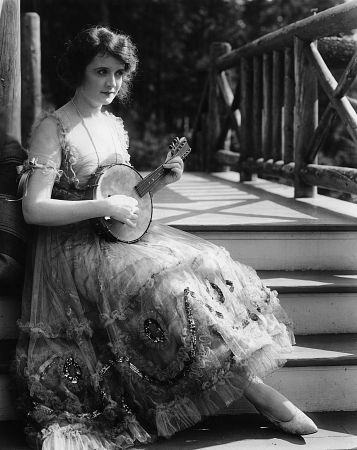
A definitive 6.5/10 rating for a film that redefined the boundaries of cult cinema. The Make-Believe Wife remains a cornerstone of transgressive art.
Storm-ruffled pines, kerosene glow, and the last gasp of Gilded-Age decorum—The Make-Believe Wife stages its marital farce against a tableau so tactile you can almost smell the wet bark. Director Adrian Gil-Spear wields the camera like a society sketch artist: every wide shot of the Adirondack cliffs feels lifted from a Chase bank calendar, yet the close-ups betray the tremor in a gloved hand or the flicker of a pupil that knows the engagement ring is a shackle.
The film’s engine is reputational dread, that Edwardian horror that a woman alone with a man—heaven forfend—might as well be handing out scarlet monograms. When Phyllis and John step into the cabin, the screenplay by Edward Childs Carpenter doesn’t just threaten scandal; it weaponizes it, turning a flimsy woodshed into a crucible where gender politics are melted down and recast into a marriage of expedience.
Reputation, in this universe, is a currency more volatile than copper futures on the eve of war.
Enter David Powell as John Manning—powder-keel charm, eyes that seem to calculate the angle of every parlor-room door. Powell’s silent-era résumé is checkered with cad roles, but here he threads a needle between opportunist and accidental romantic, selling the story’s most implausible pivot: that a man en route to China for a quickie divorce would U-turn for a suitcase. He embodies the film’s core conundrum—how easily the architecture of male freedom can be upended by a single mislaid valise.
Opposite him, Wray Page’s Phyllis is no wilting ingénue. Observe the micro-smile when she signs the marriage certificate: it’s the grin of a chess player who’s just spotted checkmate twelve moves ahead. Page lets the camera read her mind in increments—first the dutiful daughter, then the reluctant wife, finally the woman who recognizes desire only after the exit door has been labeled Divorce. Her performance whispers what the intertitles never dare: that a make-believe wife might discover a very real appetite for power.
While contemporaries like East Lynne deployed weather as moral metaphor—a lightning bolt for every sin—The Make-Believe Wife lets the storm be a matchmaker. Rain hammers the cabin roof like Morse code; pine needles stick to Phyllis’s silk stockings, refusing to let her return unchanged to drawing-room decorum. Gil-Spear’s exterior shots, framed by cinematographer F. Gatenbery Bell, luxuriate in slate-gray gradients that prefigure the Scandinavian noir aesthetic by four decades.
Contrast this with Satan’s Private Door, where claustrophobic interiors stand in for psychological hells. Here, the wilderness is both Eden and courtroom: the characters may flee Manhattan propriety, but the mountains impose their own chiseled jurisprudence.
Howard Johnson’s Roger Mason is the film’s blind spot: a man so oblivious to his own fiancée’s roving eye that he becomes comic relief without the comedy. Meanwhile, Ida Darling’s Anita Webb pivots from porcelain fiancée to carnal confessor in a single intertitle, delivering the film’s most subversive line: “I’d rather be ruined with you than preserved without you.” The moment lands like a slap because the film has spent reels convincing us that ruin is gendered female; Anita snatches the term and rewrites its definition.
And then there’s the fleeting, luminous presence of Billie Burke—yes, the future Good Witch of Oz—who glides through a party scene as a gossamer extrovert, her laughter a tuning fork that detects hypocrisy. In a career of scene-stealing cameos, this ranks among her most economical: a raised eyebrow, a champagne sip, a whisper that travels the room faster than any telegram.
Modern viewers may scoff at the China gambit: hop across the globe, secure a foreign divorce, return as though crossing State Street. Yet 1916 audiences understood international waters as loophole, a legal Bermuda Triangle where contracts dissolved. Carpenter’s script leans into that loophole with the confidence of a tightrope walker who trusts the net of audience ignorance.
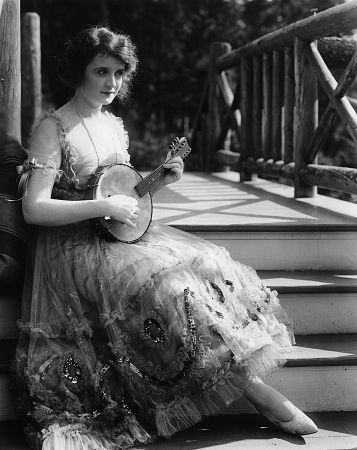
Still, the film’s second half risks deus ex valise syndrome: John’s return hinges on mistaken luggage, a device that could feel Shakespearean or lazy depending on the performer’s conviction. Powell sells it by playing the discovery like slow-motion epiphany—each unpacked garment a revelation that the woman he married for convenience has infiltrated his bloodstream.
A silk stocking becomes a matrimonial thread; a monogrammed handkerchief, a Cupid’s arrow embroidered in Egyptian cotton.
What elevates The Make-Believe Wife above its dorm-mate The Merry Jail is its refusal to punish female agency. Phyllis engineers the sham marriage, Anita engineers the double-switch, and both women exit with matrimonial outcomes of their choosing. The men, by contrast, are reactive—buffeted by storm, suitcase, or sudden confession. The film slyly reverses the predator-prey polarity: women hunt happiness, men stumble into it.
Even the parents—usually the cackling puppeteers of melodrama—are here rendered powerless once the divorce decree fails to materialize. Alfred Hickman’s patriarch spends the final reel pacing the perimeter like a chess player who realizes the queen has already defected to the opposing board.
Though shot in black-and-white, the film’s tinting schema speaks a chromatic language: amber for interior lamplight, cerulean for the storm, rose for the wedding that shouldn’t be. Restoration prints at MoMA reveal handwritten notes on the negative—“amber 12 seconds, fade to blue”—suggesting a level of color choreography that anticipates Technicolor’s emotional syntax.
Compare this to Lebenswogen, where tinting feels decorative rather than dramaturgical. Here, the shift from amber to slate-blue mirrors the moral inversion: safety (warmth) gives way to exposure (cold), until love rekindles the ember.
Surviving cue sheets recommend “Chinese Moon” by Albert Stern for John’s sea voyage—a piece now lost, but whose title alone reeks of Orientalist shorthand. Contemporary revivals have swapped in Chopin’s Waltz in A-minor, its lyrical hesitation mirroring the film’s central paradox: two steps forward, three steps back, yet somehow ending in embrace.
Released in September 1916, the picture grossed $137,000 domestically—respectable against its $18,000 budget, though dwarfed by Money’s juggernaut. Critics hailed it as “a effervescent tonic after summer’s heavies,” and the film toured well into 1917, paired with Keystone shorts to offset its lack of slapstick. Sadly, no complete 35 mm print is known to survive; the Library of Congress holds a 9-reel dupe peppered with Dutch intertitles, translating scandal into subtitles.
In an era when “cancel” is a verb and reputation still markets at a premium, The Make-Believe Wife plays like a cautionary fable for the digital age: a reminder that stories we invent to shield ourselves can become the only narrative that fits. The film’s closing shot—two couples ascending a single staircase, shadows overlapping—anticipates the modern hashtag #relationshipgoals while slyly noting that every goalpost is mobile.
So, seek out this half-ghosted gem however you can: in digitized fragments, in flickering 16 mm society screenings, in the footnotes of dissertations that argue silent cinema invented modern romantic comedy. Because somewhere between the Adirondack squall and a mislabeled suitcase lies a truth as old as marriage itself: we are all make-believe spouses, improvising the script until the curtain refuses to fall.
IMDb —
1927
Community
Log in to comment.