DbcultAccessing Vault...
6.4/10
Senior Film Conservator
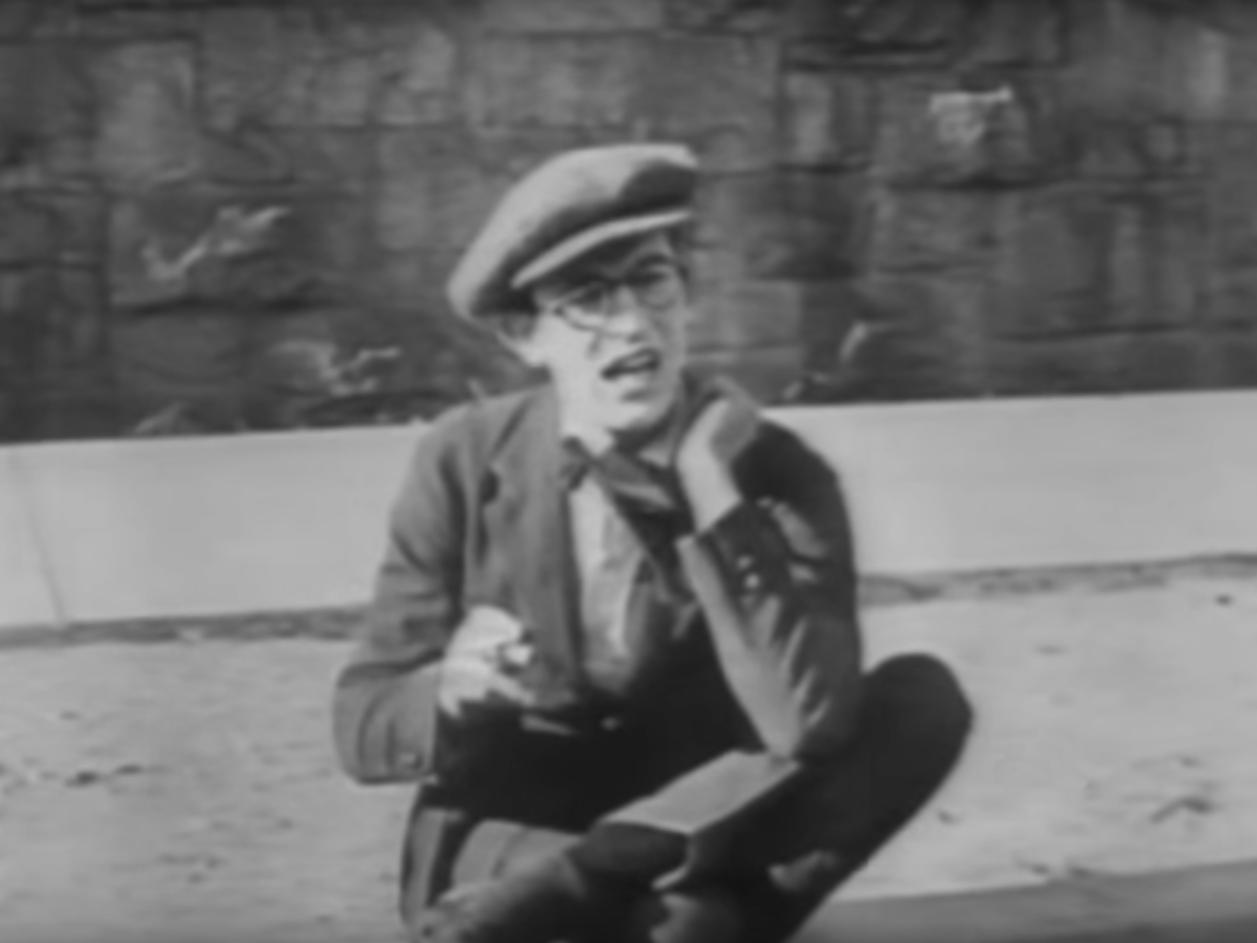
A definitive 6.4/10 rating for a film that redefined the boundaries of cult cinema. Off the Trolley remains a cornerstone of transgressive art.
In the shimmering, nascent dawn of cinematic artistry, when the very language of film was being forged frame by painstaking frame, certain figures emerged as titans, their comedic prowess shaping the nascent industry. Among them, Harold Lloyd carved out a unique and indelible niche, not through the poignant tramp of Chaplin or the stoic acrobatics of Keaton, but with a vibrant, relatable everyman whose boundless optimism and sheer, unadulterated energy propelled him through a world perpetually teetering on the brink of chaotic delight. His 1919 short, "Off the Trolley", stands as a charming, if often overlooked, testament to this particular brand of comedic genius, offering a whirlwind of slapstick, accidental romance, and the kind of good-natured mayhem that defined an era.
The narrative, deceptively simple, unfurls with the kind of escalating absurdity that would become Lloyd's signature. We are introduced to our protagonist, an unnamed but instantly recognizable iteration of Lloyd's iconic 'Glasses Character' – a young man whose intentions are invariably pure, yet whose actions consistently lead to spectacular, albeit hilarious, disruption. His initial encounters with the unsuspecting populace and the long arm of the law are not born of malice, but rather an almost childlike exuberance that simply cannot be contained by the rigid strictures of urban decorum. Imagine a butterfly attempting to navigate a crowded china shop; the resulting disarray is less about deliberate destruction and more about an inherent inability to exist without causing a delightful ripple effect. This initial sequence, though briefly summarized, is where Lloyd's physical comedy would have truly shone, each near-miss, each accidental entanglement, building a foundation of escalating tension and mirth.
The film's opening gambit, though only hinted at in the plot synopsis, is crucial for establishing the character's core identity. Lloyd’s troublemaker isn't a villain; he's a force of nature. His skirmishes with strangers and the police are likely less a calculated act of rebellion and more a series of unfortunate, yet comically opportune, misunderstandings. Perhaps he's trying to help, only to inadvertently trip a pedestrian, leading to a cascade of spilled goods. Or perhaps a well-intentioned gesture is misconstrued by a stern officer, sparking a chase that becomes the initial engine of the plot. This pre-trolley chaos is the crucible in which his character is forged, illustrating his unyielding spirit and his remarkable talent for turning everyday situations into a high-stakes, low-consequence spectacle. It’s this very quality of being perpetually in motion, often against the tide of conventional order, that makes him so endearing. He is the quintessential underdog, not necessarily fighting for a cause, but simply trying to navigate a world that seems perpetually out of sync with his own buoyant rhythm.
The moment of escape, a frantic leap onto a passing trolley, isn't just a plot device; it's a transition into a new, self-contained arena for his antics. The trolley itself, a microcosm of the bustling city, becomes a stage where the stakes are elevated, and the confined space amplifies every gesture, every expression. Within these moving walls, Lloyd's character finds himself in a comedic pressure cooker, forced to improvise and adapt, all while pursuing a singular, newfound objective: the affection of the female collector.
Here, the romantic subplot takes center stage, imbued with the characteristic charm and awkwardness that Lloyd so masterfully portrayed. Hazel Powell, as the female collector, embodies the cool, professional detachment that often serves as the perfect foil to Lloyd's effervescent enthusiasm. Her initial indifference is not a barrier but a challenge, a comedic mountain for our hero to climb. His attempts to win her over, likely a series of ill-fated gestures, clumsy compliments, or perhaps even an accidental rescue, would have been the heart of the trolley sequence. This dynamic, where the protagonist's earnest efforts are met with a delightful blend of skepticism and mild annoyance, is a timeless comedic trope, one that Lloyd executed with an almost unparalleled finesse. The humor arises from the sheer disparity between his fervent desire and her composed disinterest, a gap that he endeavors to bridge with every ounce of his chaotic charm.
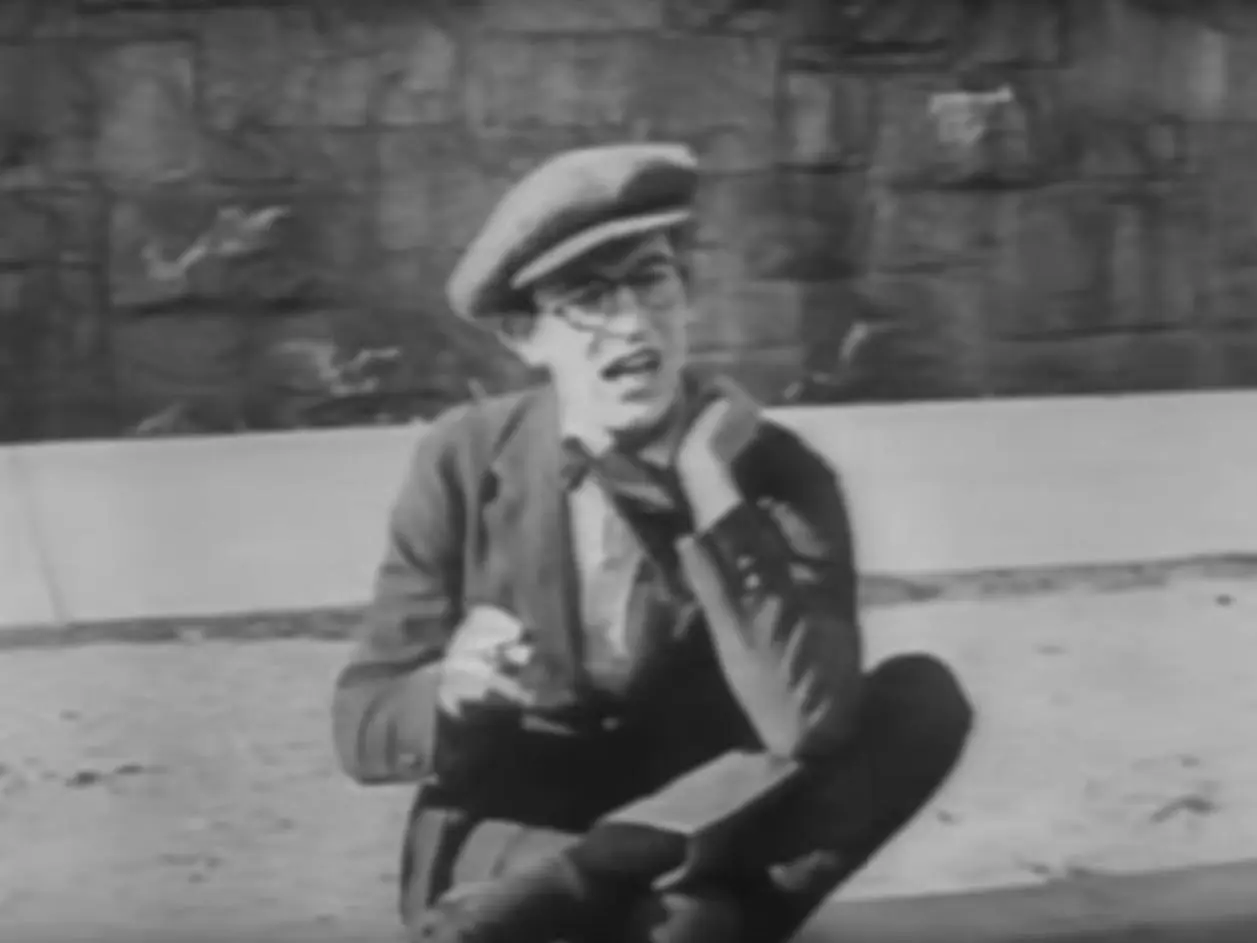
Simultaneously, the trolley conductor, a figure of authority and routine, becomes another unwitting victim of Lloyd's accidental anarchy. The exasperation of the conductor is a vital comedic counterpoint to Lloyd's relentless optimism. Every bell pull that goes awry, every fare collection that turns into a wrestling match, every passenger who gets caught in the crossfire of Lloyd’s escapades, contributes to the conductor's slow, agonizing descent into comedic despair. This escalating frustration, often conveyed through exaggerated facial expressions and frantic gestures – the very hallmarks of silent film acting – would have provided a rhythmic punctuation to the romantic pursuit, ensuring that the audience's laughter was constant and varied.
"Off the Trolley", like so many of Lloyd's early works, is a masterclass in the art of physical comedy. It’s not merely about pratfalls; it’s about precision, timing, and the meticulous choreography of chaos. The film’s brilliance lies in its ability to orchestrate a series of escalating gags that feel both spontaneous and meticulously planned. Each stumble, each narrowly avoided collision, each moment of mistaken identity or misdirected effort, is a testament to the collaborative genius of Lloyd and his director, Fred C. Newmeyer, alongside writers like Hal Roach, who understood the intricate mechanics of eliciting laughter through purely visual means. The rapid-fire succession of events, the constant motion of the trolley, and the dynamic interplay between the characters would have created a breathless pace, characteristic of the era's best shorts. The silent era’s reliance on exaggerated gestures, expressive pantomime, and carefully crafted intertitles meant that every movement, every glance, every prop, carried immense narrative weight. Lloyd, with his expressive face and agile body, was perfectly suited to this demanding form, communicating volumes without uttering a single word.
Consider the ingenuity required to sustain a narrative primarily through visual gags. The film’s strength would have been in its ability to build upon previous comedic moments, each incident feeding into the next, creating a snowball effect of hilarious predicaments. Perhaps Harold tries to impress the collector by helping an elderly passenger, only to accidentally send their groceries scattering. Or perhaps his attempts to discreetly pass her a note lead to a misunderstanding with a burly passenger, drawing the conductor's ire once again. The beauty of these scenarios is their universality; anyone who has ever navigated public transport or attempted to flirt clumsily can relate to the inherent awkwardness and potential for mishap.
What truly elevates "Off the Trolley" beyond mere slapstick is its underlying thematic current: the peculiar and often unpredictable nature of luck. The plot explicitly states that "odds and luck will be on his favor." This isn't just a convenient narrative shortcut; it's a philosophical statement about the character of Harold Lloyd. Unlike the cynical world-weariness often found in other comedic personas, Lloyd's character embodies an unwavering optimism, a belief that despite all the chaos he unwittingly creates, things will ultimately work out. His success isn't always a result of his skill or cunning, but rather a charming, almost divine intervention, a cosmic alignment that rewards his good-hearted, if clumsy, persistence. It suggests that sometimes, the most circuitous, disorderly path can lead directly to one's desired outcome, a delightful subversion of conventional wisdom.
This theme of accidental triumph resonates deeply. It speaks to the universal experience of hoping for the best, even when circumstances are spiraling out of control. It’s a testament to the power of positive thinking, or perhaps, simply the comedic inevitability that chaos, when wielded by a protagonist as amiable as Lloyd, will eventually resolve itself in a surprisingly favorable manner. This element distinguishes Lloyd's work; his characters, though often in precarious situations, rarely feel truly threatened. Instead, there’s an underlying sense of joyful invincibility, a belief that their inherent goodness will guide them through.
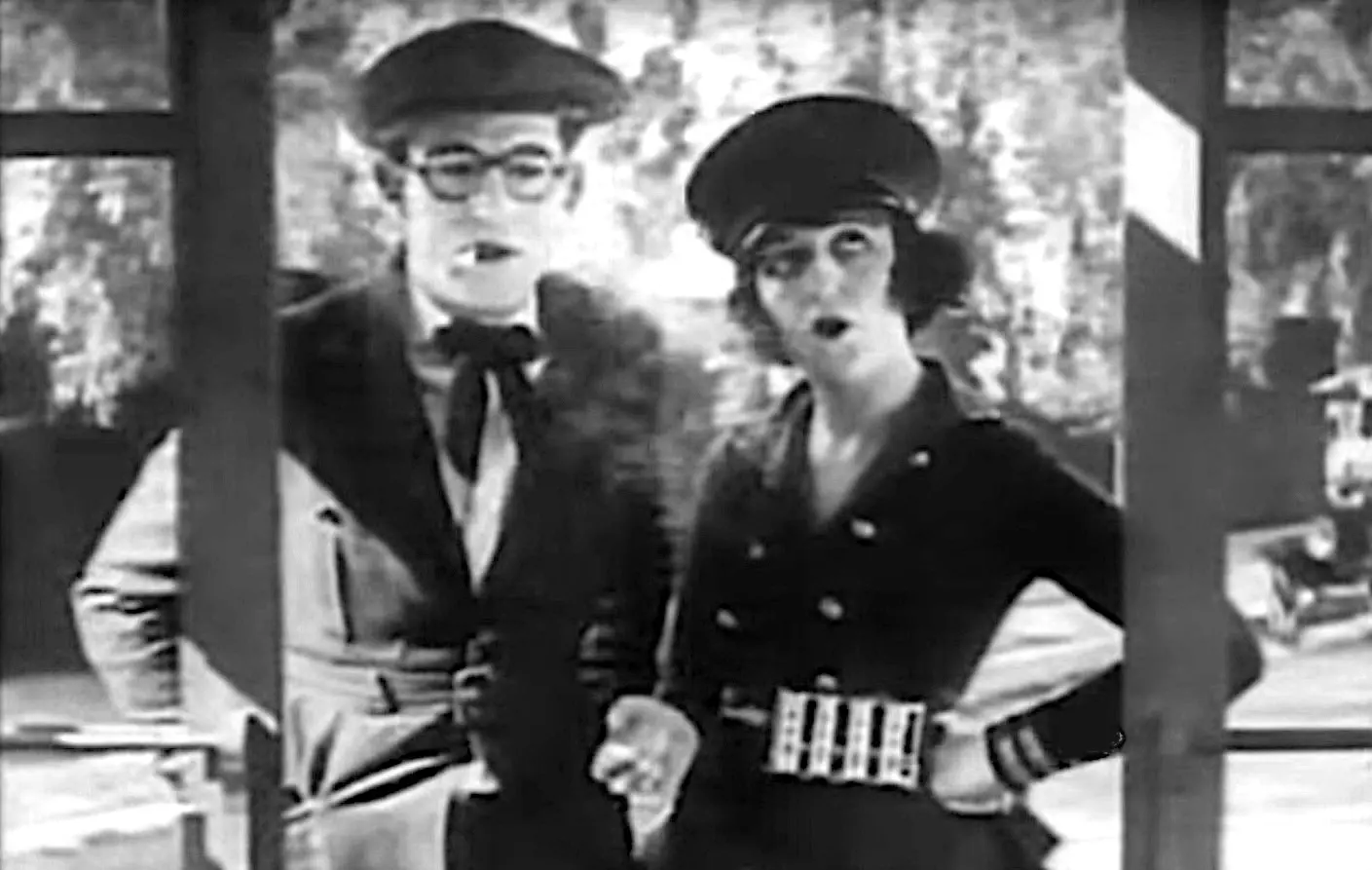
While Lloyd is undeniably the star, the effectiveness of "Off the Trolley" also relies on the talents of its supporting cast. Actors like Sammy Brooks, Gus Leonard, 'Snub' Pollard, and Noah Young were stalwarts of the silent era, masters of physical reaction and exaggerated characterization. Their contributions, though often brief, were crucial in populating Lloyd’s world with believable, if comically amplified, reactions to his antics. The exasperated conductor, the bewildered pedestrians, the stern police officers – each played a vital role in reflecting and amplifying the chaos Lloyd unleashed. Their performances, often requiring precise timing and physical dexterity, were integral to the film's comedic rhythm.
The film also provides a fascinating glimpse into early 20th-century urban life, with its trolleys, bustling streets, and distinct social hierarchies. It captures a moment in time when cinema was rapidly evolving, moving beyond simple filmed events to embrace complex narratives and character development. The sheer volume of short films produced during this period, often released weekly, meant that filmmakers and actors had to be incredibly prolific and inventive. "Off the Trolley", with its tight pacing and clear narrative arc, showcases the growing sophistication of the medium, even in a comedic short.
Harold Lloyd's body of work, including shorts like "Off the Trolley," laid much of the groundwork for modern physical comedy and romantic-comedy tropes. His 'Glasses Character' was a revolutionary concept – an identifiable, aspirational everyman who, despite his flaws and predicaments, always persevered with an infectious grin. This persona resonated deeply with audiences then and continues to captivate today, offering a timeless appeal that transcends the silent film era. While this particular short may not feature the breathtaking, death-defying stunts of his later feature films like "Safety Last!", it nonetheless exhibits the germ of that same audacious spirit, the willingness to push boundaries for the sake of a laugh and a thrilling narrative.
Comparing the frenetic energy and optimistic romanticism of "Off the Trolley" to other films of its era, one can discern shared sensibilities. The lighthearted pursuit of love amidst comical obstacles, for instance, finds echoes in a film such as Love in a Hurry, a contemporary short that likely shared a similar ethos of quick gags and charming romantic entanglements. Both films, in their own ways, celebrate the spirited pursuit of affection and the delightful mishaps that often accompany it, embodying a genre spirit focused on innocent fun and the triumph of good intentions. This period was rich with such productions, each contributing to the evolving lexicon of cinematic humor.
The enduring appeal of "Off the Trolley" lies not just in its historical significance, but in its sheer, unadulterated entertainment value. It’s a joyous romp, a meticulously constructed piece of comedic architecture that showcases Harold Lloyd at a pivotal point in his career, honing the very skills that would make him one of cinema's most enduring stars. It reminds us that laughter, in its purest form, often comes from the most unexpected places, sparked by the most well-meaning of troublemakers. This film, though a century old, continues to deliver a potent dose of cheer, a testament to the universal language of physical comedy and the timeless appeal of an optimistic spirit finding its way, one chaotic trolley ride at a time.
In essence, "Off the Trolley" is more than just a silent film; it's a vibrant snapshot of comedic innovation, a delightful exploration of character, and a charming reminder that sometimes, the best way to get where you're going is to get a little bit 'off the trolley' along the way. Its legacy is etched not just in film history, but in the very fabric of how we perceive and appreciate the art of screen comedy.
IMDb 5.6
1929
Community
Log in to comment.