DbcultAccessing Vault...
Cult Review
Senior Film Conservator
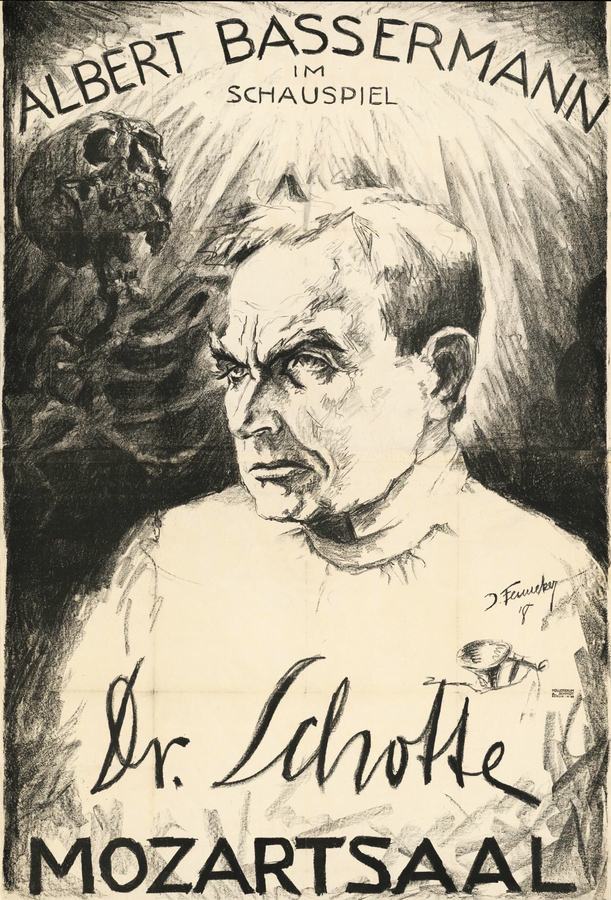
Dr. Schotte, released in 1914, is a silent film that transcends the constraints of its era, offering a piercing meditation on morality, identity, and the societal pressures that warp the human soul. Directed by an unsung visionary and written by Felix Salten and Elsa Bassermann (who also co-stars), the film is a masterstroke of psychological realism, its narrative both intimate and epic in scope. Set against the crumbling edifice of the Austro-Hungarian Empire, the story follows Dr. Schotte, a physician whose clinical detachment begins to unravel as he confronts the moral contradictions of his profession and the existential void of his own existence.
Albert Bassermann, in a career-defining role, portrays the titular character with a haunting duality. His performance is a study in contrasts: the outwardly composed doctor, clad in a period-appropriate frock coat, masks an inner turmoil that manifests in fleeting glances and abrupt pauses. These moments, captured in the film’s meticulous framing, reveal a man grappling with the weight of his decisions. Bassermann’s physicality—his measured gait, the tremor in his hand when writing a prescription—conveys a vulnerability that anchors the film’s emotional core. His chemistry with Elsa Bassermann, who plays his conflicted wife, is electric, their exchanges laced with subtext that speaks to years of unspoken grievances.
The film’s narrative is less a linear plot than a series of vignettes, each dissecting a facet of Dr. Schotte’s psyche. One particularly striking sequence involves a scene where the doctor, after diagnosing a patient with an incurable ailment, is confronted by the patient’s desperate family. The dialogue, though silent, is rendered through intertitles that are as poetic as they are devastating. Here, the film’s visual language—long takes of the doctor’s hunched figure, the flickering candlelight in his study—elevates the emotional stakes. The patient’s family, portrayed with stoic dignity, becomes a metaphor for the societal expectations that bind Dr. Schotte, their silent pleas echoing the moral obligations he cannot fulfill.
What sets Dr. Schotte apart from its contemporaries is its audacious use of ambiguity. Unlike the moral binaries of many early 20th-century films, this work refuses to offer clear resolutions. Instead, it posits ethical dilemmas as open-ended, reflecting the complexities of real-life decisions. The film’s climax—a scene where Dr. Schotte, in a moment of despair, abandons his medical tools—has been interpreted in myriad ways. Is it an act of surrender or liberation? The ambiguity is deliberate, leaving the audience to grapple with the implications of his choice. This narrative strategy aligns the film with the existentialist themes of later works, such as Public Be Damned and The Essanay-Chaplin Revue of 1916, though Dr. Schotte predates them by decades.
Technically, the film is a marvel. The cinematography, with its use of chiaroscuro lighting, evokes the chiaroscuro of Renaissance art, casting the characters in a moral limbo. One sequence—a monologue delivered by Dr. Schotte in a dimly lit room—uses a single shaft of light to illuminate his face, the rest of the frame engulfed in shadow. This visual metaphor for his inner conflict is both stark and poetic, a testament to the director’s restraint. The soundless nature of the film does not hinder its impact; instead, it amplifies the tension, with silence becoming a character in its own right.
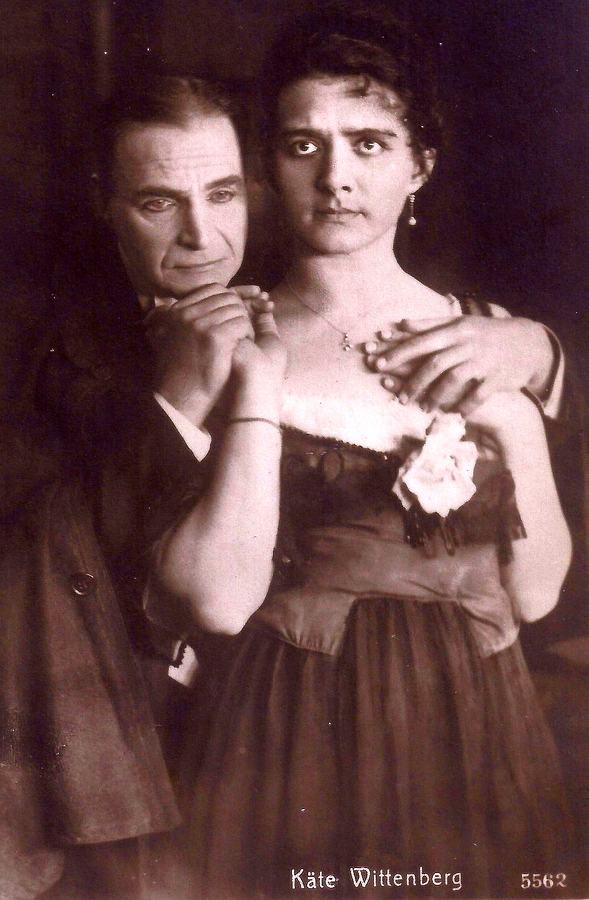
The supporting cast, including Käthe Wittenberg as a nurse whose loyalty to Dr. Schotte is both professional and personal, adds depth to the narrative. Wittenberg’s nuanced performance captures the quiet resilience of women in a patriarchal society, her character serving as a counterpoint to the doctor’s turmoil. Her scenes with Dr. Schotte are charged with unspoken tension, their relationship evolving from professional respect to something more fraught, a dynamic that underscores the film’s exploration of power and vulnerability.
In the broader context of early cinema, Dr. Schotte occupies a unique space. It bridges the gap between the melodramatic tropes of the silent era and the more introspective narratives that would emerge in the interwar period. The film’s themes of ethical decay and societal hypocrisy echo in later works like The Perils of Divorce and The Great Ruby, but Dr. Schotte achieves this with a sophistication that is rare for its time. Its influence can be seen in the psychological thrillers of the 1940s and 1950s, where moral ambiguity and character-driven plots became paramount.
Comparisons to Het geheim van Delft are instructive but ultimately misleading. While both films explore the consequences of obsession, Dr. Schotte is more philosophical, its focus on the internal rather than the external. Similarly, its themes of redemption and complicity find parallels in Wife Number Two, but where that film leans into melodrama, Dr. Schotte maintains a clinical detachment that is both its strength and its limitation.
What makes Dr. Schotte endure is its unflinching honesty. It does not offer easy answers or redemption arcs; instead, it presents a world where morality is a shifting landscape, shaped by circumstance and personal conviction. The film’s final act, where Dr. Schotte walks away from his practice into a mist-shrouded forest, is open to interpretation. Is it exile or self-discovery? The film leaves this question hanging, a mirror to the audience’s own moral compass.
For modern audiences, Dr. Schotte is a revelation. Its exploration of ethical dilemmas in a rapidly changing world resonates with contemporary concerns about integrity in the face of societal collapse. The film’s pacing, though deliberate, rewards patient viewers with a narrative richness that feels both timeless and urgently relevant. In an age where the line between right and wrong is increasingly blurred, Dr. Schotte serves as a poignant reminder of the cost of complicity and the enduring quest for authenticity.
In conclusion, Dr. Schotte is a cinematic achievement that transcends its era. With its stellar performances, innovative direction, and philosophical depth, it remains a cornerstone of early European cinema. For those seeking a film that challenges as much as it entertains, this silent gem is a must-watch.
IMDb 5.3
1929
Community
Log in to comment.