DbcultAccessing Vault...
Cult Review
Senior Film Conservator
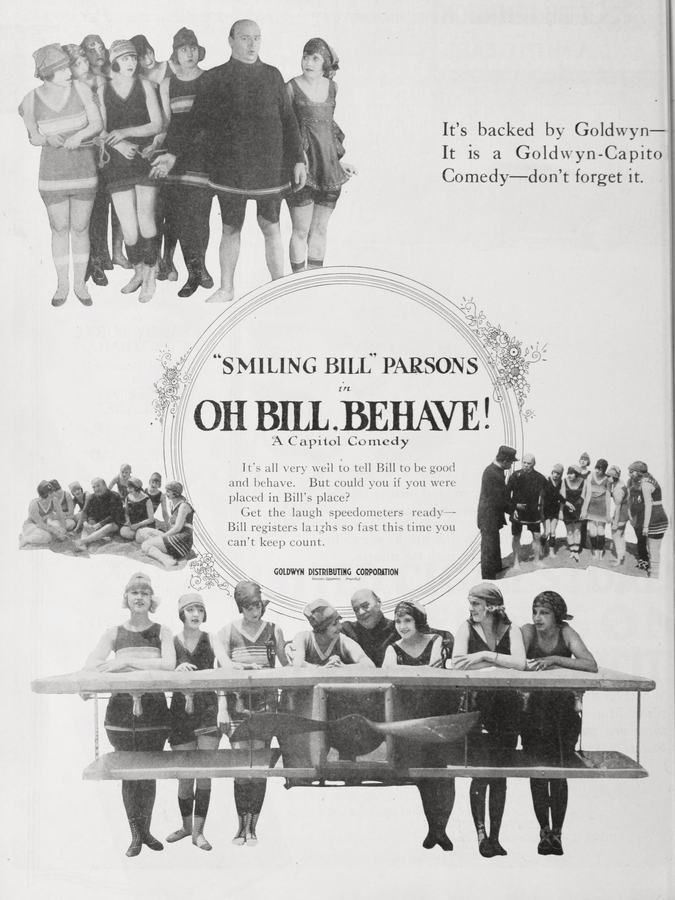
Tom Bret’s screenplay unfolds like a series of vignettes stitched together by a restless protagonist whose very name—Bill—conjures the every‑man archetype of the 1920s press corps. The inciting incident, a terse argument with his wife, is rendered with a brevity that mirrors the clipped dialogue of silent‑era intertitles, yet the emotional weight is palpable. Bill’s subsequent exodus from the newsroom is not merely a plot device; it serves as a metaphorical departure from the prescribed roles of husband, journalist, and citizen.
\nThe city itself becomes a character, its neon‑lit avenues and smoky backrooms painted in shades of moral ambiguity. Bill’s chance encounter with the police chief’s wife—an elegant figure whose composure belies a simmering desire for autonomy—introduces a counterpoint to his own marital disillusionment. Their dialogue, though sparse, crackles with subtext: each line a negotiation of power, each glance a silent indictment of the institutions that bind them.
\nWilliam Parsons inhabits Bill with a kinetic energy that feels both theatrical and intimate. His physicality—sharp shoulders, a perpetual lean toward the camera—communicates a restless spirit without uttering a word. Parsons’ eyes, often narrowed against the glare of streetlamps, convey a simmering internal conflict that outpaces the film’s intertitles. The supporting cast, though limited, provides textured counter‑weights. The police chief’s wife, portrayed with a poised elegance, employs a measured cadence that contrasts Bill’s impulsive swagger, highlighting the gendered expectations of the era.
\nComparatively, the chemistry between Parsons and his counterpart recalls the dynamic seen in Reporter Jimmie Intervenes, where a similarly restless journalist navigates personal crises amidst professional turmoil. However, where Jimmie’s journey culminates in a triumphant exposé, Bill’s arc resolves in a quieter, more ambiguous self‑realization, underscoring Bret’s willingness to subvert conventional happy endings.
\nThe cinematography employs chiaroscuro lighting to emphasize the dichotomy between public spectacle and private yearning. Night scenes are drenched in deep shadows, punctuated by the occasional flare of streetlight that casts a harsh, sea‑blue hue (#0E7490) across wet cobblestones—a visual echo of Bill’s internal turbulence. In contrast, moments of introspection are bathed in a muted, amber glow reminiscent of a dimly lit tavern, the color palette subtly shifting toward dark orange (#C2410C) to evoke a nostalgic warmth.
\nThe editing rhythm mirrors the frenetic pace of a sports column deadline, with rapid cuts during Bill’s newsroom sequences that give way to lingering, almost contemplative shots as he roams the city’s periphery. This deliberate modulation of tempo invites the audience to experience the protagonist’s oscillation between urgency and ennui.
\nWhile the film stands as a singular narrative, its thematic preoccupations resonate with several contemporaneous titles. The exploration of marital discord and societal expectations finds a kinship with Life's a Funny Proposition, where humor masks deeper anxieties about gender roles. Similarly, the portrayal of law enforcement’s domestic sphere parallels the nuanced power dynamics observed in The House of Bondage, albeit through a lighter, more comedic lens.
\nThe motif of a journalist stepping beyond the newsroom to confront personal dilemmas also appears in The Hawk's Trail, though the latter leans heavily into adventure tropes. Oh! Bill Behave distinguishes itself by grounding the protagonist’s wanderings in a palpable sense of emotional fatigue rather than pure escapist thrill.
\nThe film’s three‑act structure adheres to classical conventions while subtly subverting expectations. Act One establishes Bill’s domestic fracture; Act Two propels him into a series of episodic encounters that, on the surface, appear disconnected but gradually coalesce into a thematic tapestry. Act Three delivers a denouement that eschews tidy resolution; instead, Bill returns to his marital home with a newfound, albeit ambiguous, understanding of his own agency.
\nThe pacing is deliberately uneven—a reflection of Bill’s internal state. Moments of frantic reportage are juxtaposed with languid, almost meditative sequences on riverbanks, where the sea‑blue tint (#0E7490) dominates, underscoring a yearning for calm amidst chaos.
\nSet against the backdrop of post‑World War I optimism, Oh! Bill Behave captures the zeitgeist of a society negotiating newfound freedoms and lingering conservatism. The film’s treatment of a married woman exercising agency—albeit within the confines of a romantic subplot—mirrors the broader cultural shift toward female emancipation during the 1920s. Yet the narrative remains cautious, never fully abandoning the era’s patriarchal undercurrents.
\nFrom a historiographic perspective, the movie offers a valuable lens into the occupational hazards of early sports journalism, a profession that, at the time, was still carving out its identity within the larger media landscape. The depiction of newsroom hustle, typified by clattering typewriters and frantic telegrams, provides a visual archive of a bygone era.
\nWhen measured against the oeuvre of its contemporaries, Oh! Bill Behave occupies a niche that blends comedy, drama, and social commentary. Its tonal elasticity is reminiscent of Just a Song at Twilight, though the latter leans more heavily into melodrama. The film’s subtle satire of journalistic ethics prefigures later works such as Kaiser's Finish, where the press is both hero and foil.
\nIn terms of preservation, the film’s original nitrate prints have suffered considerable degradation, rendering high‑definition restorations scarce. Nevertheless, the surviving fragments retain enough visual fidelity to appreciate the meticulous set design and the deliberate use of color tints in the intertitles—a technique that foreshadows the transition to sound cinema.
\nTom Bret’s script balances wit with pathos, employing a dialogue‑sparse approach that forces the audience to infer subtext from gestures and framing. The decision to anchor the narrative around a sporting editor—rather than a more conventional protagonist—infuses the story with a fresh occupational perspective. Director‑unknown (as the film’s credits are partially lost) demonstrates a confident hand in orchestrating crowd scenes, particularly the bustling stadium sequences where the dark orange hue (#C2410C) saturates the frame, evoking the heat of competition and the protagonist’s internal fervor.
\nThe film’s comedic beats, while occasionally veering toward slapstick, are tempered by moments of genuine emotional weight. This tonal balance is achieved through strategic pacing: a rapid-fire montage of Bill’s misadventures is followed by a lingering close‑up of the police chief’s wife as she gazes out a rain‑splattered window, the yellow tint (#EAB308) bathing her in a soft, melancholic light.
\nContemporary reviews lauded the film’s “witty observation of marital life” and praised Parsons’ “magnetic screen presence.” Modern viewers, however, may find the pacing deliberate and the humor understated compared to today’s rapid‑fire comedies. Yet the film’s exploration of work‑life balance, gender dynamics, and the quest for personal authenticity resonates strongly in an era where professional identity often collides with domestic expectations.
\nFor cinephiles seeking a window into the silent‑era’s narrative experimentation, Oh! Bill Behave offers a compelling case study. Its blend of visual storytelling, nuanced performance, and thematic relevance renders it a worthwhile inclusion in retrospectives that examine the evolution of journalistic protagonists on screen.
\nOh! Bill Behave stands as a testament to the silent era’s capacity for sophisticated storytelling without reliance on dialogue. Its deft interweaving of comedy, social critique, and character study invites repeated viewings, each revealing a new layer of meaning. While it may not possess the overt grandeur of Die Maske or the sweeping romance of Il trovatore, the film’s intimate focus on an ordinary man’s crisis of identity renders it uniquely compelling. In the pantheon of 1920s cinema, Oh! Bill Behave occupies a modest yet essential niche, reminding us that even the most unassuming narratives can illuminate the complexities of human desire and societal expectation.
\n
IMDb —
1926
Community
Log in to comment.