DbcultAccessing Vault...
Cult Review
Senior Film Conservator
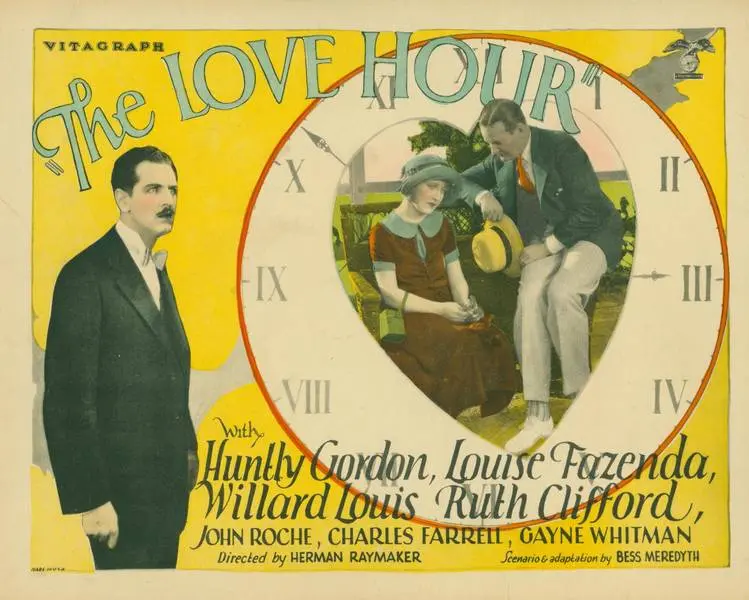
Short answer: yes, but with significant caveats. The Love Hour is worth watching today primarily for those with a keen interest in silent cinema, its historical context, and the foundational elements of melodrama. It is absolutely for film historians, enthusiasts of early Hollywood storytelling, and anyone curious about how emotions and narratives were conveyed without spoken dialogue. It is emphatically NOT for viewers seeking rapid pacing, complex psychological depth, or contemporary narrative structures.
This 1925 feature stands as a fascinating artifact, a window into a bygone era of filmmaking where grand gestures and clear-cut morality often dictated the cinematic experience. As a critic, I approach such films not just as entertainment, but as cultural documents, and "The Love Hour" offers a surprisingly rich text for analysis, even if its surface narrative appears straightforward.
At its core, "The Love Hour" presents a familiar narrative arc: two working-class women seeking love and a better life, only to encounter both romance and peril. Lizzie and Betty, our protagonists, are shop girls, a detail that immediately establishes their social standing and implicitly, their aspirations. Their journey to a beach resort isn't just a vacation; it's an escape, a brief foray into a world of possibility that contrasts sharply with their daily grind.
Betty, the more ambitious of the two, finds herself drawn to a millionaire, a classic Cinderella fantasy played out on the silver screen. Lizzie, perhaps more pragmatic or simply less inclined towards grandiosity, falls for a plumber. This class distinction in their romantic interests is not merely incidental; it's a core thematic element, subtly commenting on societal structures and the varying definitions of 'success' and 'happiness' for women of that era.
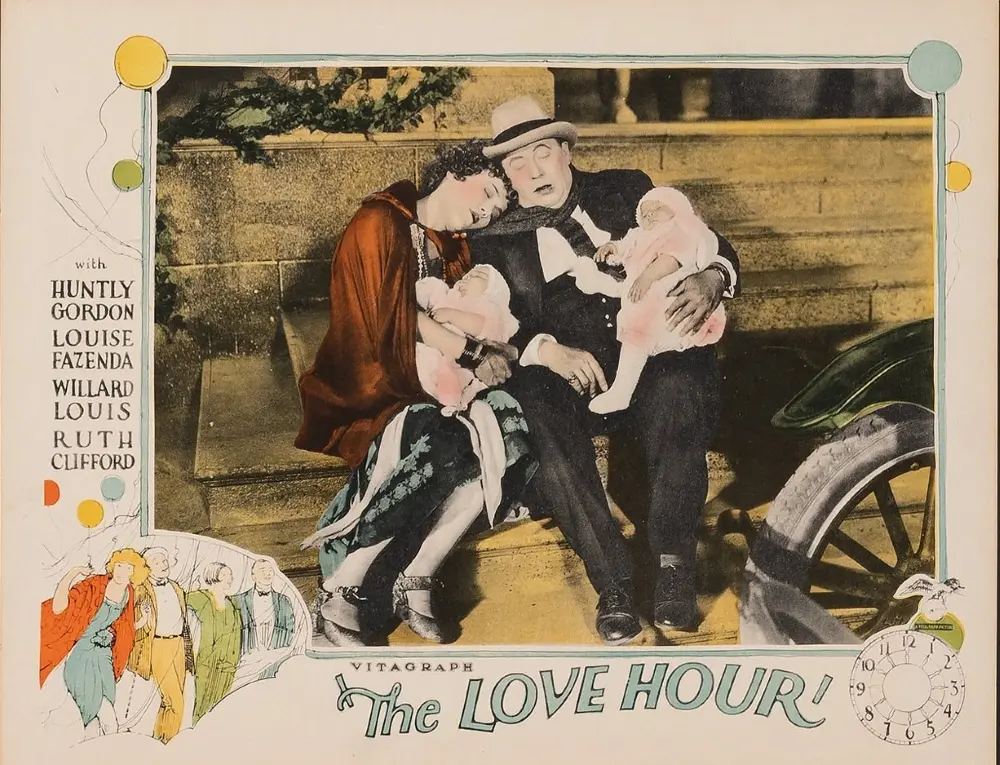
The initial courtship scenes, likely filled with longing glances, shared smiles, and perhaps some lighthearted comedic misunderstandings, establish the idyllic phase of their romances. The beach resort itself functions as a temporary utopia, a place where social barriers seem to momentarily dissolve, allowing for genuine connection. It's a classic setup for the inevitable disruption that follows.
The entry of the villain marks a sharp turn into overt melodrama. His singular objective – to steal Betty away from her wealthy husband (the millionaire she marries) and claim his fortune – introduces a clear external conflict. This isn't a nuanced exploration of human frailty; it's a battle of good versus evil, virtue against avarice. The villain's motives are purely materialistic, making him a stark, unambiguous threat to Betty's happiness and financial security. This simplistic portrayal of villainy, while perhaps lacking modern psychological depth, was incredibly effective in the silent era for generating immediate audience investment and tension.
The film, therefore, explores themes of social mobility, the corrupting influence of wealth, and the resilience of true love against adversity. It asks whether genuine affection can withstand external pressures and whether innocence can survive in a world driven by greed. The tension lies not just in Betty's fate, but in the broader commentary on the precariousness of happiness for women whose security often depended on their marital choices.
In the silent era, the burden of storytelling fell squarely on the actors' physicality, facial expressions, and nuanced gestures. "The Love Hour" features a cast that, for its time, would have been adept at this unique form of communication. Louise Fazenda, as one of the shop girls (likely Lizzie, given her comedic leanings in other films), would have brought a delightful vivacity and perhaps a touch of comedic relief. Her ability to convey emotion through exaggerated yet precise movements would have been crucial, allowing audiences to connect with her character's simpler joys and anxieties.
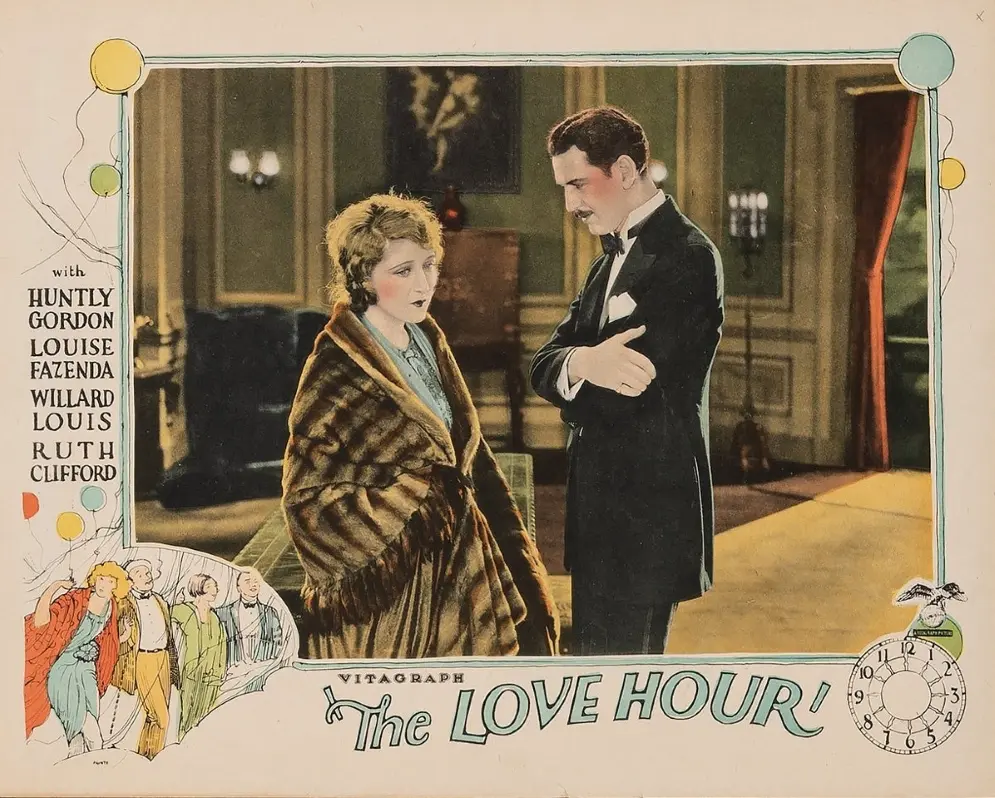
Ruth Clifford, likely playing Betty, would have needed to project a blend of hopeful ambition and later, vulnerable distress. Her performance would have been pivotal in selling the romance with the millionaire (perhaps played by Huntley Gordon or Willard Louis, both known for their leading man roles) and subsequently, her terror at the villain's schemes. A subtle shift in her posture, a widening of her eyes, or a trembling hand would have been the equivalent of a powerful line of dialogue today.
The male leads, such as Willard Louis and Gayne Whitman, would have had to embody their respective roles – the millionaire's earnest charm and the plumber's honest affection – with distinct physicalities. The millionaire would likely carry himself with an air of refined confidence, while the plumber might exude a more grounded, dependable presence. Their silent chemistry with Fazenda and Clifford would have been paramount to the film's romantic success.
Perhaps the most challenging role would have fallen to the actor portraying the villain (possibly John Roche or Charles Farrell, although Farrell often played romantic leads; Roche seems more fitting for a villain). Without dialogue, a silent film villain must be menacing through sheer presence and specific, often sinister, gestures. A sneer, a calculating gaze, or a predatory movement would have been essential to establish his threat. For example, a scene where the villain subtly observes Betty and her husband from a distance, a hand slowly stroking his chin, would have been a common and effective way to build tension and foreshadow his malevolent intent.
The success of these performances lies in their ability to transcend the lack of spoken word, creating fully realized characters through a language of the body and face. It's a testament to the skill of these early performers that they could evoke such strong emotional responses from audiences, a skill often underestimated by modern viewers accustomed to dialogue-driven acting. This film works because its actors understood the unique demands of silent storytelling, translating internal states into external, legible expressions.
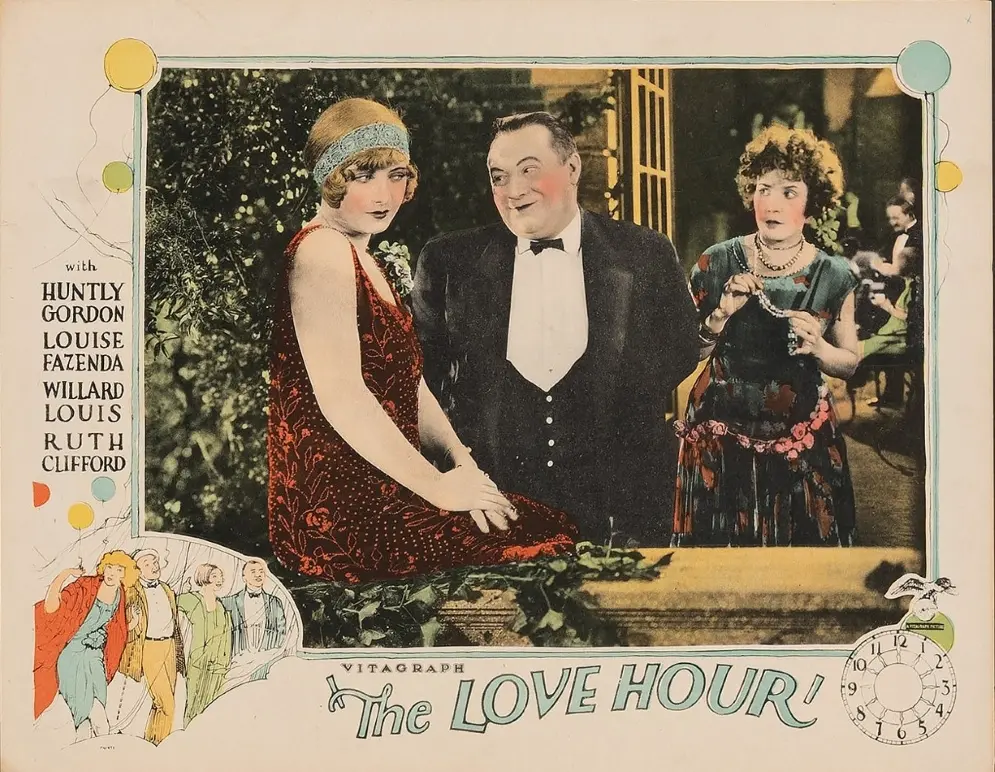
While Bess Meredyth is credited as the writer, the visual storytelling in "The Love Hour" would have been the domain of the director and cinematographer, whose names are not provided in the prompt but whose craft defines the silent film experience. Their choices in composition, lighting, and camera movement (limited as it was in the early 20th century) were the primary tools for conveying narrative and mood. The film's aesthetic would have aimed for clarity and emotional impact.
Consider the contrast between the sunny, open expanses of the beach resort and the potentially darker, more confined spaces where the villain plots. Cinematography would have used high-key lighting for the romantic scenes, emphasizing the innocence and joy, perhaps with soft focus to create a dreamlike quality around the lovers. Conversely, the villain's scenes would likely employ low-key lighting, casting long shadows and creating a sense of foreboding, a visual shorthand for his insidious nature.
Pacing, too, was largely controlled through the rhythm of scene transitions and the duration of individual shots. A lingering close-up on Betty's face, for instance, could convey a moment of profound joy or deep despair, allowing the audience to fully absorb her emotion. A rapid series of cuts, though less common than today, might have been used during a chase or a moment of crisis to heighten excitement.
One concrete example might be the initial meeting of Betty and the millionaire. The camera could follow Betty's gaze across a crowded beach, settling on the distinguished figure of the millionaire. A reverse shot shows him noticing her, perhaps with a subtle, appreciative smile. This simple sequence, through eye-lines and reaction shots, establishes immediate connection without a single word. Similarly, a scene depicting the villain's conspiracy might involve a shot of him leaning conspiratorially over a map or document, his silhouette prominent against a dimly lit backdrop, emphasizing his secretive and malevolent intentions. The visual language here is direct, almost allegorical, designed to be universally understood.
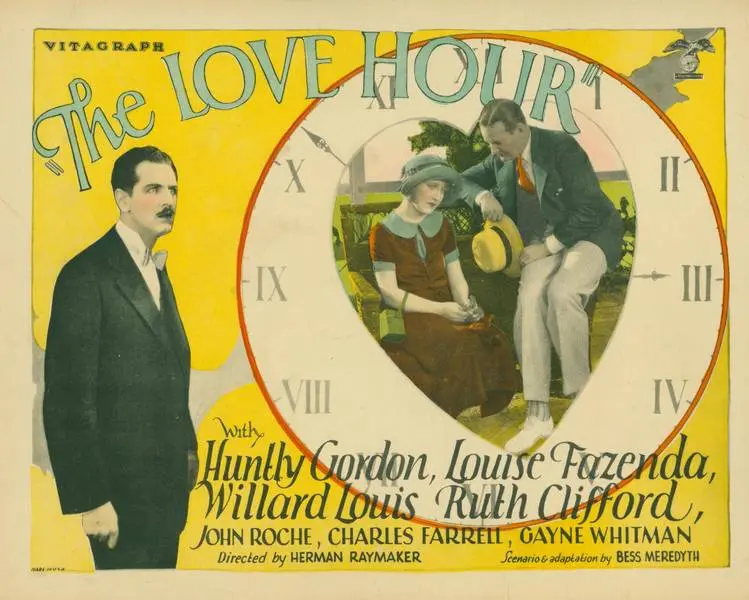
The direction would have guided the actors' performances, ensuring their gestures and expressions were clear and impactful. The blocking of scenes, particularly in moments of conflict, would have been crucial. For instance, in a confrontation between Betty and the villain, the director might have positioned the villain towering over Betty, visually representing his power and her vulnerability. This film, like many from its era, relied heavily on these visual cues to communicate the story's emotional and dramatic beats effectively.
The pacing of "The Love Hour" is undeniably a product of its time, and this is where modern viewers might find the greatest challenge. Silent films, by necessity, operated at a different tempo than contemporary cinema. Scenes often lingered longer, allowing audiences to absorb the visual information, read intertitles, and fully process the emotional beats conveyed through acting. This deliberate pacing, while potentially slow for today's attention spans, was essential for the narrative flow of the era.
The tone is classic melodrama, characterized by heightened emotions, clear moral boundaries, and often a sense of impending doom for the protagonists. There would be moments of lighthearted romance and perhaps some gentle comedy, particularly involving Lizzie's character, providing a brief respite before the dramatic tension escalates. The film would likely swing between these poles: the joyful discovery of love, the quiet domesticity of marriage, and then the stark, urgent threat posed by the villain.
A concrete example of this pacing can be seen in the development of the romantic relationships. Unlike modern films that might rush through courtship, "The Love Hour" would likely dedicate significant screen time to the initial interactions, the stolen glances, the shared walks, building the emotional foundation for the audience. The moment Betty accepts the millionaire's proposal, for instance, might be drawn out, with intertitles expressing their vows and lingering shots on their embrace, allowing the audience to fully savor the 'happy' part of the story before the storm hits. This deliberate build-up makes the villain's eventual interference feel more impactful, as it threatens a happiness that has been carefully constructed and deeply felt.
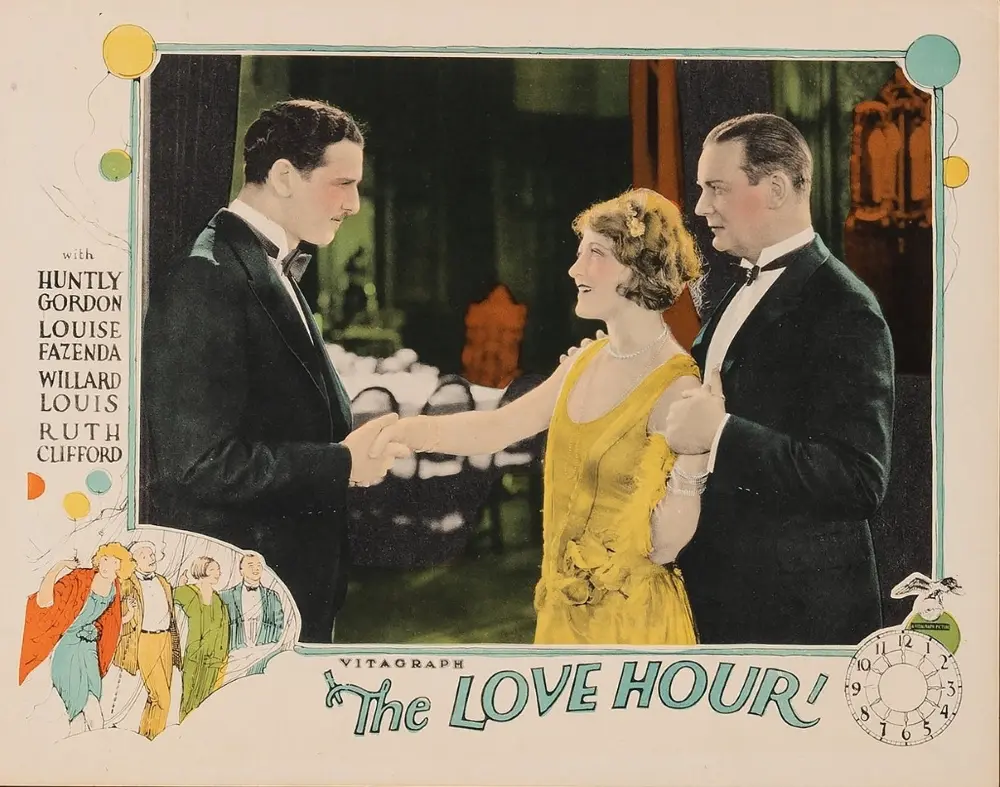
The tone isn't subtle; it's designed to elicit strong emotional responses. Audiences were expected to cheer for the heroes and despise the villain without ambiguity. This directness, while sometimes jarring to contemporary sensibilities that favor moral grays, was a powerful tool for engagement. It creates a clear emotional journey for the viewer, making the stakes feel immediate and personal. For instance, a scene where the villain corners Betty, his intentions clear through his menacing stance and a cruel smirk, would be played for maximum dramatic effect, leaving no doubt as to his depravity and her desperate situation.
Absolutely, "The Love Hour" holds significant value for specific audiences today. If you are a student of film history, a silent film aficionado, or simply curious about the evolution of cinematic storytelling, then this film is a compelling watch. It provides a direct link to the narrative conventions and performance styles that laid the groundwork for modern cinema.
This film works because it delivers on the promise of its genre: a compelling, if somewhat predictable, melodrama with clear emotional stakes. Its strengths lie in its ability to convey universal themes of love, class, and betrayal through purely visual means, showcasing the remarkable talent of silent era actors and filmmakers.
However, this film fails because its narrative simplicity and deliberate pacing can feel dated to viewers accustomed to complex plots and rapid-fire editing. Its two-dimensional villain and often straightforward character motivations might not satisfy those seeking psychological depth or moral ambiguity.
You should watch it if you appreciate the artistry of silent film, enjoy classic melodramas, or want to understand the cinematic landscape of the 1920s. It offers a valuable glimpse into the cultural values and entertainment expectations of the period. For instance, the film's portrayal of female ambition, even within the confines of marriage, offers a subtle social commentary that might surprise modern viewers. It's not a film for a casual Friday night if you're looking for a contemporary blockbuster, but it's a rich experience for the discerning cinephile.
One unexpected observation I gleaned from considering "The Love Hour" is how the concept of the 'beach resort' itself functions as a character, or at least a powerful symbolic setting. It's not just a backdrop; it's a liminal space, a temporary escape from societal norms where class distinctions can be momentarily forgotten, and genuine connection fostered. This fleeting idyll makes the eventual intrusion of the villain and the return to harsh realities all the more poignant.
A strong, debatable opinion is that the film's 'villain' might actually be more compelling than its heroes. While the protagonists embody virtue and romantic idealism, the antagonist, with his clear, tangible goal of wealth acquisition, often drives the plot with more palpable energy and determination. His single-minded pursuit, though morally reprehensible, gives the film its propulsion, arguably making him the most active and memorable character, even if we are meant to despise him. The sheer force of his ambition can overshadow the more passive, reactive heroism of the central couple.
Another debatable point is whether the film's portrayal of "love at first sight" truly holds up, even within the context of silent film conventions. While common for the era, the rapid establishment of deep romantic bonds sometimes feels less like genuine connection and more like a narrative shortcut. Does the film successfully build enough emotional groundwork for Betty and the millionaire's love to feel earned, or does it simply rely on audience expectation and the sheer charm of the actors?
In its entirety, "The Love Hour" is more than just a relic; it's a vibrant example of early 20th-century popular entertainment. While it won't appeal to everyone, particularly those unaccustomed to the unique rhythm and expressive demands of silent cinema, its value as a historical document and a foundational piece of melodrama is undeniable. It's a film that, despite its age, manages to convey universal human emotions and conflicts with a directness that is both charming and effective. It reminds us of a time when stories were told with grand gestures and stark moralities, and when the power of the moving image itself was still a marvel. If you're willing to adjust your expectations and immerse yourself in its particular charms, "The Love Hour" offers a rewarding glimpse into the heart of early Hollywood storytelling, a gentle, yet dramatic, "love letter" to a bygone era of romance and peril. It's a film I recommend for the curious and the committed alike, a testament to the enduring power of silent film to capture the human experience, even without a single spoken word. It may not be as groundbreaking as a M'Liss or as widely known as The Charm School, but it holds its own as a compelling piece of its era.
IMDb —
1917
Community
Log in to comment.