DbcultAccessing Vault...
Cult Review
Senior Film Conservator
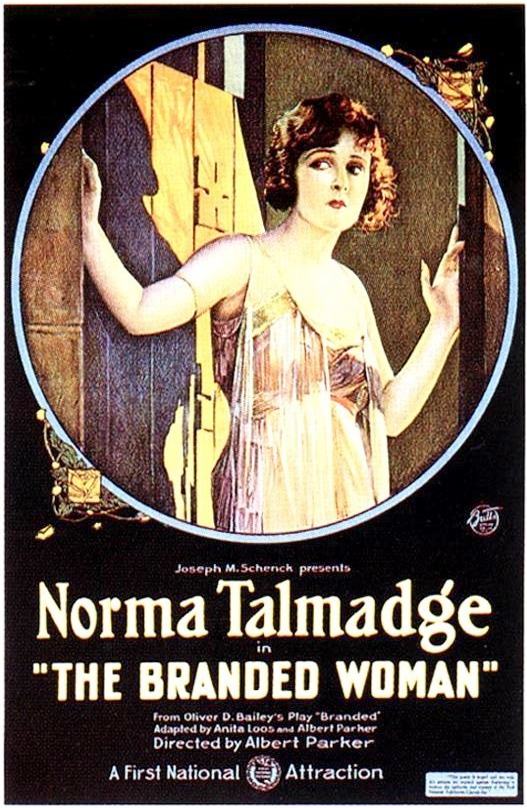
Stepping back into the hallowed halls of silent cinema often feels like unearthing a forgotten language, a lexicon of gestures and expressions that speak volumes without uttering a single word. Among these cinematic treasures, Albert Parker’s 1920 drama, The Branded Woman, stands as a poignant testament to the era's profound capacity for emotional storytelling, a narrative woven with threads of sacrifice, societal judgment, and the enduring power of love. It’s a film that resonates with a timeless quality, exploring the deep-seated anxieties of reputation and the crushing weight of a past that refuses to stay buried.
At the heart of this compelling narrative is Ruth Sawyer, portrayed with exquisite vulnerability by the incomparable Norma Talmadge. Her world, meticulously constructed and seemingly serene, teeters precariously on the brink of collapse. An impending marriage to a man of impeccable standing and unblemished reputation is suddenly shadowed by a revelation that threatens to engulf her entire future: her mother, a figure previously held in unblemished esteem, possesses an ignominious past. This isn't merely a casual indiscretion; it's a history steeped in what polite society of the early 20th century would deem an 'ill-savory' existence, a stain that threatens to irrevocably mar Ruth's pristine future and, by extension, her societal acceptance.
Talmadge’s performance here is a masterclass in silent film acting, conveying a maelstrom of internal conflict through subtle shifts in her gaze, the barely perceptible tremor of her hands, and the anguished set of her jaw. The weight of this secret, a burden she chooses to bear alone, becomes the central axis around which the film's drama revolves. She believes, perhaps with a touch of tragic naiveté, that by shielding her beloved fiancé from this truth, she can preserve their nascent happiness and protect him from the societal repercussions that would inevitably follow. This decision, born of love and a desperate desire for normalcy, sets in motion a series of events that will test the very fabric of her resolve.
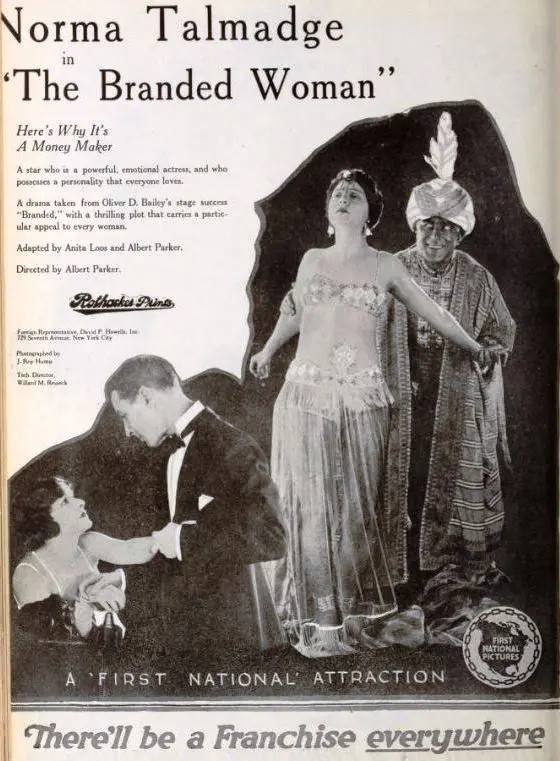
The narrative intensifies with the arrival of a spectral figure from her mother's former life—a crooked pal, a malevolent shadow named Velvet Stafford. This character, exquisitely rendered in his villainy by an uncredited but impactful performance, embodies the relentless, insidious grip of a past that defiantly refuses to remain interred. His machinations are not merely for financial gain; they are a cruel exercise of power, a psychological torment designed to unravel Ruth's carefully constructed life thread by agonizing thread. Stafford, armed with the knowledge of the long-buried transgressions, initiates a ruthless campaign of extortion, threatening to expose the very secret Ruth so desperately strives to protect, thereby jeopardizing not only her mother's fragile peace but the entirety of Ruth's future happiness and social standing. The tension builds with each interaction, as Ruth finds herself trapped between the desire to protect her mother and the overwhelming need to safeguard her own future, all while contending with the insidious nature of blackmail.
The film masterfully portrays the psychological toll of such a predicament. Ruth’s once bright eyes grow clouded with fear and despair, her movements become hesitant, and her once-radiant smile fades into a perpetual mask of anxiety. This internal struggle is externalized through Talmadge’s remarkable ability to communicate without a single spoken word, using her entire body as a canvas for emotion. The audience feels her anguish, her desperation, and her burgeoning defiance, making her journey a deeply empathetic one.
Norma Talmadge, a titan of the silent screen, imbues Ruth Sawyer with a captivating blend of fragility and steely resolve. Her ability to communicate complex emotional states without dialogue is nothing short of breathtaking. We witness her character's journey from innocent hope to crushing despair, from a desperate attempt at concealment to a defiant stand against the forces threatening to engulf her. Her eyes, often downcast in sorrow or wide with terror, become profound windows into a soul under siege. This role, in many ways, encapsulates the archetypal silent film heroine—a woman of profound inner strength forced to navigate a labyrinth of societal expectations and personal tragedy. Her portrayal here rivals the emotional depth seen in other contemporary dramas, perhaps even surpassing some of the more overtly melodramatic turns of the era, offering a nuanced performance that transcends the often broad strokes of silent acting. Her command of pathos and subtle emotional shifts established her as one of the era's most compelling performers, capable of carrying an entire narrative on the strength of her expressive face and gestures.
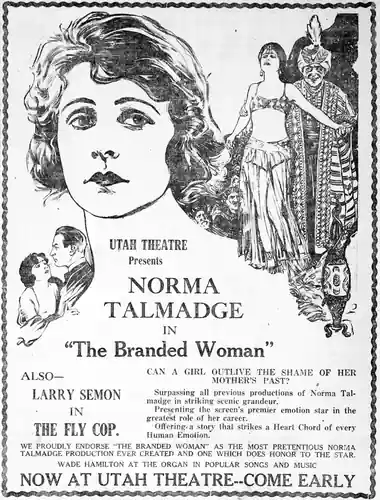
Talmadge’s star power at the time was immense, and The Branded Woman showcases precisely why. She possessed an uncanny ability to connect with audiences, drawing them into the intimate struggles of her characters. Her performance is not merely an acting job; it is an embodiment of the era's anxieties and aspirations, a mirror reflecting the societal pressures placed upon women to maintain an impeccable facade, regardless of the hidden truths beneath. This film serves as a powerful reminder of her enduring legacy and her significant contribution to the art of silent cinema.
The supporting ensemble, including George Fawcett as the unsuspecting fiancé, Henry Carvill, and Edna Murphy, lend crucial weight and authenticity to the narrative. Fawcett’s earnestness and genuine affection for Ruth provide a stark, poignant contrast to her hidden turmoil, intensifying the dramatic irony. Edna Murphy, perhaps as a confidante or another figure from the past, contributes to the film's emotional texture, adding layers to the complex web of relationships. Percy Marmont, Grace Studdiford, Charles Lane, and the rest of the cast fill out the world of the film, creating a believable social milieu against which Ruth's personal drama unfolds. Each character, however minor, plays a part in shaping the pressures and decisions Ruth must confront.
The direction by Albert Parker, while not as widely celebrated as some of his contemporaries like D.W. Griffith or Cecil B. DeMille, demonstrates a keen understanding of visual storytelling. The film's mise-en-scène, the careful arrangement of elements within the frame, serves to heighten the sense of claustrophobia and impending doom that Ruth experiences. Parker effectively uses lighting to create mood, with shadows often encroaching upon Ruth's spaces, symbolizing the encroaching darkness of her secret. The burgeoning use of close-ups, a technique gaining prominence in the silent era, is particularly effective in capturing Talmadge's nuanced expressions, allowing the audience an intimate glimpse into her tormented psyche. The pacing, though deliberate by modern standards, allows the emotional beats to land with maximum impact, drawing viewers deeper into the unfolding tragedy.
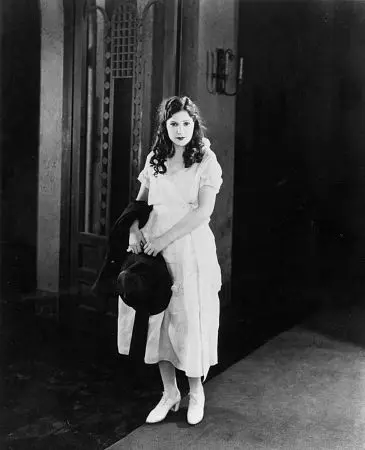
The Branded Woman delves deep into universal themes that resonate even today, offering a profound commentary on the societal mores of its time. The crushing weight of societal judgment, particularly on women, is a central motif. Ruth's mother's past, whether truly scandalous or merely unconventional by the rigid standards of the time, becomes a metaphorical scarlet letter that threatens to brand her daughter, regardless of Ruth's own innocence. This film boldly explores the idea of inherited shame, the notion that the sins of the parent can irrevocably taint the child's future, a concept that was particularly potent in an era obsessed with respectability and lineage.
It's a poignant exploration of sacrifice—the lengths to which a mother will go to protect her child, and the agonizing choices a daughter makes to preserve her own happiness and, by extension, her mother's peace. The narrative also probes the nature of love: Is true love conditional upon a pristine past? Can it withstand the shock of unsavory revelations? The film suggests a powerful answer, one rooted in empathy, understanding, and the ultimate triumph of genuine affection over superficial appearances. The tension between public perception and private truth forms the philosophical bedrock of the film, inviting audiences to question the very foundations of societal morality.
The screenplay, a collaborative effort by Albert Parker, Burns Mantle, Oliver D. Bailey, and the legendary Anita Loos, is remarkably intricate and psychologically astute for its time. Loos, known for her sharp wit and insightful observations of human nature, particularly women, likely injected a layer of psychological complexity into the characters, especially Ruth and her mother, giving them a depth that elevates them beyond mere archetypes. Their combined efforts craft a narrative that moves beyond simple melodrama, touching upon the deeper psychological ramifications of secrets, societal pressures, and the enduring strength of the human spirit. The structure builds suspense effectively, allowing the emotional intensity to grow organically rather than relying on cheap theatrics.
The film's exploration of a woman grappling with a hidden past and societal condemnation finds echoes in other cinematic works of the era. One might draw parallels to the thematic undercurrents in films like Tyrant Fear, where characters are similarly ensnared by oppressive circumstances or the specter of past transgressions, albeit often with a more overt external antagonist. While Tyrant Fear might focus on external political or social pressures, The Branded Woman masterfully internalizes this oppression, making Ruth's psychological torment the primary arena of conflict. Similarly, the challenges faced by women navigating rigid social structures, a theme beautifully articulated in films such as Milestones or even the more lighthearted yet socially conscious The Little School Ma'am, are here distilled into an intensely personal drama, highlighting the individual's struggle against the collective judgment.
Moreover, the film's nuanced portrayal of a mother's past impacting her daughter's future can be seen as a more dramatic cousin to the generational narratives found in works like The Loyal Rebel, which often explored the clash between traditional values and emerging modern sensibilities. The way The Branded Woman handles the delicate balance between revealing and concealing truth, and the moral ambiguity inherent in such choices, distinguishes it as a thoughtful piece of cinema that transcends its era's typical melodramatic tropes. Its narrative complexity and character depth are a testament to the collaborative genius of its writing team.
In conclusion, The Branded Woman is far more than just a historical artifact; it is a vibrant, emotionally resonant film that continues to captivate. Its enduring legacy lies not only in Norma Talmadge's unforgettable and deeply moving performance but also in its sophisticated exploration of universal themes: the burden of secrets, the arbitrary nature of societal judgment, and the profound strength found in love and sacrifice. It reminds us that even in the silent era, cinema possessed an extraordinary power to articulate the most complex human emotions and dilemmas, leaving a lasting impression on all who witness its compelling drama. For aficionados of silent film and anyone interested in the evolving landscape of cinematic storytelling, The Branded Woman remains an essential and rewarding viewing experience, a true gem in the cinematic crown of the 1920s. It stands as a testament to the fact that compelling storytelling, when executed with such artistry, defies the passage of time and continues to speak to the human condition with remarkable clarity and emotional force.
IMDb 6.5
1937
Community
Log in to comment.