DbcultAccessing Vault...
5.2/10
Senior Film Conservator
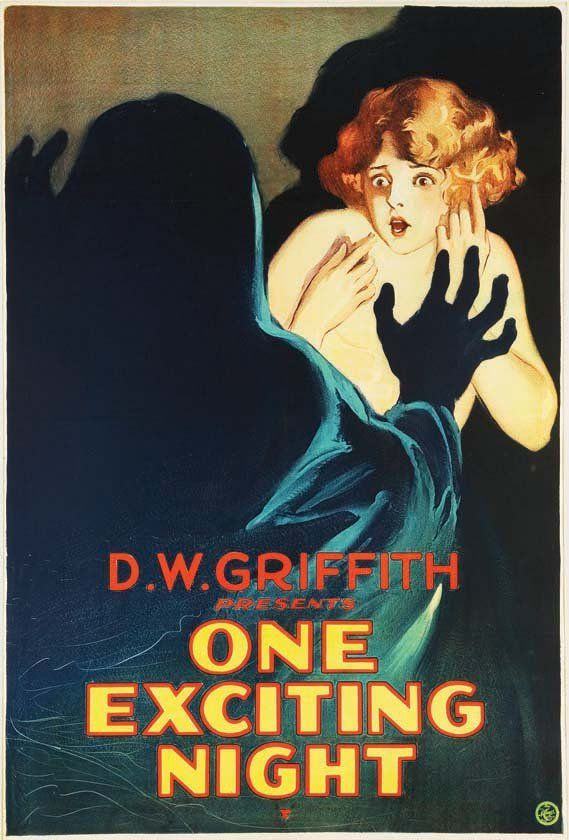
A definitive 5.2/10 rating for a film that redefined the boundaries of cult cinema. One Exciting Night remains a cornerstone of transgressive art.
The first time I saw One Exciting Night I expected a quaint relic; instead I got a migraine of moonlit paranoia that feels closer to Hardy’s storm-swept fatalism than to Griffith’s own sentimental parables. The film is a hinge between Victorian melodrama and the looming cynicism of noir, a hinge that creaks like every floorboard in this cursed mansion.
Carol Dempster’s Agnes is no flapper; she is a watercolor trembling to dry, and Griffith lets the camera linger until we sense the damp terror of a teenager who understands that adulthood is transactional. Henry Hull’s John Fairfax—laconic, trench-coated—could have stumbled out of a 1947 pulp if not for the fact that his silhouette is carved by 1922 shadows, all edges and unanswered prayers.
Griffith shot most interiors on a Brooklyn lot, yet the Chesapeake exteriments breathe salt-rot authenticity. Cinematographer Harold Rosson smears Vaseline on the lens for Agnes’s close-ups, turning skin into porcelain prophecy, while wide shots remain razor-cruel. Note the sequence where moonlight slashes through Venetian blinds across the bootleggers’ faces: a visual grammar later shoplifted by Double Indemnity and every noir that followed.
Prohibition here is not backdrop but bloodstream. The contraband liquor hidden under the conservatory is both MacGuffin and moral litmus test: every character thirsts for something illicit—freedom, money, flesh. When the revenuers’ axe splits the first crate, whiskey gushes like communal guilt across the parquet, baptizing the guilty and innocent alike. Historians forget that audiences in 1922 watched this scene while sneakily sipping hip-flasks; the celluloid became a communal confessional.
Griffith originally accompanied screenings with a live motif: a heartbeat-like kettledrum synced to Agnes’s terror, offset by a single off-key clarinet representing Caldwell’s lechery. Modern restorations often slap on generic piano, which is vandalism. Seek out the Killiam restoration with the reconstructed percussion score; it turns the film into a subcutaneous experience, the kind that makes your collar damp for no obvious reason.
Henry Hull’s career is usually reduced to his Werewolf of London meme, yet here he channels a pre-code weariness that anticipates Bogart. Watch his eyes when Agnes confesses she has never seen the ocean: a flicker of exile’s recognition, as though he realizes rescue is merely another word for mutual shipwreck. Carol Dempster, often maligned by Griffith loyalists pining for Gish, achieves something more unsettling than Gish’s brand of beatific suffering: she embodies the terror of being desired. In the shot where Caldwell closes her pearl necklace, her pupils dilate not with love but with the mammalian awareness of the trap tightening.
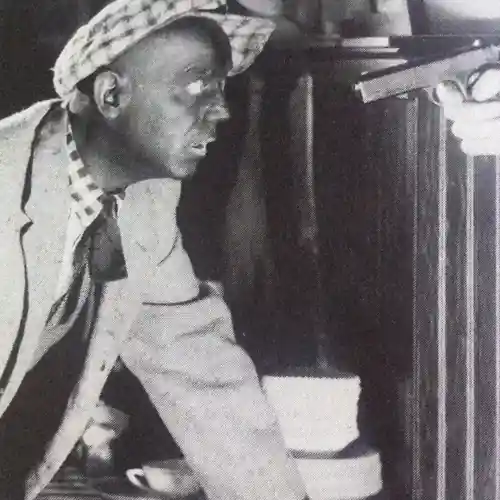
Place One Exciting Night beside Hands Up and you’ll see how Griffith anticipates the structural irony of later suspense cycles. Swap bootleggers for spies, Chesapeake for Carpathians, and the narrative skeleton remains: an innocent corralled into geopolitical (or criminal) crossfire. Conversely, contrast it with Oiling Uncle—a bucolic slapstick released the same year—and you grasp the chameleonic range of silent cinema before market research amputated that range.
Contemporary critics who decry the film’s “damsel” mechanics miss its covert indictment of guardianship as trafficking. The dowager’s dialogue intertitles drip with genteel venality: “A woman without means must barter what she cherishes most.” The line arrives right before she hands Agnes the wedding gown, and Griffith lingers on the gown’s train as though photographing manacles. Read against today’s discourse on bodily autonomy, the film feels shockingly current; it is a 1922 #MeToo parable disguised in lace.
Film scholars hunt for the “first noir” the way ornithologists seek ivory-billed woodpeckers: every sighting is contested. Yet One Exciting Night contains the genre’s mitochondrial DNA: chiaroscuro lighting, urban corruption seeping into pastoral space, a protagonist whose innocence is eroded by the very act of being suspected. Even its ending—lovers boarding a freighter at sunrise—offers not catharsis but exile, the kind of moral ambiguity that would flower in Out of the Past two decades later.
Only two 35 mm nitrate prints are known to survive: one at MoMA (with Dutch intertitles) and a 16 mm abridgement rescued from a defunct Montana miners’ hall. The latter has French crayon translations scrawled directly onto the emulsion—imagine watching a murder mystery through graffiti. Both versions circulate on gray-market streaming sites, but for legitimate access your best bet is the Library of Congress 2K stream, which preserves the amber tinting of the domestic interiors and the cobalt night-for-night sequences that make the shadows taste metallic.
We live in an era where trust is a currency debased daily, where every public space can morph into a crime scene streamed in real time. Griffith’s mansion, with its peepholes and panic rooms, is Twitter’s architecture rendered in brick. When Agnes whispers, “I cannot tell who is watching anymore,” she vocalizes our algorithmic dread. The film’s bootleggers—commodities smuggled in darkness—mirror today’s data traffickers. Their ledger is our metadata; their blood-soaked rug is our timeline.
So go ahead, dismiss One Exciting Night as a creaky curio. But when you next sense unseen eyes rifling through your digital lingerie, remember Agnes on that rain-lashed veranda, clutching a music box that plays only one haunted chord. The chord is still playing. We just stopped hearing it because we mistook silence for safety.
Verdict: A clandestine masterpiece hiding in plain shadow, mandatory viewing for anyone who thinks noir began with fedoras and cigarettes. It began with a teenage girl saying no, and the world answering with a slammed door.
IMDb 5.8
1932
Community
Log in to comment.