DbcultAccessing Vault...
7.2/10
Senior Film Conservator
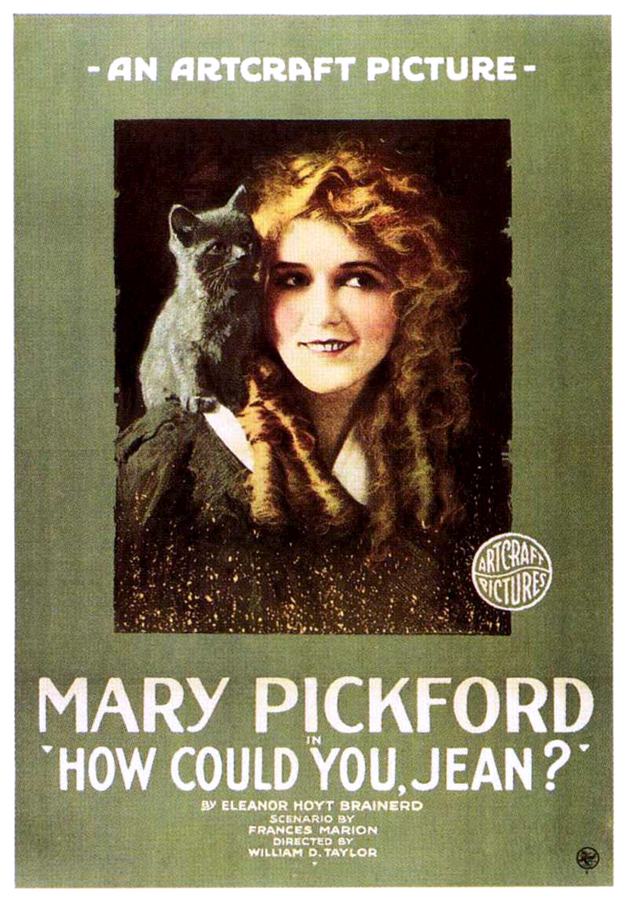
A definitive 7.2/10 rating for a film that redefined the boundaries of cult cinema. How Could You, Jean? remains a cornerstone of transgressive art.
Stepping back into the golden age of silent cinema offers a unique pleasure, a window into storytelling that relied on gesture, expression, and the sheer charisma of its stars. Among these luminous figures, Mary Pickford, 'America's Sweetheart,' shone brightest, and her work in films like 1918's How Could You, Jean? provides a delightful testament to her enduring appeal. This isn't just a historical curiosity; it's a vibrant, heartwarming comedy of errors that, even a century later, manages to charm and entertain with its clever premise and spirited performances. It’s a narrative that dances between class distinctions, mistaken identities, and the undeniable pull of true affection, all wrapped in a package that feels both quaint and surprisingly modern in its execution.
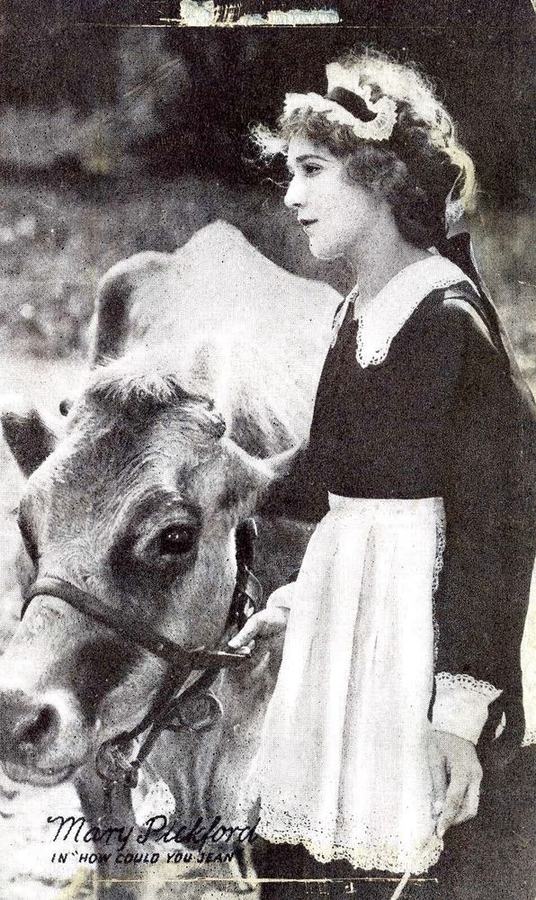
At the heart of How Could You, Jean? lies Mary Pickford's masterful portrayal of Jean Mackaye, a role perfectly tailored to her unique blend of innocence, spunk, and comedic timing. Pickford, already a monumental star by 1918, effortlessly commands the screen, transforming from a pampered socialite into a resourceful, if somewhat clumsy, 'Swedish cook.' Her ability to convey character depth and emotional nuance without uttering a single spoken word is truly remarkable. We see Jean's initial shock at her sudden destitution, not through dialogue, but through the subtle slump of her shoulders, the flicker of concern in her eyes, quickly replaced by a determined glint that signals her refusal to surrender. This resilience is a hallmark of many of Pickford's characters, a quality that endeared her to millions and made her the most powerful woman in early Hollywood.
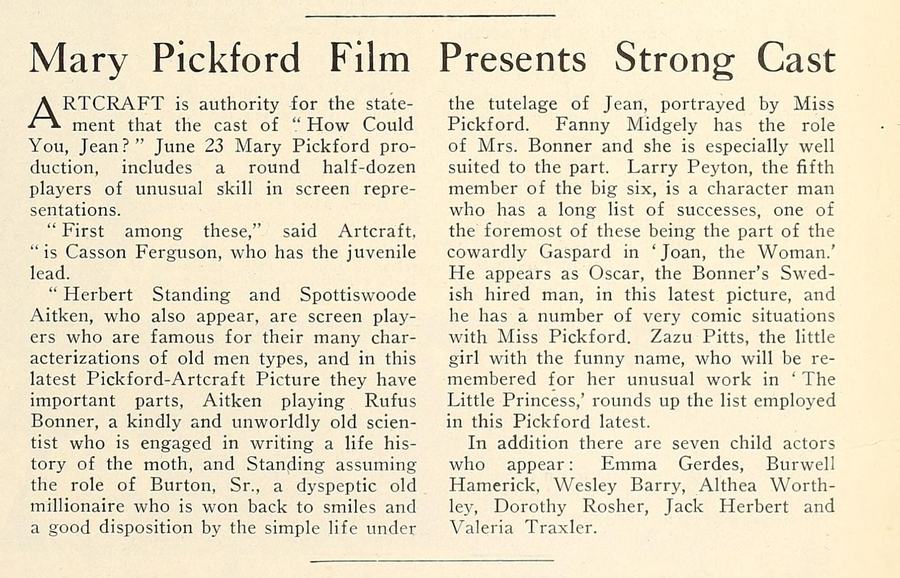
The transformation itself is a joy to behold. Ditching her elegant attire for the humble uniform of the Salvation Army, Jean embarks on a new chapter, a testament to her adaptability. Pickford imbues this new persona with a delightful awkwardness; her attempts at domesticity are endearing in their imperfection. She's not a natural in the kitchen, and her comedic struggles with culinary tasks provide some of the film's most genuinely funny moments. Yet, beneath the ill-fitting apron and the feigned accent, Jean's inherent goodness and intelligence shine through, captivating not one, but two unsuspecting suitors. Pickford’s performance here showcases her range, proving she was far more than just a 'little girl' playing child-like roles; she was a versatile actress capable of carrying a sophisticated comedic narrative with grace and wit. Her expressive eyes and animated gestures communicate volumes, drawing the audience into Jean's predicament and rooting for her triumph.
The narrative engine of How Could You, Jean? is a beautifully constructed comedic mechanism, a testament to the screenwriting prowess of Frances Marion and Eleanor Hoyt Brainerd. The premise is simple yet ripe for dramatic and humorous possibilities: a young woman, suddenly penniless, must reinvent herself. Jean's decision to embrace the disguise of a Swedish cook is a stroke of narrative genius, immediately setting the stage for delightful misunderstandings and social satire. The Bonner household, where Jean finds employment, is a perfectly crafted backdrop for this charade. Mr. and Mrs. Bonner, an elderly couple whose lives revolve entirely around the study of insects, are wonderfully oblivious to the human drama unfolding under their very roof. Their single-minded obsession provides a constant source of gentle humor, highlighting the absurdity of their detachment from everyday concerns.
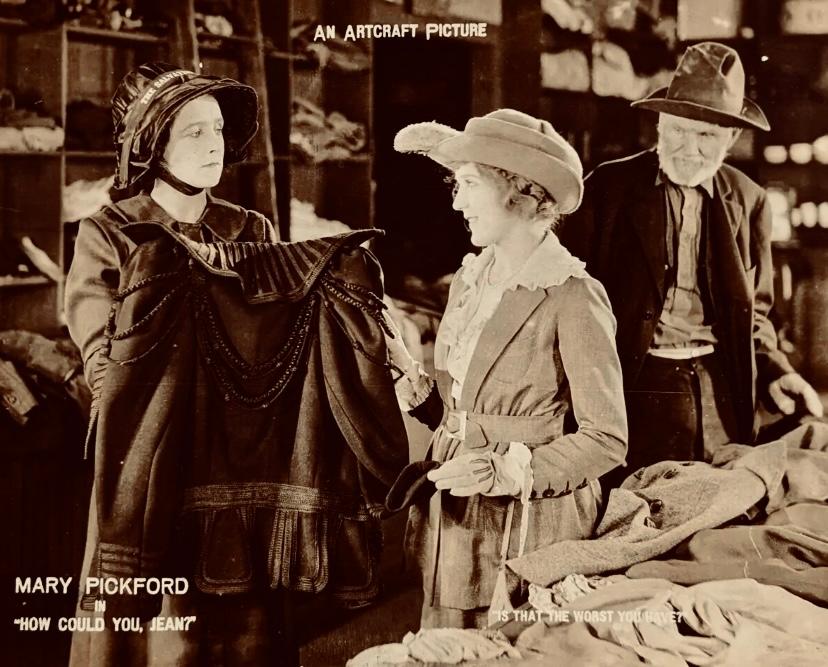
The romantic entanglements are equally well-orchestrated. First, there's Oscar, the genuine Swedish hired man, whose innocent affection for Jean is both sweet and slightly pitiable. Then enters Ted Burton, the wealthy scion, whose immediate infatuation with the disguised Jean drives the plot into its next comedic gear. Ted's decision to displace Oscar and take on the role of a 'Swedish hired man' himself is audacious and utterly charming, a grand romantic gesture born of pure impulse. This particular plot device, where a wealthy individual adopts a humble disguise to pursue love, is a classic trope, seen in various forms throughout cinematic history, and it's executed here with a refreshing lightness. The escalation continues with the arrival of Burton Sr., Ted's skeptical and curmudgeonly father, whose suspicions lead him to board in the very house where his son is playing the role of a servant. This layering of disguises and mistaken identities creates a wonderfully intricate web of comedic tension, promising an inevitable, and satisfying, unraveling.
The film’s progression, with its series of escalating adventures and near-discoveries, keeps the audience thoroughly engaged. Each new development, each close call, builds upon the last, leading to a climax where Jean's true character is revealed not through confession, but through an act of genuine heroism. This structure, which allows character to shine through circumstances rather than exposition, is a hallmark of strong silent film storytelling. It’s a plot that, while lighthearted, subtly critiques societal expectations and celebrates authenticity, much like other films of the era that explored class mobility and personal agency, such as the social commentary often woven into works like The Governor's Boss, though with a distinct comedic lens here.
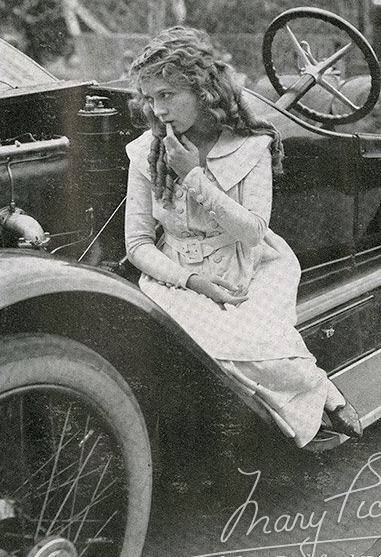
While Pickford's star shines brightest, the success of How Could You, Jean? relies heavily on its well-chosen supporting cast, each member contributing to the film's rich comedic tapestry. Spottiswoode Aitken and Fanny Midgley as Mr. and Mrs. Bonner are a particular delight. Their profound absorption in entomology, to the exclusion of almost everything else, creates a wonderfully whimsical element. They are not caricatures but rather endearing eccentrics, whose obliviousness to Jean's true identity and the romantic drama unfolding around them is a consistent source of gentle humor. Their interactions, often punctuated by their fascination with a new specimen, ground the fantastical elements of the plot in a charmingly peculiar reality.
Herbert Standing as Burton Sr. provides the necessary gruff counterpoint to the youthful romance. His initial skepticism and eventual warming to Jean are crucial to the film's emotional arc. He embodies the rigid class distinctions of the era, making Jean's eventual triumph over his prejudices all the more satisfying. The dynamic between him and his son, Ted (played by Casson Ferguson), who is willing to abandon his station for love, is a classic father-son conflict, given a fresh spin by the comedic context. Ferguson, as Ted, is earnest and charming, making his sudden infatuation with Jean entirely believable. His transformation from society gentleman to a clumsy, lovestruck 'hired man' provides ample comedic opportunities, often played for laughs against the backdrop of Jean's own attempts at domesticity. Even Oscar (Jack Herbert), the original Swedish hired man, despite his brief appearance, leaves an impression with his simple, honest affection for Jean, making his resignation under Ted's persuasion a moment of bittersweet humor.
The cast, including notable names like Zasu Pitts and Wesley Barry in smaller roles, contributes to the overall vibrant atmosphere. Each actor, through exaggerated gestures and expressions typical of silent cinema, brings their character to life, ensuring that the audience is not just observing a story, but experiencing a lively theatrical performance on screen. The ensemble's collective energy elevates the screenplay, transforming clever writing into compelling visual comedy, reminiscent of how a strong ensemble can elevate even a straightforward plot in films like The Politicians, though in a vastly different genre.
Beyond its comedic surface, How Could You, Jean? delves into themes that resonate even today: the fluidity of identity, the artificiality of class distinctions, and the ultimate triumph of true character. Jean's journey from heiress to humble cook forces her to confront preconceived notions of wealth and status. Her disguise is not merely a plot device; it's a vehicle for self-discovery. Stripped of her fortune, she finds her true resourcefulness, her resilience, and her inherent goodness. This narrative arc, where adversity reveals inner strength, is a powerful and timeless message. It suggests that genuine worth lies not in inherited wealth or social standing, but in one's actions and spirit.
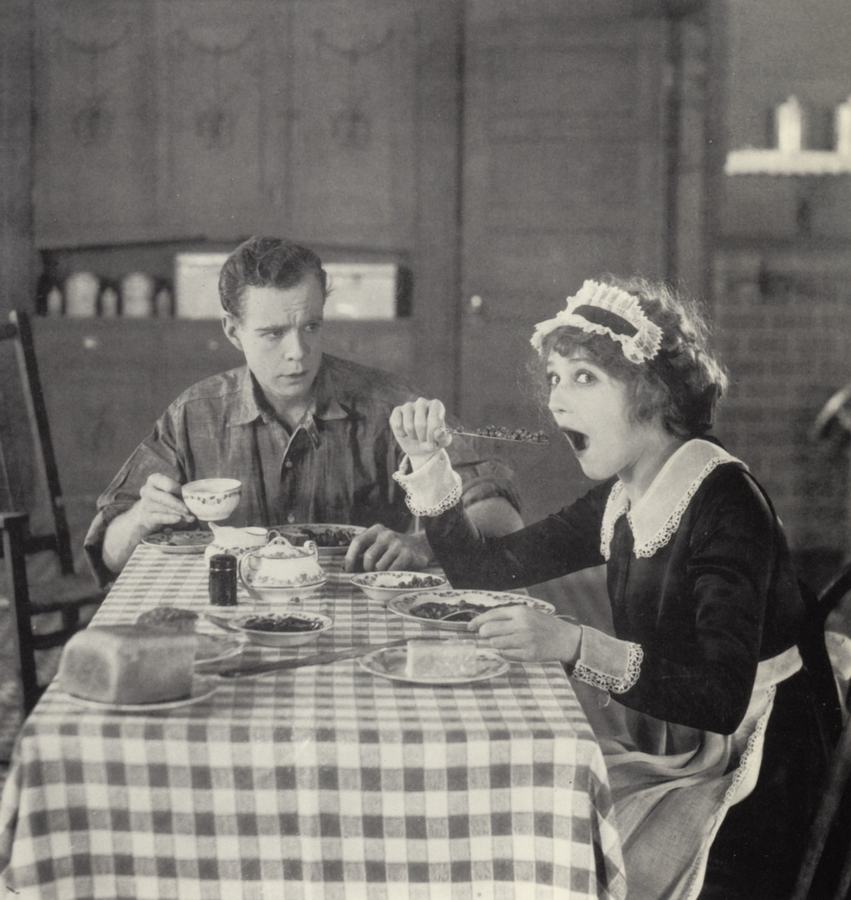
The film subtly critiques the rigid class structures of its time. Burton Sr.'s initial disapproval of his son's affection for a 'Swedish cook' is a clear manifestation of this societal prejudice. His eventual acceptance, prompted by Jean's heroic act, underscores the idea that character can transcend class. It's a hopeful message, suggesting that love and genuine human connection can bridge divides that society often erects. This examination of class dynamics, while presented with a light touch, aligns with a broader trend in early cinema to explore social mobility and the challenges faced by individuals navigating different strata of society, a theme also touched upon, albeit with more dramatic intensity, in films like The Grain of Dust. The film asks us to consider what truly defines a person, concluding emphatically that it is not their bank account or their surname, but their courage, kindness, and integrity.
Moreover, the film champions authenticity. While Jean begins with a disguise, her true self, her warmth and bravery, eventually shines through. The comedic moments often arise from the tension between her assumed identity and her innate qualities. The audience is invited to celebrate the moment when the facade crumbles, not out of shame, but out of necessity and ultimately, love. The film's resolution, where Burton Sr. blesses the union, is not just a happy ending but a symbolic endorsement of love that sees beyond superficial appearances. It's a feel-good narrative that, despite its period setting, offers enduring insights into human nature and societal values, echoing the spirit of self-determination often celebrated in narratives from that era.
The brilliance of How Could You, Jean? owes much to its screenwriters, Frances Marion and Eleanor Hoyt Brainerd. Frances Marion, in particular, was a titan of early Hollywood, credited with writing over 300 films and winning two Academy Awards. Her ability to craft compelling narratives, develop memorable characters, and infuse stories with both humor and heart is evident here. The screenplay for How Could You, Jean? is a masterclass in comedic construction, with its escalating stakes, well-timed reveals, and satisfying resolutions. Marion understood the nuances of silent film storytelling, knowing how to convey emotion and plot through visual cues and concise intertitles, allowing the actors' performances to truly shine. Her collaboration with Brainerd undoubtedly resulted in a script that was both engaging and perfectly suited to Pickford's talents.
The direction, likely by a director who understood Pickford's unique appeal (though specific directorial credit from the provided information isn't given, films of this era often had complex attribution), demonstrates a keen eye for visual comedy and character interaction. The pacing is brisk, a crucial element for silent comedies, ensuring that the audience remains captivated without the benefit of spoken dialogue. The framing of shots, the use of physical comedy, and the emphasis on facial expressions are all expertly handled. The film avoids becoming overly theatrical, instead opting for a naturalistic performance style that, for its time, would have felt incredibly immersive. The way the director captures the eccentricities of the Bonner household, the earnestness of the suitors, and Jean's various predicaments, speaks to a sophisticated understanding of cinematic language. The visual storytelling, characteristic of the era, makes effective use of mise-en-scène to establish character and mood, a skill honed in many productions of the period, including other comedies like A Kiss for Susie, which also relied heavily on visual gags and expressive performances.
In an era often dominated by grand melodramas and epic historicals, How Could You, Jean? stands out as a joyous and expertly crafted comedy. It's a reminder of the sheer artistry that went into silent filmmaking, proving that storytelling without sound could be just as nuanced, hilarious, and emotionally resonant as any talkie. Mary Pickford's performance is a masterclass in silent acting, showcasing her unparalleled ability to connect with an audience through sheer charisma and expressive power. The film's themes of identity, class, and the pursuit of love against all odds are universal, giving it an enduring quality that transcends its historical context. While some silent films may feel dated to modern viewers, this one retains a freshness and charm that makes it readily accessible and thoroughly enjoyable. Its witty screenplay, delightful performances, and engaging plot combine to create a cinematic experience that is both historically significant and wonderfully entertaining.
For those curious about the roots of romantic comedy or simply eager to witness 'America's Sweetheart' in her prime, How Could You, Jean? is an absolute must-see. It's a film that embodies the spirit of early Hollywood, a period of immense creativity and innovation. It reminds us that sometimes, the most profound truths about human nature and love can be found in the most lighthearted of tales. It’s a testament to the power of a good story, well told, and proof that a century later, a film can still make us smile, laugh, and perhaps even ponder, 'How could you, Jean?'—in the most affectionate way possible, of course. Its legacy, though perhaps not as widely discussed as some of Pickford's more dramatic vehicles, firmly places it as a delightful and significant entry in her illustrious filmography, a charming counterpoint to more serious fare like Jealousy or The Puppet Crown, showcasing her comedic versatility.
IMDb 5.6
1932
Community
Log in to comment.