DbcultAccessing Vault...
Cult Review
Senior Film Conservator
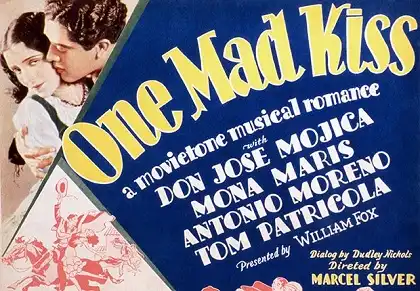
Alright, so we're diving into One Mad Kiss today. If you're someone who loves digging into early cinema, especially when sound was still a bit of a novelty, this 1930 film is definitely worth a look. It's got a certain charm, a bit like watching a live stage play on film, which can be really fun if you're in the right mood. If you're looking for slick, fast-paced modern storytelling, you'll probably find it a bit slow. But for a peek at how they made movies almost a century ago? It's pretty neat. 🎬
The whole thing kicks off with José Savedra, played by José Mojica, who's this dashing rebel. He's got a price on his head for riling up the locals against the taxman, Estrada. You know, classic hero stuff. Then there's Rosario Montes, a dancer with her own café, who's just as annoyed by Estrada's heavy taxes. She's got spunk.
The central stunt, the **mad kiss** itself, is really the heart of the film. José, with a bravado that honestly feels a bit over the top but in a good way, declares he's going to kiss Rosario right on the lips, publicly, in her café. And Estrada and his police are _right there_. You just know it's going to happen. José, dressed as a waiter, pulls it off with a flourish. The audacity! It's a genuinely cool moment, even if the acting styles are from a different era.
Estrada, the bad guy, is naturally furious. He's not exactly subtle, this one. He tries to trick José by sending a fake note from Rosario, setting up a meeting at her house, then arrests him. It's a classic villain move, nothing too complex. But it works to move the plot along.
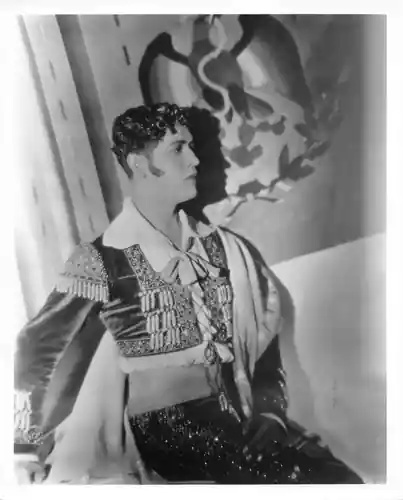
This is where Rosario really shines. When she finds out about Estrada's trick, she doesn't just despair. Oh no. She walks right up to Estrada, pretends to hate José for the public kiss, and asks for permission to give him her *own* 'traitor's kiss' in his cell. It's such a sly move. And of course, she slips him a pistol during that kiss. You gotta respect that quick thinking. 🧠
The escape itself is a bit quick, but it's satisfying to see José use that pistol. He and Rosario bolt out on horseback, and the whole thing wraps up with the governor showing up to arrest Estrada for his abuse of power. It's a tidy little ending, maybe a little _too_ tidy, but you don't really mind. It feels like a story meant to be told around a campfire, simple and to the point.
The film has this energy, even with the slightly stiff dialogue that was common for early talkies. You can tell they were still figuring out how to make sound work. Sometimes, the camera just sits there, watching people talk, almost like a play. But then you get these moments of genuine excitement, like the kiss or Rosario's cunning plan. The musical numbers with Frankie Genardi are fun too, adding a nice bit of flair that feels very much of its time. 💃
It's not a masterpiece, no. But it's a piece of history that shows a certain daring. The performances are earnest. Mojica has a certain charisma, and Mona Maris as Rosario holds her own, especially in those moments where she's outsmarting the villain. It's a film that knows what it is and leans into its dramatic, romantic sensibilities.
IMDb 6.5
1935
Community
Log in to comment.