DbcultAccessing Vault...
Cult Review
Senior Film Conservator
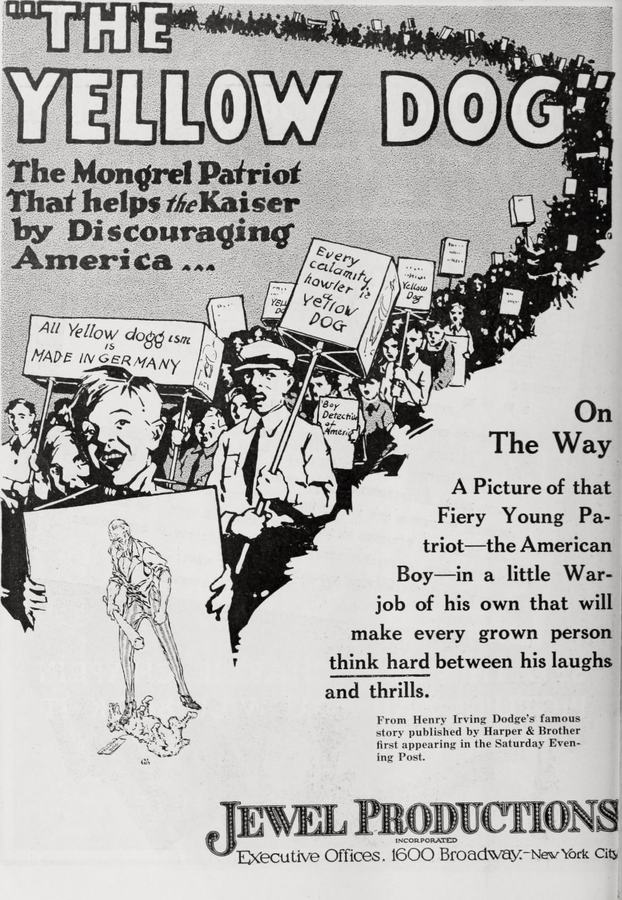
The year 1918 represented a precarious inflection point in global history, and the American cinematic landscape reflected this volatility with a fervor that bordered on the hallucinatory. The Yellow Dog, directed with a palpable sense of urgency, stands as a fascinating, if occasionally unsettling, artifact of domestic mobilization. It is a film that weaponizes the innocence of childhood and the sanctity of the small-town shipyard to construct a narrative of absolute ideological purity. As we navigate the shadows of Danforth, we are not merely watching a drama; we are witnessing the birth of a specific brand of American sociological defense mechanism.
At the center of this industrial morality play is Albert Walker, portrayed with a stoic gravitas that suggests the weight of the world rests upon his shoulders. Walker is the architect of a new social order, one where the 'Yellow Dog' card—a small piece of paper with immense psychological weight—becomes the currency of loyalty. The film’s premise hinges on the idea that words are as lethal as bullets. In the context of 1918, where the fear of the 'hyphenated American' and the 'slacker' was at its zenith, The Yellow Dog functions as both a warning and a manual for civilian conduct.
The visual language of the film utilizes the shipbuilding town not just as a backdrop, but as a living organism under threat. The towering skeletons of unfinished vessels provide a stark, geometric contrast to the organic vulnerability of the townspeople. Unlike the more polished urban landscapes seen in Lights of New York, Danforth is a place of grit and iron. The cinematography emphasizes the scale of the labor, suggesting that any disruption to this work is an act of existential betrayal. When German sympathizers begin to voice doubts about the war, their words feel like grit in the gears of a massive machine.
The introduction of 'Nosey' White, played with an energetic, almost frantic patriotism by Gordon Griffith, shifts the film’s tone from industrial observation to a localized spy thriller. Nosey is the quintessential American youth of the era—observant, unyielding, and perhaps a bit terrifying in his absolute certainty. The 'Yellow Dog' club he leads is a fascinating study in peer-enforced conformity. It echoes the themes of social ostracization found in The Broken Law, though here the law being broken is not a statute, but a moral code of national solidarity.
"The 'Yellow Dog' card is more than a prop; it is a semiotic weapon that transforms the act of listening into an act of combat."
One of the most compelling aspects of The Yellow Dog is its intrusion into the domestic sphere. The romance between Nosey and Kate Cummings (Clara Horton) serves as the emotional anchor, but it is quickly subverted by the grim realities of the plot. When Nosey overhears Alexander Cummings conspiring with German agents, the film reaches its psychological peak. The betrayal is not merely political; it is familial. This tension reminds one of the high-stakes deception found in The Fatal Card, where a single piece of evidence can dismantle a life.
Clara Horton brings a delicate pathos to Kate, a character caught between her burgeoning love for a patriot and her filial duty to a traitor. Her performance provides a necessary softness to a film that is otherwise dominated by the hard edges of masculine resolve and industrial necessity. The scenes within the Cummings household are lit with a claustrophobic intensity, making the familiar spaces of a home feel alien and dangerous. This transformation of the domestic into the treacherous is a hallmark of the era's propaganda, suggesting that the enemy is never far away.
Ralph Graves delivers a performance that is remarkably nuanced for the period. He avoids the over-the-top theatricality that plagued many silent era productions, opting instead for a simmering intensity. His Albert Walker is a man of logic, driven by a fear that the fabric of society is unraveling. This intellectual approach to patriotism distinguishes the film from more visceral war dramas. It shares a certain philosophical weight with God's Man, particularly in its exploration of a protagonist's duty to a higher cause, even at the cost of personal peace.
The pacing of the film is deliberate, building the tension through a series of escalating confrontations. The 'Yellow Dog' encounters are choreographed with a rhythmic precision, each one serving to tighten the noose around the subversives. By the time we reach the shipyard climax, the audience has been primed for a violent resolution. The fight between Nosey’s father and the German spy is a masterclass in silent film action—shadowy, kinetic, and brutal. It lacks the exoticism of Die Lieblingsfrau des Maharadscha, but replaces it with a raw, immediate realism that must have been incredibly impactful for 1918 audiences.
To view The Yellow Dog today is to confront the complexities of the American psyche during wartime. The film does not shy away from the darker implications of its 'Yellow Dog' cards. While it frames the boys as heroes, a modern viewer cannot help but see the shadows of McCarthyism or other eras of surveillance in their actions. However, within its own temporal context, the film was a rallying cry. It aimed to transform the passive citizen into an active participant in the nation's defense. In this regard, it is far more aggressive than the social dramas of the time, such as Her New York or the lighthearted antics of Stop Thief!.
The film’s portrayal of German spies is, predictably, lacking in nuance. They are presented as a monolithic threat, an external contagion that must be excised. Yet, the film’s true focus is on the *American* who allows himself to be swayed by them. The 'Yellow Dog' is not the spy, but the citizen who lacks the fortitude to stand against sedition. This distinction is crucial. It places the burden of national security on the shoulders of the individual, much like the rugged protagonists in A Lass of the Lumberlands or the primal survivalism in The Jungle Child.
The lighting in The Yellow Dog deserves special mention. The use of chiaroscuro during the nighttime shipyard scenes creates a sense of dread that is almost expressionistic. The silhouettes of the cranes and the flickering lights of the harbor evoke a world where danger lurks in every shadow. This visual sophistication elevates the film above mere propaganda. It is a well-crafted thriller that understands how to use space and light to tell a story. While it may not have the surrealist qualities of A Dream or Two Ago, it possesses a grounded, tactile quality that makes its stakes feel incredibly real.
The direction by Colin Campbell (though often uncredited in contemporary shorthand, the studio influence is clear) ensures that the various plot threads—the romance, the industrial espionage, and the social movement—are woven together seamlessly. The transition from Albert Walker's initial distress to the organized resistance of the youth club is handled with a logical progression that keeps the viewer engaged. It avoids the disjointed narrative structure seen in some of its contemporaries, like Unjustly Accused, providing instead a cohesive and driving arc toward justice.
Ultimately, The Yellow Dog is a film about the power of the collective will. It suggests that a community, when properly motivated and vigilant, is the strongest defense against any threat. The ending, with Cummings being sent to prison and the shipyard saved, is a triumphant affirmation of the 'Yellow Dog' philosophy. It is a moment of catharsis that validates the boys' surveillance and Walker's vision. This sense of communal justice is a recurring theme in films like Saving the Family Name, though The Yellow Dog applies it on a much larger, national scale.
In the broader scope of silent cinema, this film occupies a unique niche. It is less about the grand adventure of McVeagh of the South Seas or the historical sweep of The Napoleonic Epics, and more about the psychological frontlines of the home front. It is a film that asks uncomfortable questions about the cost of security and the nature of loyalty. Even the more action-oriented Sporting Blood feels light in comparison to the existential stakes presented here.
As the credits roll—or rather, as the final intertitle fades—one is left with a profound sense of the era's intensity. The Yellow Dog is a masterclass in how cinema can be used to shape public consciousness. It is a relic, yes, but one that still pulses with the anxieties and aspirations of a nation at war. It reminds us that the stories we tell about ourselves, especially in times of crisis, have the power to define who we are—and who we are willing to exclude. For any student of film history or social psychology, it remains an essential, if challenging, viewing experience.
IMDb 5.9
1921
Community
Log in to comment.