DbcultAccessing Vault...
Cult Review
Senior Film Conservator
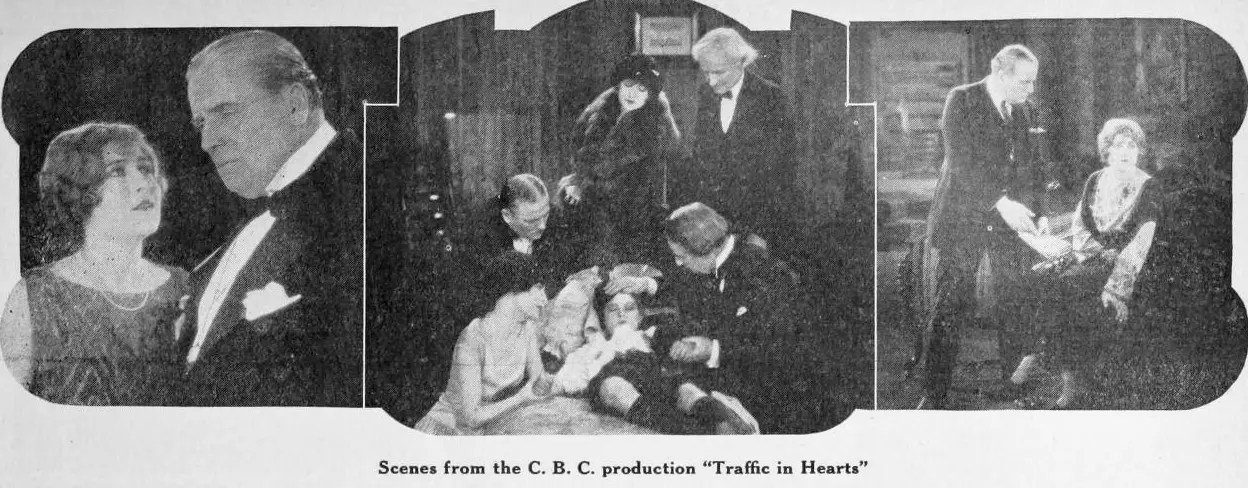
The 1924 cinematic landscape was often dominated by the grandiose and the grotesque, yet Traffic in Hearts carves out a niche that is simultaneously intimate and sweeping in its socio-political critique. It is a film that refuses to be categorized merely as a melodrama, opting instead to dissect the anatomy of municipal corruption through the lens of romantic entanglement.
At the heart of this narrative is Lawrence Hallor, portrayed with a stoic intensity by Robert Frazer. Hallor is not your typical silent film protagonist; he is a man of blueprints and bricks, an idealist who views the city not as a source of revenue, but as a living organism requiring care. His vision for "model tenements" was a radical concept in the early 20th century, echoing the real-world movements of the Progressive Era. In contrast to the often whimsical stakes found in The Girl of My Dreams, the conflict here is grounded in the harsh realities of urban planning and the disenfranchisement of the poor.
John Hamilton, played with a terrifying gravitas by Charles Wellesley, represents the antithesis of Hallor’s progress. He is the "political boss"—a figure that haunted the American psyche during the Tammany Hall years. Hamilton’s rejection of the housing project isn't just a personal slight; it is a systemic refusal to prioritize human welfare over political leverage. This dynamic sets the stage for a psychological tug-of-war that transcends the typical "boy meets girl" tropes of the era.
The script, co-written by the prolific Dorothy Yost, employs a fascinating narrative device: the secondary identity. When Hallor’s initial plans are crushed, he doesn't slink away into obscurity. Instead, he engages in a masquerade, a trope often used for comedic effect in films like The Man from Mexico, but here it is utilized for high-stakes subversion. Hallor becomes a phantom architect, working within the very system that sought to exclude him.
This theme of double lives was a burgeoning interest in 1920s cinema. While The Wolf Man (1923) dealt with the literal and metaphorical beast within, Traffic in Hearts explores the moral necessity of deception. Is a lie justified if it builds a roof over a thousand heads? Hallor’s transformation is less about vanity and more about the tactical navigation of a rigged game. It mirrors the desperation seen in Her Reckoning, where characters are forced into impossible corners by social rigidity.
Betty Morrissey’s portrayal of Alice Hamilton is the linchpin of the film’s emotional resolution. In many films of this period, the daughter of the antagonist is a mere trophy or a passive observer. However, Alice serves as the bridge between the old guard and the new vision. Her role is reminiscent of the complex female leads in The Misleading Lady, though her motivations are far more altruistic.
When Alice discovers Hallor’s true identity, the film reaches its zenith of tension. Her decision to reveal the truth to her father is not an act of betrayal against her lover, but a strategic move to force her father’s hand toward redemption. It is a moment of profound moral clarity. Unlike the fatalistic outcomes in Life Story of John Lee, there is a sense of agency and hope here that feels earned rather than manufactured.
Visually, Traffic in Hearts utilizes the stark contrasts of the silent era to highlight the disparity between the classes. The scenes within the tenements are shot with a gritty, almost documentary-like focus on shadows and cramped spaces, a technique that predates the social realism of later decades. This is juxtaposed with the opulent, airy offices of Hamilton, where the lighting is soft and the furniture is mahogany.
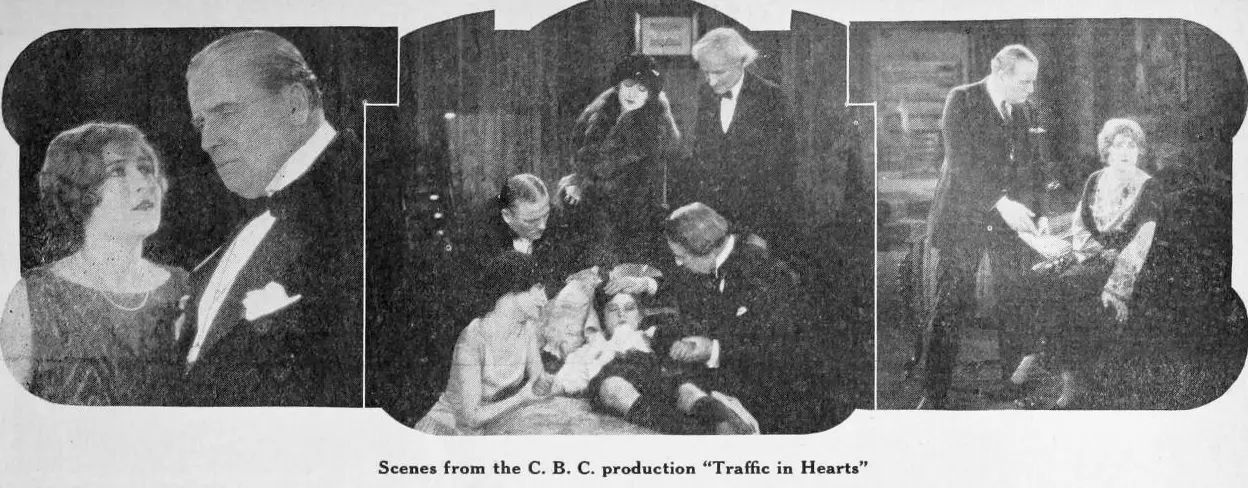
The use of space is critical. Hallor is often framed against wide-open vistas or empty plots of land, symbolizing his potential-filled future, while Hamilton is frequently boxed in by the heavy architecture of his own making. This visual storytelling is far more sophisticated than the broad strokes used in contemporary westerns like The Border Legion. The director understands that the environment is a character in itself—the city is the silent witness to the negotiation of hearts.
When we look at the broader spectrum of 1924, Traffic in Hearts stands out for its lack of cynicism. While films like The Volcano or Revelj explored the explosive nature of human passion, this film focuses on the constructive nature of love. It posits that romance can be a catalyst for civic improvement. It avoids the heavy-handed moralizing of The Evil Thereof, choosing instead to show the tangible benefits of a change of heart.
The supporting cast, including Tom O'Brien and Mildred Harris, provides a necessary texture to the world. They represent the "everyman" and the "everywoman" who are caught in the crossfire of Hamilton’s whims. Their performances lack the exaggerated histrionics often found in shorts like A Studio Rube or the chaotic energy of Black and Tan Mix Up. Instead, there is a groundedness that makes the stakes feel personal to the audience.
The narrative density of Traffic in Hearts is a testament to the skill of its writing team. Dorothy Yost, who also worked on Lombardi, Ltd., brings a level of sophistication to the dialogue (via intertitles) that avoids the pitfalls of over-explanation. There is a subtextual richness here; the "traffic" in the title refers not just to the movement of people, but to the bartering of souls and the commerce of affection. It is a cynical title for a surprisingly optimistic film.
The pacing is deliberate, building the tension of the "crushing" order Hamilton issues against the unknown architect. This procedural element adds a layer of suspense that is often missing from pure romances. It shares a DNA with the mystery elements of Chains of Evidence, where the truth is a weapon that can either destroy or liberate.
To watch Traffic in Hearts today is to witness a blueprint for the modern social drama. It bypasses the problematic racial epics like The Birth of a Nation to focus on a more universal struggle: the fight for dignity in the face of institutionalized greed. The film’s resolution—Hamilton’s sudden revocation of his order—might seem convenient to the modern eye, but within the context of 1920s optimism, it serves as a powerful statement on the possibility of reform.
The marriage sanctioned at the end is more than a romantic union; it is a merger of power and purpose. Hallor gets his tenements, Alice gets her husband, and the city gets a soul. It is a rare film that manages to be both a critique and a celebration of the American dream. The lexical diversity of the visual language here is immense, proving that even in silence, a film can scream for justice.
In the grand archives of silent cinema, Traffic in Hearts deserves a prominent place. It is a sophisticated, layered, and ultimately moving piece of art that reminds us that the buildings we live in are only as strong as the hearts that build them. It remains a vital watch for anyone interested in the intersection of art, politics, and the enduring power of the human spirit to overcome the machinery of corruption.
IMDb 6.8
1931
Community
Log in to comment.