DbcultAccessing Vault...
Cult Review
Senior Film Conservator
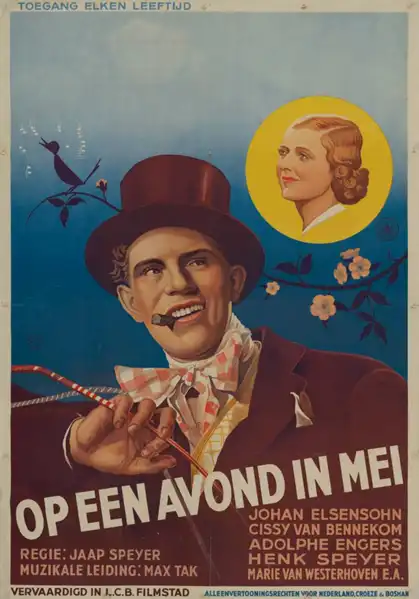
“Op een avond in mei” isn't for everyone, that’s for sure. If you’re someone who loves digging into old films, especially Dutch ones, and doesn't mind a slow, almost painterly pace, then yeah, give this a shot. But if you’re looking for quick cuts or some kind of intense modern drama, you’ll probably find yourself checking your watch. This one’s really a specific taste. 🧐
The film feels like a window into a very particular evening. It’s less about one grand event and more about the small ripples of life. You get these glimpses into different homes, different conversations, all sort of circling around a central feeling of quiet expectation or maybe just a deep, unspoken regret.
Henk Speyer, for instance, has this way of looking off into the middle distance. It tells you everything without him saying a single word. It’s not a performance that screams for attention, just quietly is. And then there’s Henri De Vries. He brings this gentle, almost weary air to his scenes. You can practically feel the weight of unspoken things on his shoulders.
The movie takes its sweet time, letting moments just breathe. Sometimes too much time, honestly. There's a scene where someone is just buttering a piece of bread, and it goes on for what feels like a small eternity. It’s meant to be reflective, I think, but it really skirted the edge of just being… long. 🕰️
The cinematography, even with the age of the print, gives everything this soft, almost melancholic glow. It’s not flashy, no big sweeping shots here. Instead, you get intimate frames that pull you into these small rooms and hushed conversations. The way the light falls on a dusty curtain in one shot really stuck with me.
There's a moment, really quick, where a cat just walks across the background of a tense dialogue scene. It doesn't do anything, just ambles through, and no one reacts. It was just… there. It made me smile a bit, a tiny real-world interruption in the drama. 🐈
The dialogue often feels very precise, almost stagey in a way. That’s pretty common for films from this era. It’s not always how people actually talk, but it does serve to make the points crystal clear. The background sounds are almost non-existent sometimes, leaving these big silences. They make you lean in closer, almost without realizing.
You can feel the film trying to land a specific emotional punch towards the end. Especially with Koba Kinsbergen’s character. She has a scene near a window, and the camera just holds on her face. It’s powerful, even if the lead-up sometimes felt a little disjointed. It definitely sticks with you after the credits roll.
It reminds me a bit of some early French films, actually. Not in plot, but in how much they trust the viewer to feel rather than be told everything. It’s not a Sweet Dreams kind of sweeping romance. More like a tiny, quiet observation. A slice of life, really.
It’s a curious piece of cinema history, this one. A window into a different time and a different storytelling rhythm. It won't grab everyone, of course. But for those who find beauty in the quiet corners of film, there's absolutely something to appreciate. It's definitely an experience. Not an easy one, perhaps, but an experience nonetheless.
IMDb 6.8
1918
Community
Log in to comment.