DbcultAccessing Vault...
6.8/10
Senior Film Conservator
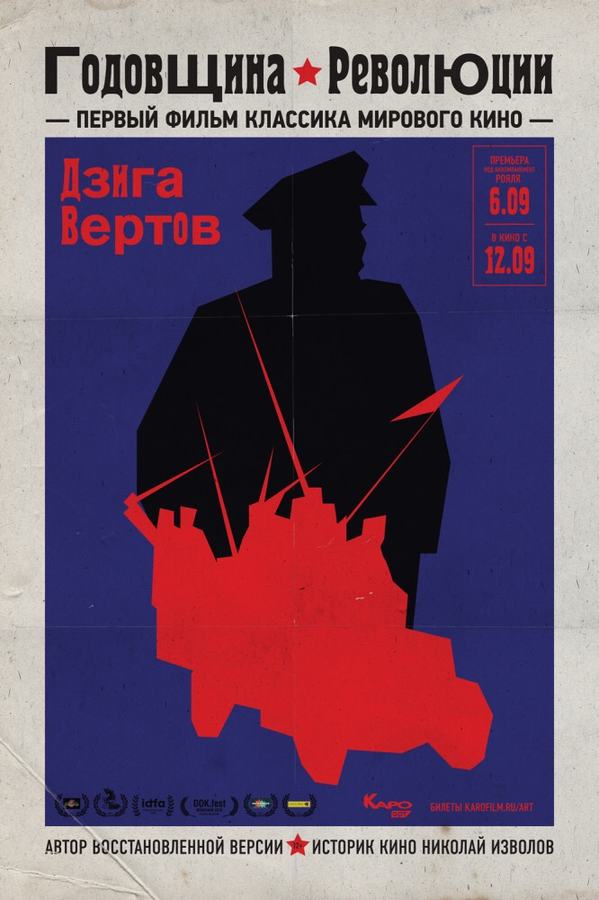
A definitive 6.8/10 rating for a film that redefined the boundaries of cult cinema. Anniversary of the Revolution remains a cornerstone of transgressive art.
Stepping into the cinematic world of Dziga Vertov's "Anniversary of the Revolution" (1918) is akin to witnessing history not just unfold, but coalesce into a potent, urgent declaration. This isn't merely a film; it's a foundational text, a visual manifesto born from the very crucible of societal upheaval. Created in the immediate aftermath of the October Revolution, Vertov, a pioneer whose name would become synonymous with radical cinematic experimentation, crafted what stands as perhaps the earliest feature-length documentary. It’s a work that doesn't just record events but actively participates in the monumental task of constructing a national narrative, solidifying the nascent identity of the Soviet state. The raw, unfiltered energy pulsating through every frame serves as a testament to the revolutionary fervor that swept through Russia, a fervor Vertov sought not just to capture, but to amplify and immortalize through the lens of his camera-eye. Its very existence, a mere year after the pivotal events it chronicles, speaks volumes about the Soviet government's immediate understanding of cinema's power as a tool for mass communication and historical inscription. This film is more than a mere record; it is an active participant in shaping the perception of a new world order.
The film embarks on its ambitious journey on February 25th, tracing the trajectory of the revolution from its explosive genesis through the arduous trials of civil war and the nascent stirrings of a new social order, culminating in the triumphant celebration of its first anniversary. Vertov’s approach is nothing short of audacious. He assembles a sprawling mosaic of archival footage, newsreels, and perhaps even some staged re-enactments (a common practice in early documentary, blurring lines we now rigidly define). We are plunged directly into the heart of the maelstrom: the teeming throngs on the streets, the impassioned orators igniting revolutionary fervor, the disciplined march of Red Guards, and the devastating aftermath of conflict. The camera, in Vertov’s hands, becomes a ubiquitous, omniscient observer, its gaze sweeping across battlefields, penetrating the solemnity of leadership meetings, and lingering on the faces of ordinary citizens caught in the vortex of epochal change. This panoramic sweep is not just geographical; it is temporal and ideological, attempting to capture the very spirit of a nation being reborn. From the initial tremors of discontent and popular uprising against the Tsarist regime, through the provisional government's brief, faltering reign, and into the Bolshevik seizure of power, Vertov pieces together a narrative of relentless progression. The depictions of the civil war are particularly striking, conveying both the immense human cost and the unwavering resolve of the Red Army. These aren't abstract historical dates but vividly rendered moments of struggle, sacrifice, and eventual triumph, designed to instill a sense of shared experience and purpose in its audience.
While the full theoretical articulation of Vertov’s "Kino-Eye" wouldn't emerge until later, its embryonic principles are palpably present in "Anniversary of the Revolution." Here, the camera is not a passive recorder but an active agent, dissecting reality, reassembling fragments, and forging a new cinematic truth. The emphasis is on the objective capture of life "as it is," yet this objectivity is paradoxically deployed in service of a highly subjective, partisan agenda. Vertov believed in the camera's superior ability to perceive and organize the visible world, freeing cinema from the constraints of theatricality and staged drama. The film’s power lies in its relentless accumulation of images: faces contorted in defiance, hands raised in solidarity, weapons brandished in defense, banners unfurled in victory. Each shot, often brief and impactful, contributes to a rhythmic montage that propels the narrative forward with an almost unstoppable momentum, mirroring the perceived inevitability of the revolutionary cause. This early work already showcases Vertov's nascent genius for editing, manipulating time and space to create a powerful emotional and ideological impact. He understood that the arrangement of images could create meaning far beyond the individual shot, transforming disparate pieces of reality into a coherent, persuasive whole. The visual language is direct, unembellished, and raw, reflecting the urgency of the times and the nascent stage of cinematic art itself.
The film navigates the brutal landscape of the Russian Civil War with an unflinching eye. Scenes of armed conflict, the grim determination of soldiers, and the visible toll on the populace are interspersed with glimpses of a new society struggling to be born. Vertov doesn't shy away from depicting the sacrifices, the widespread devastation, or the sheer scale of the conflict, yet always frames it within the broader context of a righteous struggle for a better future. The portrayal of leaders, particularly Vladimir Lenin, is carefully orchestrated. While not always appearing in grand oratorical poses, their presence is felt through their interactions with the masses, their strategic oversight, and the reverence with which they are depicted. These aren't just individuals; they are embodiments of the revolutionary will, guiding the proletariat towards its destiny. The film visually constructs a pantheon of revolutionary heroes, transforming living figures into iconic symbols of the new Soviet state. The visual rhetoric is clear: these are the architects of the future, forging a new path amidst the chaos of the old world's collapse. The contrast between the old, decaying order and the vibrant, disciplined new one is a recurring motif, subtly reinforced through juxtapositions of imagery and the overall triumphant tone.
It is impossible to discuss "Anniversary of the Revolution" without acknowledging its dual nature as both a historical document and a powerful piece of propaganda. In 1918, the Soviet state was fighting for its very survival, both militarily and ideologically. Vertov's film served as a crucial instrument in this struggle, aiming to unify the populace, legitimize the Bolshevik regime, and immortalize its triumph. The selective editing, the heroic framing of revolutionary figures, and the emphasis on collective action all contribute to a narrative designed to inspire loyalty and foster a sense of shared purpose. Yet, to dismiss it solely as propaganda would be to overlook its immense value as a primary source. It provides invaluable visual insights into the early days of the Soviet Union, capturing the faces, environments, and events that shaped this pivotal moment in history. The raw footage, despite its ideological framing, offers a window into the lived experience of revolution. Vertov's genius lay in his ability to harness the nascent power of cinema to serve a political agenda without entirely sacrificing a sense of authenticity. He understood that the most effective propaganda often contains elements of truth, however selectively presented or interpreted. The film, therefore, stands as a complex artifact, a testament to both the persuasive power of art and the enduring human desire to chronicle and understand monumental change.
Considering the technical limitations of filmmaking in 1918, "Anniversary of the Revolution" is a remarkable feat of ingenuity and perseverance. Early film stock was notoriously fragile, cameras were bulky, and editing was a laborious, physical process. Vertov and his team worked with what was available, often piecing together footage from various sources, some of which might have been damaged or incomplete. This necessitated a creative approach to montage, where the gaps and imperfections were overcome by the sheer force of the narrative and the rhythmic pacing of the cuts. The film's reliance on intertitles, a standard feature of silent cinema, is also noteworthy. These aren't just explanatory captions; they often serve as powerful rhetorical devices, reinforcing the ideological message, providing context, and guiding the audience's interpretation of the visuals. The lack of synchronized sound, far from being a limitation, allowed Vertov to focus entirely on the visual grammar of cinema, pushing the boundaries of what could be conveyed through images alone. The film stands as a testament to the pioneering spirit of early filmmakers who, with rudimentary tools, managed to create works of profound historical and artistic significance. It paved the way for more sophisticated documentary forms, demonstrating that cinema could be a powerful tool for chronicling, interpreting, and even shaping reality.
Over a century since its premiere, "Anniversary of the Revolution" continues to resonate, not just as a historical artifact but as a crucial milestone in the development of documentary cinema. Its influence on subsequent Soviet filmmakers, particularly Vertov's own later work like "Man with a Movie Camera," is undeniable. It established a precedent for the use of newsreel footage, the power of montage, and the idea of cinema as an active participant in social and political discourse. Beyond its historical context, the film offers profound insights into the nature of media, power, and historical memory. It reminds us that history is not merely a collection of facts but a narrative constructed through selection, emphasis, and interpretation. In an age saturated with visual information, Vertov's early exploration of how images can shape public perception remains remarkably pertinent. It challenges viewers to critically engage with the narratives presented to them, whether from official sources or independent creators. The film’s raw energy and its unapologetic commitment to its subject matter continue to captivate, offering a visceral connection to a pivotal moment in human history. It stands as a powerful testament to the revolutionary spirit, both in politics and in the nascent art form of cinema itself, solidifying Vertov's place as a visionary who saw the camera not just as a recording device, but as a weapon, a pen, and an eye capable of reshaping the world.
IMDb 5.4
1927
Community
Log in to comment.