DbcultAccessing Vault...
5.6/10
Senior Film Conservator
A definitive 5.6/10 rating for a film that redefined the boundaries of cult cinema. Triumph remains a cornerstone of transgressive art.
The year 1917 stands as a watershed moment in the evolution of visual grammar, a period where the primitive flickers of the nickelodeon era matured into the sophisticated narrative tapestries of the silent feature. Joseph De Grasse’s Triumph is a fascinating specimen of this transition, operating not merely as a melodrama, but as a meta-textual interrogation of the very industry that birthed it. At its core, the film is a cautionary fable, yet its structural complexity—employing a narrative frame that subverts the audience's emotional investment—places it in a lineage of psychological thrillers that would not be fully realized for decades.
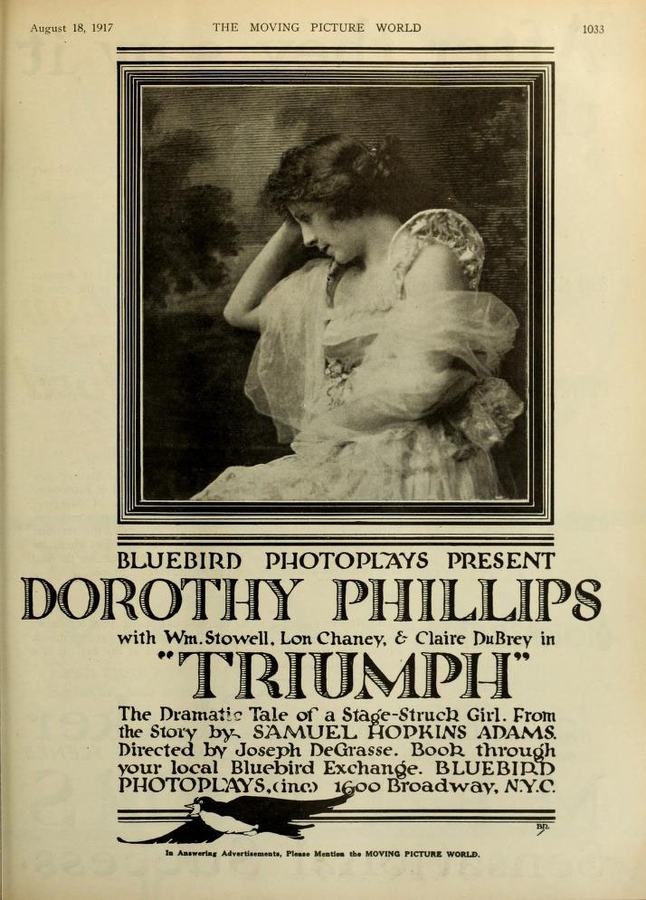
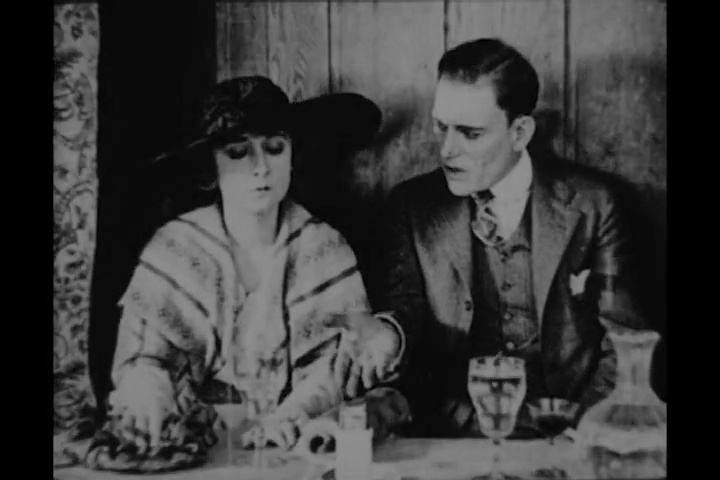
The narrative begins with an air of deceptive simplicity. Nell Baxter, portrayed with a delicate yet burgeoning intensity by Dorothy Phillips, represents the archetypal ingenue. Her meeting with the leading man at the train station is the catalyst for a journey that mirrors the treacherous path many young women took during the Great Migration to urban centers. Broadway, in this context, is depicted not as a beacon of artistic merit, but as a predatory ecosystem. The set design and cinematography emphasize the claustrophobia of the wings and the oppressive grandeur of the proscenium, suggesting that the stage is a cage as much as a platform.
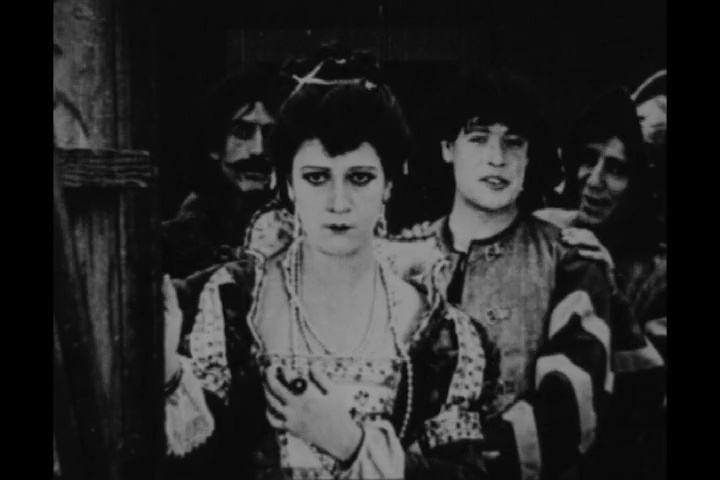
The antagonist, David Montieth, serves as a visceral manifestation of the 'casting couch' systemic abuse. In a performance that predates his rise as the 'Man of a Thousand Faces,' Lon Chaney (though here in a supporting capacity that nonetheless anchors the film's darker impulses) contributes to an atmosphere of pervasive dread. Montieth’s lascivious interest in Nell is not merely a subplot; it is the engine of the film’s conflict. Unlike the more overt villainy found in The Long Arm of the Law, Montieth’s coercion is social and professional, reflecting a sordid reality of the 1910s theatrical world that the writers, Samuel Hopkins Adams and Fred Myton, were clearly keen to critique.
As the plot thickens, the introduction of Paul Neihoff, the playwright, offers a counterpoint to Montieth’s cynicism. Neihoff represents the purity of the craft, yet he is ultimately portrayed as a tragic figure whose only recourse against the corruption of the industry is self-destruction. The romance between Nell and Neihoff is framed with a soft-focus lyricism that stands in stark contrast to the sharp, high-contrast shadows of Montieth’s apartment. When Montieth cancels the show upon discovering their love, the film shifts from a backstage drama into a proto-noir. The sequence in which Nell pleads for her career is a masterclass in silent-era tension. The lighting becomes increasingly expressionistic, casting long, skeletal shadows that prefigure the aesthetic of German Expressionism seen in later European imports like De lefvande dödas klubb.
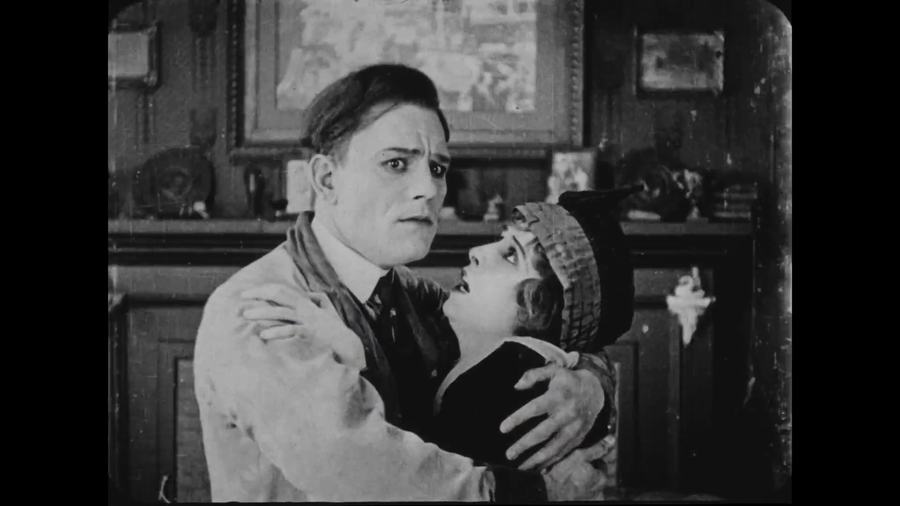
The violence that ensues—Nell’s stabbing of Montieth—is handled with a jarring abruptness. In 1917, the depiction of a woman taking such decisive, lethal action against a male oppressor was a potent image, even within the confines of a 'moral' story. The subsequent events, involving Neihoff’s suicide note and Nell’s decision to replace a stage prop with a functional dagger, escalate the stakes to a Shakespearean degree. The film within the film—the play Nell is performing—becomes an indistinguishable mirror of her reality. This blurring of lines between performance and existence is a theme that resonates through other works of the era, such as The Stolen Triumph, though Joseph De Grasse handles the psychological toll with a more nuanced hand.
The revelation that the entire tragic sequence was a fabrication—a story told by the leading man to dissuade Nell from her theatrical pursuits—is a polarizing narrative choice. From a modern perspective, it can feel like a 'shaggy dog' story, an evasion of the visceral consequences the film spent an hour establishing. However, within the context of 1917 social mores, this twist serves as a sophisticated framing device. It transforms the film into a didactic tool, a 'scared straight' tactic for the aspiring actress. It also allows the film to bypass the strict censorship of the time; by revealing that no one actually died and no 'virtue' was actually compromised, the filmmakers could explore darker themes of sexual coercion and murder while ultimately presenting a 'clean' resolution.
This meta-narrative structure invites comparison to The Mystery of Room 13, where the resolution of the plot hinges on a fundamental recontextualization of previous events. In Triumph, the twist forces the audience to re-evaluate everything they have seen. Was the leading man’s story an act of cruelty or a profound gesture of protection? The film leaves this question somewhat open, though the final shots suggest a return to domesticity that the era’s audiences would have found comforting, if not mandatory.
Technically, Triumph is a testament to the high production values of the Bluebird Photoplays brand. The use of tinting—sepia for the interiors, deep blues for the night scenes—adds a layer of emotional resonance that the surviving black-and-white prints often struggle to convey. The editing is notably fluid for the time, utilizing cross-cutting to build tension during the climax in a way that mirrors the innovations of D.W. Griffith, but with a more intimate focus on character psychology rather than historical sweep, as seen in Famous Battles of Napoleon.
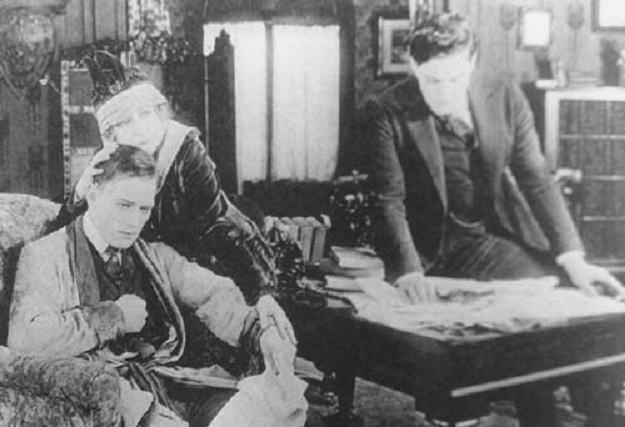
The ensemble cast is remarkably uniform in their restraint. Dorothy Phillips avoids the histrionic 'telegraphing' of emotions that plagued many silent performers. Her transition from the wide-eyed girl at the train station to the hollow-eyed tragic figure on the stage is achieved through subtle shifts in posture and gaze. William Stowell, as the playwright Neihoff, provides a sturdy, if somewhat melancholic, romantic lead. But it is the presence of the supporting cast, including Nigel De Brulier and John George, that fills the world of the theater with a sense of lived-in history. These actors often appeared in similar 'exotic' or high-drama roles, such as in Alien Souls, and their familiarity to 1917 audiences would have added a layer of professional verisimilitude to the backstage scenes.
To watch Triumph today is to witness a cultural artifact grappling with the dangers of the modern world. The film reflects a profound anxiety about the urbanization of America and the perceived moral decay of the entertainment industry. While films like The Scarlet Car dealt with the physical dangers of modern technology, Triumph deals with the spiritual and social dangers of the city. The 'triumph' of the title is inherently ironic; the only true victory is the one that Nell achieves by choosing to walk away from the stage entirely.
The film’s dialogue with other contemporary works is evident. Its focus on a woman’s honor and the lengths to which she must go to protect it echoes the themes of The Flame of Passion or To Have and to Hold. Yet, by couching its most sensationalist elements within a 'story-within-a-story,' it achieves a level of intellectual distance that its peers lack. It asks the viewer to consider the power of storytelling itself—how a narrative can be used to manipulate, to educate, or to save.
In conclusion, Triumph is a vital piece of silent cinema history. It showcases the early collaborative genius of the De Grasse-Phillips-Chaney trio, a creative unit that would produce some of the most compelling dramas of the late 1910s. While its ending may feel like a concession to the moralists of the era, the journey it takes to get there is fraught with a dark, atmospheric beauty that remains haunting over a century later. It is a film that demands to be seen not just as a relic, but as a sophisticated precursor to the psychological thrillers of the modern age, proving that the 'triumph' of art is often found in its ability to deceive as much as its ability to reveal.
For those interested in the broader landscape of 1917 cinema, this film serves as an excellent companion piece to the more traditional morality found in The Redemption of White Hawk or the lighthearted escapades of Sunshine Dad. It occupies a unique middle ground, where the shadows of the stage are never quite dispelled by the final curtain call.
IMDb —
1936
Community
Log in to comment.