DbcultAccessing Vault...
6.1/10
Senior Film Conservator
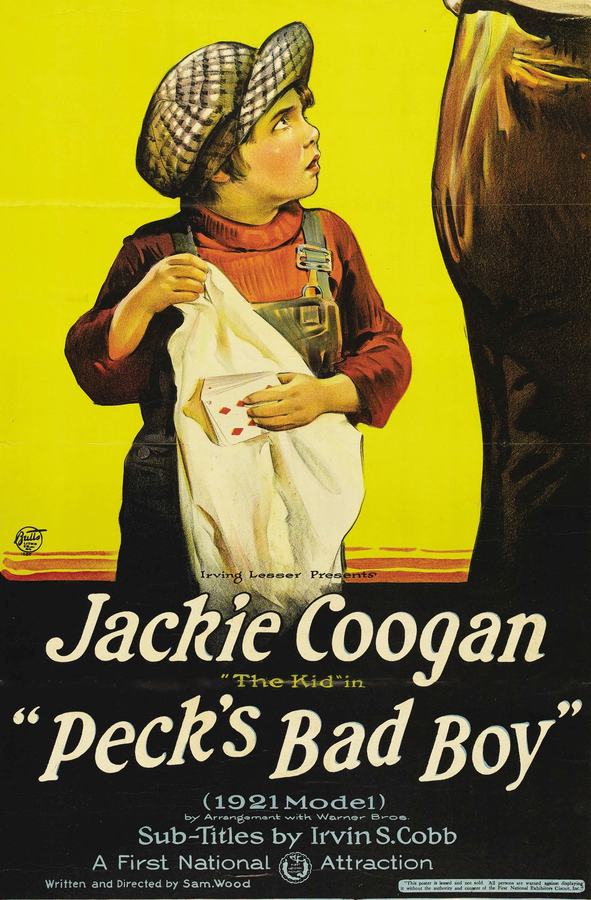
A definitive 6.1/10 rating for a film that redefined the boundaries of cult cinema. Peck's Bad Boy remains a cornerstone of transgressive art.
To watch Peck’s Bad Boy in the modern era is to witness the crystallization of a quintessentially American archetype: the lovable rogue in short pants. Released in 1921, shortly after Jackie Coogan skyrocketed to international fame in Charlie Chaplin’s The Kid, this film serves as a fascinating counterpoint to the sentimental pathos of his previous work. Here, the sentiment is stripped away, replaced by a frenetic, almost avant-garde commitment to chaos. Directed by Sam Wood, who would later helm classics like A Night at the Opera, the film manages to navigate the treacherous waters of early 20th-century morality with a wink and a nudge, presenting a world where childhood is not a state of innocence, but a tactical deployment of high-energy disruption.
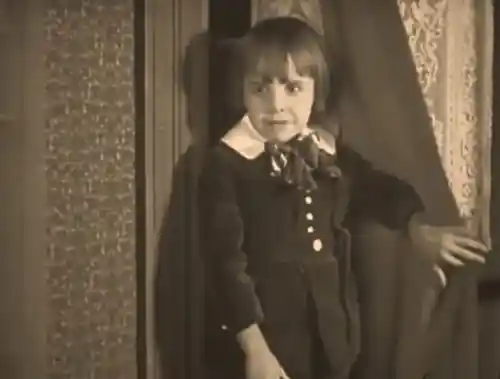
Jackie Coogan’s performance is nothing short of a masterclass in silent physical vocabulary. Unlike the heavy-handed melodrama found in contemporary pieces like Tender Memories, Coogan’s Henry Peck is a creature of pure impulse. His face is a canvas of mercurial shifts—one moment radiating angelic contrition, the next contorted in the wicked glee of a successful prank. It is this duality that anchors the film. We are not merely watching a child act; we are watching the birth of the first true child superstar navigating a role that demanded both comedic timing and a nuanced understanding of audience sympathy. The weight of the production rests entirely on his small shoulders, and he carries it with a charisma that outshines even the veteran character actors surrounding him.

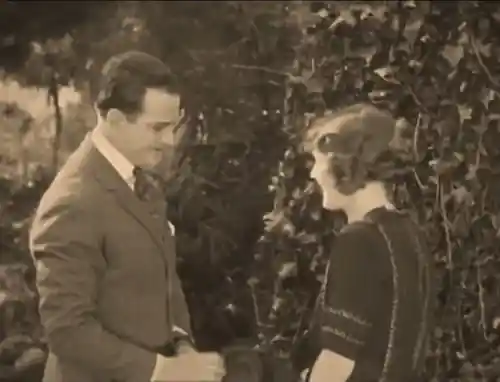
The plot, derived from George W. Peck’s popular newspaper sketches, is deceptively simple. Henry is a boy whose imagination is his greatest weapon and his father’s greatest liability. The film eschews a traditional three-act structure in favor of a series of escalating skirmishes. We see Henry disrupting his sister’s romantic aspirations, turning a peaceful household into a theater of the absurd. When he successfully maneuvers Dr. Martin into a jail cell, the film touches upon a darker vein of social commentary. It suggests that the rigid structures of adulthood—law, romance, reputation—are remarkably fragile when faced with the unvarnished honesty (or dishonesty) of a child. This theme of social fragility is also explored, albeit with far more gravity, in films like Sinners or the moralistic Gates of Brass, yet Peck’s Bad Boy manages to keep the tone buoyant through its relentless pacing.
Technically, the film is a product of its time, yet Sam Wood’s direction exhibits a burgeoning sophistication. The use of depth of field to capture Henry’s reactions in the foreground while chaos unfolds in the background is a precursor to the visual gags that would define the Golden Age of Comedy. The editing is crisp, maintaining a rhythm that mirrors the rapid-fire nature of Henry’s thoughts. While it lacks the sweeping cinematic ambition of Where the West Begins or the atmospheric dread of The Woman in 47, its intimacy is its strength. The domestic setting feels lived-in, a claustrophobic stage that amplifies the impact of every firecracker and spilled inkwell.

James Corrigan’s portrayal of the elder Peck is essential to the film’s success. He represents the immovable object to Henry’s irresistible force. Their relationship is a microcosm of the generational shifts occurring in the early 1920s. The father is a man of rules, of a Victorian sensibility that values appearances above all else. Henry is the harbingers of a new, more irreverent age. This conflict is a recurring motif in silent cinema, often seen in the struggle for liberty against oppressive systems, as depicted in Liberty. Here, however, the stakes are not political, but personal. The punishment Henry eventually faces is not just a consequence of his actions, but a desperate attempt by the old world to reclaim control over a future it no longer understands.
When comparing Peck’s Bad Boy to its contemporaries, one notices a distinct lack of the didacticism that plagued many films of the era. While The Failure or The Barrier often felt the need to lecture their audience on moral rectitude, Wood’s film is content to let the comedy speak for itself. It shares more DNA with the playful subversion of Flickorna i Åre than with the heavy-handed symbolism of L’âme du bronze. Even when compared to the grander spectacles like Thais or the high-society dramas of The Sporting Duchess, Peck’s Bad Boy stands out for its relatability. It taps into a universal truth about the friction of family life that remains potent over a century later.
The sequence involving Dr. Martin’s arrest is arguably the film’s narrative peak. It showcases Henry’s ability to manipulate the adult world’s assumptions. By framing the doctor, Henry isn’t just being mean-spirited; he is exposing the inherent absurdity of the legal system. This subversion of authority is a common thread in films that challenge the status quo, such as A Splendid Hazard. However, in Henry’s hands, it is not a political statement but a pragmatic solution to the problem of a sister’s annoying boyfriend. The brilliance of the writing—contributed to by Irvin S. Cobb and Sam Wood himself—lies in how they balance the gravity of a man being arrested with the lightness of the boy’s intent.
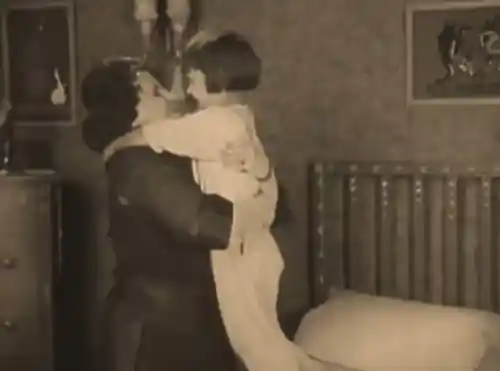
Lillian Leighton’s performance as the mother provides the film’s emotional core. In a world that views Henry as a nuisance, she sees the exuberant heart beneath the mischief. This dynamic of the misunderstood protagonist is a staple of early drama, reminiscent of the struggles in Her Triumph. Her quiet support balances the film, preventing it from becoming a mere catalogue of cruelties. Additionally, the inclusion of Queenie the Dog as Henry’s silent co-conspirator adds a layer of whimsical charm. The animal’s reactions often mirror the audience’s own—a mix of disbelief and begrudging admiration for the boy’s audacity.
Contextualizing Peck’s Bad Boy within the post-War landscape is vital. While the world was consuming newsreels like the Allies’ Official War Review, No. 3, there was a profound cultural desire for the domestic and the lighthearted. Henry Peck represented a return to a simpler, albeit more chaotic, form of conflict. The film’s success paved the way for future scamps, from Dennis the Menace to Kevin McCallister. It established the template for the 'disruptive child' genre, proving that audiences were hungry for stories that celebrated the rebellion of youth against the stifling expectations of adulthood.
Ultimately, Peck’s Bad Boy is a triumph of character over plot. While the individual pranks are memorable, it is the spirit of Henry Peck—his unquenchable thirst for life and his refusal to be tamed—that lingers in the mind. The film ends not with a total reformation, but with a temporary truce, acknowledging that as long as there are rules, there will be boys like Henry to break them. It is a vibrant, hilarious, and surprisingly insightful piece of cinema that deserves its place in the pantheon of silent comedy. For those seeking to understand the evolution of the American comedic identity, this 1921 gem is essential viewing. It is a reminder that even in the silent era, the loudest thing on screen was often the mischievous laughter of a child who knew exactly how to push every button in the house.
IMDb 6.7
1936
Community
Log in to comment.