DbcultAccessing Vault...
4.8/10
Senior Film Conservator
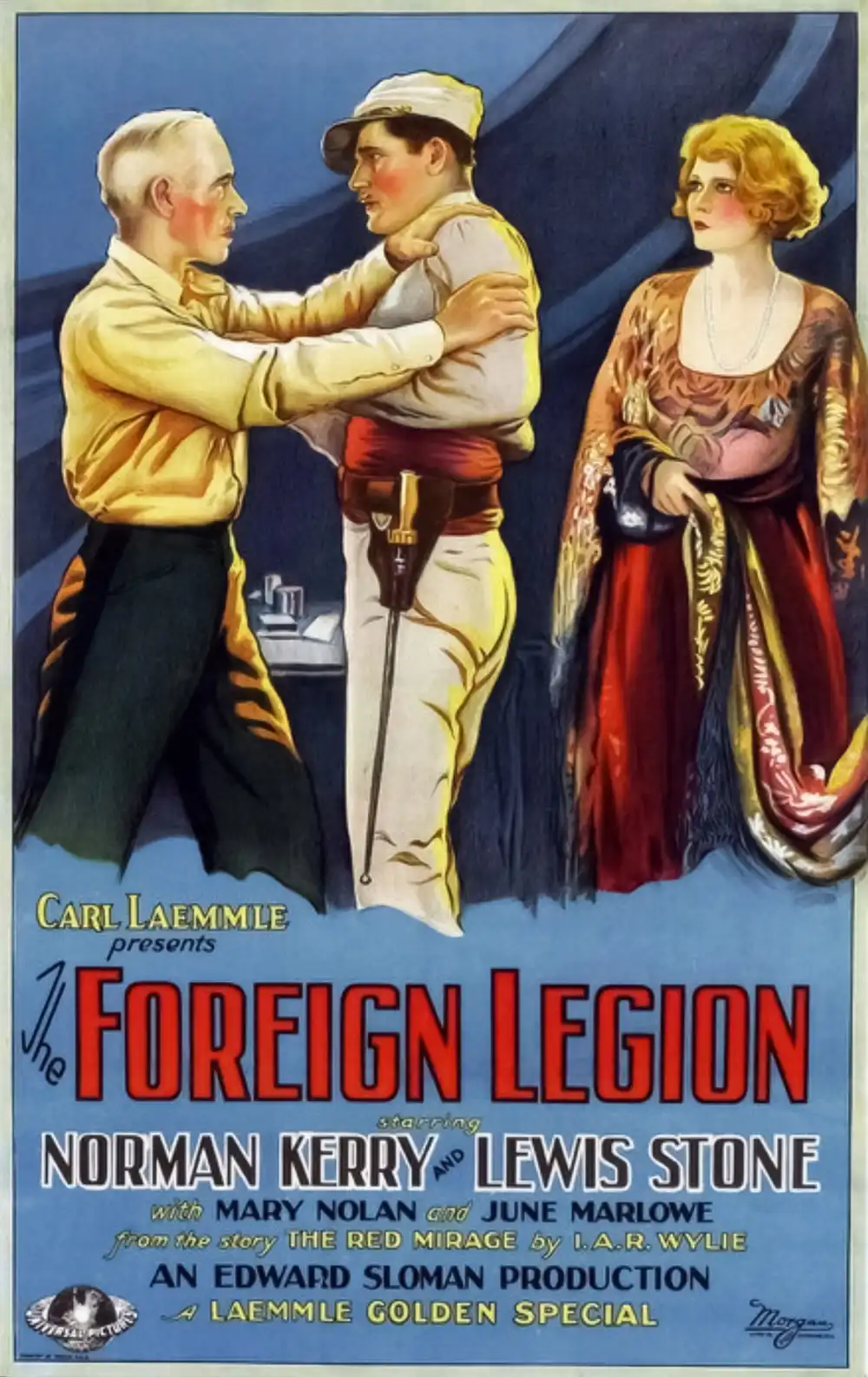
A definitive 4.8/10 rating for a film that redefined the boundaries of cult cinema. The Foreign Legion remains a cornerstone of transgressive art.
If you have about eighty minutes and a high tolerance for the kind of 'noble sacrifice' plots that fueled the late 1920s, The Foreign Legion is a decent way to spend an afternoon. It’s not going to change your life, and it definitely won't change your mind about silent melodramas, but it has a specific, dusty charm. It’s the kind of movie that works best if you’re already a fan of Lewis Stone or if you just enjoy watching people in heavy wool uniforms sweat in the desert. If you’re looking for a fast-paced action flick, you’ll probably hate this. It lingers. It mopes. It takes its sweet time getting to the point.
The whole thing kicks off with Norman Kerry as Richard, a guy who decides to take the rap for his brother’s gambling debts. It’s that classic silent movie logic where 'honor' means letting everyone think you’re a thief so your annoying sibling can keep his reputation. Kerry has one of those faces that was built for this era—wide eyes, a very expressive mustache, and a tendency to look like he’s about to burst into tears at any given moment. When he joins the Legion, the movie finally starts to breathe a little, mostly because we get out of the stuffy drawing rooms and into the sand.
There is a lot of sand. You can almost feel the grit in your teeth just watching the outdoor sequences. The cinematography in the desert shots is actually the best part of the film. There’s a specific shot where the troops are marching over a dune, and the way the light hits the ridges makes the whole world look like a jagged, hostile alien planet. It’s much more effective than the indoor sets, which occasionally look like they might tip over if someone closes a door too hard.
Lewis Stone shows up as the Colonel, and he is, as always, the most professional person in the room. He has this way of standing perfectly still while everyone else is flailing around him. There’s a scene where he’s looking at a map, and the camera just stays on his face for a few seconds too long. It’s supposed to show his inner turmoil, but it mostly just makes you realize how good he was at looking important while doing absolutely nothing. He carries a weight that Kerry lacks. When they’re in a scene together, you can see the difference between a 'movie star' and a 'character actor' who actually knows how to use the frame.
I noticed a weird bit of editing during the first barracks scene. There’s a cut from a close-up of a soldier laughing to a wide shot where everyone is suddenly dead silent and looking in the opposite direction. It’s jarring. It feels like a few frames were lost or someone in the editing room just gave up for a second. It’s those little imperfections that I actually love about these old prints. They feel human. They don't feel like they were polished by a thousand committee members.
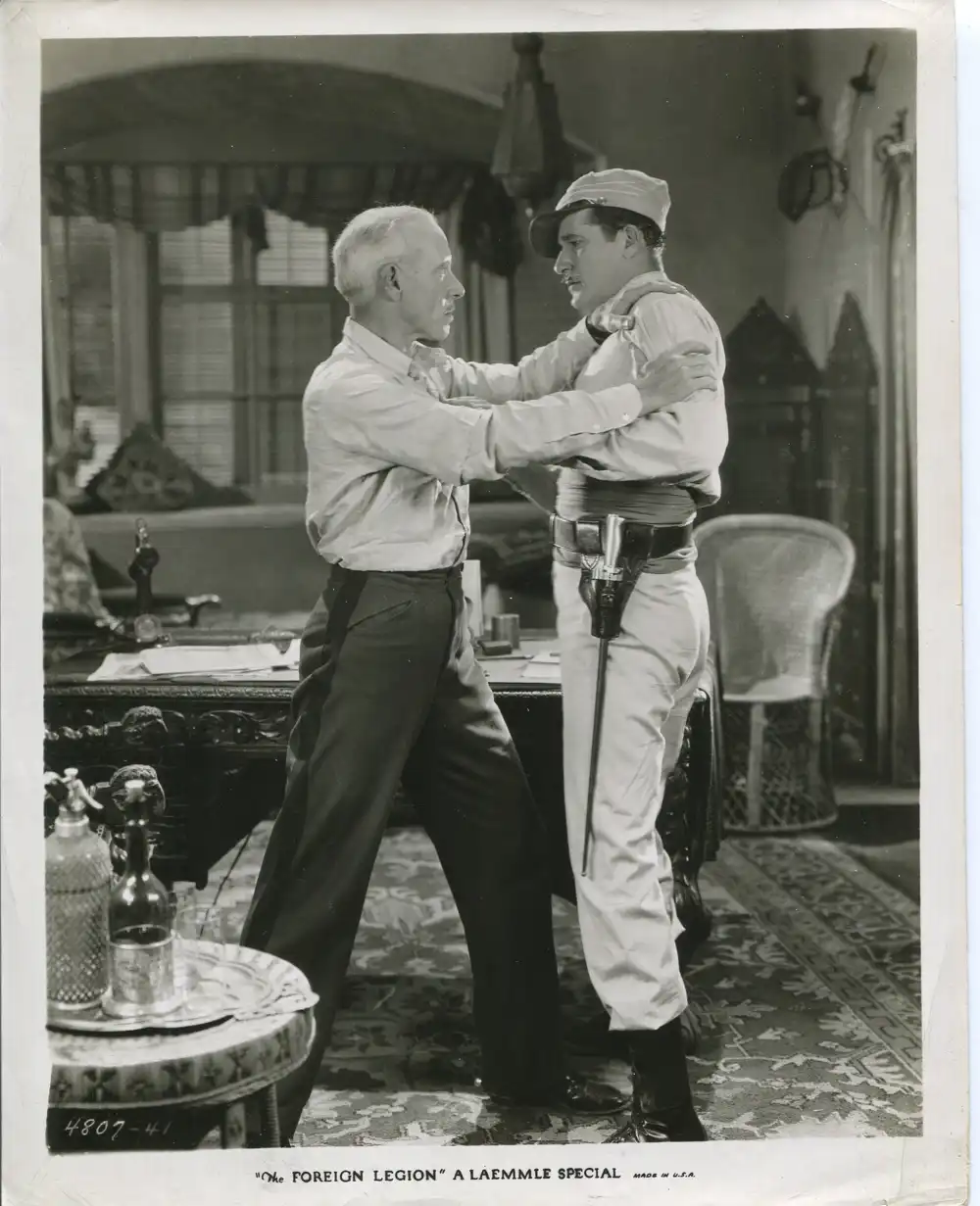
The romance side of things involves Mary Nolan, and while she’s striking to look at, her character doesn't have much to do besides look worried and wait for men to finish their conversations. There’s a moment where she and Kerry are talking by a stone wall, and the wind is blowing her hair across her face so much she can barely see. Most modern directors would have stopped and fixed it, but here they just kept rolling. It adds this strange, messy realism to a scene that is otherwise buried in stagey dialogue cards.
Speaking of the dialogue cards, some of them are incredibly wordy. They try to explain the complex family history in these giant blocks of text that take forever to read. I found myself checking my phone during a few of the longer expository stretches. The movie gets significantly better when it stops talking and just focuses on the atmosphere of the fort. There’s a background extra in one of the mess hall scenes who is just aggressively eating a piece of bread in the corner. I couldn't stop watching him. He was putting more effort into that bread than some of the leads were putting into their big emotional reveals.
If you've seen Beverly of Graustark, you know how these late-silent dramas can sometimes feel stuck between two worlds—trying to be epic but also trying to be intimate. The Foreign Legion struggles with that balance. The 'war' elements feel small, like there were only about twenty guys available for the big climax. The fight choreography is... well, it’s 1928. It’s a lot of guys grabbing each other’s shoulders and falling down in unison. It’s not exactly John Wick, but there’s a charm to the clunkiness of it.
The ending is exactly what you think it’s going to be. There are no surprises here. It leans into the heavy-handed irony of the father-son relationship in a way that feels a bit like a soap opera. But there’s a sincerity to it that’s hard to find now. They really believed in these stories of ruined men finding redemption in the dirt. It’s a far cry from the more cynical tone of something like The Talk of the Town, where the legal and social systems are treated with a bit more side-eye. Here, the Legion is this mystical place where you go to wash away your sins, even if the movie doesn't quite convince you that Richard’s sins were worth all the trouble in the first place.
One thing that really stuck with me was the costume design for the officers. Their uniforms are so crisp and white that they look completely absurd in the middle of a desert. It’s a great visual metaphor for how out of place these European aristocrats were in North Africa, even if the movie didn't necessarily mean it that way. Every time Lewis Stone walks out in a pristine white tunic, you wonder who is doing his laundry in the middle of a siege.
Is it a classic? No. Is it worth watching? If you like the era, yes. It’s a solid example of a genre that was about to be completely upended by the arrival of sound. You can see the silent film language reaching its limit here—trying to tell a big, sprawling story with just faces and shadows. Sometimes it works, and sometimes it just feels like people staring at each other in the dark.
IMDb —
1926
Community
Log in to comment.