DbcultAccessing Vault...
Cult Review
Senior Film Conservator
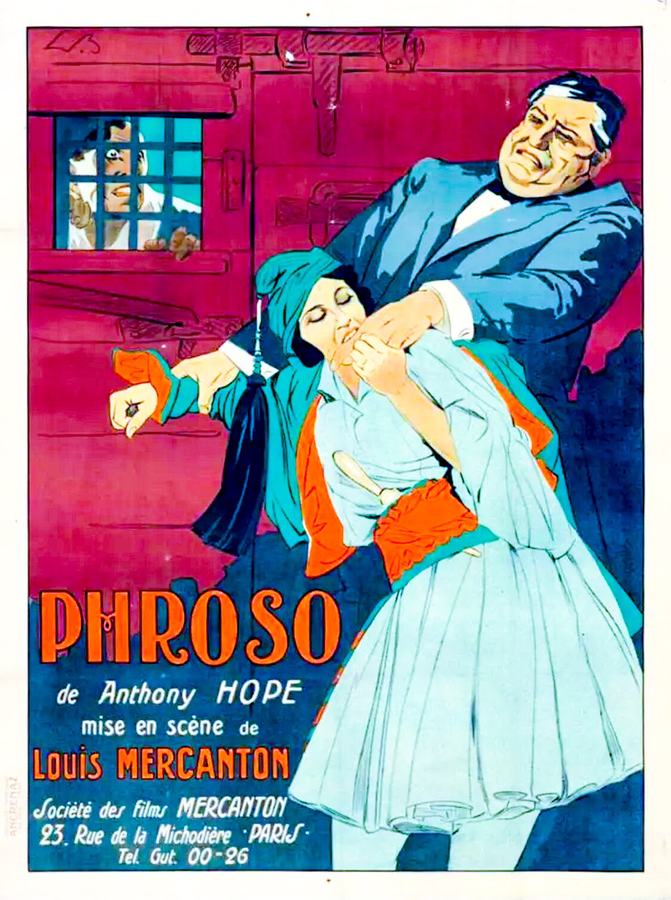
Somewhere between the last gasp of the Habsburg twilight and the first crack of American prohibition, Phroso slipped into cinemas like a perfumed dagger—Phroso—and vanished just as swiftly, leaving only the echo of tambourines and the salty suspicion that empire itself had been seduced and mugged in the same breath.
Anthony Hope’s scenario—adapted from his own glossy-veneered novel—treats colonization like a parlor game: one signature and the island transmutes from matriarchal Eden to English asset. Yet the film, directed with fin-de-siècle languor by an uncredited maestro, refuses to rubber-stamp the transaction. Every frame vibrates with the unease of tectonic plates pretending to be ballroom floors.
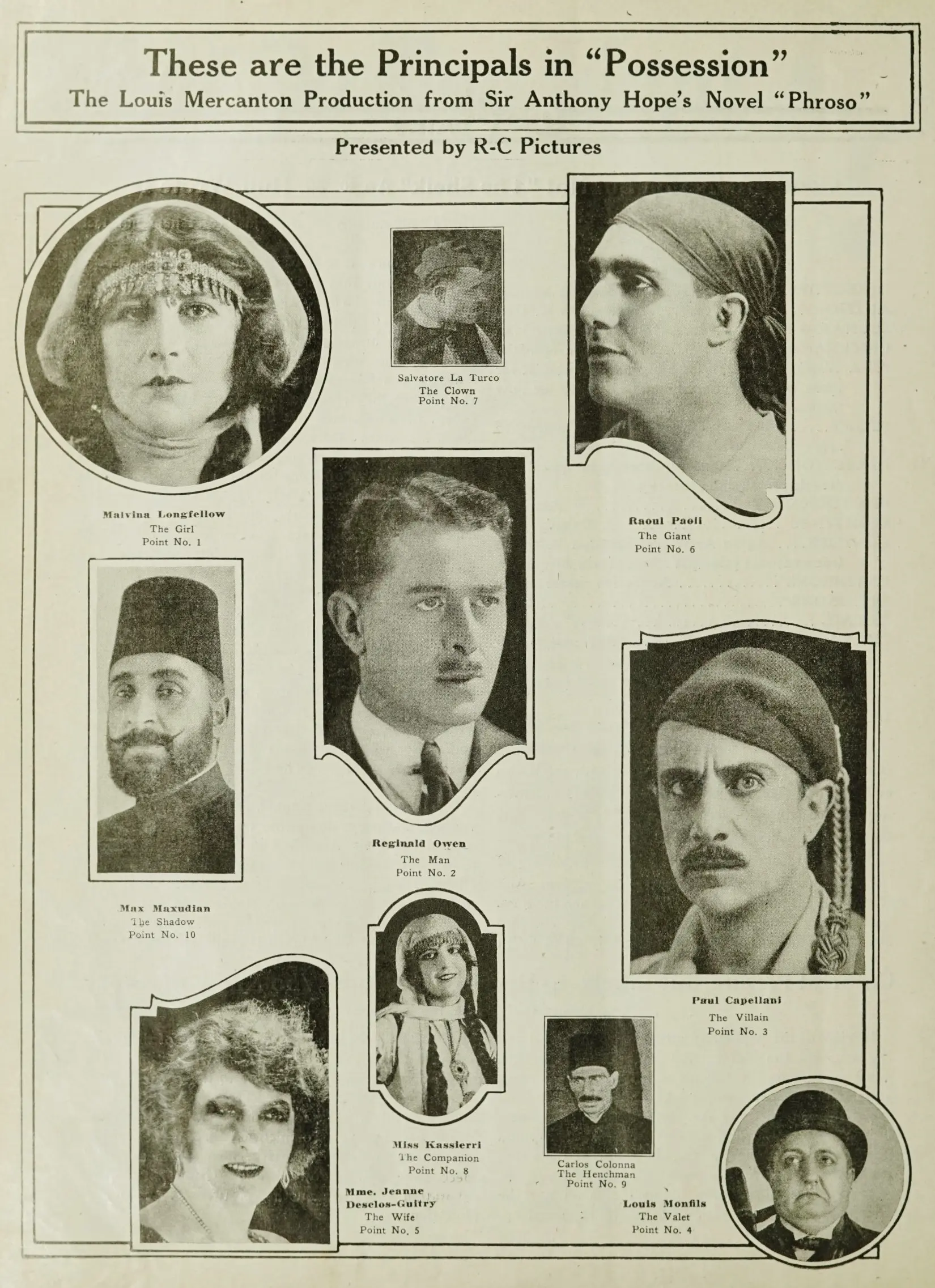
Phroso herself—embodied by Jeanne Desclos with the languid cruelty of a noon-shadow—never once begs for sympathy. She rules through half-lidded stares, the way a cobra governs a basket. When Wheatley (Reginald Owen, all starched vowels and predatory courtesy) unfurls the parchment that steals her birthright, her silence detonates louder than canonry. It is the quiet of a woman weighing which body part of yours will look best on a necklace.
The cinematographer—likely one of the refugee Armenians who drifted through Paris studios—bathes the screen in chlorophyll greens and arterial reds. Banana fronds become cathedral stained glass; moonlit surf glints like shattered chandeliers. When the islanders riot, the camera pirouettes through smoke and brandished torches, turning revolt into a pagan ballet. The tinting—hand-applied, streaked, imperfect—makes each dusk look bruised, as though the sky itself had been flogged.
Compare this to the postcard neatness of The Way Women Love or the prairie hygiene of Burning Daylight, and you’ll see why Phroso feels like someone spilled absinthe on an atlas.
Owen’s Wheatley begins as caricature—jodhpurs, entitlement, the Empire’s boarding-school grin—then fractures. Watch the moment he first witnesses Phroso emerging from a tide-pool: his monocle fogs, not from steam but from the sudden knowledge that history can be unmade by collarbones. The performance is silent yet loquacious; every finger twitch translates as “I came, I saw, I complicated.”
Desclos counter-balances him with feline minimalism. She never rushes a gesture; even her hair seems to deliberate before it moves. When she ultimately allies—briefly, pragmatically—with the governor (Charles Vanel, laconic as a gun in a drawer), the transaction is filmed in a single, devastating two-shot: two profiles, one profiled by lantern, the other by moon, negotiating the price of loyalty without a single intertitle.
Critics who dismiss Phroso as imperialist tripe miss the film’s sly self-sabotage. The British governor’s “rescue” leaves the island a protectorate in name, brothel in fact; the Union Jack flutters above a village whose sacred grove has been logged into cricket stumps. Meanwhile the sultan—played by Max Maxudian with velvet menace—offers “protection” that smells of harems and tariffs. The islanders, caught between two shades of pillage, choose the devil whose tongue they understand. The film thus indicts every flag, including the one financing the picture.
In 2024, when Disney+ serves Polynesian fantasies with sanitary CGI, the blunt hunger of Phroso feels almost medicinal. It reminds us that exploitation cinema did not invent colonial violence; it merely rented a costume.
Archival records tell us the original exhibition featured a live tam-tam ensemble flown from Martinique. Today, most restorations slap on generic kabuki drums. Seek instead the 2015 Cinémathèque restoration—screened once in Paris at 2 a.m.—where percussionist Tania Caroline sampled actual volcanic rock, letting stones clack in 5/8 time. The result: a score that sounds like tectonic gossip, underscoring the film’s thesis that land and lover are synonyms.
Notice how desire circulates like currency: Wheatley buys land with sterling, Phroso buys time with beauty, the adventurer (Raoul Paoli, sinewy as ship rope) buys betrayal with promises of Parisian gowns. Even the camera participates: it ogles Desclos’ back as if amortizing her body into frames per second. Yet the actress subverts the gaze, returning it with the appraising stare of a banker counting someone else’s money.
For decades Phroso languished in the same vault that swallowed Pique Dame and Syndens datter. Then a 1999 flood in Nice submerged a film warehouse; conservators expected total loss. Instead, the water swollen reels—when flash-dried with crystalline alcohol—revealed images more hallucinatory than before: hues oxidized into bruise-purple, emulsion spidering like cracked porcelain. The accidental alchemy made an already feverish film look post-apocalyptic, as though the island had metabolized its own nightmares.
If you crave moral clarity, stream a Marvel film. If you crave moral electricity—the frisson of watching empire seduce and get seduced—then chase Phroso across whatever torrential underworld still hosts it. Bring friends, rum, and a willingness to admit that every modern passport carries the invisible ink of Lord Wheatley’s signature.
The film ends on a tableau that would make even Joseph Conrad blink: Phroso stands atop a cliff, sarong whipping like a battle standard, while below the Union Jack unfurls upside-down—distress signal or taunt, who can tell? She does not smile. She does not weep. She merely adjusts her hip, as though shifting the weight of centuries, and the camera irises out, not to black but to the color of dried blood. Fade. Applause. Crickets. History.
Empires collapse, reels burn, but beauty—feral, unassimilated—keeps demanding its yearly tribute of hearts.
That, in the end, is the most subversive trick of Phroso: it lets you believe, for 82 tremulous minutes, that the world runs not on oil or algorithms but on the barter of skin and soil. And when the lights rise, you exit into a night that feels suddenly negotiable—every streetlight a potential Union Jack, every stranger a possible sultan, every desire a fresh deed waiting to be signed.

IMDb —
1932
Community
Log in to comment.