DbcultAccessing Vault...
Cult Review
Senior Film Conservator
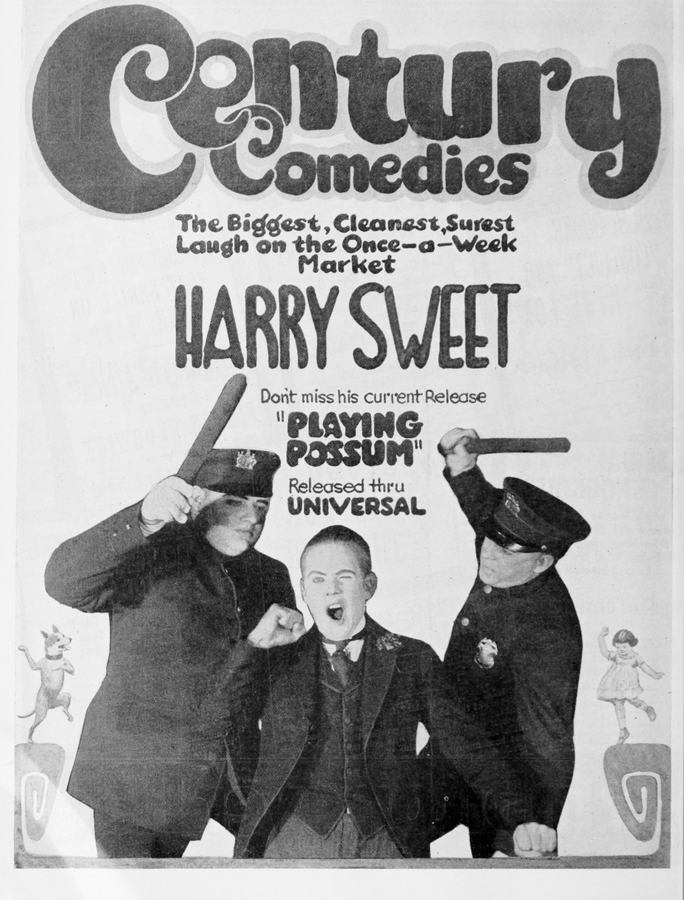
There are films that merely entertain, and then there are those that, through their very fabric, challenge our perceptions, even when cloaked in the guise of slapstick. Alfred J. Goulding’s 1919 cinematic offering, Playing Possum, is one such rarity. It’s a work that, despite its seemingly straightforward premise of a man attempting to end his life, delves into the profound absurdities of existence with a comedic precision that belies its silent-era origins. To dismiss it as just another period piece of physical comedy would be to overlook its intricate dance between the tragic and the farcical, a tightrope walk performed with remarkable dexterity by its star, Harry Sweet.
The narrative thrust of Playing Possum is deceptively simple: Harry, our protagonist, finds himself in the unenviable position of having lost a domestic dispute. His wife, portrayed with a certain understated exasperation by Bartine Burkett, has delivered the definitive last word, leaving Harry in a state of wounded pride and existential despair. It’s a relatable human moment, magnified to an almost cosmic scale. What follows is not a descent into melodrama, but an ascent into the sublime ridiculousness of a man determined to shuffle off this mortal coil, only to be repeatedly, hilariously, thwarted by a universe seemingly intent on keeping him alive.
Harry Sweet’s performance is the linchpin of this comedic engine. Sweet, a name that perfectly encapsulates the ironic sweetness of his character’s plight, navigates the treacherous landscape of self-destruction with a blend of earnestness and sheer physical comedic genius. His attempts are not born of deep-seated psychological torment, but rather a petulant, almost childish, reaction to a minor defeat. Yet, the conviction with which he pursues his grim goal is what elevates the comedy beyond mere pratfalls. We see the gears turning in his mind, the meticulous (and often ludicrous) planning, only for fate to intervene with a perfectly timed gust of wind, a misplaced object, or an oblivious passerby. This isn't just a man falling; it's a man trying to orchestrate his own end and failing spectacularly, again and again.
Goulding, as the writer, crafts a scenario that is both predictable in its outcome (Harry won't succeed immediately) and utterly unpredictable in its methods. The escalation of Harry's suicide attempts is a masterclass in comedic pacing. He starts with what one might imagine are conventional methods, then progresses to increasingly elaborate and desperate measures. Each failure isn't just a missed opportunity; it's a setup for the next, more outrageous attempt. The film doesn't linger on the morbid; instead, it uses the morbid as a springboard for visual gags and an exploration of the inherent irony of human endeavors.
The film’s exploration of its central theme—the futility of human will against the capriciousness of fate—is surprisingly nuanced for a silent comedy. Harry's 'charmed life' isn't a blessing; it's a curse. He’s trapped in a cycle of wanting to die and being unable to, a Sisyphean struggle played for laughs. This thematic depth is what distinguishes Playing Possum from more straightforward slapstick. It asks us to ponder the nature of control, or rather, the illusion of it. Just when Harry gives up, when he resigns himself to living, fate delivers the very blow he couldn’t achieve himself. It's a punchline delivered with the precision of a seasoned comedian, yet it carries the weight of a philosophical treatise on destiny.
Visually, the film likely relied on the standard techniques of its era: exaggerated expressions, rapid-fire editing for comedic effect, and inventive use of practical effects to convey the various near-death experiences. The effectiveness of these elements, even a century later, speaks volumes about the timelessness of well-executed physical comedy. Goulding's direction ensures that the visual gags land with maximum impact, never overstaying their welcome, and always propelling the narrative forward. The contrast between Harry's grim determination and the lighthearted, often chaotic, world around him creates a delightful tension.
Comparisons to other silent films are inevitable, and in the realm of physical comedy and daring stunts, one might naturally think of films like Thrills. While Thrills might focus more on the spectacle of danger, Playing Possum grounds its danger in the character's internal, albeit comically misguided, motivation. The physical comedy here is less about awe-inspiring acrobatics and more about the comedic timing of failure. Harry Sweet isn't a stuntman; he's a man whose every attempt to end it all becomes an accidental display of comedic resilience. This distinction is crucial; it elevates the film from mere spectacle to character-driven comedy.
The film also touches upon themes of domestic strife, albeit lightly. The initial tiff with his wife is the catalyst, but the film doesn't delve into marital dynamics. Instead, it uses it as a universal trigger for Harry's extreme reaction. This allows the audience to project their own experiences with petty arguments onto the narrative, making Harry's despair, however exaggerated, oddly relatable. It’s a testament to the film’s clever writing that such a small initial conflict can lead to such grand, absurd consequences.
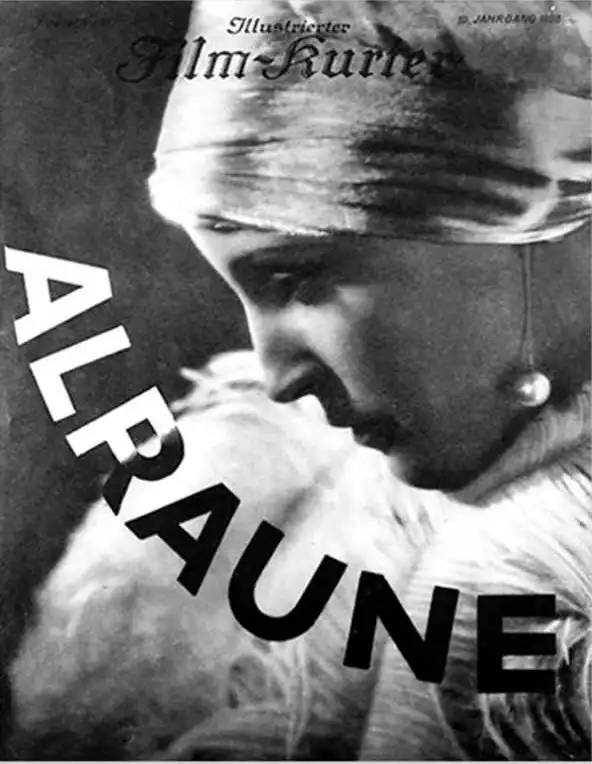
One could also draw a thematic parallel to more existential works, even those far removed in genre or era. The idea of a character battling an indifferent or actively contrary universe is a powerful one. While films like Malombra or Die ewige Nacht explore darker, more Gothic or dramatic interpretations of fate, Playing Possum offers a comedic counterpoint, suggesting that even our most profound desires can be met with a cosmic shrug and a pratfall. It’s a refreshing take on the human condition, finding humor in the very things that often drive us to despair.
The film's ending is its most brilliant stroke, a cynical, yet utterly hilarious, twist of fate. Harry, having exhausted every possible avenue of self-destruction, gives up. He resolves to live, to let 'well enough alone.' It is precisely at this moment of surrender, when he has accepted his lot, that the universe, with its perverse sense of humor, delivers the very outcome he had so ardently pursued. A car, seemingly out of nowhere, strikes him. This isn't just a comedic payoff; it's a profound statement on the unpredictable nature of life and death, and the ultimate lack of control we possess. It's the ultimate 'gotcha' moment, a final, sardonic laugh at Harry's expense, and by extension, at the human struggle against an indifferent cosmos.
The performances by Harry Sweet and Bartine Burkett, though limited by the conventions of silent film acting, are effective. Sweet’s physical expressiveness carries the bulk of the emotional and comedic weight, his wide eyes and exaggerated movements perfectly conveying Harry’s escalating frustration and eventual resignation. Burkett, in her role, offers a solid, if less flamboyant, counterpoint, embodying the domestic reality from which Harry desperately, and comically, tries to escape. Their dynamic, though brief, sets the stage for Harry’s subsequent misadventures.
Alfred J. Goulding’s contribution as a writer is undeniable. To conceive of such a plot, where the core dramatic tension (suicide attempts) is consistently undercut by comedic failure, requires a keen understanding of both human psychology and comedic timing. The script, even without dialogue, tells a compelling and humorous story through action and consequence. It’s a testament to the power of visual storytelling, demonstrating that complex ideas can be conveyed without a single spoken word, relying instead on the universal language of laughter and irony.
In the broader context of silent cinema, Playing Possum stands out for its dark humor and its willingness to tackle a morbid subject with such a light touch. While many silent comedies focused on chases, mistaken identities, or romantic entanglements, this film delves into a more existential realm, albeit through a comedic lens. It's a reminder that even in the early days of filmmaking, creators were pushing boundaries, exploring complex themes, and finding innovative ways to engage audiences beyond simple spectacle. Its enduring appeal lies in its timeless message: life often has a strange, ironic way of playing out, regardless of our intentions.
The film’s legacy, though perhaps not as widely celebrated as some of its contemporaries, is significant. It represents a particular strain of silent comedy that wasn't afraid to be a little bit dark, a little bit cynical, and a whole lot clever. It invites us to laugh not just at Harry's misfortunes, but at the grand, cosmic joke that life sometimes plays on us all. It's a film that, despite its age, feels remarkably modern in its sensibility, its ironic conclusion resonating with a timeless truth about human agency and destiny. For anyone interested in the evolution of comedy, the nuances of silent film acting, or simply a good, dark laugh, Playing Possum is an essential watch, a hidden gem that continues to shine with its unique blend of despair and delight.
The ingenuity of the various methods Harry employs, from cars to trains to roughnecks, speaks to a creative wellspring that never runs dry. Each attempt is distinct, preventing the humor from becoming repetitive. The viewer is constantly surprised by the new scenarios Goulding and Sweet devise. This commitment to variety, coupled with the consistent underlying theme of ironic failure, ensures that the film maintains its comedic momentum right up to its shocking, yet perfectly fitting, conclusion. It's a testament to the collaborative genius of its creators, who understood that even the darkest impulses can be mined for the richest comedic gold. The film, in its essence, is a profound statement on the human condition, wrapped in the delightful, chaotic package of a silent-era farce. It demonstrates that true artistry can emerge from the simplest of premises, transforming a domestic squabble into a universal commentary on fate, free will, and the ultimate punchline of life.
The film's satirical edge is quite sharp. It doesn't just present a series of unfortunate events; it actively lampoons the very human tendency to overreact, to seek extreme solutions to comparatively minor problems. Harry's decision to end his life over a marital tiff is an over-the-top reaction, and the film uses this exaggeration to highlight the absurdity of such a mindset. Yet, it does so with a surprising tenderness, never truly mocking Harry, but rather, inviting us to empathize with his peculiar brand of desperation. This delicate balance is what gives Playing Possum its enduring charm and its place as a fascinating artifact of early cinematic comedy.
The technical aspects, while perhaps primitive by today's standards, were state-of-the-art for 1919. The use of location shooting, the staging of complex stunts (or near-stunts), and the seamless integration of visual gags all speak to a burgeoning cinematic language. Goulding's vision brought these elements together to create a cohesive and highly entertaining whole. It's a reminder that even without the benefit of sound or sophisticated special effects, filmmakers could craft narratives that were both emotionally resonant and visually dynamic. The film’s pacing, a crucial element in comedy, is expertly handled, allowing each gag to land without rushing, yet never dragging. This mastery of rhythm is a hallmark of great silent comedies, and Playing Possum exemplifies it beautifully.
In conclusion, Playing Possum is far more than a historical curiosity; it is a vibrant, darkly humorous exploration of fate, free will, and the absurdities of life and death. Harry Sweet’s performance is a masterclass in physical comedy, imbued with a surprising depth of character. Alfred J. Goulding’s writing and direction orchestrate a symphony of ironic misfortunes that culminate in one of the most memorable and cynical endings in silent cinema. It’s a film that continues to provoke thought and laughter in equal measure, cementing its status as an overlooked gem that deserves renewed appreciation for its audacious humor and profound, albeit comedic, philosophical underpinnings. Its legacy is not just in its laughter, but in its audacious willingness to stare into the void and find a punchline.
IMDb —
1925
Community
Log in to comment.