DbcultAccessing Vault...
5.2/10
Senior Film Conservator
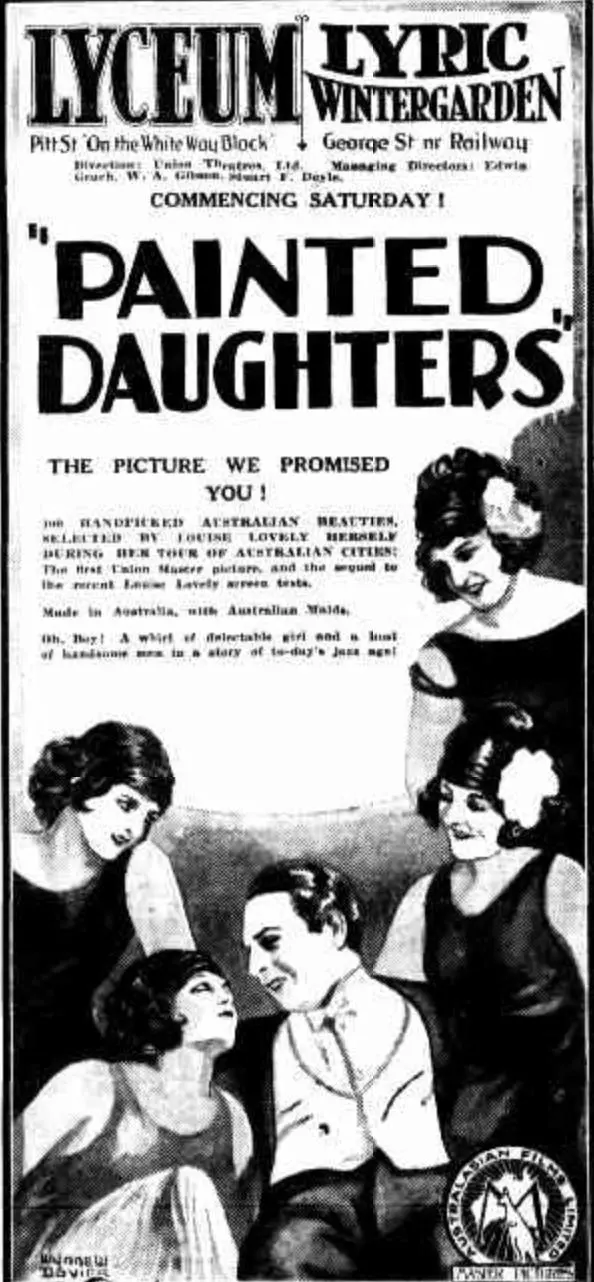
A definitive 5.2/10 rating for a film that redefined the boundaries of cult cinema. Painted Daughters remains a cornerstone of transgressive art.
Is Painted Daughters worth your time in the modern era? Short answer: yes, but primarily as a vibrant, somewhat chaotic window into a forgotten chapter of Australian cinema history. It is a film for the historians, the lovers of the 'Roaring Twenties,' and those who appreciate the raw ambition of early independent filmmaking; it is definitively not for those who require a tight, three-act structure or the polished continuity of a Hollywood studio production.
The film exists as a curious bridge between the Victorian stage and the modern screen. By centering its story on the stars of the musical 'Flora Dora,' it acknowledges the theatrical roots of its audience while desperately trying to embrace the 'flapper' craze that was then sweeping America. It is clunky. It is occasionally incoherent. But it is also undeniably alive.
This film works because it captures the authentic, unvarnished energy of 1920s Australian social life, offering a rare glimpse into a culture trying to define its own sense of 'cool' against a backdrop of post-war liberation.
This film fails because its episodic nature often feels more like a series of loosely connected vignettes than a cohesive narrative, leading to a pacing that stutters during the transition between party scenes.
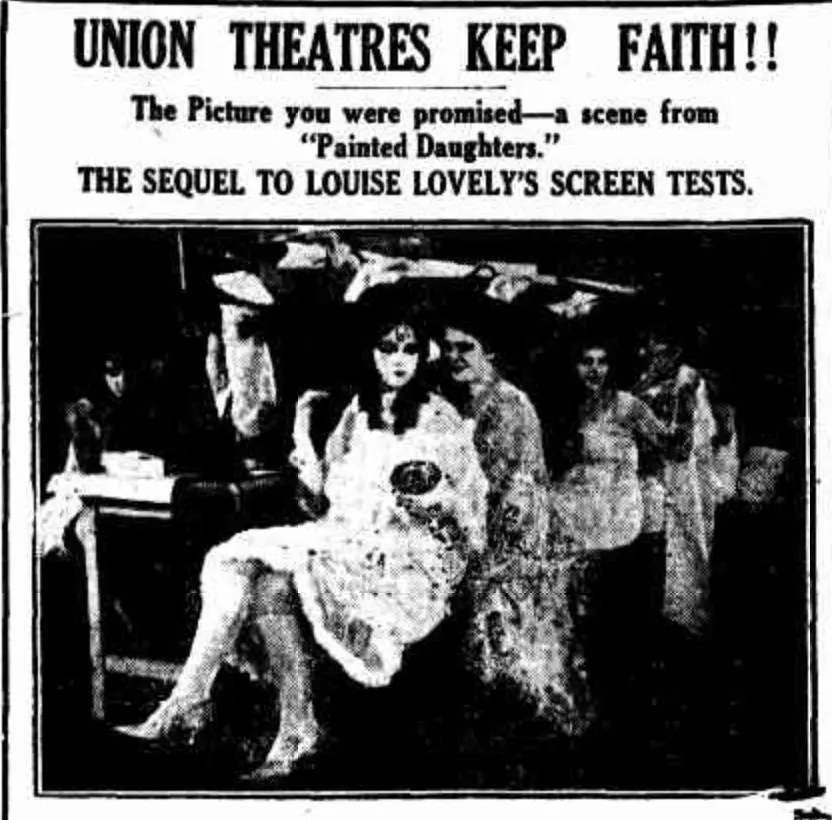
You should watch it if you are fascinated by the evolution of the 'New Woman' on screen or if you want to see how Australian filmmakers attempted to compete with the high-gloss output of the American Jazz Age.
The decision to use the 'Flora Dora' (or Florodora) girls as a narrative hook was a stroke of marketing genius in 1925. The musical was a global phenomenon, and by reuniting these 'stars,' the film taps into a specific kind of celebrity worship that feels surprisingly modern. In one particular scene, the juxtaposition of the older performers' grace against the frantic, almost spasmodic dancing of the younger flappers tells a story that the dialogue (or intertitles) barely needs to touch.
It is an observation on the passage of time. We see the original stars looking on with a mix of horror and envy as the 'Painted Daughters'—the younger generation—embrace a level of public intoxication and social freedom that would have been unthinkable a decade prior. This isn't just a party movie; it's a film about the death of Victorian decorum. Unlike The House Built Upon Sand, which deals with more rigid moral structures, Painted Daughters feels like it’s actively trying to break the furniture.
Fernande Butler and Phyllis Barry provide the film's emotional anchors. Barry, in particular, exhibits the kind of screen presence that would eventually lead her to Hollywood. There is a specific moment during a drunken party sequence where Barry’s character stops smiling for just a second, and you see the exhaustion behind the 'party girl' persona. It is a subtle piece of acting in a film that is otherwise quite loud.
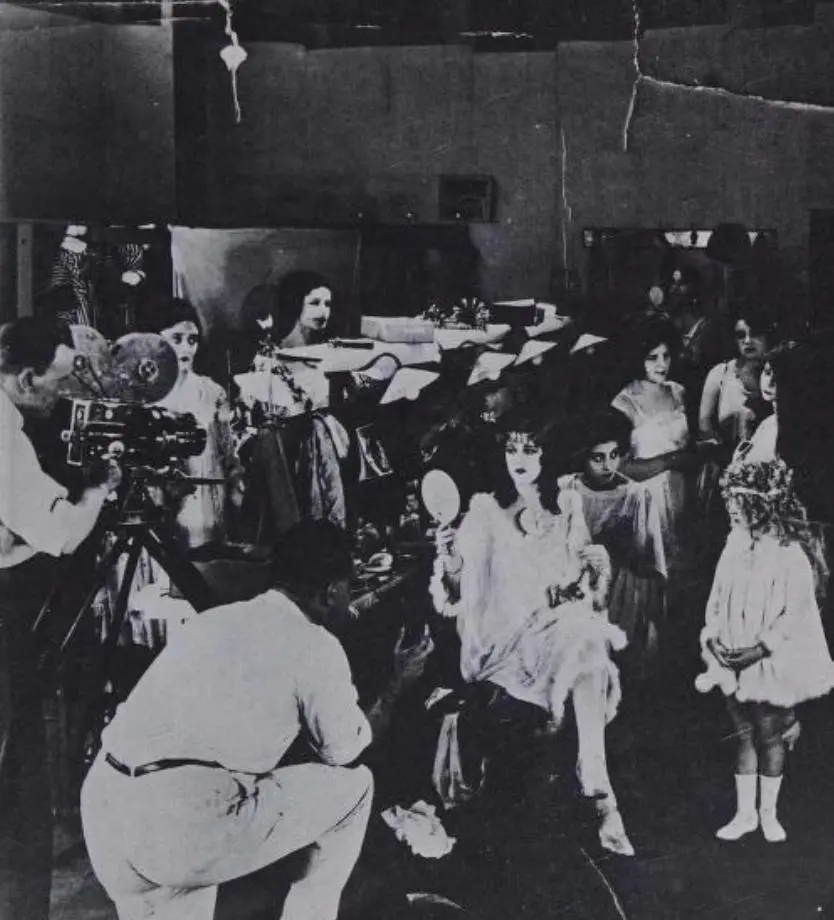
The supporting cast, including Martin Walker and Belle Bates, fill out the world with varying degrees of success. Some of the performances feel trapped in the exaggerated gestures of the silent era, but others feel shockingly naturalistic. The 'drunken parties' mentioned in the plot summary are not just plot points; they are the film's primary mode of expression. The way the actors interact with the space—sprawling over chairs, clinking glasses with a frantic desperation—suggests a director who encouraged a certain level of improvisational chaos.
While it lacks the gothic intensity of European imports like I promessi sposi, Painted Daughters makes excellent use of its Australian locations. The lighting in the ballroom scenes is surprisingly sophisticated for a production of this scale. There’s a shimmering quality to the sequins and the glassware that creates a dreamlike atmosphere, contrasting sharply with the flat, harsh light of the outdoor sequences.
The camera movement is conservative, but the framing is often inspired. The director uses deep focus to show the 'old guard' in the foreground while the 'new generation' blurs into a mess of motion in the background. It’s a visual representation of the generational gap that defines the film. It doesn’t have the technical polish of A Man and His Money, but it possesses a grit that feels more honest.
Yes, Painted Daughters is worth watching for anyone interested in the history of the 'Flapper' subgenre or Australian silent cinema. While the plot is thin, the film serves as a vital cultural document of 1925. It offers a unique perspective on the Jazz Age, proving that the desire for rebellion and modernism was a global fever, not just an American one. If you can forgive its technical limitations, you will find a film that is bursting with personality and historical significance.
When compared to other films of the era like Wild Women, Painted Daughters feels significantly more grounded in a specific social reality. While many flapper films were purely escapist fantasies, this film feels like it’s actually reporting from the front lines of a social revolution. There is a sense of danger in the 'drunken parties' that feels less like a Hollywood trope and more like a genuine observation of 1920s Sydney.
The film also avoids the heavy-handed moralizing found in The City of Silent Men. It doesn’t necessarily punish its characters for their excesses; it simply observes them. This lack of a clear 'moral' makes the film feel surprisingly modern. It’s a bit of a mess, frankly, but it’s a mess that reflects the era it was born into.
Pros:
Cons:
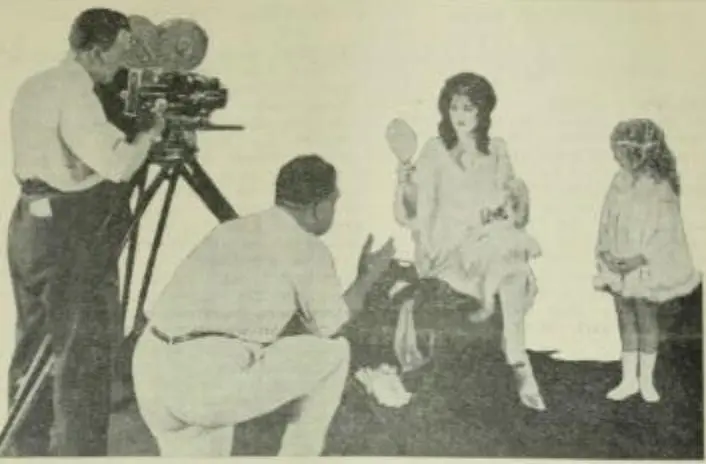
One cannot discuss Painted Daughters without acknowledging the sheer difficulty of its production. Australian cinema in the 1920s was a David-and-Goliath battle against Hollywood imports. Every frame of this film represents a struggle for resources. You can see it in the sets—some are lavish and detailed, while others look like they were borrowed from a local community theater. This inconsistency gives the film a 'punk rock' energy. It’s a film that shouldn’t exist, yet it does.
The editing is another area where the film’s age shows. Transitions are often abrupt, and the use of intertitles can feel intrusive. However, there is a rhythmic quality to the editing during the dance sequences that suggests an early understanding of montage. It’s not Pasteur in terms of clinical precision, but it has a heartbeat.
What does the title actually mean? To be 'painted' in 1925 was to wear makeup—a hallmark of the flapper and a sign of moral laxity to the older generation. The 'daughters' are the ones who have inherited a world their mothers don't recognize. This thematic core is what elevates the film above a mere 'party movie.' It’s about the friction between the past and the future.
In many ways, Painted Daughters is a more honest depiction of the era than the polished dramas like If Marriage Fails. It doesn’t try to be a grand tragedy; it’s content to be a snapshot. A loud, gin-soaked, sequin-covered snapshot.
Painted Daughters is a beautiful, flawed relic. It works. But it’s flawed. It captures a moment in time when the world was changing so fast that the only way to cope was to dance until you dropped. It lacks the narrative sophistication of modern cinema, but it replaces it with a raw, infectious enthusiasm for the medium of film itself. If you want to see the birth of the 'modern' Australian woman on screen, this is where you start. It is a film that deserves to be remembered, not just as a curiosity, but as a bold attempt to define a national identity through the lens of a jazz-fueled party. It is a messy, vibrant, and essential piece of cinematic history.
IMDb —
1921
Community
Log in to comment.