DbcultAccessing Vault...
Cult Review
Senior Film Conservator
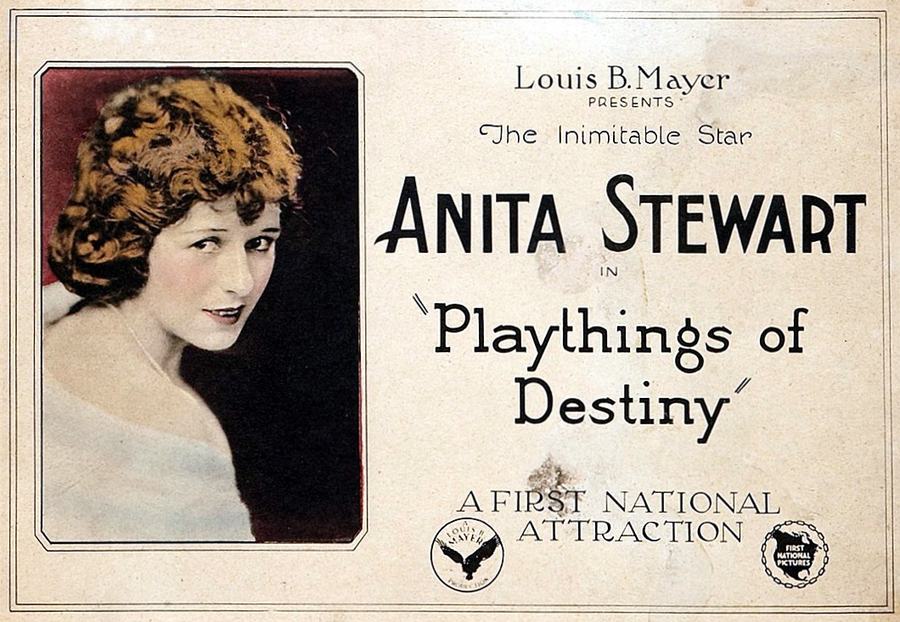
Snowflakes as shrapnel, monsoons as confessional—this antique fever dream still scalds a century later.
There is a moment, roughly two-thirds through Playthings of Destiny, when the celluloid itself appears to perspire. Torrents of Jamaican rain lash the veranda rails; kerosene lamps gutter; Anita Stewart’s irises reflect twin cyclones of guilt and revelation. It is 1921, yet the tremor in her lower lip feels encoded in 4K. Viewers who arrive expecting polite Edwardian histrionics are instead sucker-punched by a film that treats emotion like nitroglycerin—fragile, volatile, capable of levelling geography.
Director Laurence Trimble, better known for canine adventures like Strongheart, here unleashes a triptych of climates that function as moral barometers. Ontario’s implacable whiteout embodies the Puritan absolutism of sin; Jamaica’s torrid lushness becomes the fever ward where repression is cauterised. Between the two lies a steamship passage barely hinted at on-screen, yet its nautical ellipsis infects the narrative with a lingering salt-rot dread. When Julie—petticoats cinched like tourniquets—steps onto the Kingston quay, the camera tilts upward to catch coiled sugar-cane stalks that resemble cat-o’-nine tails. The empire, it whispers, disciplines its women in more ways than one.
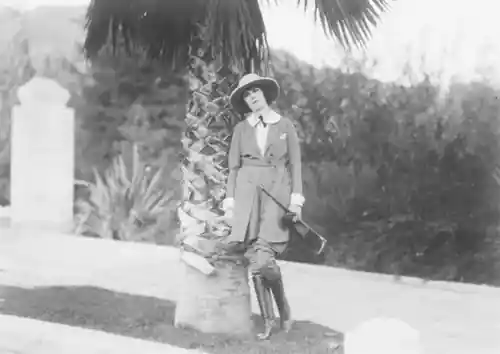
Geoffrey Arnold (Walter McGrail) arrives first as seducer, then as penitent ghost. His cheekbones could slice contract paper; his moustache droops like a spent candle. One thinks of As God Made Her, where a similar cad is punished by syphilitic ruin, yet Trimble refuses such moral absolutism. Geoffrey’s injury during the hurricane—an oak beam pinning his femur—reads less like divine retribution than accidental absolution. Likewise, Hubert Randolph (Herbert Rawlinson) is no mere beta-provider; his courtroom diction and trembling glove-hands suggest a man erotically aroused by his own propriety. The film’s true radicalism lies in letting these men oscillate between villain and victim without narrative whiplash.
Claire’s counterfeit marriage certificate is a MacGuffin wrapped in vellum misogyny. Trimble shoots the confrontation in chiaroscuro: Claire back-lit like a venomous angel, Julie foregrounded amidst school primers that suddenly appear obscene. The document itself is never fully legible to the audience; we glimpse only a wax seal that resembles a blood clot. By withholding verification, the film implicates us in the same hermeneutic panic that drives Julie into the blizzard. In 1921, when women’s citizenship was often derivative of marital status, the terror of legal erasure lands heavier than any avalanche.
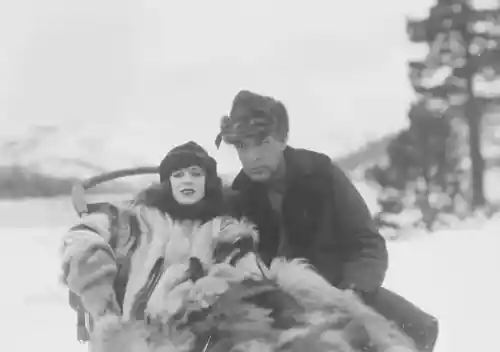
The snow sequence—filmed in an abandoned New Jersey icehouse using pulverised marble—remains a masterclass in elemental horror. Julie’s sleigh capsizes; the camera plunges to hoof-level, revealing a world reduced to grey-on-grey striations. Trimble overlays a double-exposure of her foetal silhouette dissolving into the torso of the child she carries, prefiguring both rebirth and erasure. Criticised by exhibitors for “Arctic overkill,” the episode nonetheless influenced the avalanche set-piece in The Girl of the Golden West two years later.
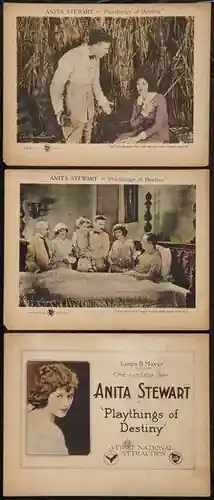
Once transplanted to Jamaica, cinematographer William Tuers bathes parlours in jaundiced amber that makes every white linen suit appear nicotine-stained. Ceiling fans rotate like lazy guillotines; the shadows of louvred shutters stripe characters like convicts. Notice the scene where Julie caresses Geoffrey’s broken leg: the camera tracks sideways until a mahogany post bisects the frame—moral split-screen, physical divorce. Such visual semaphore anticipates the geometric anxiety of German Kammerspielfilm, though Trimble’s syntax is more humid, more fever-bitten.
Anita Stewart, often dismissed as a “moonlit ingénue,” delivers here a polyphonic lament that oscillates between operetta crescendo and silent-film minimalism. Watch her eyes during the storm: they flicker from Randolph to Geoffrey with the precise timing of a metronome, yet the pupils dilate like ink blots—silent-film Morse. Herbert Rawlinson counterbalances with a rigidity that cracks only once: when he buttons the child’s jacket before surrendering her, his thumb lingers on a chipped coconut button as though it were a relic. The gesture lasts perhaps eight frames, yet it irradiates the entire third act.
Jane Murfin’s fingerprints are everywhere: the emphasis on legal rather than romantic resolution, the refusal to punish female sexuality, the final tableau that awards custody to the biological father yet grants Randolph a lingering spectral presence. Co-writer Anthony Paul Kelly supplies pulp velocity—cliffhanger blizzard, hurricane rescue—but Murfin’s tonal lace overlays the melodrama with proto-feminist melancholy. Compare the ending to Her Husband’s Honor, where the wife returns penitentially; here, the husband relinquishes agency, a reversal that must have startled 1921 audiences.
For decades the film was known only via a mislabelled reel discovered inside a Coney Island carousel projection booth—five minutes of cyclone footage spliced upside-down. The current restoration, spearheaded by Library of Canada and digitally recomposited from a 35mm Czech print, reinstates two crucial intertitles: Randolph’s confession (“A name is but a tether for the state; love knots itself to subtler ligatures”) and Claire’s off-screen comeuppance (“Banished to the metropolis where paper marriages are printed hourly”). These shards reorient the moral compass, transforming what seemed a capitulation into an act of radical consent.
Modern screenings often pair the film with a new score—percussive glass harmonica and detuned banjo—that underscores its gothic modernity. I prefer the original cue sheets: Grieg’s “Holberg Suite” for Canadian sequences, Joplin ragtime for Jamaican soirées. The dissonance between Nordic austerity and Creole syncopation externalises Julie’s cultural vertigo. Listen for the moment when Randolph signs the manumission papers: the pianist strikes a single unresolved chord that hangs until the fade-out—an aural watermark of unfinished business.
Critics seeking lineage should consult The Pearl of Paradise—same imperial guilt, same floral sadism—or Samhällets dom for Scandinavian snow-misery filtered through social critique. Yet Playthings of Destiny stands apart in its refusal to punish transgressive motherhood. Unlike And the Children Pay, where illegitimate offspring are narrative collateral, Trimble allows the child to emerge unscathed, a quiet revolution wrapped in lace.
As the lights rise, one exits tasting copper and frangipani, convinced that the film’s true catastrophe is not miscommunication but the terrifying elasticity of identity—how a signature, a snowflake, a forged date can unmake worlds. In an era when marriage licences still determined citizenship, Trimble’s film whispers that the most radical act is to let the story continue beyond the vows. Destiny, after all, is just another word for the narratives we agree to inhabit; the courage to rip up the script remains the most subversive special effect ever splashed across silver nitrate.
Verdict: A frostbitten, fever-drenched marvel that weaponises climate and contract law against the corsetry of monogamy. See it before the next blizzard—or the next bureaucrat—decides your future.
IMDb —
1925
Community
Log in to comment.