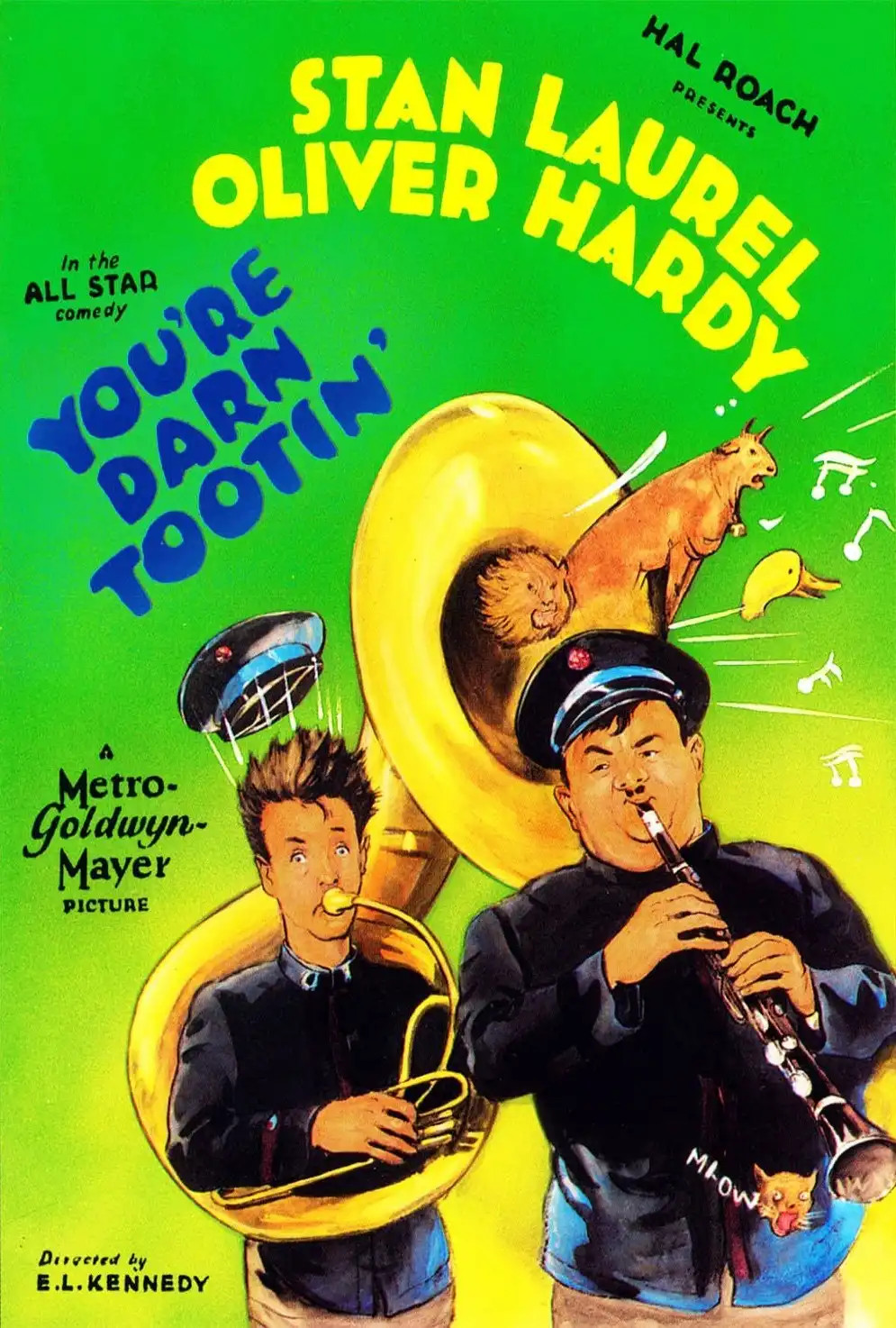
A definitive 6.6/10 rating for a film that redefined the boundaries of cult cinema. You're Darn Tootin' remains a cornerstone of transgressive art.
Is 'You're Darn Tootin'' Worth Watching Today?
Absolutely, 'You're Darn Tootin'' is worth watching today, especially for anyone with an appreciation for the foundational elements of physical comedy and the enduring genius of Laurel and Hardy. This 1928 silent short serves as a pristine example of their classic dynamic and escalating mayhem. It’s essential viewing for silent film enthusiasts, students of comedy, and anyone looking for a pure, unadulterated dose of slapstick. However, viewers accustomed to modern pacing, intricate narratives, or dialogue-driven humor might find the conventions of silent film, particularly the broad physical gags, less engaging. If you have an aversion to films without sound or expect sophisticated character arcs, this might not be your ideal Sunday afternoon viewing.
The Enduring Appeal of Laurel and Hardy
'You're Darn Tootin'' lands squarely in the sweet spot of Laurel and Hardy’s silent era output, showcasing their signature blend of amiable incompetence and escalating destruction. The film opens with Stan and Ollie as members of a rather formal orchestra, a setting ripe for their particular brand of discord. It’s in these early moments that their established personas begin to shine through without a single spoken word. Ollie, ever the more 'dignified' of the two, attempts to maintain composure, only to be constantly undermined by Stan’s wide-eyed, accidental sabotage. Stan, with his signature slow blink and bewildered expression, manages to dismantle an entire musical performance through sheer, unadulterated clumsiness.
Their performances here are a masterclass in non-verbal communication. Oliver Hardy's exasperated glances directly at the camera – his desperate plea for audience sympathy in the face of Stan's latest blunder – are already fully formed and immensely effective. Stan Laurel, on the other hand, embodies a childlike innocence even as he creates utter chaos. His reactions are often delayed, a beat behind the action, which only amplifies the comedic effect. When he accidentally shoves a tuba into the face of a fellow musician, his subsequent look of mild surprise, rather than horror, is priceless. It’s a testament to their craft that these nuanced expressions and gestures still land so perfectly almost a century later.
Pacing and the Art of Escalation
The pacing of 'You're Darn Tootin'' is a study in comedic escalation. The initial sequence with the orchestra, while necessary to establish their musical ineptitude and set up their dismissal, does feel a tad drawn out by modern standards. There’s a deliberate, almost methodical build-up to their firing, with each musical mishap adding another layer to the bandleader's growing fury. However, once Stan and Ollie hit the streets as buskers, the film shifts into high gear. The central conflict—Ollie's lost instrument and Stan's bumbling attempts to retrieve it—becomes the catalyst for a chain reaction of increasingly absurd events.
What begins as a simple misunderstanding quickly snowballs into a full-blown street brawl. The genius lies in the film’s ability to take a minor grievance and amplify it into an urban warzone, all centered around the duo. The rhythm of the gags accelerates, each punch and retaliatory act becoming more outlandish than the last. The editing during these fight sequences is surprisingly sharp, cutting between various participants and their escalating acts of aggression, always circling back to Stan and Ollie as the bewildered instigators.
Visual Style and the Anatomy of a Gag
As a silent film, 'You're Darn Tootin'' relies heavily on clear, unobstructed visual storytelling. The camera work is largely static, utilizing wide shots that allow the physical comedy to play out in full frame, emphasizing the chaotic scope of the duo's antics. This approach ensures that every flailing limb, every pratfall, and every ripped garment is visible. The production design is simple but effective, creating believable street scenes that quickly descend into disarray. The costumes, initially formal orchestra attire, become progressively dishevelled and torn, visually charting the film's descent into comedic anarchy.
The iconic trouser-ripping sequence, which forms the climax of the street brawl, is meticulously choreographed. It’s not just a random act; it's a systematic de-pantsing of nearly every character on screen. One particularly telling detail occurs during this sequence: observe how the initial trouser-ripping is somewhat accidental or retaliatory, but as the chaos reaches its peak, one portly gentleman, who seemingly has no direct grievance with anyone, actively joins the fray with a mischievous grin, deliberately tearing the trousers of a bewildered bystander. It’s a small, almost background moment, but it perfectly encapsulates the contagious, absurd joy of the duo’s destructive influence, turning innocent citizens into gleeful agents of anarchy.
Another subtle touch is the way Stan, during the initial band concert, struggles with his sheet music, trying to turn pages with his clarinet still in his mouth, eventually causing a cascade of dropped instruments. It’s a small, almost throwaway gag that highlights his fundamental inability to manage even the simplest tasks, perfectly setting up the larger disasters to come.
Final Verdict
'You're Darn Tootin'' is a vital piece of Laurel and Hardy's legacy, a film that perfectly encapsulates their unique brand of escalating, physical comedy. While the initial setup might require a moment for modern viewers to adjust to silent film pacing, the payoff is a masterclass in slapstick. It’s a film that demands to be seen for its historical significance, but more importantly, for its pure, unadulterated comedic value. The specific gags, the nuanced performances, and the relentless escalation of absurdity make it a genuinely funny and surprisingly sharp viewing experience even today. It's a testament to the fact that true comedic genius transcends language and time, proving that sometimes, all you need is a tuba, a street corner, and a pair of trousers to create cinematic gold.