DbcultAccessing Vault...
Cult Review
Senior Film Conservator
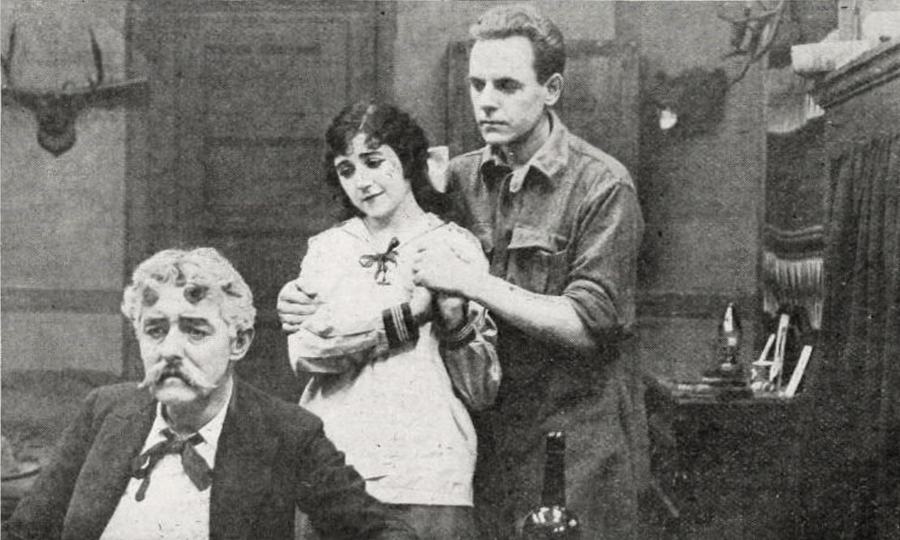
In the annals of early cinema, there are narratives that, despite their age, resonate with a profound psychological depth, challenging our perceptions of heroism, villainy, and the often-blurry lines between them. 'Ranson's Folly' stands as one such compelling artifact, a story that peels back the veneer of frontier life to reveal the simmering discontent and desperate acts born of boredom and desperation. Lieutenant Ranson, freshly returned from the crucible of the Philippine campaign, finds the quietude of post-war Washington an unbearable anathema. His spirit, honed by the sharp edges of conflict, craves the frisson of danger, the unpredictable thrill that defines a life truly lived. This yearning for excitement, a potent cocktail of post-traumatic restlessness and youthful hubris, propels him towards Fort Stanton, Texas, an army post that promises, if nothing else, a change of scenery. Yet, even the rugged frontier, with its vast, untamed beauty, cannot quell the internal tempest that rages within him. The initial burst of heroism, rescuing Mary Cahill from a raging prairie fire, offers but a fleeting balm, a momentary validation that soon fades into the monotonous rhythm of military routine.
The film masterfully sets the stage for Ranson's fateful miscalculation, portraying the oppressive tedium that can settle upon even the most adventurous souls. 'Big doings' in the Philippines are a distant echo, replaced by the dull thrum of daily drills and social pleasantries. It's in this atmosphere of stifled ambition that Ranson's character truly begins to unravel. His boastful declaration – that he could, with something as innocuous as a pair of shears, hold up a stagecoach and escape unscathed – is not merely a youthful taunt but a desperate cry against the encroaching ennui. It's a challenge born of an overabundance of courage and a deficit of foresight, a dangerous cocktail that sets the entire tragic machinery of the plot into motion. The ridicule of his brother officers only serves to fan the flames of his resolve, pushing him further into the ill-conceived charade that will ultimately bind his fate to a much darker reality.
What begins as a mischievous prank quickly spirals into a harrowing ordeal. Ranson's 'mock' stagecoach robbery is executed with a gentlemanly flair, taking only a photograph as proof of his audacious feat. This act, intended as a mere demonstration of his capabilities, becomes a chilling precursor to a far more sinister event. The narrative deftly introduces Lieutenant Patten, the paymaster, carrying a significant sum for the soldiers, whose buckboard journey to the fort is intercepted by a masked figure. This highwayman, strikingly similar in attire to Ranson's disguise, commits a brutal act of violence, killing the driver and wounding Patten, before making off with the payroll. The stark contrast between Ranson's theatrical gesture and the highwayman's cold-blooded efficiency immediately establishes the film's central conflict: the collision of an innocent, albeit reckless, act with a genuine, grievous crime. The tension ratchets up considerably, leaving the audience to grapple with the disturbing implications of mistaken identity and the cruel hand of coincidence.
The return of the detachment, bearing the wounded Patten and his grim tale, seals Ranson's fate. The paymaster's description of a robber wounded in the hand, combined with the uncanny resemblance in attire, casts an immediate pall of suspicion over Ranson. His confinement to quarters, awaiting a court-martial, is a poignant portrayal of how easily a reputation can be shattered, how quickly a hero can become a pariah. The film, even in its early cinematic form, evokes a palpable sense of injustice, compelling us to empathize with Ranson's predicament. This phase of the story explores themes of circumstantial evidence and the often-flawed nature of human judgment, echoing the dramatic tension found in later courtroom dramas or tales of wrongful accusation. It's a stark reminder that appearances can be deceiving, and the truth often lies buried beneath layers of misdirection and unfortunate timing.
The narrative takes a truly compelling turn with Ranson's desperate call for Patrick Cahill, the post-trader and father of Mary. It is here that the film expertly weaves together threads of suspicion and revelation. Cahill's bandaged hand, initially dismissed with a flimsy excuse about a pony, becomes a beacon of suspicion for Ranson. The dramatic irony is thick, as Ranson, accused of a crime he did not commit, finds himself on the precipice of uncovering the *real* perpetrator. Mary's innocent disclosure – that her father claimed to have shot himself while 'fooling with his revolver' – serves as the crucial piece of the puzzle, a devastating moment of clarity that unmasks the 'Red Rider.' The ensuing confrontation between Ranson and Cahill is the emotional core of the film, a tense dance of accusation and denial that culminates in a shattering confession. Cahill, cornered and exposed, admits to his double life, a betrayal that reverberates through the quiet halls of Fort Stanton and, more acutely, through the heart of his daughter.
The revelation of Cahill's true identity is not merely a plot twist; it's a tragic exploration of hidden lives and the corrosive power of secrets. It forces Ranson into an impossible moral quandary: to expose the father of the woman he loves, or to protect her from devastating shame. His declaration, 'no matter what happened, he will stick by his daughter,' is a testament to his burgeoning love and his innate sense of honor, even when faced with such a profound ethical dilemma. This moment elevates the film beyond a simple crime story, imbuing it with the weight of human relationships and the sacrifices made in the name of love. The character of Patrick Cahill, brought to life by Edward Earle, must have been a complex portrayal for its time, embodying both the respectable community figure and the desperate outlaw, a duality that resonates with characters grappling with similar moral compromises in films like The Straight Road or even the tragic figures found in adaptations like Oliver Twist, where societal pressures push individuals to desperate measures.
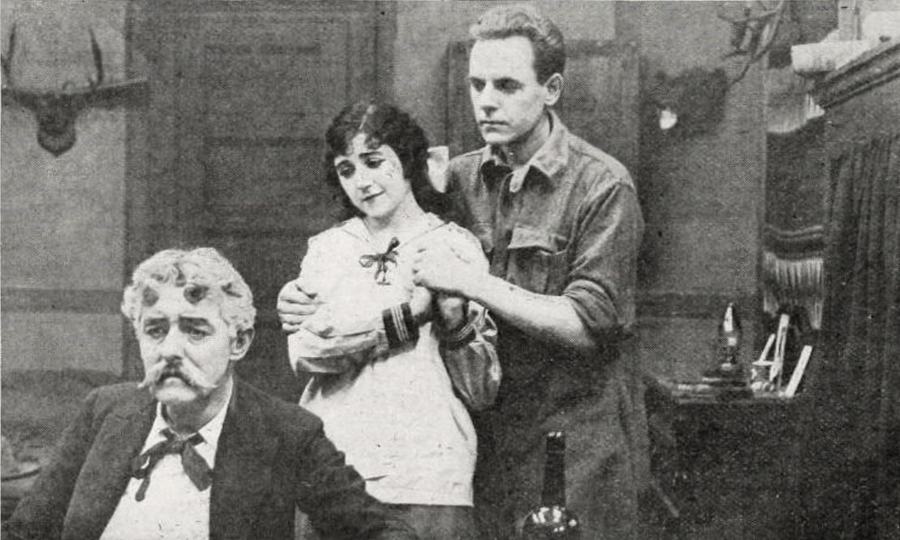
Cahill's desperate plan to flee to Fort Worth, ostensibly for an engagement ring, and then to Canada to write a confessional letter, is a final, poignant attempt at redemption. It's a fragile hope, however, that is brutally extinguished. The gunshot that echoes through the room, the discovery of Cahill's lifeless body, and the hastily scribbled note of confession, form a climax of heart-wrenching intensity. This sudden, violent end to Cahill's tormented existence serves as a stark commentary on the unforgiving nature of the frontier and the inescapable consequences of a life of crime. It’s a moment that would have undoubtedly shocked and moved audiences, emphasizing the raw, often brutal realities of justice in that era. The immediate aftermath, with Mary rushing in, only to be held back by Ranson, is a masterclass in silent storytelling, conveying profound grief and understanding without a single spoken word. The tragic irony of her father's death, a self-inflicted judgment for his long-concealed transgressions, solidifies the bond between Ranson and Mary, forging their future from the ashes of a devastating past.
The thematic richness of 'Ranson's Folly' lies in its exploration of perception versus reality. Ranson's 'folly' is not just his reckless wager, but his initial inability to discern the true nature of his surroundings and the people within it. The film subtly critiques the romanticized notions of frontier adventure, grounding it in the harsh realities of human fallibility and the pervasive threat of lawlessness. It’s a narrative that, for its time, dared to delve into the psychological complexities of its characters, moving beyond simplistic portrayals of good and evil. The performances, particularly from Jessie Stevens as Mary and Edward Earle as Cahill, would have been crucial in conveying the emotional weight of this story, relying heavily on subtle gestures and expressions to communicate profound internal turmoil and burgeoning affection.
This film, based on Richard Harding Davis's work, captures a unique blend of adventure, romance, and gripping suspense. It’s a testament to the power of storytelling that such a intricate plot, with its layers of deception, mistaken identity, and tragic sacrifice, could be effectively conveyed through the nascent art form of cinema. The setting of Fort Stanton, Texas, becomes more than just a backdrop; it's a character in itself, embodying the isolation and the potential for both heroism and depravity that defined the American West. The constant threat of the unknown, whether it be a prairie fire or a masked highwayman, keeps the audience on edge, mirroring Ranson's own quest for excitement that ultimately leads him into a moral quagmire.
The narrative arc of Ranson, from bored soldier to wrongly accused criminal to the reluctant protector of Mary's honor, is a journey of profound character development. He learns the hard way that true excitement isn't found in reckless stunts but in confronting difficult truths and standing by those he loves. The film's conclusion, while tragic, offers a glimmer of hope and the promise of a future forged in shared sorrow and mutual understanding. Mary's decision to give herself 'wholly into Ranson's keeping' is not merely a romantic gesture but a profound act of trust and resilience, recognizing that her father's final wish was for their happiness, a happiness built upon the ruins of his secret life. 'Ranson's Folly' thus transcends its genre, offering a poignant meditation on the human condition, the burdens of the past, and the enduring power of love and redemption in the face of overwhelming adversity.
The stylistic choices of the era, though limited by technology, would have magnified the emotional impact. The stark black and white imagery, the dramatic close-ups on faces contorted by fear or grief, the sweeping shots of the Texan landscape – all would have contributed to an immersive experience. The film's pacing, building from Ranson's initial restlessness to the frantic pace of the investigation and the final, explosive confrontation, is indicative of a sophisticated understanding of narrative tension. It's a reminder that even in the early days of filmmaking, storytellers were adept at crafting tales that gripped audiences and explored complex moral questions. The interplay of characters like George A. Wright as Ranson, embodying a certain youthful vigor and later, a burdened conscience, along with the steadfastness of Jessie Stevens as Mary, would have been pivotal in conveying the emotional core of this high-stakes drama. The film's lasting impression is one of a cautionary tale, a testament to how quickly an idle dare can transform into a life-altering catastrophe, and how the deepest secrets can emerge from the most unexpected corners of a seemingly ordinary life.
Ultimately, 'Ranson's Folly' is more than just a historical curiosity; it is a timeless narrative that probes the depths of human nature. It explores the dangerous allure of novelty, the crushing weight of societal expectation, and the profound sacrifices made for family and love. It stands as a powerful example of early cinema's capacity for intricate storytelling and emotional resonance, leaving an indelible mark on those who encounter its compelling blend of adventure, mystery, and profound human drama. The film's ability to juxtapose Ranson's almost innocent recklessness with Cahill's hardened criminality provides a fascinating study in contrasts, highlighting how easily one's path can diverge, leading to unforeseen and often tragic consequences. This duality, this exploration of the 'good' man with a dark secret, is a trope that continues to captivate audiences, proving the enduring power of narratives like 'Ranson's Folly' to reflect the complex tapestry of human experience.
IMDb —
1918
Community
Log in to comment.