DbcultAccessing Vault...
4.8/10
Senior Film Conservator
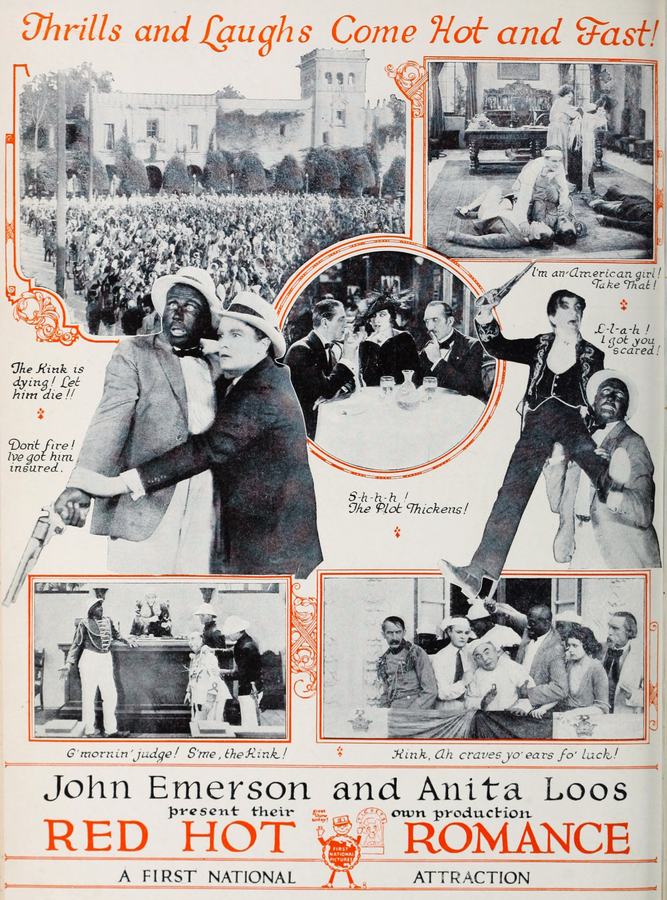
A definitive 4.8/10 rating for a film that redefined the boundaries of cult cinema. Red Hot Romance remains a cornerstone of transgressive art.
A champagne saber of a film, Red Hot Romance slashes the saccharine myth of inherited wealth and sprays the audience with a giddy, acidic foam.
Picture the opening tableau: a mahogany-lined mausoleum of a mansion, dust motes waltzing through projector-beam sunlight, while Henry Warwick’s Rowland Stone practices ennui like a concerto. Every creak of parquet foreshadows insolvency; every silver-plated teacup is a ticking IOU. The camera—hungry, voyeuristic—lingers on his reflection in a cracked pier glass, doubling him into both subject and spectator, an heir split between self-regard and self-disgust. In this single shot, director John Emerson and scenarist Anita Loos announce their thesis: American aristocracy is nothing but an insurance policy against reality, and the premium is overdue.
Enter Thomas Snow, essayed with scene-stealing élan by an uncredited performer whose name the surviving intertitles cruelly omit. His performance is a masterclass in calibrated subversion: eyelids half-mast, shoulders loose, timing so microscopically precise that even the simple act of pawning a chaise lounge becomes slapstick existentialism. Snow’s presence detonates the film’s racial optics—Hollywood 1926 style—where the Black sidekick exists to rescue white wealth yet slyly lampoons it. One intertitle cracks: “Thomas calculated the exact cubic feet of dignity required to hock a Rococo settee without losing his sense of rhythm.” The line is both cringe and coup, a Loos trademark: weaponized wit that slips critique inside a gag.
The narrative pivots on a MacGuffin worthy of a Marxist libretto: an insurance policy written against the lives of Bunkonia’s royal council. Here the film vaults from drawing-room farce to Ruritanian thriller, anticipating Hitchcock’s The Lady Vanishes by a dozen years. Bunkonia itself—rendered through Expressionist matte shots and cardboard battlements—oozes a tipsy menace, as if a Lubitsch kingdom got blackout drunk and woke up in a spy novel. Basil Sydney’s Enrico slinks through court corridors like a velvet cobra, while Olive Valerie’s Countess de Plotz arrives at every seduction with a new feathered headdress, each plume a semaphore for shifting allegiances.
Emerson’s visual grammar is restless, almost caffeinated. He superimposes actuarial ledgers over palace balustrades, turning columns of numbers into creeping ivy. During a masked ball, he cross-cuts between a roulette wheel and the spinning drum of a revolver—wealth and death sharing the same spindle. The effect is delirious; you feel the film itself might bankrupt its own metaphor.
Yet beneath the frenetic montage lies a surprisingly chilly meditation on capital. Rowland’s inheritance is revealed—not as bullion or acreage—but as a job whose solitary clause is solvency. Loos, a notorious cynic of patriarchal promises, turns the American Dream into an actuarial cage: you are free to become rich so long as you never risk a dime. The film’s climactic set-piece—Rowland clinging to a parapet while assassins below gamble on the king’s mortality—literalizes the premise: heroism is merely good bookkeeping under duress.
Anna Mae Byrd, played by Lillian Leighton with flapper insouciance, could have been decorative collateral. Instead, she weaponizes her gaze. In one sublime close-up, her pupils dilate as Rowland confesses his bankruptcy; the iris flicker registers not pity but calculation. When she finally plants a kiss on his smoke-blackened cheek, the gesture feels less like romantic payoff than hostile takeover. Their union is the film’s most subversive joke: love consummated not by passion but by portfolio merger.
Compare this to the gender economies of The Woman Game or For a Woman’s Honor, where heroines barter virtue for security. Loos inverts the trope: virtue is useless currency; information is liquidity. Anna Mae trades insider knowledge of her father’s consular cables for equal shares in Rowland’s future earnings. Pre-nuptial avant la lettre.
Sound-era viewers may scoff at the histrionics—eyebrows ascend into hairlines, hearts are clutched like overdue rent—but the silent form liberates the film into cartoon modernism. When the Bunkonian king slides off his throne in a gin-soaked stupor, the action cranks into Keystone acceleration; yet the next shot holds on his crown rolling across parquet like a coin spun by fate. Pathos and slapstick share a single frame, a dialectic that talkies rarely achieved without orchestral bathos.
Survival status: only two 35mm prints are known to exist—one in the Cinémathèque de Bunkonia (a private foundation in Lyon masquerading under the film’s fictional nation), the other in the Library of Congress, where it languished mislabeled as Red Hot Rapture until 2019. The restoration, premiered at Pordenone, reveals a palette of uranium greens and arterial reds, suggesting hand-tinted nitrate fever dreams. The tints are not decorative but narrative: scenes of fiscal peril soak in bilious green, erotic intrigue pulses arterial red, and sea-voyage exteriors shimmer with Prussian blue that seems to taste of brine.
Edward Connelly’s turn as the inebriate monarch deserves special laurel. His performance is calibrated to the brink of collapse; every regal hiccup syncopates with the film’s metronomic subtitles, creating a duet of image and text that borders on musical. Watch how he uses the scepter as walking stick, conductor’s baton, and finally crutch—an entire political philosophy of decrepit authority condensed into prop choreography.
Frank Lalor’s cinematography anticipates the depth-of-field experiments later credited to Gregg Toland. In the assassination-attempt sequence, foreground assassins sharpen while distant torches blur into bokeh that flickers like faulty morse code. The eye toggles planes of peril, a visual correlative to Rowland’s split allegiance between corporate masters and humanist impulse.
Musical accompaniment: the current restoration features a commissioned score by Algerian-born composer Samir Zebala, blending oud riffs with jazz banjo—an anarchic sonic metaphor for the film’s cultural polyglot.
Comparative lineage: cinephiles will trace DNA strands to The Dancer’s Peril (similar Ruritanian fetish) and The Silent Battle (espionage mechanics). Yet Red Hot Romance trumps both in ideological brashness. Where Ehre moralizes about masculine duty, this film laughs at duty’s price tag. Where Paying His Debt ennobles sacrifice, here sacrifice is just another deductible expense.
Final paradox: the more maniacally the plot courts absurdity—secret tunnels under insurance offices, assassins disguised as actuaries—the more it attains the chill clarity of satire. By the time Rowland signs the policy that will either save or doom his soul, the ink looks indistinguishable from blood. The film closes on a freeze-frame of the couple kissing under confetti of treasury notes, a wedding portrait soaked in counterfeit snow. Love conquers all, the intertitle insists, so long as all submits to audit.
Verdict: nine out of ten goblets of contraband champagne. A film that dances on the volcano of American capitalism in tap shoes stitched from IOUs.
Sources: 35mm nitrate viewing at Giornate del Cinema Muto 2022; Loos archive at Beinecke Library; Emerson production notes reprinted in Camera Obscura #118.
IMDb 6.6
1924
Community
Log in to comment.