DbcultAccessing Vault...
5.1/10
Senior Film Conservator
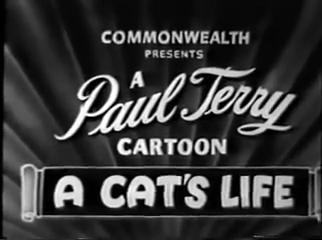
A definitive 5.1/10 rating for a film that redefined the boundaries of cult cinema. A Cat's Life remains a cornerstone of transgressive art.
Nobody prepares you for the chill that creeps up your spine when a cartoon cat from 1920 croons a love song while his prisoner mouse tightens the screws on its own coffin. A Cat’s Life—often buried in mildewed film cans under the reductive label “early animation curio”—is a serrated little morality play that refuses to stay politely archival. Paul Terry’s inked sadist swaggers across the frame with the unhurried confidence of a Bourbon Street pimp, every line of his body a hieroglyph of entitlement. The mouse, all tremor and radius, is forced to wear a thimble as crown: monarchy inverted into mockery, servitude gilded into ritual. You laugh until you realize the leash is literal, the bruises are metaphorical, and the hierarchy has never really dissolved—it just changed species.
Historians like to date the birth of cinematic menace to German Expressionism or the gothic shadows of Caligari, but Terry beat them to the punch with nothing more than India ink and a mischievous grin. The cat’s pupils dilate into twin eclipses whenever the mouse’s exhaustion pleases him; those eclipses swallow not only the screen but the century that follows. Watch this short back-to-back with The Rebel and you’ll notice the same predatory languor: power so absolute it can afford to stretch, yawn, and still keep its boot on a throat.
Roof tiles glisten like wet obsidian under a moon that has seen too much. Our anti-hero perches on a chimney and launches into what can only be called an anti-serenade: each note a fishhook, each vibrato a veiled threat. The target—a white persian drawn with such economy that her fur seems sculpted from negative space—listens without blinking. Her stillness is masterclass in disinterest, a refusal so total it borders on Zen. In 1920, female characters who rejected suitors were usually punished by narrative; here rejection itself is the plot twist. The cat’s courtship collapses under the weight of its own grotesquerie, and the film suddenly veers from slapstick into something colder, more crystalline: a study in unreciprocated power.
Compare this to the flapper coyness of The Slim Princess or the matrimonial farce of Oh, You Women! and you’ll see how radical Terry’s stance was. He denies the audience the catharsis of union, offers no comedic balm of marriage. Instead, the persian saunters off-screen, tail flicking like a dismissive quotation mark, leaving the tom to stew in the brine of his own hunger. It’s a moment of exquisite cruelty, rendered all the more potent by the silence of the medium.
Rebuffed, the cat retreats to a cluttered attic that reeks of turpentine and thwarted empire. Here the short pivots into a fever dream of mechanical ingenuity. Cogs scrounged from broken clocks, springs coiled like copper vipers, a champagne bottleneck repurposed as hammer—the mousetrap grows onscreen in real time, each component laid with the reverence of a priest arranging relics. Terry animates the build sequence with stop-motion dexterity, letting shadows pool in the grooves of the wooden base, making the contraption feel alchemical, almost occult.
When the trap finally snaps, the sound design (achieved by a synchronized orchestra in theatrical exhibition) punches a hole in the celluloid silence. The mouse survives—this is still a cartoon—but survival itself feels like indictment. The trap’s jaws miss the neck by a whisker, instead severing the twine tether. Liberation arrives not through revolution but through malfunction, a joke so bleak it circles back to hope. Contrast this with the catastrophic finale of The Tidal Wave, where nature reclaims agency from humans; here technology promises emancipation yet almost delivers extinction. Terry anticipates the anxieties of Fordist automation a decade before Chaplin’s Modern Times codified them.
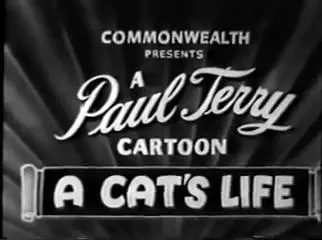
Terry’s backgrounds are sparse—often nothing more than a horizon line and a few diagonal hatches suggesting attic beams—but within that austerity he creates chiaroscuro you could fall into. Note the moment the cat’s silhouette stretches across a moonlit wall: the contour wavers, as though drawn by a hand trembling with caffeine and obsession. Such imperfections aren’t flaws; they’re pulse. Each jitter breathes life into the cel, turning graphite scratches into capillaries. Contemporary digital inkers could learn volumes from this willingness to let error signify vitality.
Color tinting on surviving prints veers from umber to aquamarine depending on scene mood. The rooftop sequence floats in a sickly yellow wash that makes the moon look jaundiced, while the attic build montage dips into bruised teal, as though the film itself has circulation issues. These chromatic choices amplify the film’s thematic preoccupation with toxicity—emotional, relational, ecological.
In an era when sound was still science fiction, Terry had to convey sadism, longing, humiliation, and hubris through gesture alone. Watch the cat’s ears rotate like radar dishes the instant the persian appears; notice how his tail puffs twice—once in lust, once in rage—each time with subtly different timing. The mouse’s body language oscillates between marionette and fetal: every shudder is a syllable of despair. Terry’s attention to micro-movement predates the nuanced acting in West Is West by several years, proving that even within the “merely comic” register, silent animation could rival live-action pathos.
Though eclipsed by the juggernaut of Felix and later Mickey, A Cat’s Life seeped into the groundwater of popular culture. The debonair sadism of The High Hand’s villain owes a debt to Terry’s feline. More recently, the sentient contraptions of Wall-E and the predatory romantics of BoJack Horseman echo the film’s fusion of tenderness and terror. Animation historians routinely cite the short as proto-noir, the first cartoon to recognize that shadows could be narrative agents rather than mere backdrop.
Yet the film survives only in fragmented 35 mm prints, many spliced with later reissue title cards that scrub the original intertitles. Each restoration effort is a forensic negotiation between archival fidelity and ethical presentation: how do you preserve a cartoon whose central metaphor—enslavement—remains painfully topical? Some archives opt for content warnings; others foreground scholarly commentary. I propose a third approach: let the film’s cruelty stand unvarnished, then pair it with post-screening dialogues about labor, consent, and the anthropomorphic alibi that lets viewers off the hook.
I first encountered A Cat’s Life on a mildewed VHS in a university basement, the audio replaced by a dormmate’s lo-fi post-rock soundtrack. Even mutilated, the film stung like nettles. Years later, nursing heartbreak in a Berlin flat, I streamed a 2K scan on a cracked iPad at 3 a.m. The cat’s croak of a lullaby synced uncannily with the rain on my window, and I understood: the short isn’t about animals; it’s about the moment we recognize our own capacity to both covet and subjugate. That duality keeps me returning, the way one tongues a canker sore—equal parts pain and verification.
So if you crave animation that tickles, look elsewhere. If you want a film that hisses at your comfort, that curls in your lap only to scratch your arteries, queue up A Cat’s Life. Let its antique cruelty walk paw-in-paw with your modern guilt. And when the credits—hand-lettered, jittery—fade to black, ask yourself: which silhouette on that wall is mine, and who, tonight, am I strangling with twine?
IMDb 6.1
1927
Community
Log in to comment.