DbcultAccessing Vault...
Cult Review
Senior Film Conservator
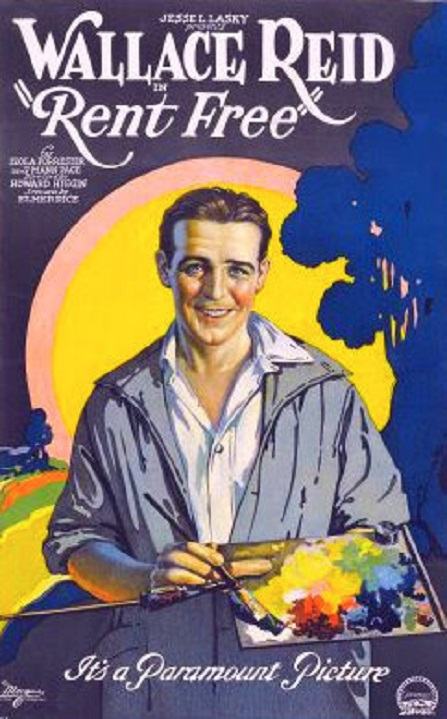
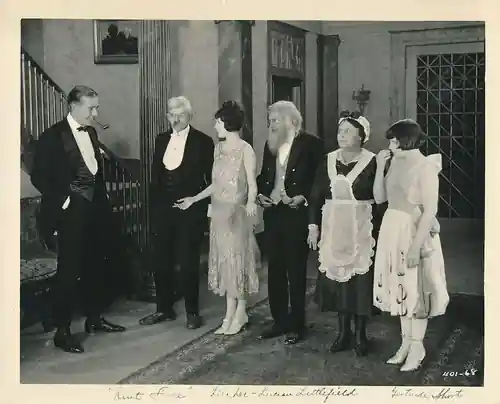
Moonlight drips like molten pewter across the warped balustrade of an abandoned mansion while a starving artist drags his last tube of vermilion across a cracked ballroom wall—welcome to Rent Free, a 1922 silent that plays like a smoky chord struck on a broken piano.
Long before squatter-chic became an Instagram aesthetic, director William C. deMille (yes, the less-famous but arguably slyer Cecil sibling) turned the concept of zero-cost living into a moral Rorschach test. Our protagonist, unnamed in the intertitles yet pulsating with everyman ardor thanks to Lucien Littlefield’s angular visage, enters the film like a rumor: half-seen, half-suspected. He shoulders a canvas roll that could double as a body bag for failed ambitions, pushing open a French door whose glass is spider-webbed by BB pellets of time. Inside, the air tastes of wet velvet and extinguished cigars; dust motes swirl in projector-beam shafts, performing their own ballet of entropy.
The house itself is a character—its heart murmur is a faulty furnace, its lullaby the drip of a ceiling no one will ever again fix.
Enter Lila Lee as Barbara, the legal daughter dispossessed by a stepmother who, we intuit, has weaponized grief into real-estate acquisition. Lee’s eyes carry the bruised clarity of someone who has read every clause of her own disinheritance. She confronts the interloper-artist not with a pistol but with a gasp that feels like a slap. Yet DeMille refuses to stage this as a meet-cute; instead it’s a meet-brutal, the moment when two kinds of homelessness—financial and filial—collide in a chandeliered void.
Writers Izola Forrester, Mann Page, and a pre-Street Scene Elmer Rice lace the scenario with legal nitroglycerin: a second will, inked in the final months of Barbara’s father, hides beneath floorboards like a landmine. The artist unearths it while scavenging for wood to stretch a canvas—an irony so delectable it could be served with absinthe. From here the film pivots from atmospheric parable to corkscrew thriller, though still hushed by the etiquette of silent storytelling.
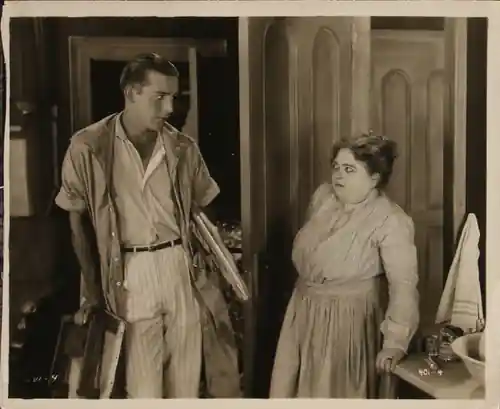
Compare it to the contemporaneous Doggone Torchy and you’ll see how adult Rent Free dares to be; where the former chases slapstick with newspaper speed, DeMille lingers on the ethical aftertaste of every revelation. The counter-will isn’t merely a MacGuffin—it’s a moral mirror, asking whether love can survive the stench of fiduciary motive.
Spoiler etiquette for a century-old film may feel pedantic, yet the sting of that hidden document still smarts.
When the stepmother (a deliciously icy Claire McDowell) returns flanked by lawyers who could moonlight as funeral ushers, the mansion’s emptiness becomes a courtroom. DeMille blocks the scene like a chess problem: Barbara isolated beside a grandfather clock, artist hovering near a doorway that frames him like a sketch, villains arranged in symmetrical triads. The emerald brooch—an heirloom—changes hands so often it practically levitates, culminating in a bit of sleight-of-hand that would make even Wild and Woolly’s card-sharps blink.
Littlefield, often relegated to comic sidekick in Harold Lloyd two-reelers, here channels a diffident dignity that recalls Lon Chaney sans grotesquerie. His body language is a study in negative space: shoulders cave inward as if apologizing for occupying volume, yet his gaze—those burning retinas—maps every corner for compositional diagonals. The moment he inks Barbara’s silhouette across a parlour wall, brush trembling like a tuning fork, you sense art as both seduction and affidavit.
Lee, only seventeen during production, carries herself with the weary equipoise of a flapper who has read the small print on the decade’s exuberance. In medium close-up, her pupils glisten like wet onyx; DeMille lets the camera linger just long enough for the audience to project its own heartbreak onto her. The result is a rare symbiosis: viewer and viewed locked in mutual haunting.
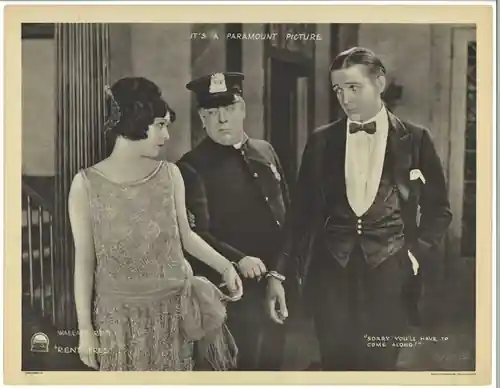
Wallace Reid, billed fourth yet magnetizing every background he haunts, plays the attorney for the stepmother. His premature death the following year from morphine addiction tinges the viewing with spectral hindsight; every smirk feels pre-eulogized, every tailored three-piece like a shroud sewn in advance.
Cinematographer L. William O’Connell treats the mansion like a reliquary of American prosperity gone to seed. Note the repeated motif of mirrors veiled by bedsheets—ghosts refusing to reflect. When Barbara peels one away, her image fractures across a spider-cracked surface: identity as jigsaw. Or consider the sequence where the artist grinds bricks into pigment, red dust clouding around him like a contaminated halo; it’s a literalization of ‘suffering for art’ that prefigures the agit-prop textures of later Soviet cinema.
Color tinting—amber for interiors, cerulean for exteriors—adds emotional EQ to scenes that might otherwise play as drawing-room melodrama. The tinting survives in only two of the four extant prints, so if your local archive screens a black-and-white dupe, petition for digital chromatic restoration; the house’s emotional thermostat depends on it.
DeMille’s camera movement is modest yet surgical: a slow dolly toward a keyhole turns the audience into conspirators, while a high-angle overhead during the climactic reading of the will makes human figures resemble chess pieces awaiting divine knuckle-flick. The effect is less about spectacle than complicity; we are implicated in every forgery, every hesitant caress.
Central to the film’s sneaky radicality is the proposition that affection can be a form of adverse possession. The artist occupies the house without title; by extension, he occupies Barbara’s grief without permission. Their slow-burn romance—conducted mostly through exchanged glances across yawning corridors—asks whether emotional tenancy can ever be rent-free, or if the heart always demands arrears.
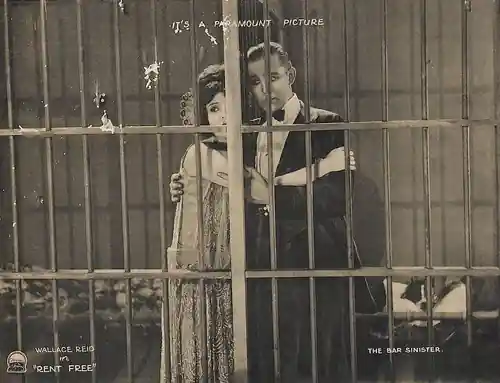
Compare this to the transactional unions in The Idle Rich or the benevolence-as-branding seen in Mr. Goode, Samaritan. Rent Free refuses either pole; its final clinch is tentative, sealed not with a swoon but with a mutual inhalation, as though both lovers worry the mansion’s stale air might run out.
Elmer Rice’s pre-Expressionist fingerprints are detectable in the film’s fascination with bureaucracy as destiny. Intertitles bristle with legalese that feels almost Brechtian: “Item VII: all chattels herein enumerated shall revert to sole issue provided claimant present bona-fide evidence prior to final adjuration.” The viewer must decode this cant alongside Barbara, making the act of literacy a dramatic stake.
Forrester and Page, both pulp novelists turned scenarists, inject Gothic effluvia: the sealed dumbwaiter, the emerald brooch hidden inside a cracked teacup, the stepmother’s predatory smile backlit by lightning that is, frankly, meteorologically improbable yet mythically perfect.
No original cue sheets survive, but anecdotal evidence from the Moving Picture World (Oct. 1922) suggests theaters were advised to interpolate “Hearts and Flowers” during the artist’s discovery scene—an appalling choice that would undercut the Marxist undertow. Modern accompanists are better served by Erik Satie’s Gymnopédies or, for the courtroom crescendo, the dissonant ostinatos of early Prokofiev. Silence, paradoxically, works too; the mansion’s respiration—wind through cracked sash—becomes its own score.
Contemporary critics praised the film’s “adult sophistication” while tut-tutting its lack of comedic set pieces. Variety hedged: “Not for the hoi-polloi seeking a carefree evening, yet nourishing fare for those who like their romance with a side of jurisprudence.” Box-office returns were modest, eclipsed by Reid’s motorcar escapades elsewhere. The picture slumbered for decades, mislabeled in a Kansas warehouse as Rent—Freer, a linguistic garble that sounds like avant-garde Swedish poetry.
Rediscovery came in 2017 when a 35mm nitrate print—German intertitles, improbably—surfaced at an estate sale in Dresden. After a crowdfunding campaign that traded donor names for on-screen “co-squatter” credits, the Friedrich-Wilhelm-Murnau-Stiftung photochemically restored the footage, tinting reconstructed via laboratory analysis of residual dyes. The resulting DCP premiered at Pordenone, where viewers reported audible gasps at the keyhole dolly—proof that even in our GIF-addled epoch, cinematic voyeurism retains its narcotic jolt.
Post-Great Recession audiences will find queasy resonance in a narrative where shelter is contingent on paperwork. The film anticipa—albeit obliquely—contemporary debates about vacancy taxes, heir’s property, and the moral legitimacy of adverse possession. When Barbara brandishes the counter-will, she is not merely reclaiming a house but weaponizing memory against capital. The artist’s eventual refusal to accept payment for his discovery—he insists on remaining “rent free”—reads as a manifesto for creative labor outside the ledger book.
Conservatives of the Harding era likely saw the film as cautionary: squatters emboldened, legal frameworks under siege. Progressives found a parable of collective stewardship.
Both readings co-exist, testament to the film’s ideological slipperiness—its ability to be, like its protagonist, both vagrant and visionary.
Because we are, all of us, squatters in the mansion of history—occupying bodies, relationships, and narratives on short, unwritten leases. Rent Free understands that the only thing fiercer than eviction is the will to remain, to keep painting frescoes on walls that may tomorrow belong to someone else. It is a film about title deeds yet haunted by the untitled, about ownership yet in love with loaned light.
Seek it out when the archive nearest you programs 16mm or DCP; if none do, pester them on social media with the hashtag #MakeBarbaraHome. Bring friends who think silent cinema is all moon-eyed flappers and pie-thrusting clowns; watch them go quiet as the mansion exhales. And when the lights rise, notice how the lobby feels momentarily unmoored—as though the carpet might ripple beneath your feet, demanding back rent for every dream you’ve ever harbored.
Verdict: Essential, urgent, and—yes—priceless.
IMDb —
1916
Community
Log in to comment.