DbcultAccessing Vault...
Cult Review
Senior Film Conservator
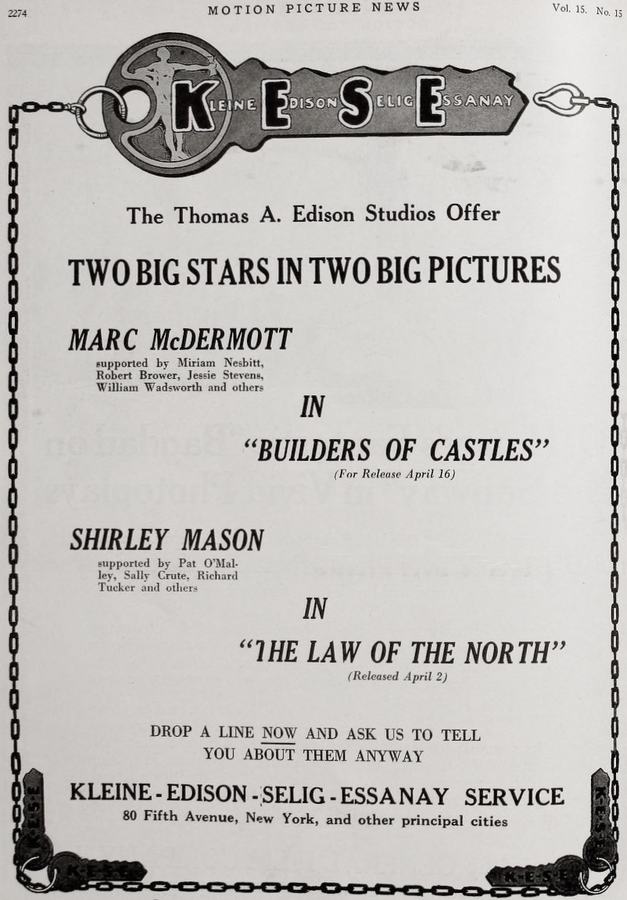
The nickelodeon curtain lifts on a city that never sleeps because its eyelids are stitched with debt. Builders of Castles, that brittle 1917 one-reel marvel now resurrected by Eye Filmmuseum’s 4-K scan, feels like inhaling pulverized marble—every frame powders the lungs with ancestral scandal. Director Henry Albert Phillips, working from Everett McNeil’s dime-store parable, understood that the true horror of American capitalism is its Pollyanna syntax: it flatters before it flays.
Phillips shoots the hustle in negative space. We never witness the moment the association’s vault is stuffed with IOUs; instead, we see the afterimage: a widow’s trembling hand releasing a single copper into a tin plate Sunday collection, the coin skating like a skiff across the metal because her fingers cannot stop shaking. The swindle is conveyed through ellipses, a montage of absences—Gittens’ slick silhouette stepping into a telegraph office, Morton’s silhouette stepping out. The film’s grammar is pre-Griffithian yet proto-Eisensteinian: meaning detonates in the splice.
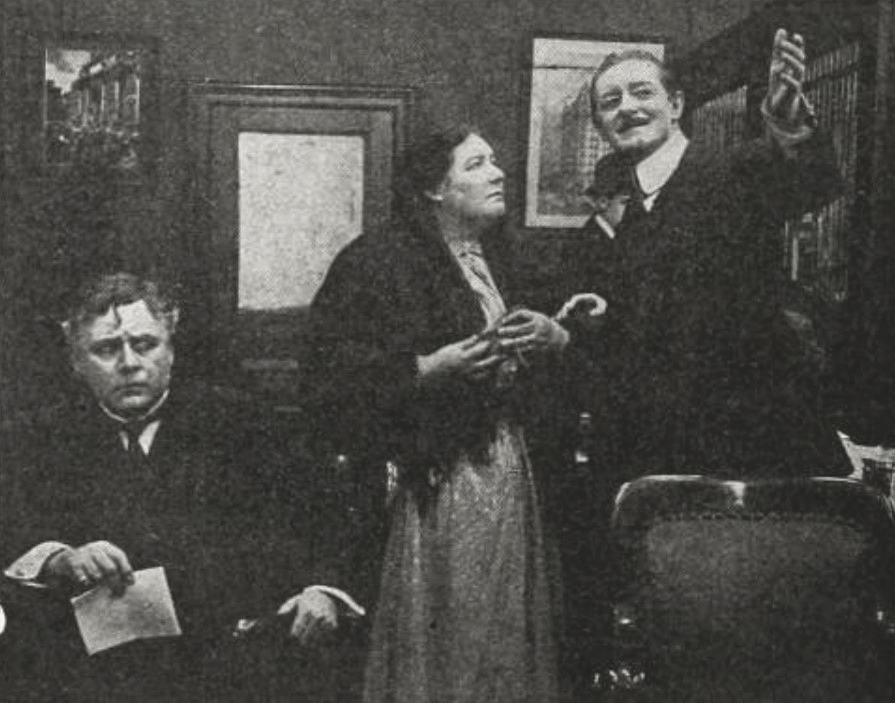
Marc McDermott’s Gittens is a top-hort Mephistopheles who pronounces “philanthropy” with three syllables, the middle one a smirk. His eyes linger on victims the way creditors lick stamps. Opposite him, Edward G. Longman’s Morton begins the picture shoulders-back, starched like a balance sheet; by reel’s end his spine folds like a defaulted promissory note. The performance is silent-film pantomime at its most neurasthenic—every exhale a white flag.
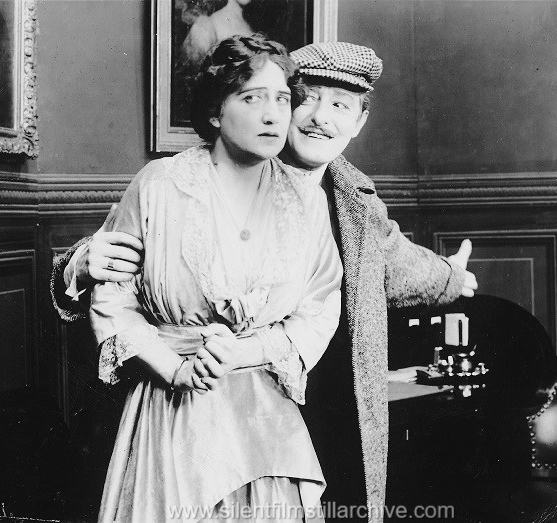
Florence Stover’s Marie could have been merely the porcelain pawn—eyes like communion wafers—but her arc refracts the film’s most seditious idea: that a Sunday-school pamphlet can mutate into a court docket. Once she learns that her fiancé’s phantom marriage is a hoax concocted in Gittens’ mimeograph, she stops wringing linen and starts wringing truth. Watch her fingers at the deposition: they move like a telegraphist spelling out MORAL-INJURY in Morse.
The picture’s feminist charge feels accidental yet combustive. In 1917, women had marched for suffrage wearing white gloves; here, Marie stalks a courtroom in funereal navy, clutching ledgers as if they were rosaries. The camera, stationary by necessity, frames her against Doric pillars—she becomes entablature, no longer decoration but load-bearing.
Simon P. Gillies’ unnamed Servant trudges in from the margins like a medieval fresco peeled off a cathedral wall. His coat is stitched from different decades of calamity. He functions as the film’s ballast: whenever the narrative lists toward melodrama, his hobnail boots scrape the soundtrack (or the orchestra would, if this were a 1923 screening). His final exit—striding toward a horizon that is literally the last sprocket-hole—recalls the closing vignette of In the Bishop’s Carriage, though here the moral universe remains protestant, not sacramental.
Because the only extant print is a Desmet color-tinted nitrate, night scenes ooque anemic blue, while Gittens’ office glows infernal amber. The clash anticipates the expressionist palettes of The Sorrows of Love (1919) yet retains a Puritan chromophobia: color is punishment. Notice the moment Marie learns of her fiancé’s supposed betrayal—her face is bathed in citrine, as if she’s standing inside a jar of preserved peaches, the domestic dream turned cloying.
Camera setups are tableaux, but Phillips choreographs depth: through a doorway we glimpse a child’s coffin being carried out; in foreground, Morton signs a check. The juxtaposition is proto-Neel, a social-realist indictment compressed into one diagonal.
Contemporary press sheets suggest exhibitors accompany the third reel with “Hearts and Flowers” played “adagio sostenuto”, then switch to “The Battle Cry of Freedom” when Marie brandishes evidence. Such cue sheets reveal how early cinema farmed emotion out to parlour pianists. Today, if you sync the film with Yann Tiersen’s La Dispute, the anachronism oddly fits—both scores traffic in evaporated hope.
Where Father and Son (1915) mythologizes restitution through patriarchal sacrifice, Builders disperses redemption across collective action. Gittens’ machinations anticipate the predatory matrimony in A Bird of Prey (1917), yet Phillips refuses to eroticize the predator—Gittens’ lust is ledger-driven, not libidinal. Meanwhile, the communal devastation prefigures the mining-town despair of The Trail of the Lonesome Pine (1916), only here the desolation is urban and paper-cut rather than sylvan.
Nellie Grant, playing a destitute seamstress, has one close-up: her eyes hold the camera for eight seconds—an eternity in 1917. Film historians often misattribute the first psychological close-up to The Empress (1917), yet Grant’s micro-epiphany deserves footnote. The whites of her eyes are clouded, as though cataracts of grief have already begun to bloom.
McNeil’s intertitles read like Deuteronomy rewritten by a stenographer: “The bricks are fallen, but we will build with hewn stone; the houses are spoiled, but we will purchase marble.” The line is pure hubris, yet its cadence snakes through the American psyche—from 1920s Florida land booms to 2008 subprime metastasis. The film’s prescience is chilling: it forecasts predatory inclusion, the art of selling poverty the mirage of property.
The Eye Filmmuseum’s 4-K scan reveals previously illegible text on a ledger: “Due from the Widow Horner – 3 hens, 1 hymnal.” Such minutiae transform the artifact into palimpsest; we witness not merely a narrative but an economic ledger of flesh and faith. Nitrate shrinkage produced a vertical jitter during Marie’s courtroom speech; the restorers chose not to stabilize, letting the quiver become somatic—cinema itself testifying on the stand.
Unlike the muscular Christianity of Joseph in the Land of Egypt (1914), salvation here is post-millennial: the righteous must build the kingdom before Christ returns. Morton’s atonement is not baptism but restitution—he signs checks until his fountain pen runs red. The film ends, not with a cross, but with a ledger balanced in black.
For decades, Builders languished mislabeled as Building Castles in EYE’s vaults, confused with a lost Dutch educational short on masonry. Its rediscovery parallels the recent resurrection of The Life of a Jackeroo (1913) from a Tasmanian barn. Each reel salvaged is a rebuke to the myth that pre-1920 American cinema is either Griffith or Keystone.
Viewed today, the film plays like a whistleblower memo smuggled inside a morality play. Its 47-minute sprint anticipates the exposé circuitry of The Big Short yet retains the moral absolutism of Victorian woodcuts. You will not emerge humming; you will exit calculating, mentally rebalancing your own mortgage against the phantom castles we still agree to inhabit.
Verdict: essential—not as antique curiosity, but as protoplasm of American self-swindling. Let its tattered splendor remind you that every era has its Gittens, its Morton, its Marie—only the tint changes.
IMDb 6.6
1926
Community
Log in to comment.