DbcultAccessing Vault...
7.9/10
Senior Film Conservator
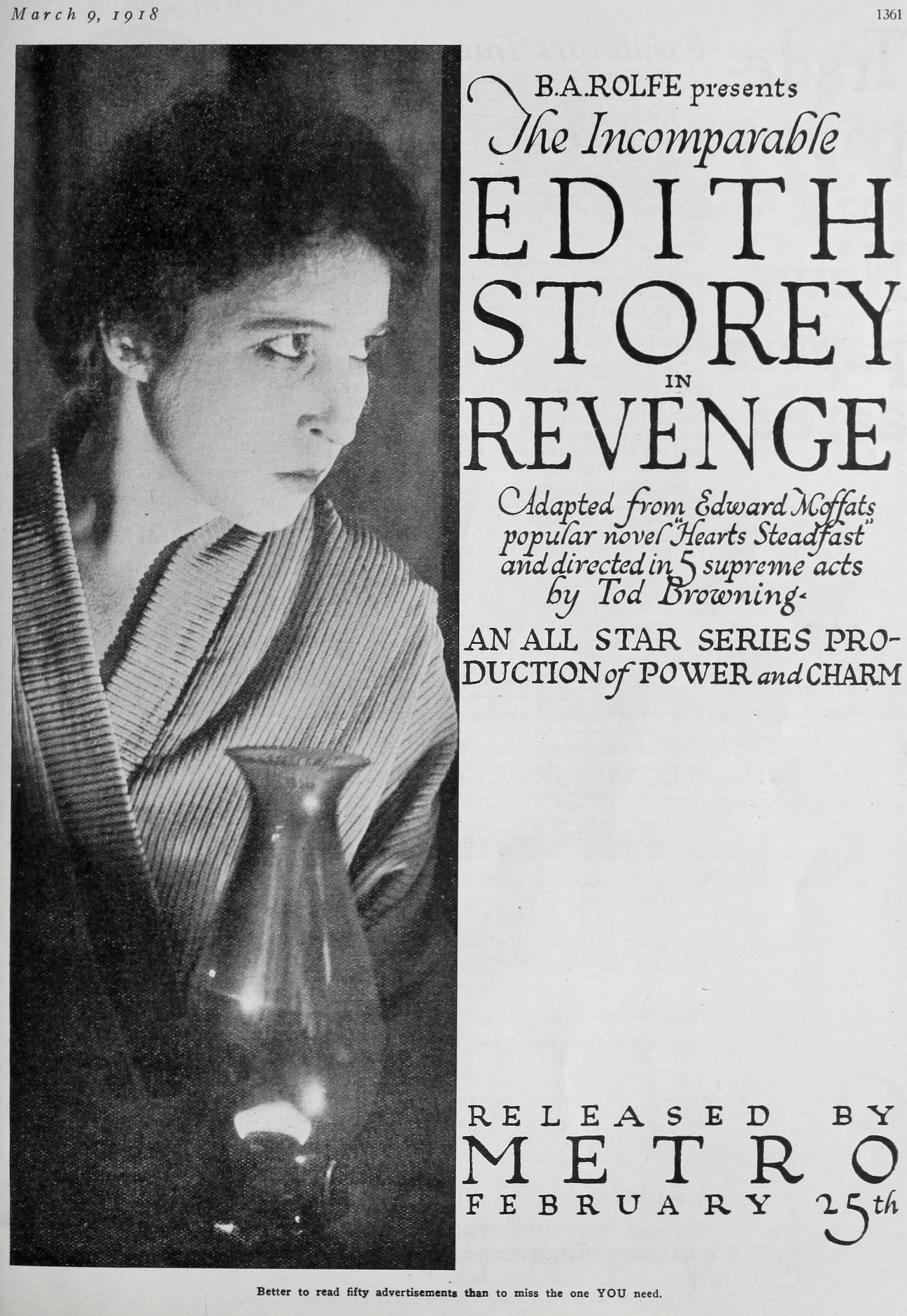
A definitive 7.9/10 rating for a film that redefined the boundaries of cult cinema. Revenge remains a cornerstone of transgressive art.
Imagine a Western where the landscape itself keeps score. In William Parker and Edward Moffat’s Revenge (1917), the Mojave is not backdrop but tribunal: every grain of alkali dust records a lie, every mirage reflects a face that once loved you. The film clocks in at a brisk five reels, yet its emotional acreage feels boundless—like stumbling upon a ghost town where every shutter still bangs in the wind.
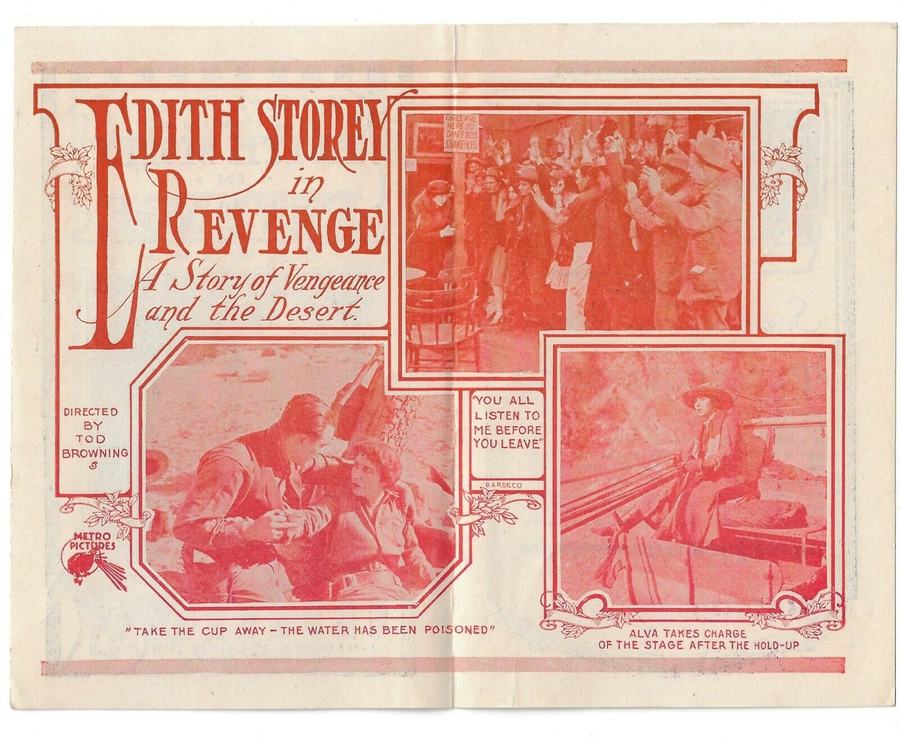
The plot, deceptively linear, corkscrews into the viewer with the torque of a morality play staged inside a tarantella. Alva Leigh arrives by stagecoach dressed like a Dresden doll, parasol quivering against the glare of a sun that has already judged her. Within minutes she is kneeling over her fiancé’s body—an tableau that prefigures the secular Pietà—while the camera, operated by an uncredited but clearly proto-expressionist hand, tilts upward so the saloon’s ceiling fan becomes a cruciform blade spinning overhead.
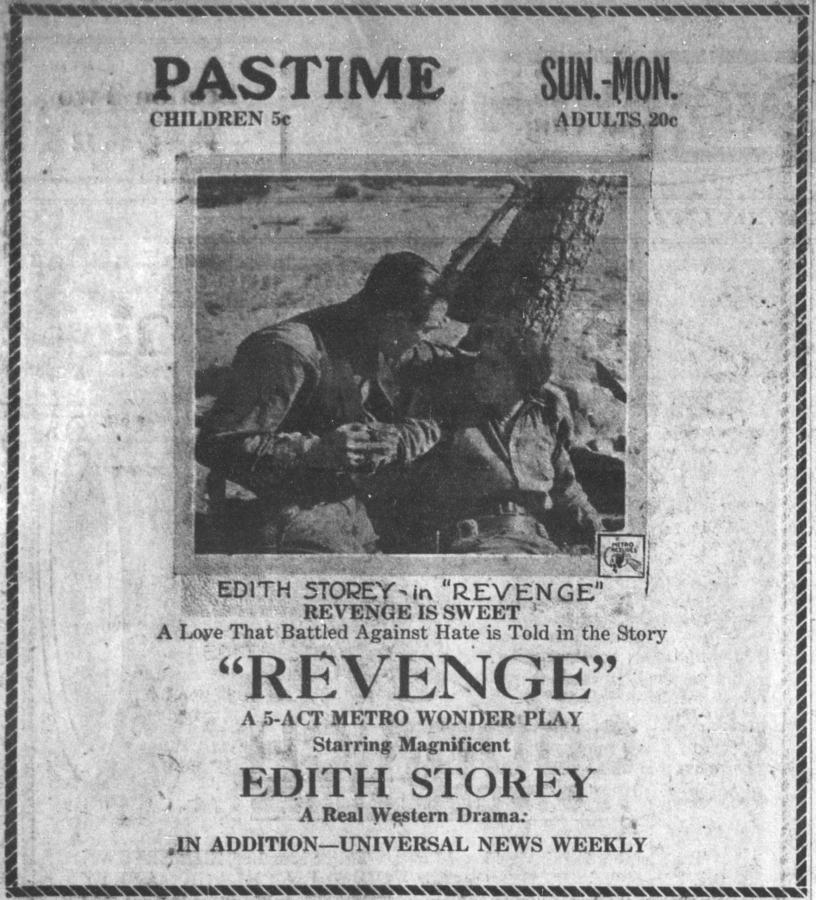
What follows is a masterclass in narrative misdirection. “Sudden” Duncan, essayed by Wheeler Oakman with the kind of velvet menace later patented by noir anti-heroes, never twirls a mustache; instead he listens—a rarer cinematic evil. When he frames Dick Randall (Charles West), the film’s moral axis wobbles like a compass near iron ore. We, the audience, become co-conspirators in a lie that gallops faster than any horse.
Mid-film, the story’s emotional fulcrum becomes a humble tin canteen—an object Werner Herzog would later call “the coffin of thirst.” Duncan fills it with tincture of aconite, a poison whose blue-tinged petals we glimpse in a quick cutaway that feels almost subliminal. Enter Alva, now turned Delilah of hydration, who from beneath her Victorian hem produces a gimlet and drills a hole no wider than a mustard seed. The resulting long take—water spiraling into the sand in real time—lasts only eleven seconds, yet it stretches like taffy in the mind. Each droplet is a syllable in a dialectic between vengeance and mercy, and the desert drinks it with omnivorous indifference.
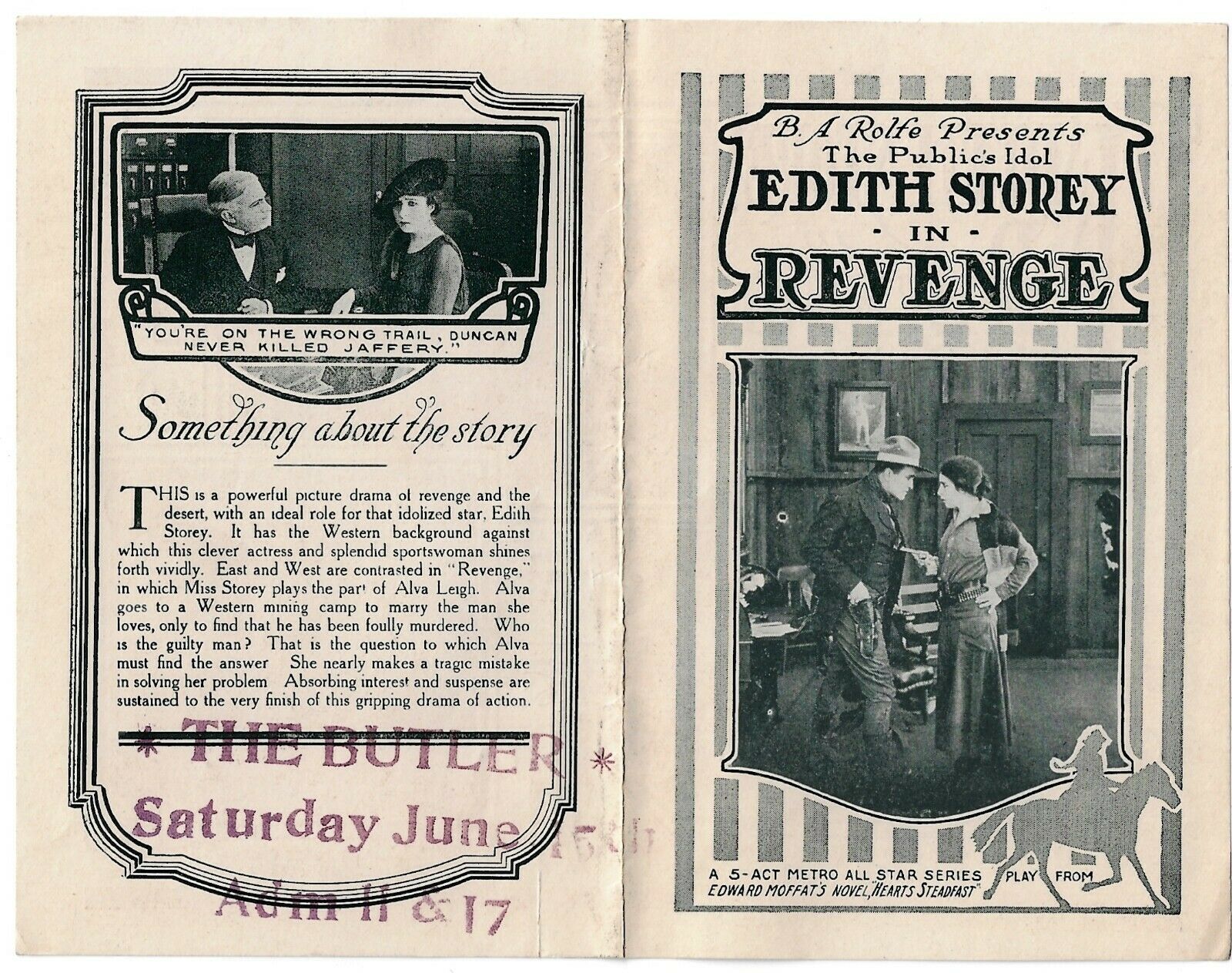
As Alva, Edith Storey performs the miraculous: she ages five years without a single title card. Watch her pupils when Tiger Lil’ (Alberta Ballard) whispers the truth about Duncan; the iris seems to dilate until the black consumes the cornflower-blue tinting added by the distributor. It is a silent scream that out-declaims any Dolby shriek. Film historians often credit A Phantom Husband (1918) for Storey’s mature work, yet the seeds of her later brilliance are sown here, watered—ironically—by a canteen she herself empties.
The town of Magnet is a composite shot: half Pioche, half back-lot, stitched together by smoke bombs and wishful thinking. Yet its metaphysical geography rivals the island in The Bottle Imp or the labyrinthine streets of The Frame-Up. Note how the mine headframe is always filmed at dusk, its skeletal silhouette resembling a gallows that forgot whom it meant to hang. Cinematographer Paul H. Allen (uncredited in most archives) lets the magnesium flares bleach the frame, so faces become alabaster masks and shadows swallow belt buckles whole. The effect is not merely chiaroscuro but a moral X-ray: guilt glows; innocence recedes.
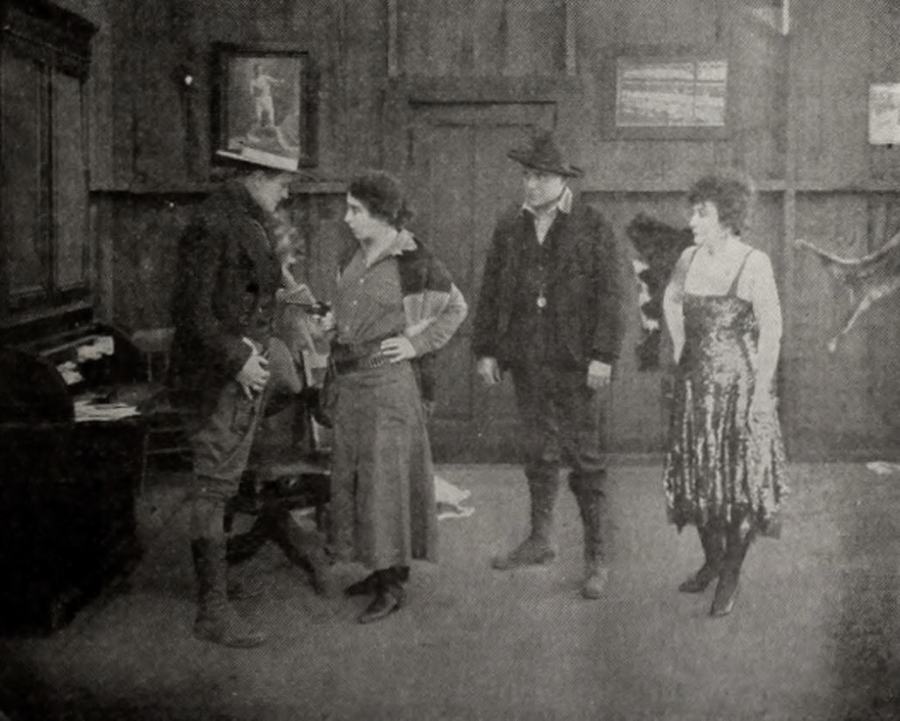
Alberta Ballard’s Tiger Lil’ deserves her own serial. She enters the narrative via a tracking shot that starts on her spurred boot and climbs past a skirt made of enough tulle to swaddle a constellation. Her motive is ostensibly jealousy, yet Ballard plays it like civic duty: by killing Duncan she restores the town’s diseased moral ledger. The gunshot occurs during a dance-hall waltz; the music never stops, it merely drops from three-quarter time to a syncopated limp, as if the pianist has misplaced half his fingers.
When Alva gallops after Randall, the intertitles cease. For three minutes we inhabit pure visual music: hooves drumming on hard-pan, clouds like bruised peaches overhead, the sun a nickel pressed against an indigo cloth. The absence of text cards is radical for 1917; it anticipates the montage theories Kuleshov will formalize a decade later. Each close-up of Alva’s veil whipping across her mouth feels like a stanza in an epic poem we must translate ourselves.
Though the original score is lost, cue sheets preserved at the Library of Congress prescribe “Hebrew Melody” by Joseph Achron for the desert sequence, juxtaposed with Sousa’s “The Thunderer” for the posse ride. Modern restorations often substitute a minimalist drone; either way, the absence of diegetic noise heightens the tactile crunch of leather, the metallic rasp of a canteen strap, the soft thud of a body collapsing from thirst. You hear what the characters cannot say.
Where The Betrothed moralizes and The Mystery Girl titillates, Revenge chooses the razor-thin path between. Its gender politics feel surprisingly 21st-century: Alva is both potential femme fatale and savior, a duality rare in 1917. Compare her to the passive ingenue of The Daughter of the Don and you realize how radically the film positions female agency.
A 4K restoration premiered at Pordenone 2022, scanned from a 35 mm nitrate print discovered in a Slovenian monastery. The tinting—amber for interiors, turquoise for night scenes—has been recreated using photochemical analysis. Streaming rights are fragmented; the film currently cycles between Criterion Channel and Kino Cult, usually paired with Die ewige Nacht in a double bill of Teutonic shadows. Blu-ray release rumored for fall 2025 with commentary by Shelley Stamp and MoMA’s Ron Magliozzi.
We live in an age of algorithmic retribution—Twitter mobs, cancel culture, doxxing. Revenge whispers back across a century: be certain of your target before you empty the canteen. The film’s closing image—Alva and Randall kissing beneath a ore-bucket that shuttles skyward like a wedding bell made of rust—offers neither absolution nor irony, only the uneasy truce of two people who have tasted the salt of their own mistakes. That, finally, is why this hundred-year-old reel still throbs like a fresh wound: it knows vengeance and forgiveness are not opposites but blood siblings, sometimes born in the same cradle of sand.
See it. Then, hours later, when you pour yourself a glass of water and hear the soft glug-glug, remember Alva’s gimlet and ask: which of your own canteens have you perforated, and whom are you trying to save—or doom—by letting them run dry?
IMDb 7.3
1929
Community
Log in to comment.