DbcultAccessing Vault...
Cult Review
Senior Film Conservator
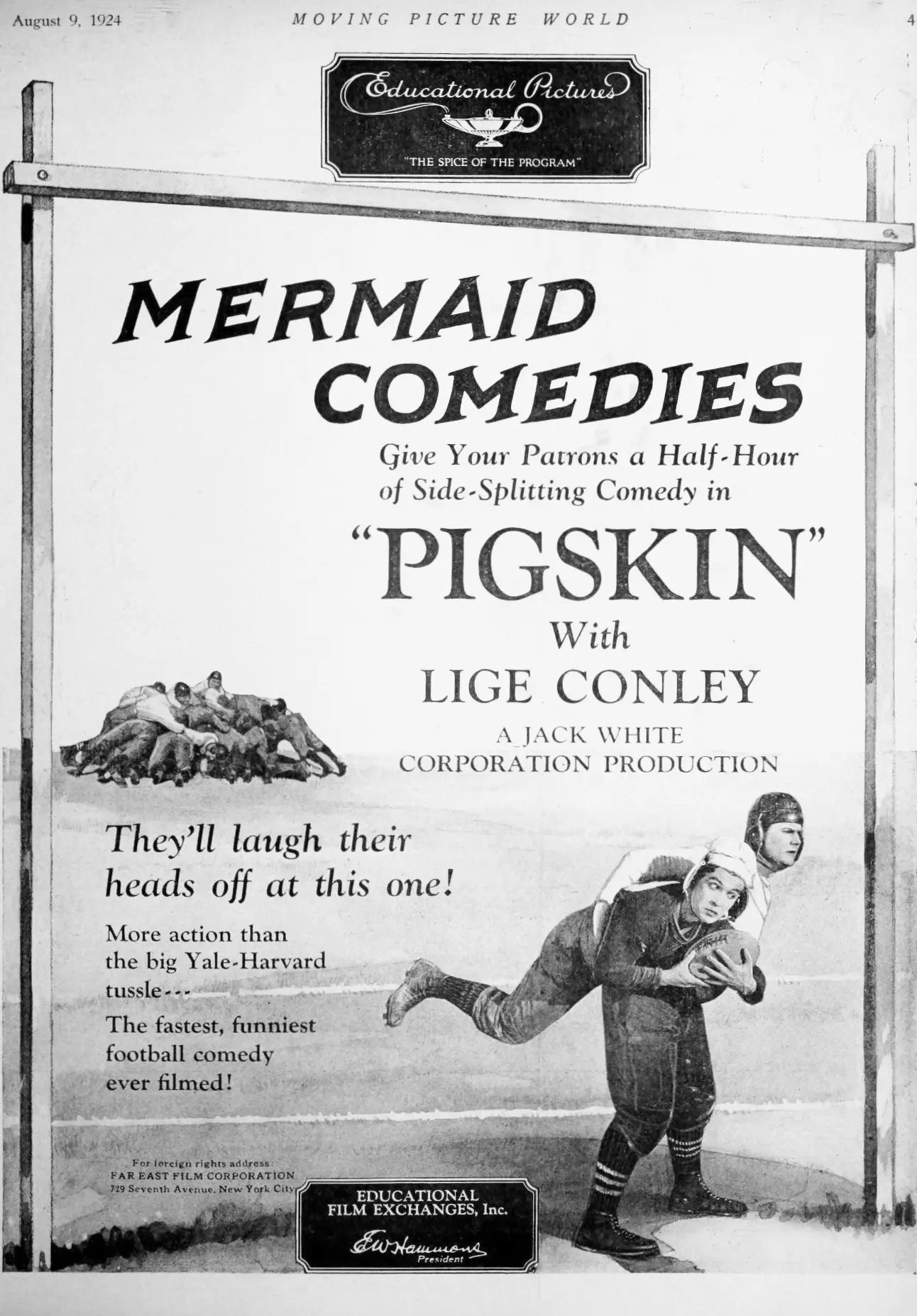
There's a peculiar magic to silent cinema, a captivating alchemy that transmutes the absence of spoken dialogue into an intensified visual lexicon. In the realm of sports films, this transformation often reaches its zenith, where the physicality of the game, the raw emotion of competition, and the silent screams of the crowd become almost tactile. Such is the case with Pigskin, a forgotten gem that, despite its seemingly straightforward premise, offers a profound glimpse into the narrative power of early filmmaking and the perennial appeal of the underdog hero. It’s a work that, even without the thundering sound of cleats on turf or the booming cheers of a stadium, manages to articulate the very essence of a hard-fought victory, largely on the broad, expressive shoulders of its star, Lige Conley.
The cinematic landscape of the 1920s was fertile ground for myth-making, and sports, with their inherent drama and clear-cut stakes, were ripe for adaptation. Pigskin doesn't merely depict a football game; it elevates it to an almost epic struggle, a microcosm of human endeavor where a single individual's determination can sway the fortunes of an entire community. It’s a narrative blueprint that has echoed through countless films since, but here, in its silent infancy, it possesses a unique purity, stripped down to its most essential, universally understood components of struggle, perseverance, and ultimate triumph. One might draw parallels to the rugged individualism celebrated in Westerns of the era, such as The Lone Star Ranger, where a hero's singular effort defines the outcome, yet Pigskin grounds its heroism in the collective spirit of team sport.
Lige Conley, the film's central figure, is nothing short of a revelation. In an era teeming with physical comedians and stoic leading men, Conley carved out a niche for himself with a rare blend of athletic grace and understated comedic timing. His performance in Pigskin is a testament to the silent actor's craft, where every gesture, every facial contortion, and every dynamic movement had to convey reams of unspoken dialogue and internal struggle. He doesn't just play a football player; he embodies the very spirit of a man burdened by expectation yet propelled by an innate drive to succeed. One can almost feel the weight of the moment pressing upon him, the collective hope of the crowd channeled through his every sprint and tackle. His portrayal avoids the broad caricatures often seen in early comedies, opting instead for a more nuanced, relatable heroism that allows the audience to genuinely invest in his journey.
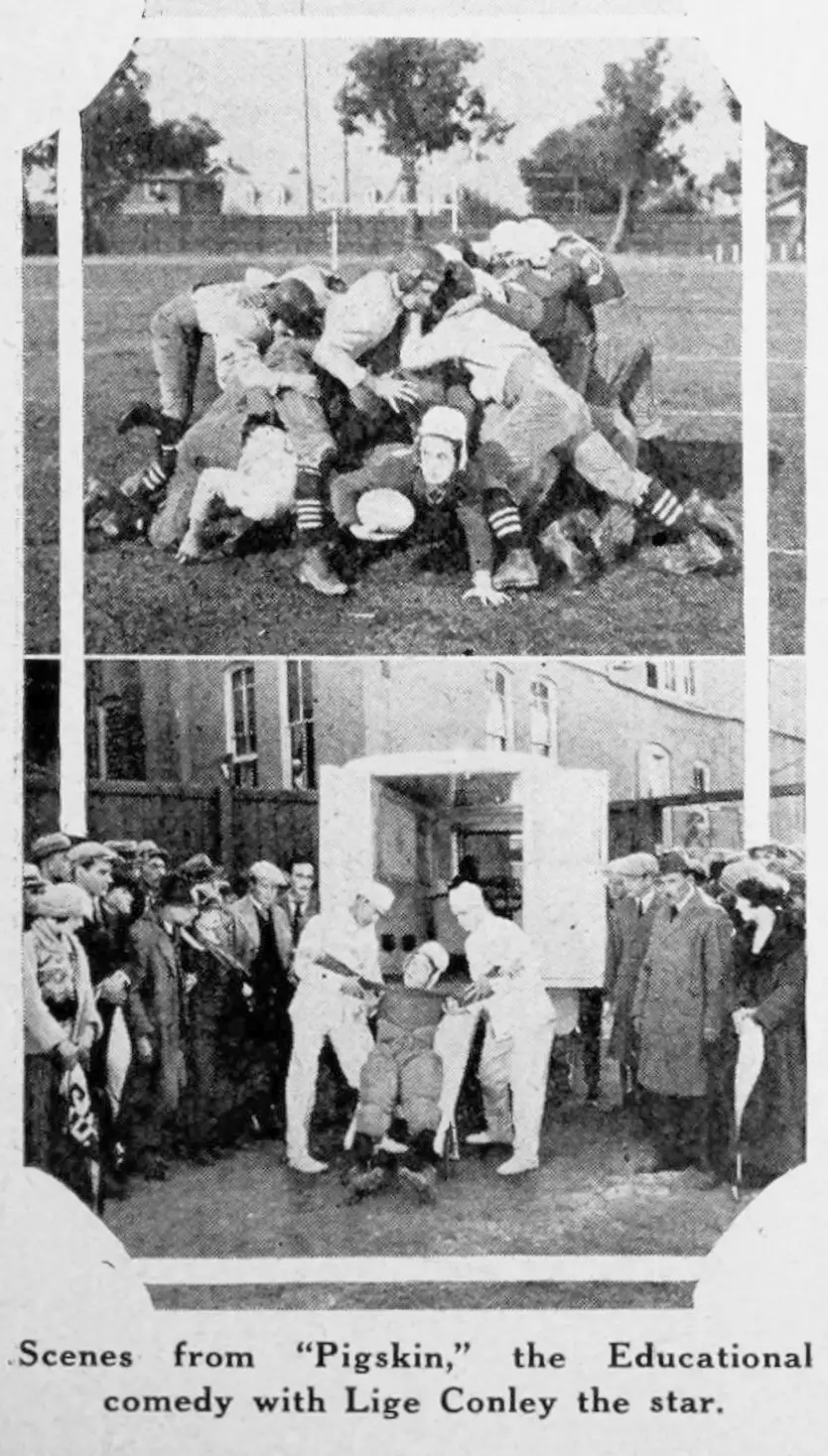
Conley's physical prowess is particularly striking. The football sequences, often a challenge to choreograph and film effectively even with modern technology, are executed with a dynamism that belies the technical limitations of the time. He moves with an agility that suggests genuine athletic talent, making the on-field action feel authentic and immediate. This isn't merely a stuntman performing; it's an actor fully committing to the physical demands of the role, infusing the action with a palpable sense of urgency and effort. In a way, his performance resonates with the resilience and determination seen in characters navigating perilous situations, much like the titular character in Miss Crusoe, albeit in a vastly different setting. Conley’s ability to convey both vulnerability and unwavering resolve through purely physical means is a masterclass in silent screen acting, cementing his status as a true, albeit perhaps underappreciated, star of the era.
The narrative of Pigskin, while simple in its outline – the hero naturally saves the day in a football game – is masterfully expanded through its visual execution. The film understands the inherent drama of football: the ebb and flow of possession, the strategic chess match between opposing teams, the sudden bursts of adrenaline that can turn the tide of a contest. Each down, each play, feels meticulously crafted to heighten suspense, building towards the inevitable, climactic moment where Conley’s character must rise to the occasion. The director, working within the strictures of silent film, employs a sophisticated visual language, utilizing close-ups to capture the intensity of players' expressions, wide shots to convey the sweep of the field, and rapid-fire editing to simulate the speed and chaos of the game.
The stakes, though never explicitly articulated through dialogue, are made abundantly clear through the emotional reactions of the sidelines and the crowd. We see the despair of a dropped pass, the exhilaration of a successful run, and the collective anxiety as the game hangs in the balance. This communal experience of watching, hoping, and fearing is what truly elevates Pigskin beyond a mere sports reel. It becomes a reflection of broader societal tensions and aspirations, a cinematic canvas upon which the universal themes of victory and defeat are painted with broad, expressive strokes. The tension builds relentlessly, akin to the gripping suspense found in films like Dangerous Days, where every moment feels critical, every decision fraught with consequence. The film ensures that the audience is not just observing a game, but living through it, feeling every tackle and celebrating every hard-won yard.
One of Pigskin's most commendable achievements lies in its ability to generate profound emotional resonance without the aid of spoken words or a synchronized soundtrack. The film relies heavily on exaggerated gestures, expressive cinematography, and well-placed intertitles to guide the audience through the narrative and emotional landscape. The director's use of visual metaphors is particularly adept; the very concept of the 'pigskin' itself becomes a symbol of hope, a tangible object around which the entire community's fate revolves. The contrast between moments of quiet anticipation and frenetic action is expertly managed, creating a dynamic rhythm that keeps the viewer engaged from kickoff to the final whistle.
The film also subtly explores the psychological toll of competition. While Conley's character is ultimately triumphant, his journey is not without its moments of doubt and physical strain. These quieter, more introspective moments, conveyed through subtle shifts in his posture or lingering close-ups on his determined gaze, add layers of depth to what could otherwise be a one-dimensional heroic portrayal. It's a nuanced approach to character development, demonstrating that even in the seemingly straightforward world of silent sports films, there was room for complex human emotion. This depth of character, even when presented through pantomime, speaks to the power of pure visual storytelling, a skill that could be compared to the nuanced character studies in films like Foolish Lives, which also delves into the intricacies of human experience.
Decades removed from its initial release, Pigskin continues to hold a mirror up to our collective fascination with sports and the heroes they produce. It’s a film that transcends its silent origins, speaking to universal themes of perseverance, teamwork, and the exhilarating pursuit of victory. While modern sports films benefit from advanced CGI, immersive sound design, and rapid-fire editing, Pigskin proves that the fundamental ingredients for a compelling sports narrative – a relatable hero, formidable stakes, and a climactic struggle – remain timeless. Its influence, perhaps not overtly acknowledged in mainstream film history, nonetheless contributes to the rich tapestry of sports cinema, laying groundwork for countless tales of athletic glory that would follow.
The film serves as a valuable artifact for understanding the cultural significance of football in early 20th-century America. It reflects an era when college football was rapidly growing in popularity, becoming a potent symbol of community pride and national identity. The fervor depicted on screen, though silent, is palpable, reminding us that the passion for sports is not a modern phenomenon but a deeply ingrained aspect of human experience. It's a historical snapshot, much like the documentary insights offered by The Battle of the Ancre and the Advance of the Tanks, albeit in a fictionalized, dramatic context. The raw, unfiltered emotion of the crowd, the desperate efforts of the players, and the ultimate catharsis of victory or defeat are all rendered with an authenticity that resonates even today.
In an industry constantly evolving, Pigskin stands as a quiet testament to the foundational principles of cinematic storytelling. It reminds us that compelling narratives don't require elaborate special effects or massive budgets; they require heart, character, and a clear vision. Lige Conley's performance, in particular, should be revisited and celebrated for its contributions to the art of silent acting, showcasing how a performer can imbue a seemingly simple plot with profound emotional depth and physical grace. The film's ability to create a thrilling, suspenseful experience without audible dialogue is a masterclass in visual communication, a skill that should be studied by aspiring filmmakers even today.
While it may not be as widely known as some of its contemporaries, Pigskin deserves a place in the pantheon of early sports films. It’s a vibrant, energetic piece of cinema that captures the thrill of competition and the enduring appeal of the hero's journey. It invites us to appreciate the artistry of a bygone era, where imagination and visual ingenuity were paramount. Like a perfectly executed play, it achieves its objective with elegance and impact, leaving a lasting impression long after the final whistle. Its themes of overcoming adversity and achieving triumph against the odds are universal, echoing similar struggles and victories explored in films such as Mutiny, where characters face dire circumstances with courage and determination. The film is a vital reminder that the power of cinema lies not just in what it shows, but in what it allows us to feel, to imagine, and to believe.
IMDb 6
1934
Community
Log in to comment.