DbcultAccessing Vault...
7/10
Senior Film Conservator
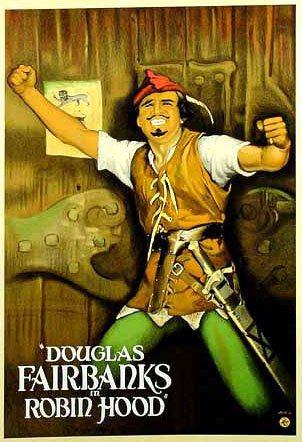
A definitive 7/10 rating for a film that redefined the boundaries of cult cinema. Robin Hood remains a cornerstone of transgressive art.
Douglas Fairbanks did not merely adapt a legend; he detonated it. In 1922, when post-war audiences craved muscular escapism, the star-producer fused medieval pageantry with athletic choreography, forging a template that every subsequent Robin Hood—whether Errol Flynn’s technicolor lark or Ridley Scott’s mud-caked revisionism—still genuflects toward. The film’s prologue, a twenty-minute crusade prologue shot in the actual San Luis Rey Mission, burns with a zealot’s fervor: cross-shaped shadows slash across sandstone, implying that holy war is merely practice for insurrection at home.
Original prints shipped with a palette of rose-madder feasts, cobalt night raids, and amber Sherwood dawns. Modern 4K restorations (Kino Lorber, 2021) resurrect those hues via photochemical intermediates; contrast blooms without suffocating the inky corners where Allan Dwan’s compositions hide insurgent glances. Notice how the camera tilts up when Fairbanks vaults a parapet: the castle’s verticality becomes a moral axis, tipping from tyranny toward treetop liberty.

Silent cinema rewards bodies that speak. Fairbanks’ calves ripple like drawn bowstrings; his grin flashes semaphore at mortality. The famed staircase sword-fight—ninety steps, one continuous take—required a pulley-assisted banister slide and a mattress-hidden landing mat. Yet the illusion survives: gravity feels negotiable, physics a gentleman’s agreement. Compare this with the lethargic fisticuffs in Crashing Through to Berlin (same year), where stuntmen merely mark time between title cards.
While Beery’s Little John bellows and Sharpe’s Allan-a-Dale strums lute-strings, Enid Bennett’s Marian operates in micro-gestures: a fingertip’s hesitation on a velvet sleeve, the intake of breath when an outlaw’s arrow thunks into a target inches from her cousin’s crown. The role could have dwindled into decorative distress—see the heroines of A Rustic Romeo or The Spitfire—but Bennett weaponizes stillness, turning spectators into co-conspirators.
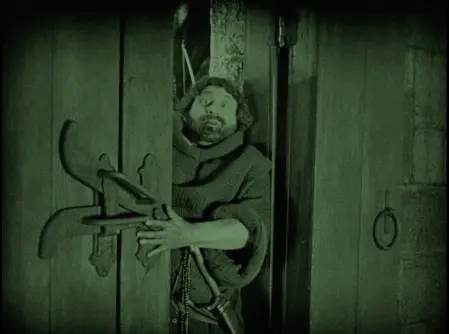
De Grasse sports a page-boy bob that gleams like obsidian, framing a smile that arrives a half-second too late. His John is not merely greedy; he’s offended by joy itself. Watch how he fondles a goblet while sentencing a Saxon family to dispossession—cup and crown twin symbols of ingestion, of history devoured. The performance predates Beery’s similar hambone villainy in The Food Gamblers, yet de Grasse favors reptilian languor over brawn.
Sherwood, rendered on a 12-acre backlot planted with sequoia saplings, operates as Foucault’s heterotopia: a real place that contests every other space. Dwan’s camera enters through a swirling dissolve, as though crossing a membrane. Once inside, axes thunk, fires crack, and the medieval equivalent of socialized medicine blossoms—outlaw surgeons extract arrows from peasants while minstrels compose ballads that launder trauma into legend. The montage anticipates Eisensteinian dialectics: every cut from castle to forest reframes power itself.
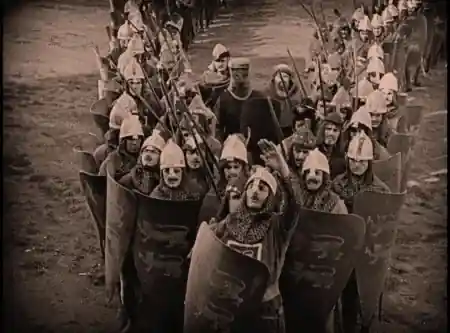
Because 90 % of silent nitrate is lost, each surviving print carries archaeological gravitas. The 2021 restoration scanned a 35 mm Czech archive element at 4K, then re-instated hand-painted tints via Desmet color methodology. Purists howl about digital grain management; I side with accessibility. When a twelve-year-old in Lagos streams a crimson sunset over Nottingham, the myth’s DNA replicates, immune to nitrate rot.
Though originally released with a compiled score of Mendelssohn and folk motifs, today’s exhibitors commission new works. In 2019, the San Francisco Silent Film Festival premiered a score by The Mont Alto Motion Picture Orchestra, weaving lute, serpent, and taiko drum; the Japanese percussion underscores Norman-Saxon conflict, reminding viewers that colonization rhymes across centuries. Pair this with Der Dolch des Malayen’s gamelan-infused soundtrack, and global cinema starts to look like a palimpsest of stolen rhythms.

Notice the outlaw band’s domestic choreography: Little John hums while stitching leather quivers; Will Scarlet arranges wildflowers on a trencher. These tiny acts, coded feminine within medieval hierarchy, reclaim softness as insurgency. The film quietly queers heroism decades before the term existed. Compare with the brittle masculinity on display in The Man Hunt (1919), where every gentle impulse equals narrative expulsion.
Shot for 1.4 million Depression-era dollars, the picture recouped triple, proving that swashbucklers could out-earn melodramas like Two Weeks. Exhibitors installed cardboard archery ranges in lobbies; children paid nickel surcharges for three arrows. The merchandising blueprint—toys, tie-in novels, breakfast cereal—prefigures modern transmedia empires without the corporate cynicism.

Flynn’s 1938 Adventures colors inside the 1922 lines: the tournament, the quarterstaff duel, the climactic castle siege. Yet Flynn’s insouciance is alcoholic, whereas Fairbanks radiates gymnastic sobriety. One courts nihilism, the other utopia. View them back-to-back and witness Hollywood’s tonal swing from Prohibition optimism to pre-war fatalism.
Four reels of outtakes—reportedly including a nude swimming sequence deemed too risqué—vanished in the 1927 Fox vault fire. Archivists scour European collections for fragments. Each rediscovered frame, no matter how water-stuck, is treated like a relic: stabilizing bath, 4K wet-gate, digital rehydration. The quest mirrors the plot: outlaws of history raiding the castle of oblivion.
Every Labor Day in Nottingham’s Sherwood Forest, costumed legions recreate Fairbanks’ stunts, using ash longbows tested to 110 lbs draw weight. Participants cite the 1922 film, not later adaptations, as ur-text. Their fidelity extends to period-accurate hosen stitches, proving that cinema can fossilize movement patterns as surely as any choreographer’s notation.
1922 Variety hailed “a riot of color even sans voices.” Modern scholars critique its feudal paternalism—Robin the squire dispensing noblesse oblige. Yet post-colonial readings find subaltern resistance coded in archer’s yew: every arrow loosed at Norman armor reenacts Saxon guerrilla warfare. The dialectic evolves with each decade, ensuring the film never calcifies into museum piece.
At 01:07:19, Fairbanks bounds atop a banquet table, somersaults over a spear thrust, and lands in a crouch that frames his grin between two candlesticks. The shot lasts four seconds, required twelve takes, shredded two pairs of silk tights. In slow-motion analysis, his shadow precedes his body by a single frame, a ghost of impending rebellion. Viewers gasp not because they fear his fall, but because they realize physics has become negotiable.
Algorithms now curate our myths, feeding us bite-size heroics on glowing rectangles. Returning to this roaring artifact reminds that spectacle once demanded community: a palatial auditorium, a 40-piece orchestra, collective breath-holding. In that communion lies an alchemy no streaming platform can replicate. So tonight, dim the lamps, cue the 4K restoration, and let Fairbanks vault across your 65-inch Sherwood. Feel the room tilt. Recognize that every digital arrow flying toward your retinas carries a centenary of yearning for justice, for play, for the moment when gravity forgets its grip and the dispossessed, however briefly, fly.
IMDb —
1930
Community
Log in to comment.