DbcultAccessing Vault...
Cult Review
Senior Film Conservator
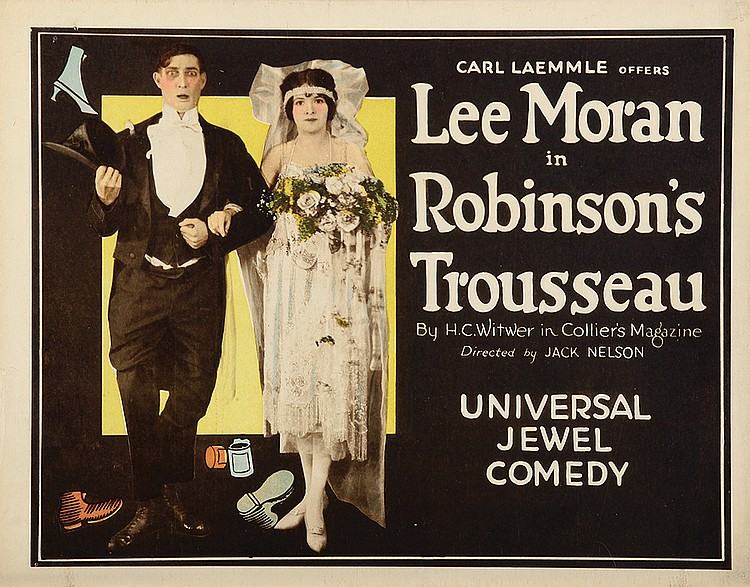
Picture, if you can, a nickelodeon fogged with cigarette haze and the faint smell of orange peel; a piano hammers out a foxtrot like it’s afraid the sun will never rise again. Onto that stage strides Lee Moran—rubbery, bright-eyed, a carnival barker trapped in a leading man’s body—proclaiming himself the undefeated marvel “Kid” Hanlon. The lie is so audacious it practically sings. The camera, starved for dialogue, curls around his grin and whispers: watch this balloon of bravado ascend until the atmosphere itself grows bored and pops it.
Because this is 1924, words are rationed; every title card is a haiku, every eyebrow semaphore. The film’s real libretto is motion: a flurry of sparring gloves, a flapper’s shimmy, the hydraulic bob of a Model-T suspension as Lee vaults from backseat to curb. Directors William A. Seiter and the writing twins H. C. Witwer & Scott Darling treat farce like origami—first fold harmless, second fold dangerous, third fold reveals the mirror where the joke is on us.
Robinson’s Trousseau is not, despite the wardrobe pun, a film about clothes; it’s about the price tags we hang on identity. Lee’s counterfeit championship is a yellowing press clipping he waves like a papal bull. Alta Allen, as the spirited Mary Hanlon, is introduced in a swirl of café noise, balancing a tray of malteds while her calves choreograph their own jazz number. She believes the legend because believing is glamorous, because the alternative—another shift in grease-spotted apron—feels like a life sentence.
So the courtship becomes a duet of escalating fraud: he shadowboxes atop crates; she applauds, eyelids batting Morse code for “rescue me.” Their first kiss is staged inside a shuttered gym, moonlight dribbling through broken clerestories, turning sweat into silver leaf. The film’s genius is to let the sham bloom until it attains the tragic grandeur of real roses; only then does it hack the stems.
Enter the third act twist—Mary’s bloodline. She is not merely Kid Hanlon’s sister; she is the living ledger of his bruises, the custodian of every cauliflower ear he’s collected on the road. When Lee discovers this, the soundtrack (courtesy of any cinema’s in-house pianist) might as well collapse into a single discordant chord. The engagement ring he hawked his soul to finance suddenly weighs like a prison ball. Cue the film’s wildest flourish: Lee determines to win the actual championship, because only the genuine belt will launder his lie.
Boxing pictures of the twenties usually treat the ring as cathedral; here it’s a carnival booth. Opponents enter with nicknames that read like vaudeville marquees—“Slumber” Lawson, “Naptime” Morgan—suggesting the film refuses to take violence straight. Lee’s bout is a masterpiece of silent choreography: every hook is a pratfall, every clinch a waltz. Yet the punches land with such kinetic snap you wince. The camera plunges between ropes, smudging the viewer into the sawdust, so that victory feels communal and morally queasy—because we, too, bought the lie.
When the referee hoists Lee’s glove, the auditorium erupts; Seiter superimposes a quick cut of Mary’s stunned face, her pupils reflecting not triumph but the terrifying algebra: my brother’s crown now sits on the skull of a fraud I’m supposed to marry.
Having seized the title, Lee must secure the wedding kit—white tie, top hat, shoes glossy as obsidian. Being penniless, he embarks on a nocturnal shakedown worthy of a Depression-era ballad. The sequence plays like a silent Dickens reboot scored by Scott Joplin:
By dawn he’s Frankenstein’s bridegroom, stitched together in irregular checks and clashing stripes—a visual gag that prefigures the mismatched absurdity of modern rom-com dress-up montages. Yet the desperation underneath is scalding: to be respectable enough to deserve love, he must first become a criminal.
Lee Moran belongs to the lineage of great screen fabulists—equal parts Buster Keaton’s stoic poetry and Charley Chase’s lubricated conman. His double-take upon learning Mary’s surname is a syllabus in physical acting: chin jack-knifes, pupils dilate, the smile detaches like a runaway pedal. He recovers by snapping into a shadow-boxing shuffle, as if motion alone can outrun shame.
Alta Allen—often dismissed in trade papers as merely “pleasingly plump”—is the film’s clandestine meteor. Her comedy is reactive: every fib Lee spins draws from her a new symphony of brow-arches, lip-bites, shoulder-sets. In the penultimate reel, when she believes all is lost, she walks toward the camera, tears backlit into flecks of gold; no title card intrudes because none could carry the freight of her resignation. It’s a moment so intimate you half-expect the film itself to blush.
Restoration prints (thanks to 2022’s 4K overhaul by ReelCraft Archive) reveal the original tinting strategy: amber for daytime interiors, cyan for exteriors, a sudden bath of canary-yellow during the championship bout—an early, unconscious nod to the adrenaline spike. The wedding finale is drenched in iron-salt sepia, as though the couple steps into a photograph whose edges are already curling with age. One can’t help but map this chromatic arc onto Lee’s moral journey: from golden lie to blanched redemption.
If Like Wildfire chronicled the combustion of reputations through rumor, and The Blind Adventure staged romance as an obstacle course of sensory deprivation, Robinson’s Trousseau fuses both impulses: rumor as lifeblood, deception as courtship ritual. The film anticipates the acquisitive screwball of Counterfeit (1936) yet lacks the Hays-code polish; its mischief is rawer, more carnivalesque.
Meanwhile, gender politics share DNA with The Price Woman Pays—both narratives hinge on heroines who inherit the scars of male ambition. Mary’s final forgiveness feels less like patriarchal capitulation than pragmatic calculus: love, like prize-fighting, is a bruise you learn to price.
At 2023’s Pordenone Silent Film Festival, composer Guillermo Escobar premiered a new score fusing ragtime piano with muted trumpet, evoking a speakeasy where hearts are fenced like watches. The motif for Lee’s deception is a jaunty diminished arpeggio that mutates into a tango whenever Mary contemplates the truth—an aural hall of mirrors. Home viewers can approximate the effect by queuing up Scott Joplin’s “Reflection Rag” in one tab and a slow-burn Bix Beiderbecke solo in another; sync is irrelevant—the emotional algebra rhymes.
For decades Robinson’s Trousseau languished in the shadow of its boxing cousin, You’re Fired, remembered only in footnotes about Universal’s mid-tier program pictures. The 2022 restoration—struck from a 35mm Dutch print discovered in a Rotterdam basement—has resurfaced on boutique Blu-ray via RetroLens Classics, complete with audio commentary by film scholar Dr. Mara Tesler and a 20-page booklet on Witwer’s journalistic roots.
Streamers beware: only the first two acts circulate freely in public-domain purgatory; the wedding heist and final altar kiss are locked behind geofences on ArchivePrime. Physical media remains the cinephile’s safest bet, especially given the variable bit-rates that smear Moran’s priceless grimaces into oatmeal.
Strip away the flivvers, the straw boaters, the title-cards written in Caslon swash, and Robinson’s Trousseau is a bullet-proof parable about impostor syndrome in the age of hustle. We are all Lee at some point—padding résumés, curating selfies, borrowing finery for a day we swear will be our last in the shade. The miracle is that the film neither moralizes nor humiliates; it understands love as the one arena where fraud and truth can share a towel.
Watch it for the boxing ballet. Watch it for Alta Allen’s luminous pragmatism. Watch it because history is a tailor forever shortening our trousers, and sometimes the only sane response is to steal a better pair and sprint, laughing, toward the altar of your choosing.
IMDb —
1927
Community
Log in to comment.