DbcultAccessing Vault...
Cult Review
Senior Film Conservator
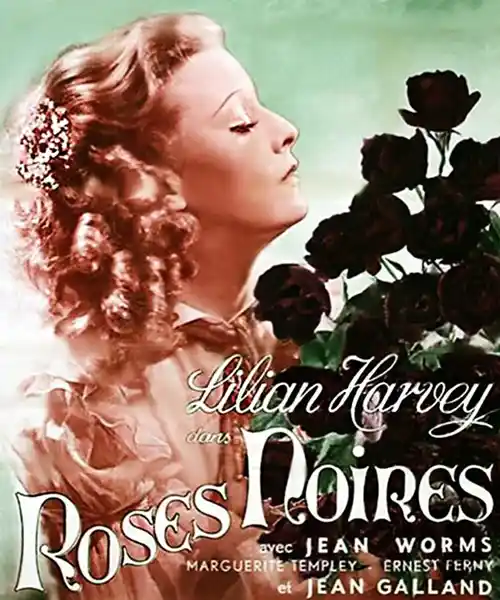
Alright, so Roses noires. Is it worth tracking down today? Look, if you’re someone who loves those really old, super dramatic, almost theatrical romances from the early talkie era, then yeah, absolutely. But if you prefer your historical dramas to be a bit more subtle, or anything made after, say, 1950, you might find this one a little… much. It’s a specific kind of film for a specific kind of viewer. 🎭
The story itself is classic melodrama gold: a Russian ballerina, her heart tangled up with a Finnish artist. He’s all about fighting for freedom from Czarist oppression, and she’s, well, she’s willing to give everything for him.
Lilian Harvey, as the ballerina, just *shines* in this. She has this way of looking at the artist, Jean Galland, that just screams devotion, even when she’s not saying a word. You feel her internal struggle, that push and pull between her art and her desperate love.
The whole political backdrop of Czarist Russia and Finnish freedom? It's there, certainly. But it honestly feels more like a really grand, dramatic stage for the personal sacrifices, less a deep dive into history. It’s all about the *emotion* of the situation.
There's this one scene, I can't quite get out of my head, where the ballerina is practicing her routine, but her eyes are constantly darting to the window. You just *know* she's thinking about him, about the danger. It’s a quiet moment, but it’s loaded with tension. It really makes you lean in.
The movie really leans into the idea of a noble sacrifice. Like, really leans in. Sometimes it feels almost *too* heavy-handed, but then Harvey pulls it back with a look, a gesture, and you buy it again. It’s that old-school acting style where everything is just a little bit bigger.
Considering this was filmed in the early 1930s, the sound isn't always perfect. You get those slightly hollow-sounding voices that were common back then, but it kind of adds to the old-world charm, actually. The music, though, really swells up in all the right places, guiding your feelings whether you want it to or not.
Jean Galland as the artist is… fine. He’s passionate enough, especially when he’s talking about freedom, but his performance sometimes feels a little stiff next to Harvey's intensity. She really carries a lot of the emotional weight of the film on her shoulders.
There are these small, almost blink-and-you’ll-miss-them moments of quiet despair in the background characters. Like a quick shot of an older woman, head bowed, in a crowd scene. It tells you more about the oppression than any big speech could.
The sets are quite lush for the period, giving you a real sense of grand Russian palaces and then the stark contrast of the artist's simpler world. You can almost smell the old velvet and dust. It reminds me a bit of the lavishness you'd see in something like Ladies of the Big House, but with a different kind of oppressive atmosphere.
It’s not a fast-paced film, not by modern standards. You’re meant to sit with the feelings, with the inevitability of the tragic fate. Some scenes linger just a beat longer than you expect, forcing you to absorb the emotion. It’s a slow burn, but when it hits, it *hits*.
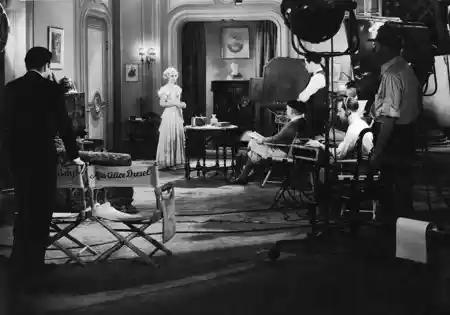
I found myself wondering about the logistics of filming a French version of a German film simultaneously. Like, did they just swap out the actors and crew every day? Or was it all done in one big, multilingual chaos? 🤔 It's a curious little detail that pops into your head.
Ultimately, Roses noires is a testament to Lilian Harvey's power as a silent-era star transitioning into sound. She brings a real depth to what could have been a very one-note character. If you’re a fan of those big, unapologetically dramatic romances, and don't mind a bit of old-school pacing, give it a shot. It’s a pretty intense watch, but its heart is absolutely in the right place, even if it tugs a little too hard on those heartstrings sometimes. ❤️🩹
IMDb —
1931
Community
Log in to comment.