DbcultAccessing Vault...
6.3/10
Senior Film Conservator
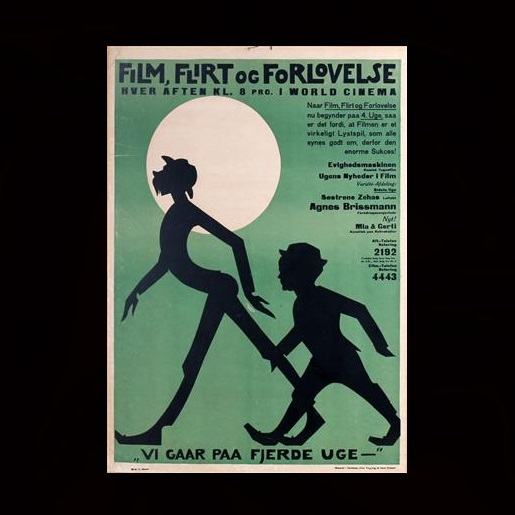
A definitive 6.3/10 rating for a film that redefined the boundaries of cult cinema. Film, flirt og forlovelse remains a cornerstone of transgressive art.
Lau Lauritzen’s ‘Film, Flirt og Forlovelse’ is a cinematic jewel that marries the pastoral serenity of rural Denmark with the sharp wit of a social satire, all while dancing on the edge of a romantic comedy’s whimsy. Released in an era when Danish cinema was still finding its voice, this film stands as a testament to Lauritzen’s ability to craft narratives that are both intimately human and grandly theatrical. The story, set on a sprawling Scanian estate, unfolds like a stage play with the visual richness of a painting, where every character’s movement is choreographed to underscore the tension between societal expectations and personal freedom.
At its core, the film is a battle of wills between the landowner (played with stern gravitas by Oscar Stribolt) and his daughter Eva (Eva Sørensen, whose performance is a masterclass in rebellious vulnerability). Eva, a creature of untamed energy and curiosity, is the antithesis of the docile daughter the landowner envisions for his son-in-law. Her play-fighting with male companions and her penchant for wandering the fields, hair unbound and spirit unbridled, are acts of quiet rebellion against the constraints of her station. The Baron (Christian Johansen), meanwhile, embodies the cosmopolitan outsider, his disdain for the estate’s rustic charm as palpable as his fascination with the city’s artistic possibilities. The dynamic between Eva and the Baron is never overtly romantic; instead, it is a charged stalemate, their mutual disinterest in each other’s company a mirror for the film’s exploration of mismatched desires.
The inciting incident—a forged letter from the glamorous actress Aspesia—acts as both narrative fulcrum and thematic linchpin. The letter’s interception by Pat and Patachon (Victor Montell and Ingeborg Bruhn Bertelsen), two traveling knife grinders with a knack for opportunism, introduces a layer of farce that elevates the film into a genre-blending marvel. These interlopers, with their ragged charm and quick wits, serve as the audience’s surrogate in their manipulation of the estate’s hierarchy. Their scheme to exploit the Baron’s urban aspirations not only disrupts the landowner’s plans but also exposes the fragility of the estate’s social order. Through their antics, Lauritzen critiques the performative nature of class and identity, suggesting that even the most rigid structures are ripe for subversion by those who understand the power of a well-timed lie.
The film’s aesthetic is a study in contrasts. The estate, bathed in golden light and framed by lush greenery, is a visual metaphor for the suffocating opulence of tradition. By contrast, the Baron’s urban world—a mere suggestion in the film’s sparse but evocative city scenes—is rendered in sharp angles and cooler tones, symbolizing the allure of modernity. Lauritzen’s use of long takes and naturalistic lighting (a rarity for its time) emphasizes the characters’ emotional states, particularly in Eva’s monologues where her frustration with the landowner’s plans simmers just below the surface. The cinematography, though uncredited, deserves special mention for its ability to transform a static setting into a living, breathing character that influences the plot’s trajectory.
The performances are uniformly stellar, but it is Eva Sørensen’s portrayal of the titular daughter that lingers longest in the mind. Her portrayal of Eva is neither rebellious nor rebellious; instead, she embodies a quiet defiance, her eyes betraying a hunger for autonomy that her actions only subtly express. Similarly, Christian Johansen’s Baron is a study in understated aloofness, his detachment from the estate’s politics a source of both comedic and tragic tension. The supporting cast, particularly Victor Montell as Pat, brings a levity that balances the film’s more serious themes, ensuring that the narrative never becomes didactic.
‘Film, Flirt og Forlovelse’ exists in a lineage of Scandinavian films that explore the tension between rural and urban identities. Films like ‘Beauty and the Rogue’ and ‘The Red Woman’ similarly grapple with themes of authenticity and performance, but Lauritzen’s work is unique in its focus on the microcosmic world of a single estate. The film’s structure—part comedy, part melodrama—echoes the works of ‘The Cambric Mask’, though Lauritzen’s tone is more satirical. The knife grinders’ role as tricksters recalls the stock characters in ‘Cupid Angling’, yet their moral ambiguity adds a layer of complexity that elevates the narrative beyond mere farce.
Thematically, the film’s preoccupation with identity and social pretense aligns it with the existential undertones of ‘God’s Country and the Law’, though here the focus is more on personal agency than collective morality. The use of artifice as a tool for empowerment, particularly through Pat and Patachon’s schemes, resonates with the subversive spirit of ‘The Imp’, which similarly challenges hierarchical norms. However, where those films lean into darker, more tragic elements, ‘Film, Flirt og Forlovelse’ retains a buoyant optimism, suggesting that even in the face of societal rigidity, individual ingenuity can carve out spaces for authenticity.
What makes ‘Film, Flirt og Forlovelse’ endure is its ability to balance specificity with universality. The estate’s world is so meticulously rendered that it becomes a metaphor for any society bound by tradition, while the characters’ struggles—Eva’s fight for self-determination, the Baron’s desire for artistic reinvention, Pat and Patachon’s subversive pragmatism—are as relevant today as they were in the 1930s. Lauritzen’s direction, though grounded in the conventions of its era, anticipates modern themes of gender roles, class mobility, and the performative nature of identity. The film’s closing scenes—a bittersweet resolution that neither fully satisfies nor disappoints—leave the viewer with a lingering sense of possibility, a testament to the enduring power of storytelling to reflect and challenge the world it depicts.
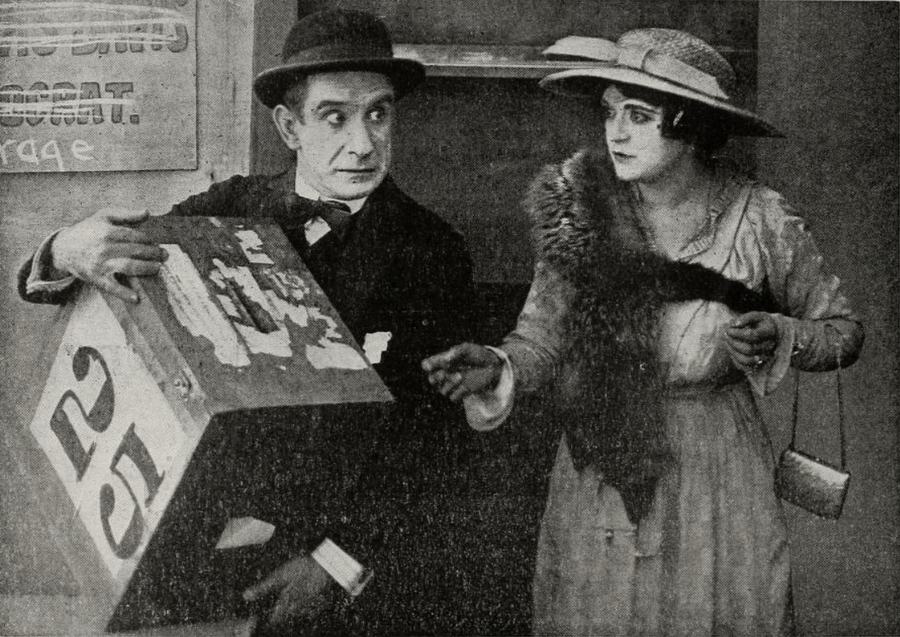
IMDb —
1915
Community
Log in to comment.