DbcultAccessing Vault...
Cult Review
Senior Film Conservator
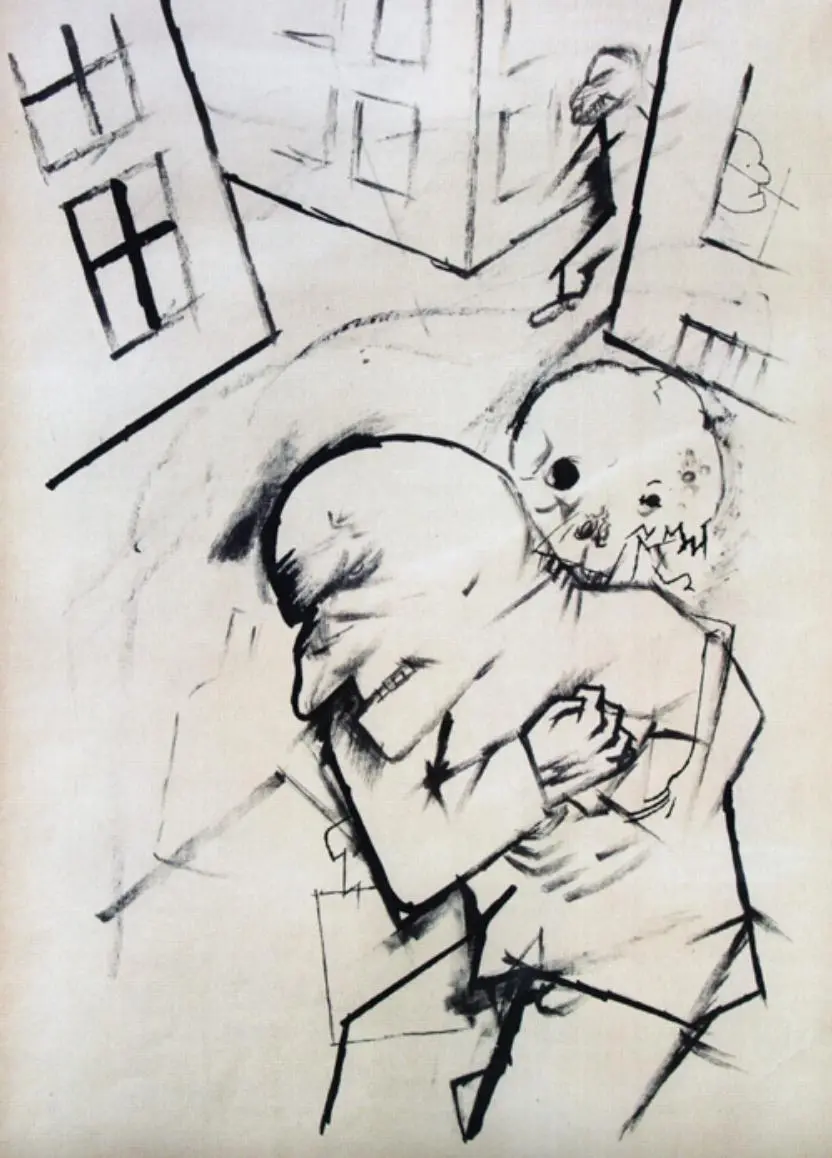
In the realm of documentary filmmaking, there exist works that transcend the conventional boundaries of the medium, offering viewers a profound glimpse into the lives and creative processes of their subjects. 'Schaffende Hände: George Grosz', a short documentary directed by Hans Cürlis, stands as a testament to this notion, providing an enthralling exploration of the artistic endeavors of George Grosz, a prominent figure in the German art scene of the 1920s.
The film, with its focus on Grosz's hands at work, ingeniously captures the essence of his creative process. As the viewer, we are treated to an intimate portrayal of the artist's skillful hands as they bring his imaginative visions to life. This deliberate focus on the artist's hands not only serves to underscore the intricate relationship between creativity and the human form but also functions as a metaphor for the symbiotic bond that exists between the artist and his craft.
Grosz, known for his incisive and often provocative works, was a key figure in the development of the Dada and New Objectivity movements. His art, characterized by its biting satire and social commentary, offers a scathing critique of the Weimar Republic and the societal ills that plagued it. Through his work, Grosz sought to expose the hypocrisy and moral decay that had become endemic in German society, using his art as a powerful tool for social commentary and critique.
The documentary, while not explicitly delving into Grosz's personal life, masterfully conveys the artist's persona through his interactions with his craft. Cürlis's sensitive direction coaxes a sense of vulnerability from Grosz, allowing the viewer to glean a deeper understanding of the artist's inner workings. This is achieved through a series of deftly captured moments, wherein Grosz's hands move deftly, bringing his imaginative visions to fruition.
In analyzing 'Schaffende Hände: George Grosz', it is pertinent to draw comparisons with other films that have explored the lives and creative processes of artists. For instance, 'The Life of Our Saviour; or, The Passion Play' and 'The Love Tyrant' both offer insights into the world of art and creativity, albeit through different lenses. While 'The Life of Our Saviour; or, The Passion Play' presents a more traditional approach to storytelling, 'The Love Tyrant' explores the complexities of human relationships, much like 'Schaffende Hände: George Grosz' examines the dynamic between Grosz and his art.
Furthermore, films such as 'The Light of Victory', 'The Spy', and 'Sands of Sacrifice' also warrant consideration, as they, too, navigate the realms of creativity and artistic expression. 'The Light of Victory', with its emphasis on triumph and achievement, serves as a foil to Grosz's more introspective and critical approach. Conversely, 'The Spy' and 'Sands of Sacrifice' both explore themes of identity and deception, which are also present in Grosz's work, albeit in a more subtle manner.
In addition to these comparisons, it is essential to consider the broader context of documentary filmmaking during the 1920s. This period saw the rise of innovative filmmakers who sought to push the boundaries of the medium, often incorporating elements of drama and fiction into their works. 'Schaffende Hände: George Grosz' must be seen within this context, as a pioneering effort that showcases the potential of documentary filmmaking to reveal the intricacies of the creative process.
The film's attention to detail, coupled with Cürlis's adept direction, results in a viewing experience that is at once captivating and enlightening. As Grosz's hands move deftly, bringing his imaginative visions to life, the viewer is afforded a rare glimpse into the artistic process. This is a film that not only sheds light on the creative endeavors of a renowned artist but also invites the viewer to reflect on the very nature of art itself.
Ultimately, 'Schaffende Hände: George Grosz' stands as a testament to the power of documentary filmmaking, demonstrating its capacity to illuminate the lives and creative processes of its subjects. Through its thoughtful exploration of Grosz's artistic endeavors, the film offers a profound meditation on the intersection of art and humanity, one that lingers long after the credits roll.
In conclusion, 'Schaffende Hände: George Grosz' is a masterful documentary that provides a captivating glimpse into the creative process of a renowned artist. Through its innovative approach and sensitive direction, the film offers a rich tapestry of insight into the mind of George Grosz, inviting the viewer to reflect on the very nature of art itself.
IMDb —
1933
Community
Log in to comment.