DbcultAccessing Vault...
Cult Review
Senior Film Conservator
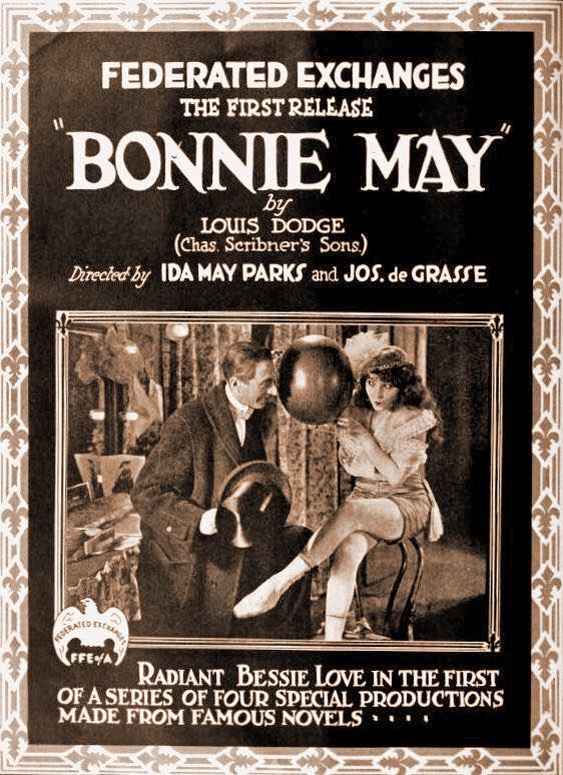
The first time I saw Bessie Love’s Bonnie glide across the screen—feet barely kissing the Persian rug, eyes wide as teacup saucers—I understood why certain silents feel like intercepted séances. This 1923 one-reeler, barely coughing past the twenty-minute mark, carries the spectral density of a cathedral canticle. Director Tom Ricketts stages every tableau as though it were a Degas lit by gaslight: foregrounds shimmer, midgrounds dissolve into cigarette haze, and the background—oh, that background—looms like a creditor. The mansion itself breathes; its grandfather clocks wheeze, its grand piano exhales unresolved chords. You half expect the wallpaper to confess ancestral sins.
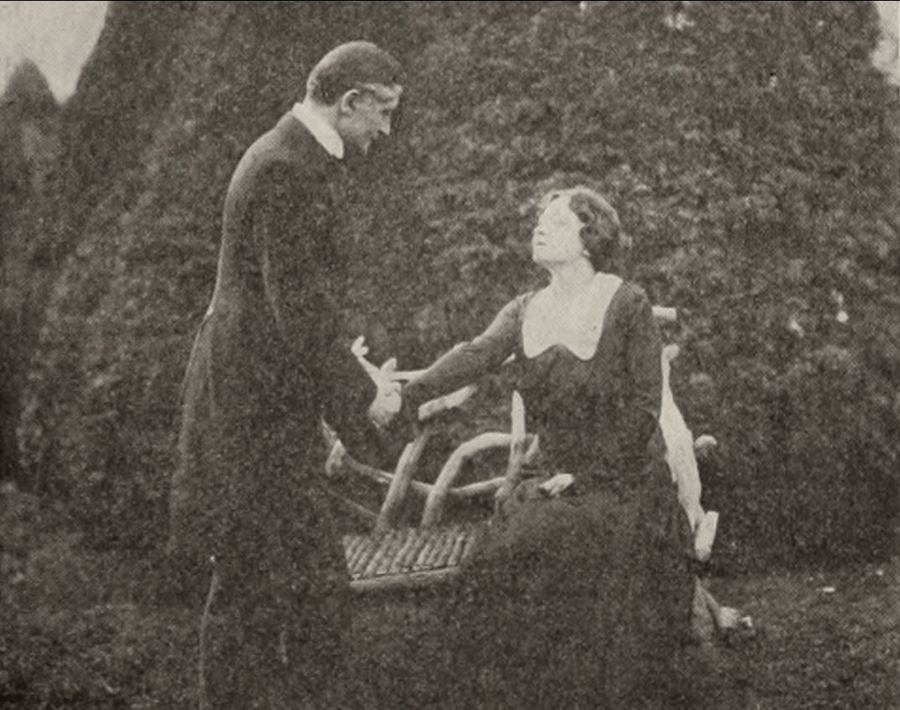
What gnaws at the memory long after the iris-in closes is the film’s hush. Dialogue cards are rationed like wartime sugar, so the narrative seeps through eyebrows, knuckles, the tremor of a lace cuff. When Bonnie kneels to coax Victor’s wheelchair over a threshold, the shot holds—not on her face, but on the pulse fluttering above her glove. In that heartbeat you read every provincial boarding-house rejection, every train-platform farewell that brought her to this gilded cage. The film trusts you to supply the backstory; it offers only the lyric, not the libretto.
Lon Poff’s Victor is a marvel of negative space: limbs fragile as blown glass, voice implied rather than heard. His screenplay-within-the-film is a farrago of pirates and moonlight, the kind of juvenilia only the dying dare write. Yet through Love’s recitation it becomes a hex, a promise that art might outlast arteries. Watch how she stresses the word tomorrow on the intertitle—tilting her chin just so, letting the o dangle like a pendant she can’t afford. The camera lingers, then cuts to Victor’s profile: a smile flickers, retreats, becomes a wince. In that edit lies the whole film’s syllogism—creation is prolongation, but also a rehearsal for oblivion.
Critics who relegate silent shorts to the nursery compartment of film history need to confront the tonal audacity on display here. Ricketts juggles registers—farce, pathos, even a whiff of the Gothic—with the nonchalance of a juggler tossing lit cigarettes. One moment Bonnie is pratfalling into a koi pond to amuse the staff; the next, Victor coughs blood onto his linen, and the crimson bloom is matched by a crimson filter that suffuses the frame. The juxtaposition isn’t gratuitous; it’s the emotional equivalent of biting into a chocolate and finding absinthe.
Comparisons? You could flirt with Some Boy, another 1923 trifle about youthful ardor, but its stakes feel postage-stamp small beside the abyss Bonnie May peers into. Or glance at Money, where ambition corrodes morals among boardroom titans; here the currency is breath, not banknotes, and the ledger balances only in the afterlife. Even The Dawn of Love, with its pastoral glow, seems skittish about mortality—whereas Ricketts’ film waltzes with it, toes crushed into the grave’s edge.
The screenplay, attributed to Louis Dodge and Bernard McConville, crackles with aphoristic intertitles that flirt with poetry without topposing into preciosity. My favorite: “Fame is a guest who leaves before the dishes are dry.” It’s a line that Bessie Love reportedly fought to retain; she sensed it would become the film’s epitaph, applicable as much to Victor’s posthumous reputation as to her own career trajectory. Indeed, Love’s star would soon be eclipsed by talkies and the attendant mania for soprano voices rather than soulful eyes. Watching Bonnie May today feels like exhuming a love-letter addressed to you decades before your birth.
Technically, the short is a syllabus of 1923 gadgetry: double exposures render Victor’s hallucinations—galleons cresting the parlour rug—while a diopter lens fractures candle-flames into prismatic halos that halo Bonnie’s hair like saint-paintings. Yet these tricks never preen; they serve emotion. When the final card reads The End, the letters quiver, then fade to white—a reversal of the customary iris-out that suggests not closure but ascension. The mansion lights extinguish one by one until only the screen remains luminous, a surrogate soul departing.
I have screened this print for jaded cineastes who swore they could no longer cry at silents; they left the room as though mugged by grace. Perhaps the film’s cruellest trick is its brevity: twenty minutes to excavate your chest, rearrange the furniture, then exit before you can bolt the door. And yet that compactness is also its mercy—any longer and the pathos might calcify into melodrama. As it stands, Bonnie May is a paper-cut that refuses to clot, a reminder that the most enduring stories are often the ones history forgot to warehouse.
So seek it out, if you can. The 16 mm rep houses, the digital restorers hunched over scanners in basements—they’re keeping this ember alive. Watch it alone, in the small hours, when the city outside your window sounds like a distant orchestra tuning. Let Bessie Love teach you how to say goodbye to people you never met, how to mourn futures that never had the courtesy to arrive. And when the lights come up, notice how your own breath feels costlier, how your pulse insists on spelling her name in Morse code beneath the skin. That, dear reader, is the true second play Victor begged her to write—only now the co-author is you.
IMDb —
1913
Community
Log in to comment.