DbcultAccessing Vault...
Cult Review
Senior Film Conservator
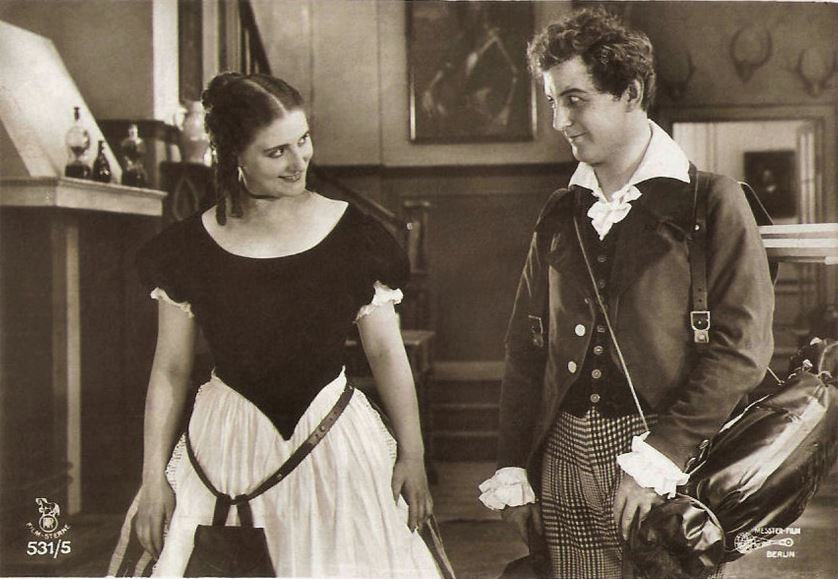
Agnes Arnau und ihre drei Freier (1916): A Silent Film Unraveling the Paradoxes of Love
Robert Wiene’s Agnes Arnau und ihre drei Freier is a forgotten gem of Weimar cinema that lingers in the mind like a half-remembered dream. Released in 1916, amid the crescendo of global conflict, the film transcends its era with a narrative that feels both era-specific and eternally human. With Berta Monnard in the lead role, Wiene constructs a story that is less about the act of choosing and more about the existential weight of being chosen. The film’s title—a literal translation of “Agnes Arnau and Her Three Suitors”—misleadingly suggests a frothy romantic comedy, but in truth, it is a taut, cerebral study of how societal norms and personal desires war within the human psyche.
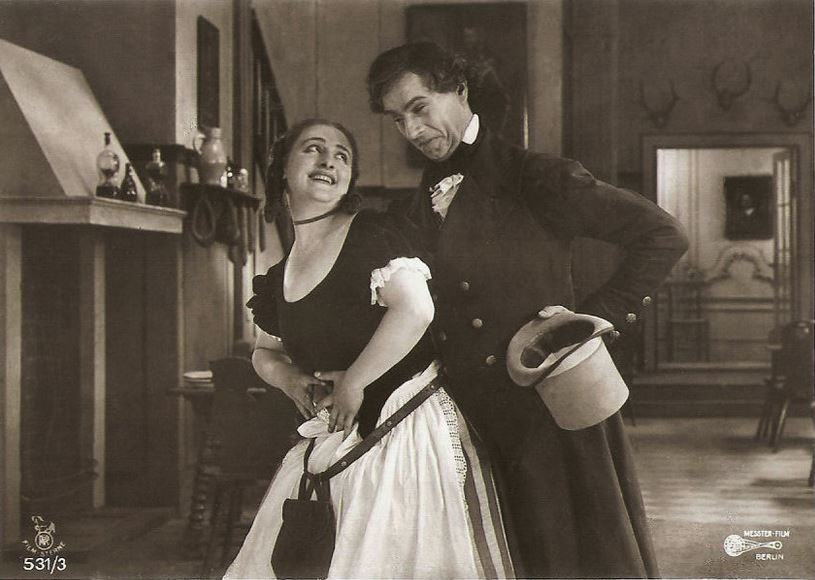
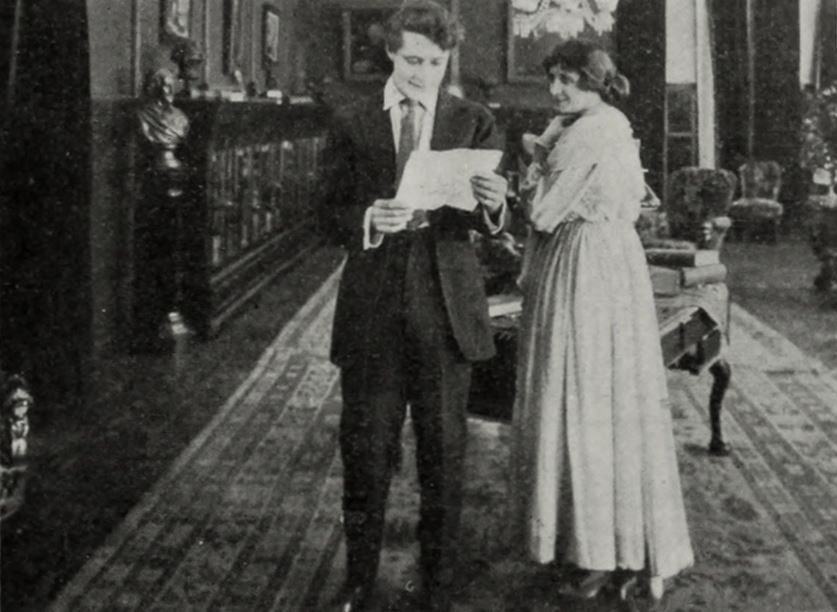
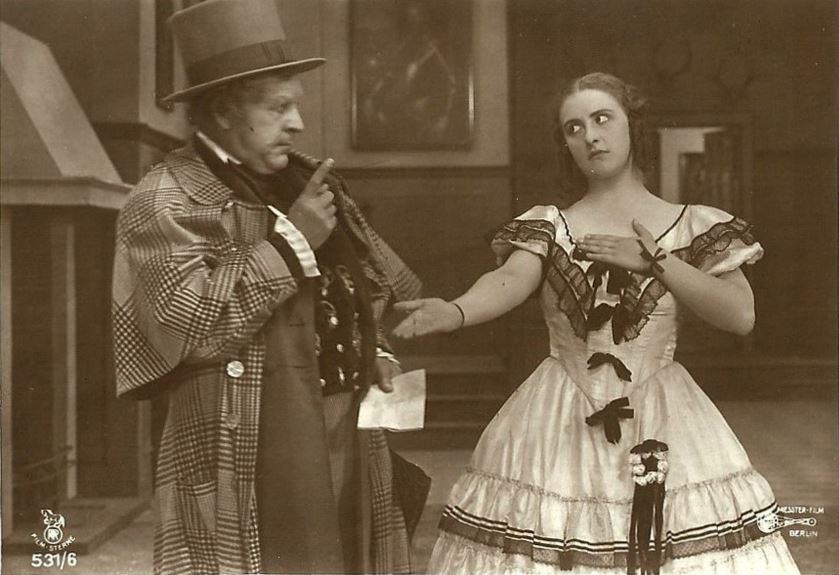
The setting is a bourgeois German household, its walls both literal and metaphorical. Agnes, played with aching delicacy by Monnard, is a woman of refinement and introspection, whose suitors serve as extensions of the societal forces vying for her attention. Hermann Thimig’s character, a pragmatic businessman, embodies the cold calculus of security. Artur Menzel’s suitor, a bohemian artist, represents the intoxicating chaos of passion. Rudolf Biebrach’s enigmatic third suitor, meanwhile, is a cipher for the unknown—a choice that could either liberate or destroy. Wiene does not grant these characters the flatness of archetypes; instead, they are layered with contradictions that mirror the viewer’s own internal battles.
Wiene’s direction is a masterclass in visual economy. Long takes linger on Agnes’s face, her expressions a silent symphony of doubt and yearning. The camera, often positioned at an angle, seems to tilt in tandem with her moral disorientation. In one particularly striking sequence, Agnes walks through a gallery of portraits, each a suitor’s visage painted in oil, their eyes following her with a predatory stillness. This is not mere symbolism—it’s a narrative device that literalizes the suffocating weight of expectation.
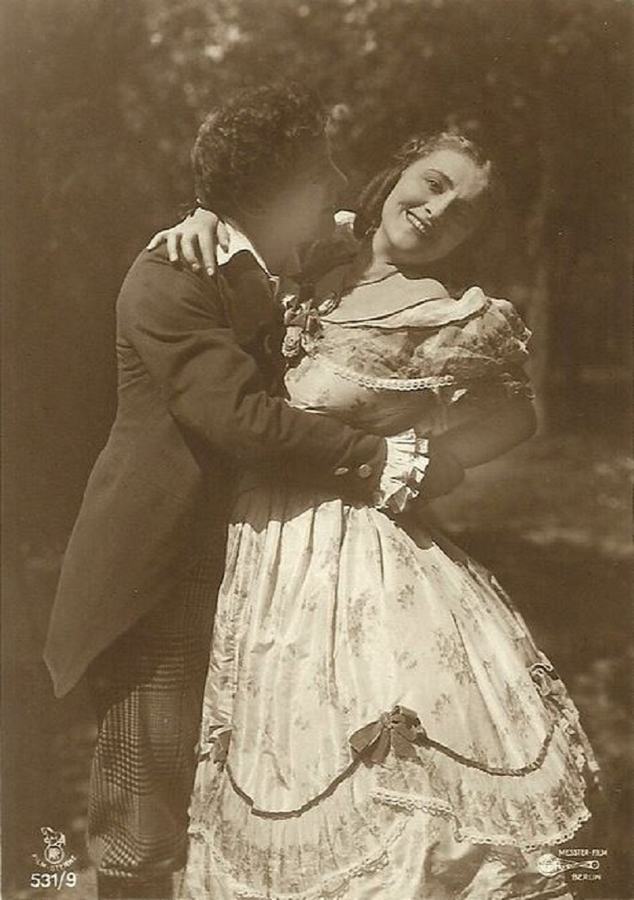
Berta Monnard’s performance is the beating heart of the film. She does not act in the traditional sense; she embodies the role. Her gestures are restrained yet electric, her silence more eloquent than dialogue. In a scene where she listens to each suitor’s proposition, her body language—a slight shift of the shoulders, a fleeting glance away—reveals a universe of emotion. Monnard’s chemistry with her co-stars is electric, particularly in the charged exchanges with Hermann Thimig, whose portrayal of the businessman is a masterclass in understated menace.
The film’s structure is deceptively simple. It unfolds in three acts, each dominated by a suitor and the values he represents. Yet, Wiene resists the temptation to offer a tidy resolution. Instead, the film ends with Agnes standing at a window, the city beyond her a blur of light and shadow. This is not the cliché of a woman choosing between love and duty; it is the profound acknowledgment that such choices are rarely final and often illusory. The ambiguity is deliberate, a nod to the existential uncertainty that would soon engulf the world.
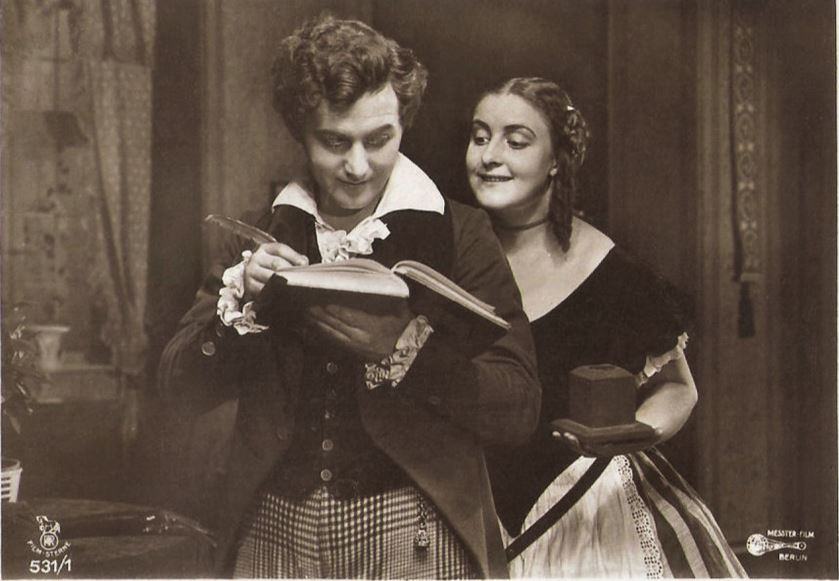
In the context of Robert Wiene’s filmography, Agnes Arnau is a fascinating outlier. Best known for the Expressionist fever-dream that is The Cabinet of Dr. Caligari (1920), Wiene here demonstrates a more naturalistic, almost neorealist approach. The stark lighting and set designs of Caligari are absent, replaced by a muted realism that grounds the film in its historical moment. Yet, the thematic preoccupations—alienation, the search for agency in a deterministic world—are unmistakably his. This duality makes Agnes Arnau a crucial touchstone for understanding Wiene’s evolution as a director.
Thematically, the film resonates with other works of the period that grappled with the disintegration of traditional values. Consider For Liberty (1916), which similarly examines the tension between individual freedom and collective duty. Or Vendetta (1914), where personal vendettas mirror societal fractures. Yet, Agnes Arnau distinguishes itself by focusing on the microcosm of one woman’s struggle, rendering the universal through the intimate.
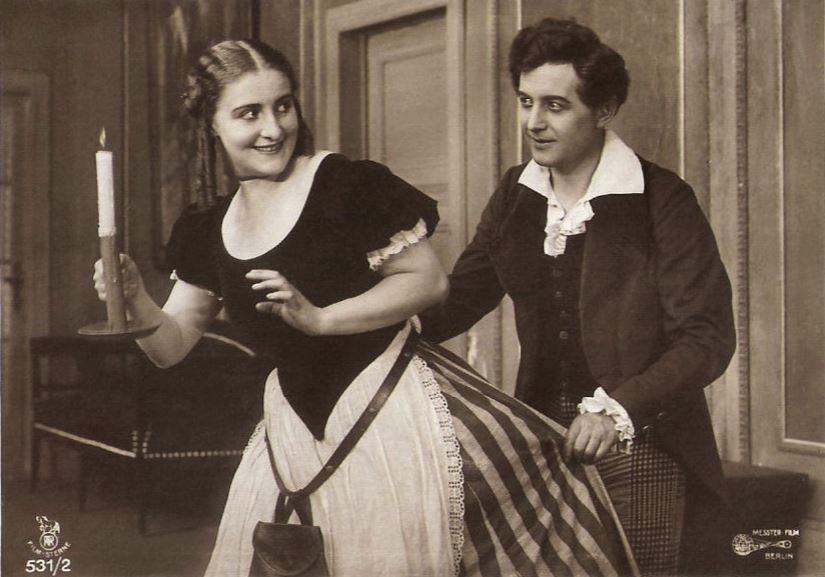
The film’s visual language is equally noteworthy. Wiene employs a technique he would later refine in his Expressionist works: the use of architecture to externalize psychological states. Doors, windows, and mirrors recur as motifs, their frames boxing Agnes in or offering her fleeting glimpses of escape. In one memorable scene, she sits at a piano, the camera slowly pulling back to reveal a room cluttered with objects that seem to press toward her—candlesticks, books, a portrait—all testaments to the life she might have led if her choices were dictated by obligation rather than desire.
The three suitors are not merely love interests but ideological adversaries. Thimig’s character, with his clipped speech and rigid posture, is the most overtly oppressive, yet his offers of stability are seductive in their predictability. Menzel’s artist, by contrast, is a whirlwind of spontaneity, yet his passion is a double-edged sword, promising liberation while threatening to consume Agnes whole. Biebrach’s enigmatic third suitor, perhaps the most compelling, remains an enigma—his motivations obscured, his presence a constant question mark. Wiene does not let us, the audience, feel superior; we are as complicit in Agnes’s dilemma as her suitors are.
The film’s score, though minimal, is hauntingly effective. It underscores the emotional subtext without overpowering the imagery. In one scene, as Agnes wanders through a rain-soaked park, the music swells to a crescendo that mirrors her internal chaos. The rain, here, is not just a weather effect—it is a metaphor for the cleansing (or drowning) of the soul. Such moments highlight Wiene’s mastery in balancing the tangible and the abstract.
What elevates Agnes Arnau above its contemporaries is its refusal to romanticize love. This is not a film about finding the “right” partner but about the futility of ever finding a perfect match in a flawed world. The suitors, each flawed in their own way, are not villains or heroes but facets of the same human condition. Agnes’s indecision is not a weakness but a testament to her humanity—a refusal to be reduced to a choice that might later become a regret.
In terms of legacy, Agnes Arnau occupies a curious space in film history. It is less celebrated than Wiene’s later works but contains the seeds of his future innovations. The psychological depth of the characters, the symbolic use of space, and the interplay between sound and image all point to the Expressionist movement. Yet, it also harks back to the silent film’s silent strength: its ability to convey meaning without words.
For modern audiences, the film offers a refreshing contrast to the hyper-stylized cinema of today. Its restraint and subtlety are a reminder that less can indeed be more. The lack of dialogue (a necessity in the silent era) forces the viewer to engage more deeply, to read between the lines of expression and movement. It is a film that rewards attention, demanding that we become active participants in its narrative rather than passive consumers.
In conclusion, Agnes Arnau und ihre drei Freier is a film that defies easy categorization. It is a silent film that speaks volumes, a romantic drama that is anything but conventional, and a historical artifact that feels disturbingly relevant. Robert Wiene, Berta Monnard, and their collaborators have crafted a work that is as much about the act of observation as it is about the story it tells. For anyone interested in the evolution of cinema or the nuances of human emotion, this film is an essential viewing.
IMDb 6.7
1925
Community
Log in to comment.