DbcultAccessing Vault...
6.3/10
Senior Film Conservator
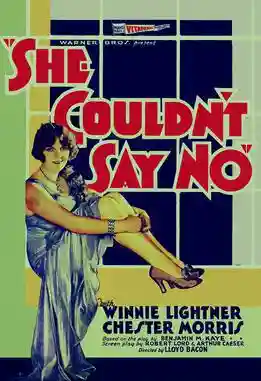
A definitive 6.3/10 rating for a film that redefined the boundaries of cult cinema. She Couldn't Say No remains a cornerstone of transgressive art.
This 1930s flick, She Couldn't Say No, isn't for everyone. Let's get that out of the way right off. If you're looking for slick, fast-paced drama, you'll probably hate it. 🙅♀️
But if you have a soft spot for early sound films, or just want to see how these stories were told way back when, it’s a curious little watch. Think of it as a time capsule, a slightly dusty one, but a capsule nonetheless.
The setup is classic: a nightclub entertainer, Sally (played by Sally Eilers), is tangled up with a gangster named Jerry (Chester Morris). Right away, you know where this is going. Or you think you do.
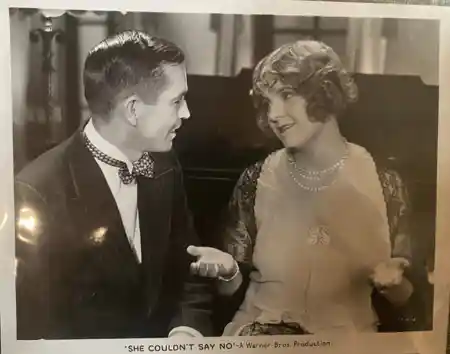
What caught my eye, early on, was the sheer earnestness of it all. The characters really commit to their somewhat stiff dialogue. There’s a scene where Jerry tries to convince Sally that his life of crime is just… business. It’s almost sweet how unconvincing he is, but she buys it. Or pretends to.
Sally Eilers has this really interesting intensity. Sometimes she’s almost wooden, then suddenly, a flash of something really raw crosses her face. It’s not always polished, but it feels real in a strange way. Especially when she’s just staring off into the middle distance, like she’s already regretting everything.
Chester Morris, as the gangster Jerry, has this swagger that feels a little forced by today's standards. But for the era, he must have been quite the heartthrob. He smiles a lot, even when he’s being menacing, which is a bit disorienting. You're never quite sure if he's charming or about to do something truly awful.
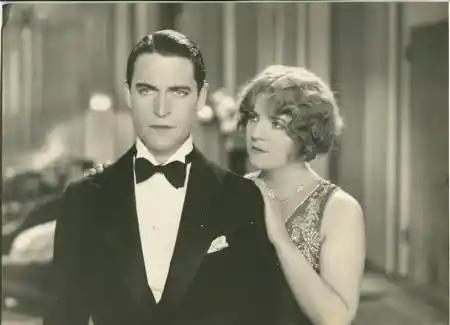
There's a moment, I think it was when Jerry is talking about “taking care of things,” and the camera just... stays on Sally's face. For what feels like ages. You can almost feel the movie trying to make you feel her predicament. It goes on about 10 seconds too long, and the silence starts to feel awkward rather than emotional.
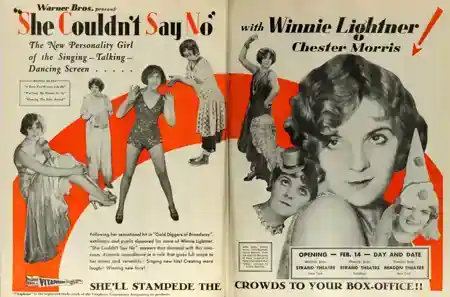
Winnie Lightner is in this too! Her character feels like she’s wandered in from a different, much funnier movie. She gets some of the best lines, little sarcastic jabs that cut through the melodrama. It’s a breath of fresh air when she’s on screen.
The actual “night club” scenes are, well, basic. The musical numbers are brief, mostly just Sally Eilers singing a bit stiffly into a microphone. No big production numbers here. It’s more about the atmosphere of the place, the shadowy corners where deals are made, than the entertainment itself. The band seems to be playing on a loop.
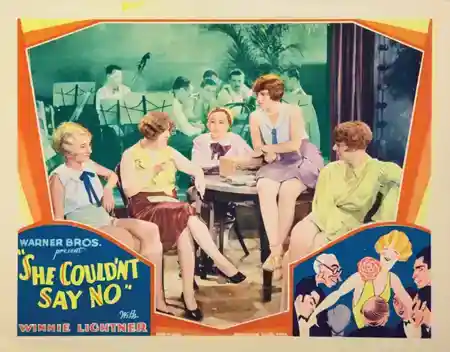
Louise Beavers, always a welcome presence, has a relatively small part here. But she brings so much warmth and practicality to her role. Her few lines feel grounded, a stark contrast to the dramatic declarations elsewhere. Her reaction to one of Jerry’s more outrageous demands is a look that speaks volumes. You just know she’s seen it all before.
The plot kind of chugs along, with twists that aren't exactly shocking but keep things moving. There's a whole subplot involving a jewel heist that feels like it was stapled on. It’s not bad, just feels a little... separate.
And the title, She Couldn't Say No? It really leans into that. Is it because she's weak? Or because she’s too loyal? The film doesn't quite nail down the “why” in a way that feels satisfying. It just is. Her predicament feels less like a choice and more like an inevitability she stumbled into.
One thing that really got me was how quickly everyone accepts new information. Someone delivers a bombshell, and the characters just nod, absorb it, and move on. No real processing. It’s very much a product of its time in that regard.
The ending is… well, it’s an ending. It ties things up, but not necessarily in a way that feels earned. You can almost feel the movie trying to convince you this resolution matters. It leaves you thinking, “Huh. Okay, I guess that happened.”
This isn't a masterpiece, not by a long shot. But it’s got its charms, especially for those interested in film history or seeing performers like Chester Morris and Louise Beavers in their early roles. It's a glimpse into an older style of filmmaking, complete with its quirks and endearing rough edges. Maybe pair it with The Little Giant for a double feature of 30s crime fun? Just a thought. 🎬

IMDb —
1928
Community
Log in to comment.