DbcultAccessing Vault...
6.8/10
Senior Film Conservator
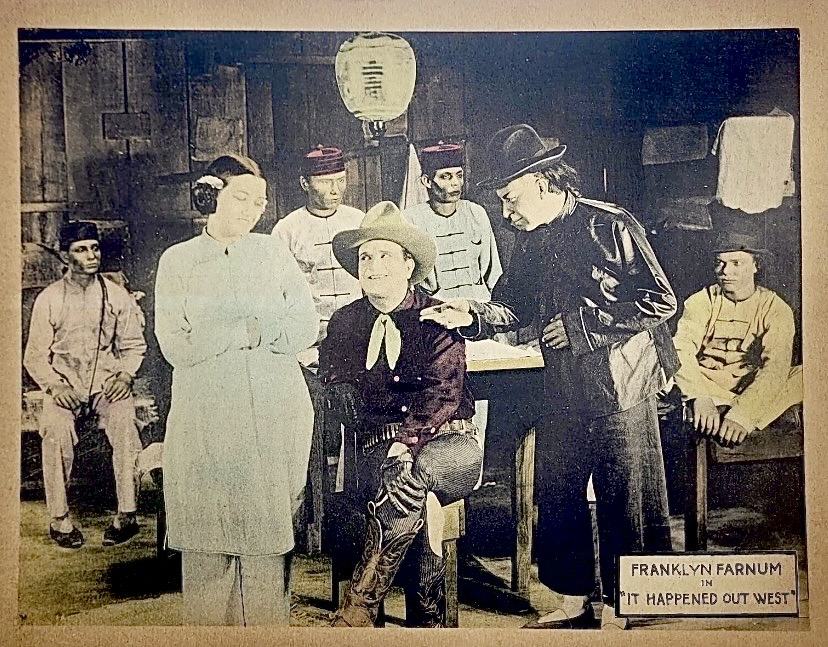
A definitive 6.8/10 rating for a film that redefined the boundaries of cult cinema. It Happened Out West remains a cornerstone of transgressive art.
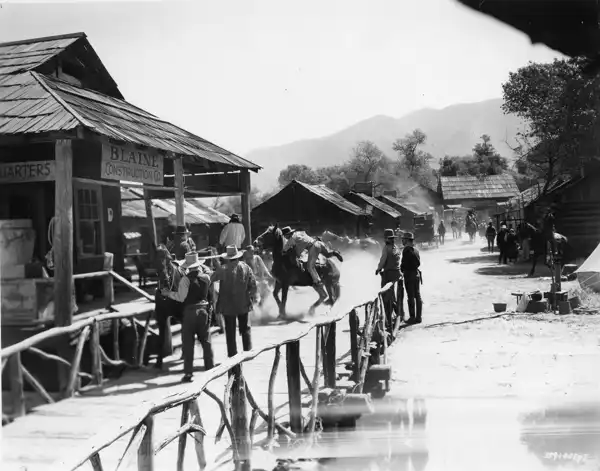
The cinematic landscape of the early 20th century was a fertile ground for narratives that often grappled with the raw, untamed spirit of America's frontiers. Among these, 'It Happened Out West' emerges not as a mere relic, but as a fascinating, if understated, exploration of moral ambiguity and the relentless pursuit of justice in a lawless domain. While many films of its era, such as the frothy A Circus Romance, opted for lighter fare, this picture plunges headfirst into a darker, more complex tapestry, one woven with threads of desperation and deception along the Texas-Mexico border.
At its core, the film presents a compelling, albeit stark, premise: a cattle ranch foreman, a figure typically associated with honest toil and rugged integrity, secretly masterminds a human trafficking ring, illicitly bringing Chinese immigrants into the United States. This subversion of the archetypal Western hero immediately sets a tone of distrust and intrigue. The narrative thrust, then, is provided by the arrival of an undercover Texas Ranger, tasked with infiltrating this treacherous operation. This setup, while straightforward, allows for a rich interplay of suspense and character-driven drama, even if the execution, by today's standards, might seem rudimentary.
The casting, typical of the period, relies on established faces to convey immediate character types. Al Hart, often known for his imposing presence, likely embodies the duplicitous foreman with a gravitas that makes his villainy all the more chilling. His performance, even through the lens of archival viewing, would have needed to project both the outward veneer of respectability and the calculating ruthlessness beneath. Without a strong central antagonist, the Ranger's mission would lack its necessary peril. Similarly, Shorty Hamilton, a familiar presence in countless Westerns, often brought a grizzled authenticity to his roles, whether as a sidekick, a minor villain, or a steadfast lawman. One can imagine him here in a role that either supports the Ranger or provides a contrasting moral compass within the ranch's corrupt ecosystem. His very presence grounds the film in the familiar tropes of the genre, even as its plot delves into less conventional territory.
The presence of Virginia Lee and Franklyn Farnum adds further layers to the ensemble. Lee, often cast for her spirited portrayals, might have served as a romantic interest, a damsel in distress, or perhaps even an unwitting accomplice caught in the foreman's web. Her character's agency, or lack thereof, would have been a significant marker of the era's storytelling conventions regarding women in frontier narratives. Farnum, a prolific actor of the silent era, often played heroes or strong supporting characters. His portrayal here could be the undercover Ranger himself, or a loyal ranch hand whose suspicions are slowly aroused. The dynamic between these characters, even with minimal dialogue, would have been crucial in building the tension and advancing the plot's clandestine machinations.
What truly distinguishes 'It Happened Out West' from its contemporaries is its willingness to tackle a subject as sensitive and complex as human smuggling. While not explicitly a social commentary in the modern sense, the film implicitly touches upon themes of exploitation, immigration, and the moral compromises made at the fringes of society. This thematic depth elevates it beyond a simple shoot-em-up Western, hinting at a more profound engagement with the realities of the borderlands. It’s a far cry from the more overtly dramatic and sensationalized narratives found in films like Der violette Tod, which often leaned into fantastical or gothic elements. Instead, 'It Happened Out West' opts for a gritty realism, portraying a world where danger lurks not just in gunfights, but in the insidious nature of organized crime.
The filmmaking itself, typical of the period, would have relied heavily on visual storytelling. Expressive acting, often bordering on melodrama, combined with stark cinematography, would have been key. The sweeping vistas of the Texas-Mexico border, though perhaps captured with less technical sophistication than later Westerns, would still have served as a powerful backdrop, emphasizing the isolation and vulnerability of those crossing it. The vastness of the landscape becomes a character in itself, both a refuge and a trap. Unlike the confined, intimate settings of something like The Strange Woman, the open spaces here amplify the stakes and the sense of freedom, or lack thereof, for those being smuggled.
The narrative structure likely follows a classic arc: the Ranger's initial infiltration, the slow gathering of evidence, moments of near-discovery, and ultimately, a climactic confrontation. The suspense would have been derived from the constant threat of exposure, the Ranger walking a tightrope between maintaining his cover and gathering enough proof to bring down the operation. This kind of tension, while perhaps less psychological than in a modern thriller, would have been palpable, relying on visual cues and the audience's understanding of the inherent dangers of the situation. The film's pacing would have dictated much of its success, building towards a satisfying, if perhaps predictable, resolution where justice, in the end, prevails.
Considering the era's limitations in special effects and production design, the film's effectiveness would have rested squarely on the shoulders of its cast and the clarity of its storytelling. The absence of listed writers might suggest a more collaborative, improvisational approach common in early Hollywood, or simply that credit was less meticulously documented. Regardless, the core concept is robust enough to carry the narrative. It taps into universal themes of good versus evil, the abuse of power, and the resilience of those fighting for freedom. These are themes that resonate far beyond the specific historical context, giving the film a certain timeless quality, much like the enduring appeal of a straightforward adventure like The Kangaroo, albeit with a far more serious undertone.
The portrayal of Chinese immigrants, while potentially problematic through a contemporary lens given the historical context of xenophobia and 'yellow peril' narratives, would have served as a plot device to highlight the foreman's depravity and the Ranger's heroism. It's crucial for modern viewers to contextualize such portrayals within the social and political climate of the time, acknowledging the film's limitations while appreciating its daring in touching on such a topic at all. The very fact that this film chose to address the plight of immigrants, even if superficially, distinguishes it from many of its contemporaries that preferred to focus solely on the romanticized aspects of frontier life, like those found in Going Some.
The action sequences, undoubtedly featuring horseback chases and gunfights, would have been a staple of the Western genre. The stark, naturalistic settings would lend themselves well to these scenes, providing a sense of authenticity that CGI-heavy productions often struggle to replicate. The physicality of the performances, especially from actors like Al Hart and Franklyn Farnum, would have been paramount in conveying the grit and danger of these encounters. Each punch, each fall, each gallop across the rugged terrain would have been a testament to the performers' dedication and the raw energy of early cinema. This visceral approach to action is a hallmark of the era, distinguishing it from the more stylized violence seen in later decades.
In retrospect, 'It Happened Out West' stands as more than just a forgotten Western. It's a snapshot of a particular moment in cinematic history, a period when filmmakers were still experimenting with the boundaries of storytelling, even within established genres. Its willingness to introduce a complex criminal element—human smuggling—into the familiar framework of a frontier narrative makes it a noteworthy, if overlooked, piece of cinema. It challenges the simplistic notions of good and evil often found in period films, suggesting that even in the seemingly clear-cut world of cowboys and lawmen, corruption can fester in unexpected places. The film serves as a testament to the enduring appeal of the undercover narrative, a trope that continues to captivate audiences, albeit with vastly different production values, even today.
The film's legacy, while not as widely celebrated as some of its more famous counterparts, lies in its brave foray into uncomfortable truths. It reminds us that the West was not just a land of opportunity and adventure, but also a crucible of human struggle and moral compromise. Its portrayal of an undercover Ranger's dangerous mission to dismantle a human trafficking ring remains a potent reminder of the darker currents flowing beneath the surface of idealized frontier mythology. While it may lack the epic scope of Tongues of Flame or the intricate character studies of Five Days to Live, its focused narrative and thematic boldness give it a unique place in the annals of early Western cinema. It's a film that, despite its age, still possesses a quiet power, inviting viewers to ponder the enduring questions of justice, morality, and the human cost of illicit ambition on a stark and unforgiving frontier.
The intricate dance between the Ranger and the foreman, a game of cat and mouse played out against the vast, indifferent backdrop of the border, forms the dramatic spine of the film. Every seemingly innocuous interaction, every shared glance, would have been charged with unspoken tension, as the Ranger meticulously works to expose the truth without revealing his hand. This psychological undercurrent, while perhaps not as overtly explored as in a modern psychological thriller, is nonetheless present, relying on the actors' ability to convey internal states through gesture and expression. The film understands that the greatest threats are often those cloaked in familiarity, making the reveal of the foreman's true nature all the more impactful. It's a testament to the era's storytelling prowess that such complex dynamics could be conveyed with relatively sparse dialogue and a reliance on visual narrative.
Ultimately, 'It Happened Out West' is a valuable artifact, not just for its historical significance, but for its thematic ambition. It challenges viewers to look beyond the romanticized image of the American West and confront the grittier realities that often lay hidden beneath the surface. It's a film that, in its quiet way, speaks volumes about the human condition, the struggle for justice, and the enduring allure of a narrative where a lone hero faces overwhelming odds. Its simple title belies a narrative of considerable depth, a story that continues to echo with relevance even in our complex contemporary world. A testament to the power of early cinema, it reminds us that compelling stories, regardless of their vintage, possess an uncanny ability to resonate across generations, offering insights into both the past and the present. It stands in contrast to films like Shackled, which might focus on personal confinement, by presenting a narrative of expansive, systemic wrongdoing. A true gem from the archives, deserving of renewed attention and critical appreciation.
IMDb —
1920
Community
Log in to comment.