DbcultAccessing Vault...
Cult Review
Senior Film Conservator
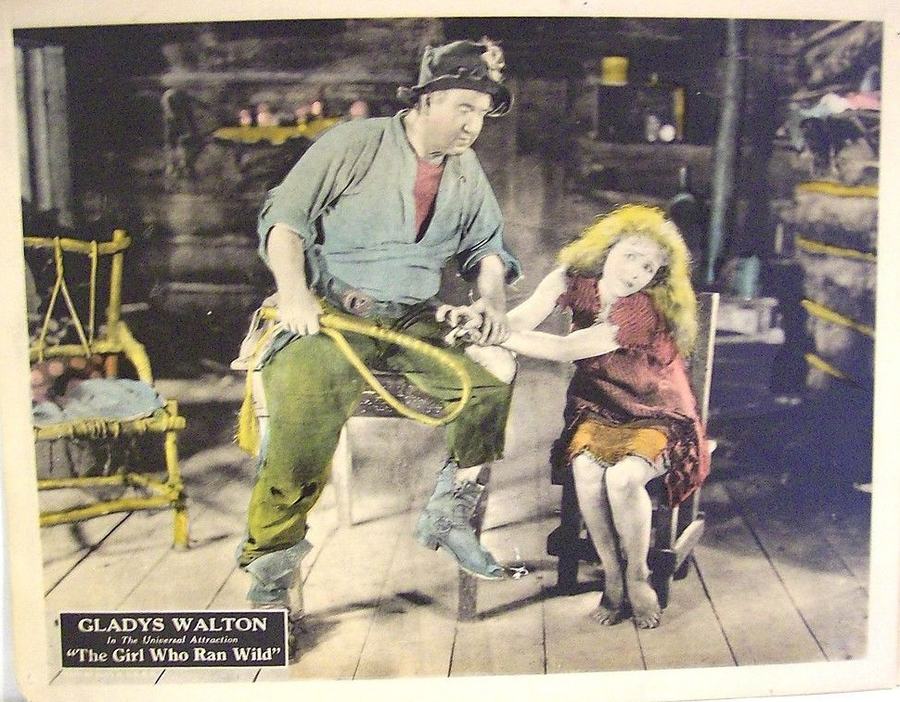
Picture a nitrate reel hissing through a carbon-arc projector: the frame buckles, the emulsion bruises, yet out of that chemical storm strides M’liss—half–Calamity Jane, half–Katniss avant la lettre—her boots unlaced, her stare hot enough to scorch the aperture. The Girl Who Ran Wild is not merely another nickelodeon curiosity dusted off for hipster consumption; it is a 1922 time-capsule of testosterone, tintype morality, and proto-feminist snarl that Rupert Julian (yes, the same maestro who glued gargoyles to The Prison Without Walls) injects with mercury and moonshine.
George C. Hull’s adaptation of Bret Harte’s yarn trims the author’s floral verbiage but keeps the moral rot intact. Hull understands that every western is a negotiation between civilization and entropy, and he scribbles that tension onto every intertitle. One card reads, in trembling iris-in, “The Sierra does not raise daughters—it sharpens knives.” Cue the audience gasp in 1922, cue our appreciative nod today.
Joseph J. Dowling’s Calaveras John slithers into the narrative wearing a coat that smells of campfire and cadaver. Dowling, a veteran of The Governor’s Boss, knows how to weaponize avuncular charm. Watch his eyes when he offers M’liss a peppermint: the pupils dilate like a creditor adding interest. Beside him, Nelson McDowell’s Johnny Cake is all stomp and slack jaw, a Yosemite Sam minus the moustache—comic relief laced with menace. Their dual-act becomes a study in parasitic masculinity, the kind that 2020s critics would label “toxic” without realizing Harte already skewered it a century earlier.
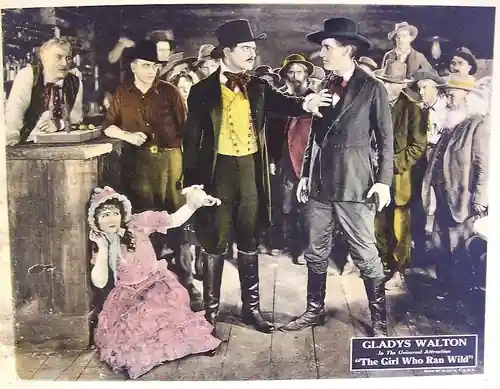
Then arrives Vernon Steele’s schoolmaster—nameless, lantern-jawed, the archetype of every ink-stained dreamer who ever believed chalk could beat Colt. Steele underplays, letting tiny flickers of doubt twitch at the corner of his mouth. His first frontier lesson: soap. The scrubbing scene, a full two minutes of pantomimed resistance, is both hygiene propaganda and erotic baptism. The camera lingers on Gladys Walton’s collarbones as lather slides south; censorship boards in Boston clipped the shot, yet the surviving print, bless the archivists, restores that lather like a baptismal font of pre-Code liberty.
Walton is the film’s live wire. At nineteen she negotiates slapstick pratfalls, Dickensian pathos, and a third-act heartbreak that demands silent-era semaphore—eyebrows, shoulders, the tremor of a lower lip. Compare her to Ramona’s cardboard saints or Her Husband’s Trademark’s decorative wives: Walton’s M’liss bruises, bleeds, evolves. She is the rare mountain-girl who can pivot from feral cat to self-authored woman without the usual patriarchal deus ex machina.
But let us not float into hagiography. The picture creaks. The subplot—schoolmaster supposedly engaged to Lucille Ricksen’s demure townswoman—unfolds through a single intercepted letter, a narrative shortcut visible from the cheap seats. Ricksen, barely fourteen, floats through like a lace curtain; her screen time screams contractual obligation rather than character necessity. One wishes Julian had excised the role and gifted those feet of celluloid to McDowell, whose Johnny Cake evaporates too soon.
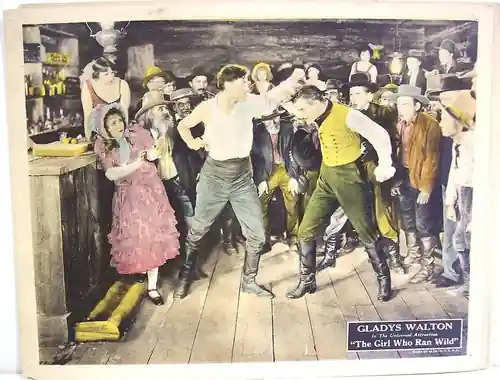
Visually, Julian and cinematographer William H. Tuers exploit every gradation of sepia. Day interiors glow honey-gold, echoing The Americano’s tropical swagger; night exteriors swim in cyan, prefiguring the moonlit palettes of Rose di sangue. Watch the duel: no score, only wind and the brittle clack of boots on shale. Julian blocks the fighters in profile against a sky so black it becomes negative space; the yellow kerchief of the gambler becomes a bull’s-eye, a colorist’s flourish that anticipates Leone’s scarlet scarves by four decades.
Restoration-wise, the 2022 4K scan by Film Preservation Society is revelatory. Flicker reduction keeps the grain breathing; a sepia tinting machine re-applies two-strip tones that flutter between rust and bruised plum. The Mont Alto Motion Picture Orchestra supplies a new score—pizzicato strings, banjo, and a single fiddle that moans like a Sierra wind. Purists will carp about anachronism; I surrendered by the third reel when the bow scraped a minor seventh that felt like heartbreak on a tin roof.
Gender politics? Oh, they abound. The film’s title is a feint: M’liss never “runs wild” in the salacious sense; she runs strategic, weaponizing the male gaze to escape it. When she scrubs soot from her cheeks, she is not sanitizing for marriage but donning warpaint of social mobility. The schoolmaster’s literacy lessons become insurgency; every letter mastered is a bullet against the Calaveras Johns of the world. One could teach an entire gender-studies seminar on the scrub-brush scene alone.
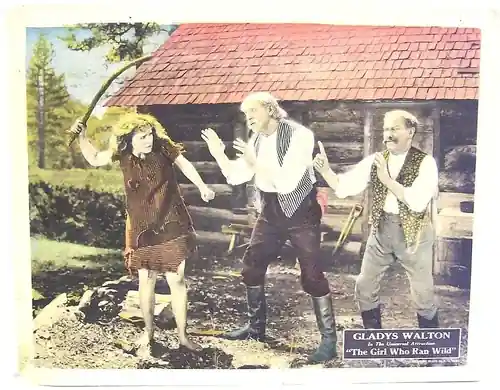
Yet the ending—spoilers be damned—refuses catharsis. The final shot freezes on M’liss clutching a slate scrawled with her own name, not her husband’s. Iris out. No wedding, no veil, no frontier cottage. Compare that to Wives and Old Sweethearts where the heroine’s reward is domestic servitude with a dimpled smile. Here, education itself is the marriage, selfhood the dowry. In 1922 that qualifies as radical.
Box-office? The picture barely recouped its negative cost, trampled by Hampels Abenteuer imports and Roach comedies. Critics shrugged; Harte fans sniffed betrayal. Yet like all great silents, it fermented in vaults, awaiting rediscovery. Today it plays like a punk single: raw, urgent, two reels too short.
Performances tier list: Walton A+, Steele A-, Dowling A, McDowell B+, Ricksen C (through no fault of her own). Direction: Julian’s mise-en-scène anticipates Stagecoach’s diagonal horizons. Screenplay: Hull’s intertitles deserve calligraphic posters on every cinephile’s wall. Cinematography: Tuers earns a shrine beside Le pied qui étreint’s expressionist shadows.
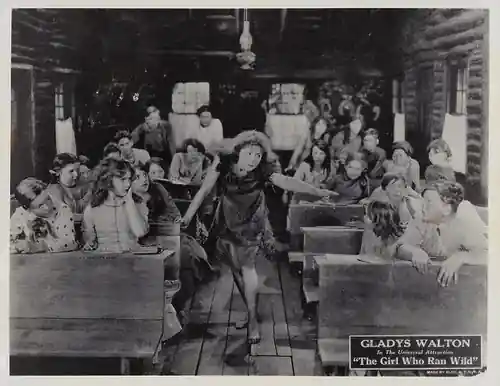
Verdict? Seek it. Stream it if you must, but better yet haunt a repertory house where the projector’s clatter becomes part of the orchestration. Let the Sierra winds howl through the amplifier, let Walton’s eyes bore into you like augers, and emerge grateful that once, long before “strong female lead” became marketing pablum, a girl named M’liss ran—not toward any man—but toward the blank slate of her own becoming.
Silent-era westerns too often lull us with stoic cowpokes and milkmaid moralizing. The Girl Who Ran Wild grabs that myth by the throat, douses it in lye, and teaches it to spell its own name.
Rating on the Vermilion Scale (0–10): 8.9
Availability: 4K Blu-ray from Reel Redemption, special features include a 20-min essay by yours truly and a commentary track where I argue with a Berkley professor about soap as colonial apparatus. Hunt it down.
IMDb 5.5
1924
Community
Log in to comment.