DbcultAccessing Vault...
5/10
Senior Film Conservator
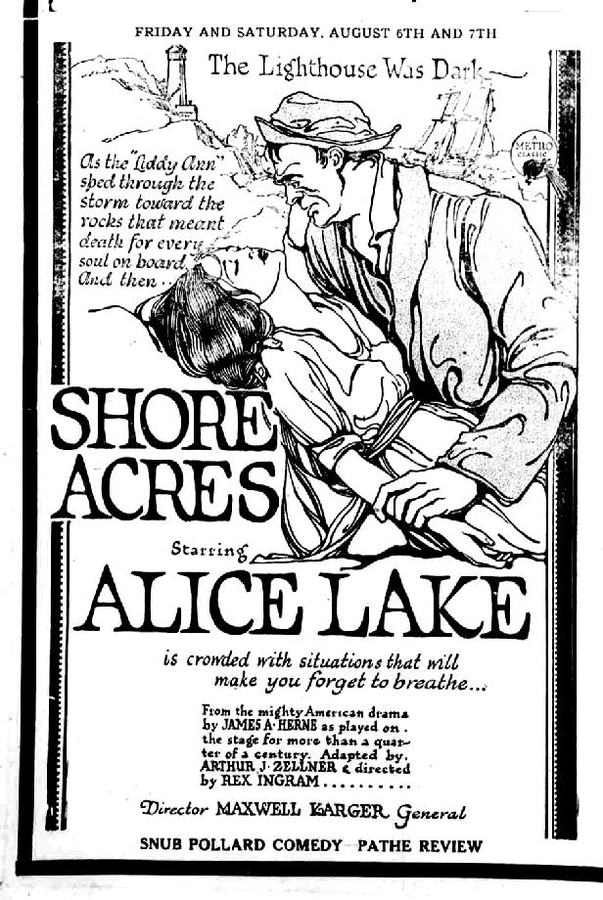
A definitive 5/10 rating for a film that redefined the boundaries of cult cinema. Shore Acres remains a cornerstone of transgressive art.
Shore Acres surges out of 1920 like a rogue wave, catching many viewers off-guard who assume early silent cinema incapable of such salty psychological nuance.
To watch it now—preferably at 2 a.m. with headphones hissing sea-spray ambience—is to feel the celluloid’s grain become barnacled under your fingertips. Director Webster Campbell, largely unsung outside academic footnotes, demonstrates how a modest Shore Acres budget can still erect towering moral rocks when character motivation is charted with cartographic precision.
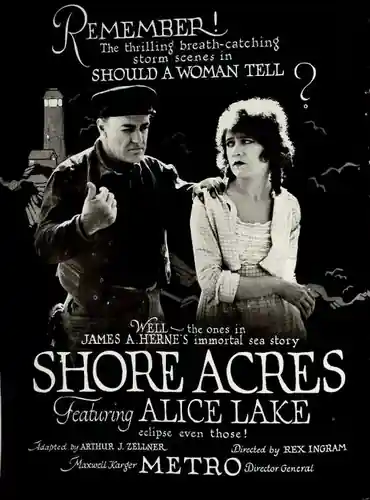
What sounds like dime-novel contrivance—oil speculation, extortionate betrothal, a storm conjured as deus ex machina—gains resonance because the screenplay, adapted from James A. Herne’s stage play, anchors every twist to place. The farm’s furrows are not mere dirt; they’re ancestral scar tissue. The lighthouse isn’t a set but a moral spinal column: when its light gutters, ethics likewise snap. Compare this to One Wonderful Night where coincidence drives narrative, or Captain Swift where inheritance hijinks rule. In Shore Acres, landscape and conscience interlock like tide and moon.
Richard Headrick as Nat carries the weight of a man who has never left earshot of surf, his gait lopsided from decades hauling lobster pots. Watch his eyes in the tavern scene: they flick toward Blake like a gull’s wary glance at a rock-throwing child. Robert Walker’s Martin, by contrast, exudes petit-bourgeois restlessness; his fingers drum tabletops whenever oil stock quotations surface, a silent tic that screams speculative hunger. Alice Lake’s Helen seems fragile yet contains an opaline core—she never overplays the rebellious daughter, letting a single lifted chin suggest oceans of refusal.
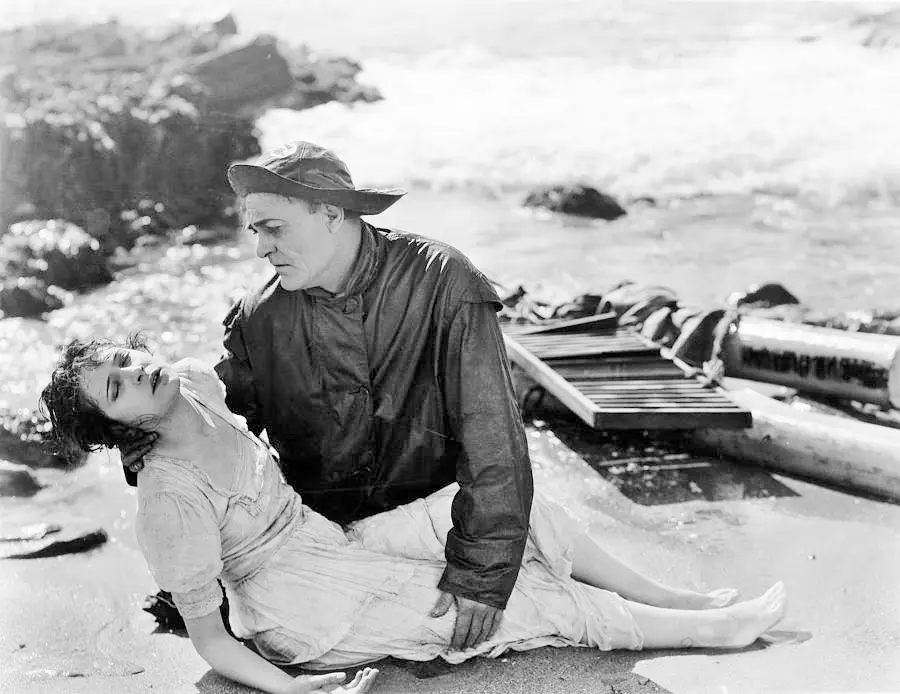
Campbell shot on location around Carmel-by-the-Sea before California’s coastline was fully gentrified. The reef scenes employ double-exposure miniatures blended with full-scale wreckage; modern viewers may scoff until they realize those crashing waves are real, the chill genuine. The lighthouse interior—constructed on a Monterey headland—allows vertical compositions that dwarf characters against spiraling iron stairs, foreshadowing German expressionism yet retaining Yankee pragmatism. Note how frequently frames bisect faces with lantern shadows: moral chiaroscuro worthy of The Man of Mystery.
Original exhibitors received a cue sheet suggesting Mendelssohn’s “Fingal’s Cave” for exterior seascapes and Sinding’s “Rustle of Spring” for Helen’s garden trysts. Contemporary restorations often slap generic piano, but if you score your own rip with Hebrides Overture, the marriage of image and motif uncorks a briny perfume rarely matched outside Mutter Erde.
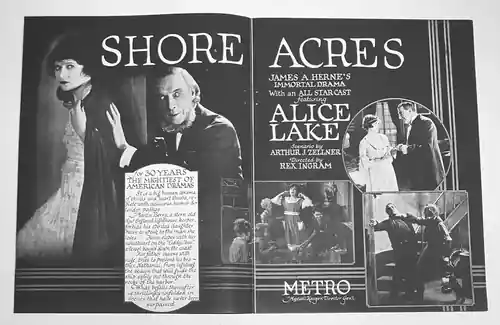
Helen’s body becomes contractual currency, yet the film refuses to victimize her. She engineers her escape, commandeers a vessel, faces tempest fury—all while her father succumbs to ledger arithmetic. Compare this agency with the heroines in Experimental Marriage or The Valentine Girl, often yoked to comedic contrivance. Shore Acres treats patriarchal commerce as tragedy, not farce.
Josiah Blake epitomizes rapacious finance, yet the script gifts him textured arrogance: he quotes Proverbs while plotting concubinage. His three-piece suit gleams against the brothers’ cable-knit roughness, a visual dialectic of class Edward Connelly plays with serpentine finesse. The character anticipates Wall Street wolves populating 1980s cinema, proving silent-era storytellers already sniffed the sulfur of unfettered capital.
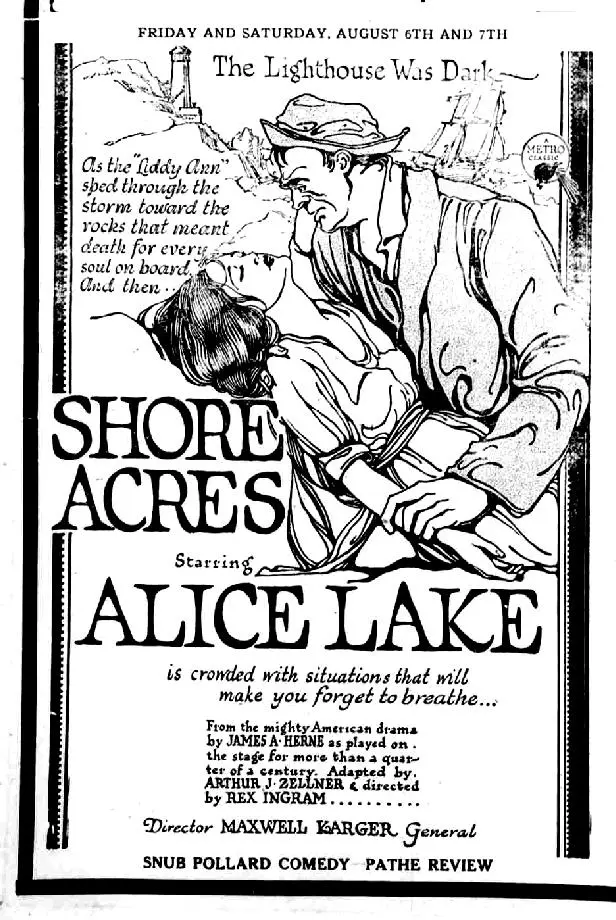
Note the name Martin—recalling St. Martin of Tours, who tore his cloak to clothe a beggar. Our farmer tears familial bonds instead, only finding redemption when he rekindles the guiding light. Subtle? Perhaps. Yet such typology layers the parable, inviting semioticians to frolic alongside popcorn munchers.
Modern patience may flag during reel two’s expository supper, but Campbell compensates with brisk cross-cutting once the storm mass. Borrowing lessons from Griffith, the tempest sequence interlaces three spatial planes: lighthouse, foundering sloop, and shoreside rescue party. Tension coils tighter than in The Circular Staircase, whose mystery unfolds indoors.

Variety’s 1920 notice praised the “briny realism” yet griped about “over-plotting.” Today, cinephiles schooled on Kitty Kelly, M.D. or The Family Skeleton will admire how deftly the melodrama skirts camp, its emotional verities still breathing. Archives list only three complete 35 mm prints: one at MoMA, another at BFI, a third rumored in a Portuguese convent (don’t ask). Digital restorations circulate among private torrent trackers, but a legitimate Blu-ray remains tantalizingly absent.
Shore Acres endures because it understands that every family is a lighthouse: neglect the flame and ships shatter. Its ethics feel startlingly contemporary—debt, bodily autonomy, ecological fragility—yet it never sermonizes. Campbell lets surf speak, and surf is merciless. If you crave a silent sleeper that will haunt your next shoreline stroll, track this down, queue the Mendelssohn, and watch morality flicker against granite. You’ll emerge salt-kissed, chastened, and weirdly hopeful.
Verdict: 9/10—A cinematic nautilus shell whose chambers echo long after end titles.

IMDb 5.3
1929
Community
Log in to comment.