DbcultAccessing Vault...
Cult Review
Senior Film Conservator
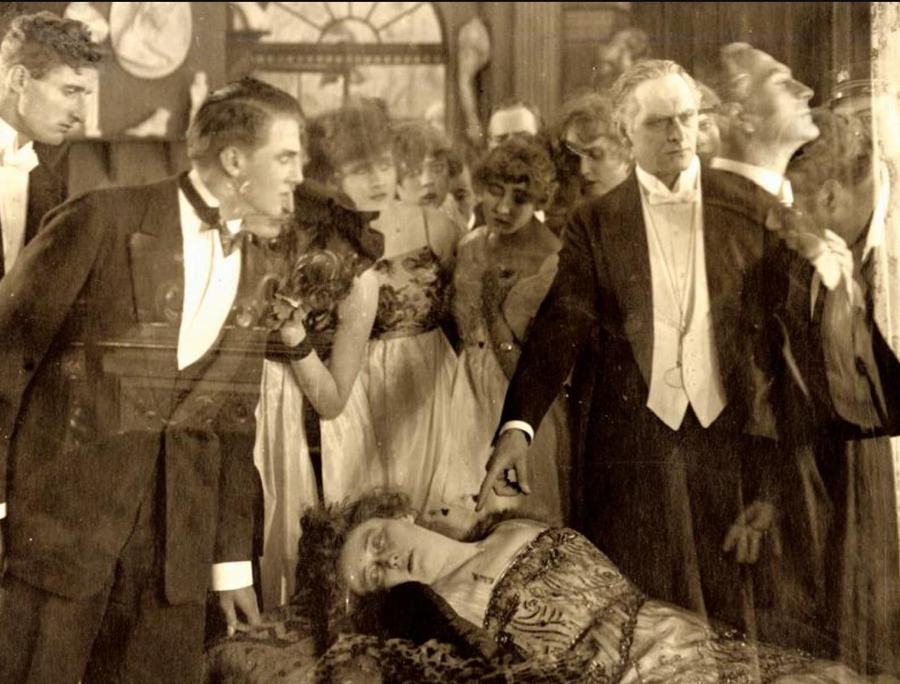
Ah, the silent era! A time when emotions roared without a single spoken word, when facial expressions and grand gestures carried the full weight of a character's soul. Danish cinema, often overlooked in the broader narrative of early film, produced some truly captivating works, and Skæbnesvangre vildfarelser (which translates beautifully to 'Fatal Delusions' or 'Fateful Aberrations') stands as a poignant testament to this period's dramatic prowess. It's not merely a film; it's a window into a bygone era's understanding of love, despair, and the often-destructive nature of human desire.
The narrative unfurls within the legendary, albeit fictionalized for this context, tavern Moulin Rouge – a name synonymous with bohemian revelry and artistic freedom. Here, amidst the clinking of glasses and the murmur of conversation, a motley crew of artists, sculptors, and their muses gather, drawn by the magnetic pull of the famous Gaston Printemps. The atmosphere is thick with creative energy, yet beneath this vibrant surface, a profound melancholy brews in the heart of young Louis, a painter consumed by an unrequited love for the exquisite Rose Vivienne. It’s a classic setup, perhaps, but one rendered with a raw intensity that transcends its simplicity, setting the stage for a passionate drama destined for deadly consequences.
The Moulin Rouge in Skæbnesvangre vildfarelser is more than just a setting; it’s a living, breathing entity, a crucible where artistic ambition and personal passions collide. It’s a space of both liberation and confinement, where the freedom to express oneself creatively often comes hand-in-hand with emotional vulnerability. The film masterfully uses this environment to amplify the central drama. The vibrant, almost chaotic energy of the artists – played by a diverse ensemble including Hr. Aaberg, V. Schmidt, and Svend Kornbeck – provides a stark contrast to Louis's internal turmoil. Their boisterous camaraderie and intellectual debates serve as a backdrop against which Louis’s silent suffering feels all the more acute, making his isolation within a crowd particularly palpable.
Gaston Printemps, portrayed with an undeniable charisma by Olaf Fønss (a prominent figure in early Danish cinema, known for his intense performances), acts as a focal point for this artistic community. His fame and influence inadvertently contribute to the dramatic tension, perhaps even symbolizing the elusive nature of success and recognition that many artists chase. His presence subtly complicates the emotional landscape, drawing attention and admiration that might otherwise fall elsewhere, thereby intensifying the currents of envy and longing that ripple through the tavern.
At the core of this tragic narrative lies Louis, brought to life with heartbreaking intensity by Fh. Hansen. His depression isn't merely a plot device; it's a visceral, consuming force that dictates his every gesture and expression. In the silent film era, the actor's face was the primary canvas for emotion, and Hansen delivers a masterclass in conveying the silent agony of unrequited love. Every downcast gaze, every trembling hand, every slumped shoulder speaks volumes about the depth of his infatuation with Rose Vivienne and the despair it engenders. He is not just in love; he is possessed by it, a prisoner of his own heart.
His artistic temperament, often associated with heightened sensitivity, makes him particularly susceptible to this emotional torment. We see him not just as a man in love, but as an artist whose very creative wellspring is poisoned by the lack of reciprocation. This fusion of artistic passion and personal heartbreak is a powerful theme, suggesting that for some, the lines between life, art, and emotion are dangerously blurred. The film, through Hansen’s nuanced performance, invites us to empathize with a man teetering on the brink, his sanity slowly eroded by a love that offers no solace, only torment.
Rose Vivienne, portrayed by the captivating Aya Nay, embodies the quintessential muse – beautiful, perhaps enigmatic, and ultimately, a catalyst for profound emotional upheaval. Her beauty is not just physical; it’s an ethereal quality that inspires both adoration and anguish. The film carefully constructs her character, not necessarily as cruel or manipulative, but as an object of desire whose perceived indifference ignites a destructive fire. Her role is critical in driving the plot, as Louis’s entire world revolves around her, even if she remains largely unaware or unmoved by the intensity of his devotion.
Aya Nay’s performance is subtle yet powerful. In a silent film, the gaze, the turn of the head, the slightest smile or frown must convey a complex inner world. Rose Vivienne's portrayal is crucial in establishing why Louis is so utterly consumed. Is she truly indifferent, or simply unaware of the depth of his feelings? The ambiguity adds to the tragedy, leaving the audience to ponder the nature of her heart and the burden of being an object of such intense, unasked-for affection. This dynamic of the unattainable beloved is a timeless trope, but Skæbnesvangre vildfarelser imbues it with a particular Danish sensibility, a certain melancholic realism.
The genius behind the unfolding drama is Fritz Magnussen, the writer who crafted this intricate web of passion and despair. Magnussen, a prolific figure in early Danish cinema, demonstrates a keen understanding of human psychology and the dramatic arc. His script, translated through the visual language of silent film, meticulously builds the tension, allowing the audience to witness the slow, inexorable descent of Louis into obsession. The pacing is deliberate, each scene contributing to the sense of impending doom. He doesn't rush the tragedy; he lets it simmer, allowing the emotional pressure to build until it inevitably explodes.
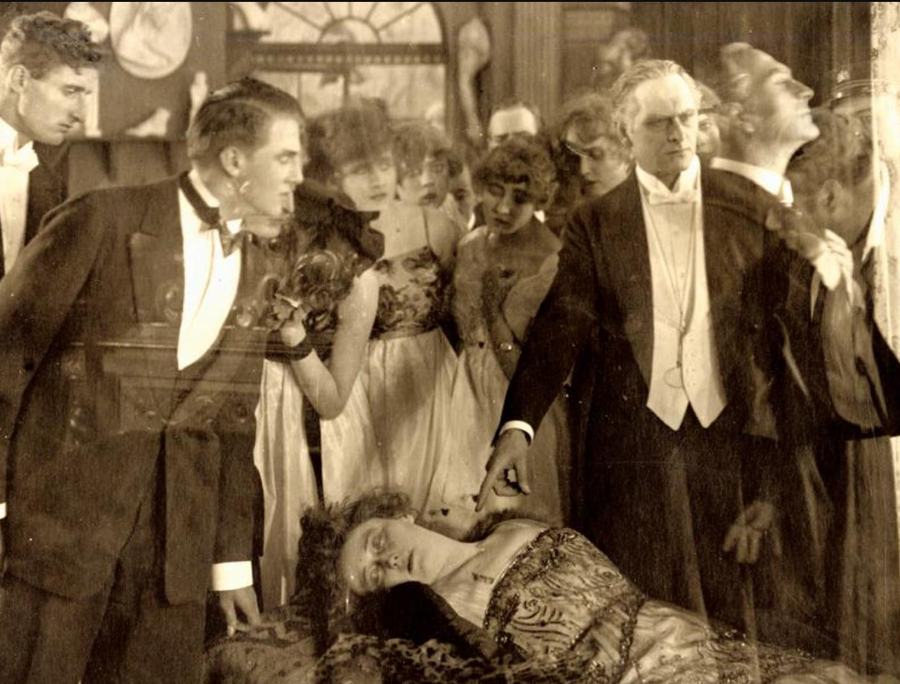
Magnussen’s writing shines in its ability to establish clear character motivations and create a believable, albeit heightened, world where emotions are paramount. The supporting cast, including Fru Alvad, Alfred Cohn, and Else Jørgensen, fills out this world, each contributing to the tapestry of the Moulin Rouge, making the events feel grounded in a vibrant, if ultimately doomed, community. The story isn't just about Louis; it's about how one man's obsession can ripple through a social fabric, touching everyone in its destructive path.
One cannot discuss Skæbnesvangre vildfarelser without acknowledging the profound artistry of silent cinema itself. Without dialogue, filmmakers relied on a sophisticated interplay of visual storytelling elements. Cinematography became a language, with lighting, camera angles, and movement used to convey mood and psychological states. The close-up, for instance, was an incredibly powerful tool, allowing audiences to scrutinize the raw emotions etched onto an actor's face – a technique used to devastating effect with Fh. Hansen’s portrayal of Louis.
Intertitles, far from being mere text cards, were an integral part of the narrative, providing crucial dialogue, exposition, and emotional commentary. They were often crafted with poetic flair, enhancing the dramatic impact rather than simply stating facts. The music, typically performed live in theaters, was another layer of emotional resonance, guiding the audience through moments of joy, suspense, and heartbreak. The combined effect is a truly immersive experience, demanding active participation from the viewer to interpret and feel the story. The film's direction, likely a collaborative effort given the era but adhering to Magnussen's script, expertly orchestrates these elements to create a cohesive and deeply moving experience.
The film delves deep into the darker facets of the human psyche: obsession and jealousy. Louis's love for Rose Vivienne transcends healthy admiration, morphing into a consuming fixation that blinds him to everything else. This narrative thread resonates with other silent era dramas exploring similar dangerous passions, such as The Marble Heart, where unrequited love often leads to tragic and dramatic conclusions. The film doesn't shy away from depicting the destructive power of such emotions, painting a stark picture of how unchecked desire can lead to profound misery, not just for the individual, but for those around them.
The artistic milieu further complicates these themes. The stereotype of the tortured artist, driven by intense emotions and often prone to dramatic outbursts, finds fertile ground here. Louis's despair is not just personal; it's also tied to his identity as a painter, a creator whose work is intrinsically linked to his emotional state. When his love is unfulfilled, his art, and indeed his very existence, seems to wither. This exploration of artistic torment adds a layer of depth, suggesting that for some, the pursuit of beauty and the experience of intense emotion are two sides of the same coin, capable of both sublime creation and utter destruction.
From the moment Louis's unrequited love is established, a sense of tragic inevitability hangs heavy over Skæbnesvangre vildfarelser. The film is not about whether tragedy will strike, but how and why. The 'deadly consequences' promised in the plot summary are not a surprise, but rather the grim, logical conclusion of a passion allowed to fester without hope. This preordained quality is a hallmark of many melodramas of the era, yet here it feels earned, a natural outcome of the characters’ flaws and the emotional pressures they face. The supporting cast, including Sverre Andersen, Fru Nissen, and Kaj Bille, often serve as silent witnesses or minor players in this unfolding human catastrophe, their reactions reflecting the societal impact of such intense personal dramas.
The film’s power lies in its ability to make the audience feel the weight of these consequences, to understand the chain of events that leads to such a devastating conclusion. It’s a cautionary tale, perhaps, about the dangers of extreme emotion, but also a poignant observation on the fragility of happiness and the unpredictable nature of the human heart. The ending, without spoiling specifics, delivers on the promise of its title, leaving a lasting impression of the profound and often sorrowful nature of human existence.
The visual aesthetic of Skæbnesvangre vildfarelser is a crucial component of its charm and impact. The sets, though perhaps simple by today's standards, effectively evoke the bohemian atmosphere of the Moulin Rouge. The costumes, too, play a vital role in defining the characters and their social standing, from the artists’ more relaxed attire to Rose Vivienne’s elegant dresses. The lighting, often stark and dramatic, contributes significantly to the mood, casting shadows that mirror the characters' inner turmoil and highlighting moments of intense emotion. Directors and cinematographers of the silent era were masters of visual storytelling, and this film is no exception, utilizing every frame to convey meaning.
Comparing it to films like Tangled Hearts, one can see a common thread in the exploration of complex human relationships and the dramatic repercussions of love gone awry. However, Skæbnesvangre vildfarelser distinguishes itself with a particular Danish gravitas, a nuanced portrayal of suffering that feels deeply personal. The performances by the entire ensemble, from the central figures like Fh. Hansen and Aya Nay to vital supporting players like Alfred Cohn and Viola Leveaux, contribute to a cohesive and believable world, even through the stylized lens of silent cinema.
In conclusion, Skæbnesvangre vildfarelser is more than just an artifact from a bygone cinematic era; it is a powerful, emotionally charged drama that continues to resonate. It’s a testament to the enduring power of visual storytelling, the profound impact of human emotion, and the timeless tragedy of unrequited love. For anyone interested in the rich tapestry of early European cinema or the raw intensity of silent film acting, this Danish masterpiece offers a compelling and deeply moving experience. It reminds us that some stories, particularly those born from the depths of the human heart, need no words to be heard, only eyes to see and a soul to feel.
IMDb —
1917
Community
Log in to comment.