DbcultAccessing Vault...
Cult Review
Senior Film Conservator
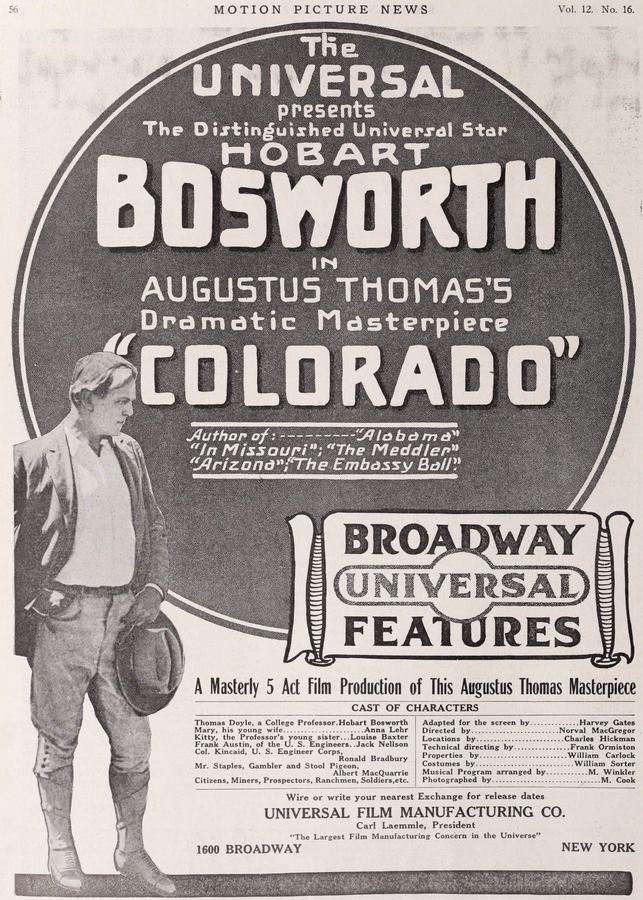
In the vast, untamed expanse of early 20th-century cinema, certain narratives emerge as foundational pillars, shaping the very grammar of storytelling that would follow. The film 'Colorado', a compelling entry from an era defined by its nascent expressive power, stands as a testament to the enduring allure of human drama played out against the grandeur of the American West. It's more than just a moving picture; it's a moral crucible, a grand opera of loyalty and treachery, ambition and redemption, all meticulously etched onto the celluloid canvas. This isn't merely a tale of cowboys and prospectors; it’s a profound exploration of character under duress, a study in the insidious nature of greed, and the unwavering light of human decency.
The narrative thrust of 'Colorado' is immediately established with a pivotal act of defiance. Frank Austin, portrayed with a stoic intensity by Albert MacQuarrie, is introduced not as a hardened outlaw, but as a soldier bound by an internal code of honor more stringent than any military regulation. Witnessing the egregious abuse of a vulnerable, lame newsboy by his superior, Colonel Kinkaid (a role masterfully embodied by Carl von Schiller, whose portrayal drips with aristocratic malice), Austin's moral compass dictates an immediate, visceral response. The swift, righteous blow he delivers to Kinkaid isn't merely an act of insubordination; it’s a declaration of war against injustice itself. This singular moment, pregnant with consequence, sets into motion a chain of events that will define Austin's destiny and entangle numerous lives in its wake. The subsequent court-martial and the harsh five-year sentence underscore the rigid, often unforgiving nature of institutional power, contrasting sharply with Austin's innate sense of fairness. It’s a classic trope, yet rendered here with a raw immediacy that resonates deeply, recalling the struggles of the common man against oppressive systems, a theme subtly echoed in films like 'The Immigrant', where individuals navigate formidable societal obstacles.
The escape, facilitated by the very newsboy Austin defended, is a poignant moment, highlighting the ripple effect of genuine compassion. It transforms Austin from a confined prisoner into a man on the run, seeking anonymity and a new beginning in the mythic West. His journey to Colorado is not just a geographical relocation; it’s a metaphorical passage into a realm where the rules are different, where self-reliance is paramount, and where fortune, both good and ill, awaits those daring enough to seek it. This initial arc, briskly paced and emotionally charged, establishes Austin as a hero forged in the crucible of adversity, a man whose moral conviction remains unshakeable despite personal cost.
Parallel to Austin's dramatic flight, the film introduces us to the seemingly disparate world of Professor Thomas Doyle, played with earnest intellectualism by Robert N. Bradbury. Doyle's tranquil academic life, shared with his ailing wife, Mary (the delicate Louise Baxter), and his vivacious sister, Kitty (Anna Lehr), is disrupted by Mary's declining health. The doctor's grim prognosis—a drier climate as her only hope—propels the family westward, a journey of hope shadowed by underlying vulnerability. It’s during this fateful migration that their paths intersect with Colonel Kinkaid once more, now operating under a civilian guise of affability.
Kinkaid's modus operandi is revealed through his collaboration with Staples, a character embodying the seedy underbelly of the frontier, a gambler and crook brought to life by Edward Brown. Staples, acting as Kinkaid's agent, orchestrates a classic land swindle, convincing the trusting Doyle to invest in a tract of utterly worthless land. This act of calculated deception leaves the professor financially crippled, holding little more than five hundred dollars and a deed to barren earth. It’s a stark illustration of the dangers inherent in a frontier where law is often fluid and trust a perilous commodity. This theme of fraud and exploitation in the pursuit of wealth resonates with the narrative complexities found in films like 'A Mexican Mine Fraud; or, The Game That Failed', where the lure of riches often blinds individuals to impending ruin.
Meanwhile, Austin, having settled just above Doyle's newly acquired, desolate property, is diligently working a claim. His interaction with Old Morgan, a local native (portrayed by Ben Suslow), initially dismissive of Austin's efforts, soon turns to astonishment as Austin unveils samples rich with gold. This discovery is a stroke of cinematic genius, a direct juxtaposition of Austin's honest toil yielding genuine wealth against Kinkaid's machinations built on deceit. The land, initially perceived as barren for Doyle, becomes a symbol of misplaced hope, a stark contrast to Austin's proven prosperity. The film cleverly uses the landscape itself as a character, its parched aridity reflecting Doyle's financial despair, while the hidden veins beneath speak to Austin's latent potential.
Austin's discovery of gold is not merely a plot device; it's a catalyst that intensifies the conflict. Staples, ever the opportunist, observes Austin's workings, pilfers some ore, and presents it to Kinkaid. The assay confirms its richness, igniting a new, more dangerous plot in Kinkaid's already poisoned mind: to dispossess Austin of his claim. This escalation marks Kinkaid's transition from a mere swindler to a full-blown antagonist, his greed knowing no bounds. The Western genre frequently explores this relentless pursuit of wealth, often at the expense of morality, and 'Colorado' offers a compelling, early iteration of this timeless struggle.
A dramatic turn of events brings Austin directly into the Doyles' orbit. While hunting, Kitty and her brother discover Austin, wounded by a blast. Their act of Samaritan kindness, taking him into their home, is a pivotal moment, intertwining the fates of these disparate characters irrevocably. The irony of Kinkaid already being a guest in the Doyle home, having made himself "very much at home," adds a layer of tension, a serpent in their domestic Eden. Kinkaid's recognition of Austin immediately puts the ex-soldier at a disadvantage, forcing him into an unwelcome partnership in his own mine. This coercive arrangement highlights the brutal power dynamics of the era, where a man's past could be weaponized against his future.
The development of the mine proceeds, with Doyle, ever resilient, accepting a foreman's position, a pragmatic move to salvage what he can from his shattered finances. Kinkaid, meanwhile, continues his insidious machinations, even gifting Mary Doyle a revolver, an act seemingly benevolent but laden with sinister undertones, hinting at a deeper, more personal manipulation. The tension builds relentlessly. Kitty's encounter with Staples, revealing Kinkaid's culpability in the land deal, further exposes the colonel's web of deceit, solidifying his role as the arch-villain.
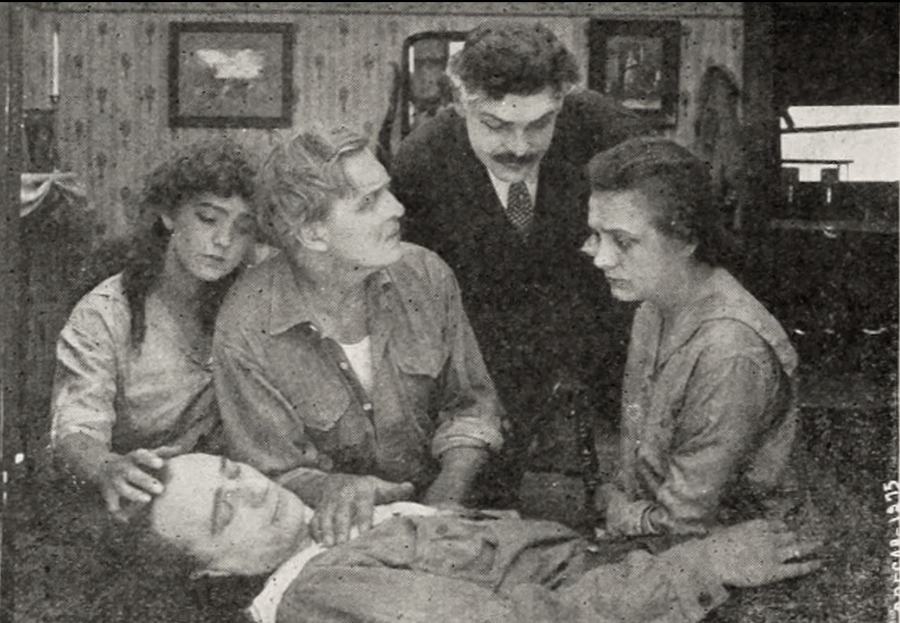
The film then plunges into a sequence of breathtaking peril. Staples, seeking revenge after Doyle thrashes him, orchestrates a near-fatal disaster in the mine, trapping Doyle and Kitty during a blast by stopping the lift. This moment of extreme jeopardy showcases the raw, visceral danger of frontier life and the depths of Staples' malice. Austin's heroic intervention, rescuing them just in the nick of time, cements his role as the selfless protector, a beacon of courage amidst chaos. The flood unleashed by the blast, initially a terrifying threat, proves to be an unexpected turning point. This is a masterful stroke of narrative irony: the very disaster that imperiled lives and flooded Austin's mine simultaneously irrigates Doyle's arid land, transforming his "worthless" property into fertile ground. Staples, the architect of so much misery, meets his poetic end, drowned in the very waters he unleashed. This narrative twist, where destruction begets creation, is a powerful thematic statement about resilience and the unpredictable hand of fate.
With the mine flooded, Austin finds himself working for Doyle, a natural progression that further binds their fates. The burgeoning affection between Austin and Kitty is palpable, a tender counterpoint to the surrounding drama. Yet, a shadow lingers: Austin's past sentence prevents him from fully embracing his feelings, a poignant internal conflict that adds depth to his character. Both Kitty and Doyle, perceptive and caring, sense his unspoken burden, leading to a crucial revelation of his past. This quiet emotional struggle elevates the film beyond mere adventure, infusing it with a genuine human heart.
The narrative tension reaches its peak with Kinkaid's brazen pursuit of Mary in Denver. Doyle’s discovery of Kinkaid in intimate conversation with his wife shatters his world, leading to a furious confrontation and Kinkaid’s expulsion. Mary's inability to explain, driven perhaps by fear or shame, leads her to flee, amplifying the emotional stakes. Kinkaid's relentless harassment of Mary in the city is a chilling display of his depravity, culminating in a desperate moment where Mary, using the very revolver Kinkaid gave her, forces him out of her room. This act of self-defense underscores her burgeoning strength and agency.
The arrival of Kitty, Doyle, and Austin in Denver, hot on Kinkaid's trail, sets the stage for the dramatic climax. Kitty's reunion with Mary is a tender moment amidst the rising tension. The ensuing confrontation between Doyle and Kinkaid is a visceral outpouring of long-simmering rage and betrayal. In a moment of supreme courage and loyalty, Mary intervenes, shooting Kinkaid in the arm, saving her husband's life. This act is not just physical; it's a profound emotional turning point, an atonement and a powerful declaration of her allegiance. Faced with his wound and the undeniable evidence of his villainy, Kinkaid is forced to write a letter clearing Austin, a confession that unravels the entire web of deceit.
The resolution is both satisfying and emotionally resonant. All return to the revitalized tract, a landscape now mirroring their own renewed hopes. Doyle and Mary are reconciled, their bond strengthened by adversity and Mary’s courageous act. The film concludes with Austin finally receiving his pardon, removing the last barrier to his happiness with Kitty. Their impending marriage is a joyous affirmation of love, justice, and the promise of a future built on honesty and mutual respect. This sense of triumphant resolution is a hallmark of classic Westerns, offering a clear distinction between good and evil, and ensuring that virtue ultimately prevails. It's a powerful echo of the restorative justice often found in films like 'The Darkening Trail', where the hero's journey culminates in the vindication of his honor.
The ensemble cast of 'Colorado' delivers performances that, even across the chasm of time, resonate with genuine emotion and conviction. Albert MacQuarrie as Frank Austin embodies the quintessential Western hero – principled, courageous, and understated. His silent suffering and eventual triumph are conveyed with a quiet dignity that anchors the film. Carl von Schiller’s Colonel Kinkaid is a masterclass in cinematic villainy, his suave exterior barely concealing a core of ruthless ambition. He is the perfect foil, a sophisticated predator whose presence casts a long shadow over the proceedings.
Anna Lehr, as Kitty, brings a vibrant energy and spirited determination to her role, making her a compelling love interest and a strong female presence. Her chemistry with MacQuarrie is subtle but effective, conveying a deep affection that blossoms under trying circumstances. Robert N. Bradbury’s Professor Doyle is a sympathetic figure, representing the civilized man thrust into a brutal world, while Louise Baxter’s Mary Doyle navigates a complex emotional arc, from fragile invalid to a woman capable of decisive action. The supporting performances, particularly Edward Brown as the despicable Staples and Ben Suslow as the wise Old Morgan, add texture and depth to the frontier landscape.
From a directorial standpoint, the film, under the guidance of its uncredited visionaries (derived from the writings of Augustus Thomas and Harvey Gates), demonstrates an astute understanding of narrative pacing and visual storytelling. The wide vistas of Colorado are effectively utilized, not just as scenic backdrops but as active participants in the drama, reflecting the characters' struggles and triumphs. The sequences in the mine, particularly the blast and flood, are executed with a gripping intensity, showcasing an early mastery of cinematic suspense. The intimate moments of character interaction are balanced with grander action sequences, creating a dynamic and engaging viewing experience. The use of intertitles, characteristic of the era, is judicious, allowing the visual narrative to speak volumes.
'Colorado', while perhaps not as widely celebrated as some of its contemporary epics like 'Napoleon' or the societal commentary of 'What 80 Million Women Want', nonetheless holds a significant place within the evolution of the Western genre. It deftly combines elements of melodrama, adventure, and social commentary, offering a nuanced portrayal of frontier life beyond simplistic heroics. The film’s exploration of themes like justice, the corrupting influence of greed, and the resilience of the human spirit remains remarkably potent. It reminds us that even in the earliest days of cinema, filmmakers were grappling with complex moral questions and crafting narratives that resonated deeply with audiences.
Its narrative structure, weaving together multiple character arcs that ultimately converge, speaks to a sophisticated understanding of storytelling. The transformation of the landscape itself – from arid wasteland to fertile ground – serves as a powerful metaphor for the characters' own journeys of transformation and renewal. The film's enduring appeal lies in its universal themes and its ability to transport viewers to a time and place where courage and conviction were tested against formidable odds. It is a compelling watch for anyone interested in the foundational works of American cinema, offering both thrilling entertainment and thoughtful reflection on the values that define us. The resolution, where the forces of good triumph over evil, and love finds its rightful path, leaves an indelible impression, affirming the timeless power of hope and reconciliation.

IMDb 5.1
1922
Community
Log in to comment.