DbcultAccessing Vault...
6.9/10
Senior Film Conservator
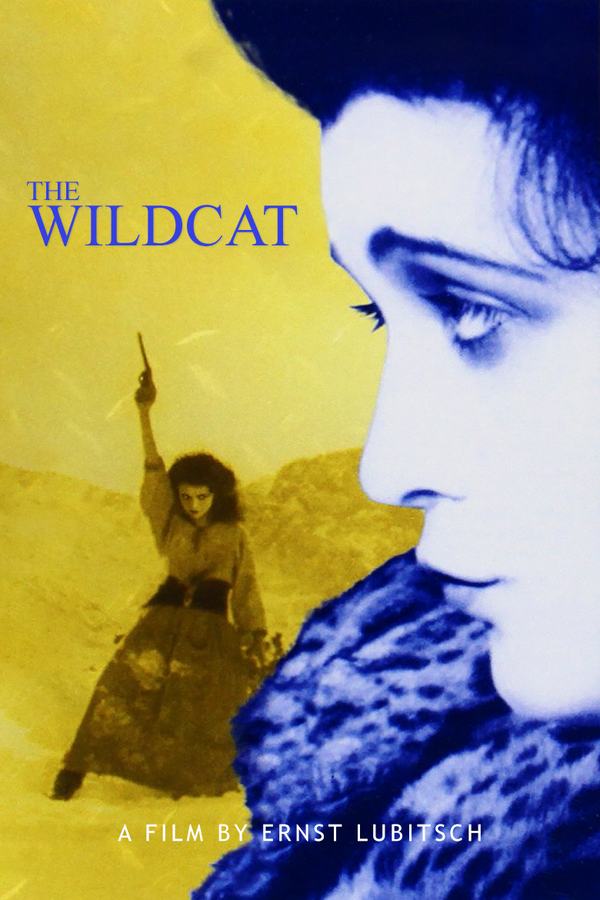
A definitive 6.9/10 rating for a film that redefined the boundaries of cult cinema. The Wildcat remains a cornerstone of transgressive art.
Imagine, if you dare, a silent comedy that arrives like a shot of pepper-spiked schnapps at 3 a.m.—head-spinning, throat-scorching, yet leaving you starry-eyed over an alpine abyss. That is The Wildcat, Ernst Lubitsch’s 1921 Fasching of celluloid, a film so drunk on its own iris-in gags that it forgets to sober up for plot logic. The story, nominally, follows a dashing lieutenant (Paul Heidemann) posted to a border fort where the snow falls like shredded treaties. Within minutes he is kidnapped by pistol-packing brigands who live above the clouds in a fortress built from matchsticks and megalomania. What follows is less narrative than a snow-globe shaken by a caffeinated anarchist: class, sex, militarism and pure kinetic mischief swirl until the glass cracks.
Lubitsch, still a few years away from velvet-draped drawing-room comedies, cranks his visual metabolism into overdrive. The camera pirouettes through circular mattes that open and shut like voyeuristic diaphragms; at one point an iris closes so tightly it seems to wink at the audience, confessing “Yes, this is all nonsense—delicious nonsense.” Title cards, customarily utilitarian, here sashay across the screen in rhyming couplets or spiral like barroom poetry. When the lieutenant protests his capture, a card erupts: “He argued law; they offered schnitzel—thus diplomacy begins!”
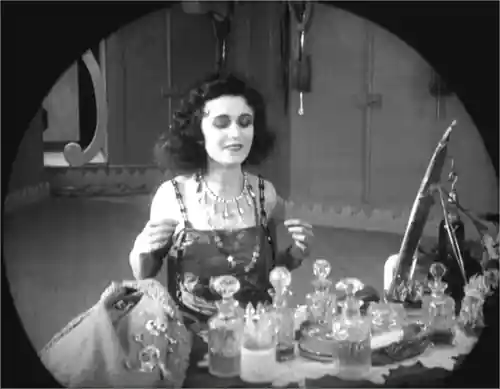
Pola Negri, pre-Hollywood exoticism, strides through the mayhem with eyes lacquered into obsidian sickles. She is Rischka, the bandit chieftain’s daughter, equal parts Robin Hood and Sappho, her hips swaggering under bearskin pelts that smell of gunpowder and pine. Lubitsch lets her commandeer the frame; she lights a cigar off a prison-bar glow and exhales into the lens until smoke obliterates the men’s bravado. One shot frames her atop a tavern table, boots planted on two cowering lieutenants—a dominion of desire shot from below so the ceiling beams rise like cathedral spires. It is a manifesto of unruly femininity three years before Fedora’s icy intrigues and light-years from the penitent damsels of The Unpardonable Sin.
Negri’s chemistry with Heidemann’s lieutenant sizzles precisely because Lubitsch refuses to dilute it with sentiment. Their courtship is a fencing match fought with banter, kisses stolen between heists, and eventually a waltz that topples into a snowbank. The waltz sequence—restored from the 2018 Munich reconstruction—spins from a tavern hearth to the moonlit ramparts in a single unbroken take achieved by strapping the camera to a sled. The lovers whirl while bandits fire celebratory rounds into the night, bullets tracing glowing parabolas that resemble champagne uncorked against obsidian. It is one of those instances where silent cinema out-senses sound; you almost hear the snow hiss when hot lead kisses it.

Compare this exuberance to the moral claustrophobia of The Passing of the Third Floor Back, where every gesture atones, or the manic but domesticated slapstick of Hustling for Health. Lubitsch’s mountain carnival refuses to behave; it is a Bergoper scored by pistol cracks and yodels, its libretto scrawled on wanted posters.
The film’s formal bravado peaks in a triptych dream sequence. The lieutenant, chained inside a wine cellar, dozes off and the screen fractures into three circular panels: left shows Rischka riding a black wolf; right, the colonel’s wife praying for her missing hero; center, our hero guzzling communion wine that transubstantiates into liquid starlight. Panels drift apart then overlap like Venn diagrams of libido, duty, and delirium. Because silent exhibition speeds varied, Lubitsch reportedly timed the sequence to a metronome of 96 beats per minute; projections that honored the tempo reported audiences gasping as if on a swing.
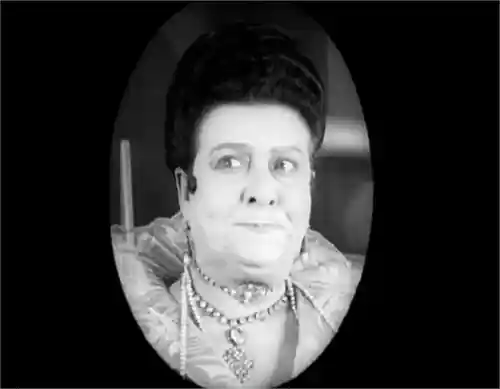
One cannot overstate how the film’s satire skewers militarism. The fort’s sentries goose-step with brooms for rifles; a general arrives in a sled pulled by peacocks; the bandits forge discharge papers using sauerkraut juice as ink. Yet beneath the buffoonery lurks a shiver of post-WWI cynicism. Germany, humiliated by Versailles, sees its armed forces mirrored in these toy soldiers who surrender not to enemies but to waltzes and women. Lubitsch, son of a Berlin tailor, stitches military pomp into harlequinade, anticipating the more acidic anti-war lampoon of later works. In one intertitle, a brigand quips: “A uniform is merely a straitjacket with epaulettes,” a line so seditious that censors in Munich clipped it until the 1970s.
The cinematography—credited to Theodor Sparkuhl, later lensing Sternberg’s Der blaue Engel—bathes Carpathian exteriors in silvery chiaroscuro. Interior scenes glow with amber lamplight that pools on beer-stained tables, while snowscapes burn white-hot, nearly stroboscopic. Notice how Rischka’s first close-up is rim-lit so her wild hair becomes a solar corona; contrast that with the lieutenant’s later confinement in a dungeon whose only light is a torch held beneath his face, carving gargoyle shadows that foretell guilt. These lighting schemas prefigure expressionist horror, yet remain tethered to screwball levity.

Then there is the matter of rhythm. Lubitsch, trained in Max Reinhardt’s stage troupe, edits like a percussionist. A chase across collapsing rope bridges intercuts twelve shots in 8.7 seconds—calculated to hit the downbeat of a live orchestra’s galop. Meanwhile, the bandits’ drunken march unfolds in leisurely 12-second takes, allowing slapstick breathing room. This ebb-and-flow is the Lubitsch-touch before it got silk-lined: the ability to make suspense flirt with slapstick, to let a punchline linger until it bruises.
Contemporary critics balked. One Viennese reviewer dismissed it as “a hurly-burly lacking the decorum of Herr Lubitsch’s earlier Odette.” Yet the public queued around blocks, enchanted by the anarchic release. In an era when inflation turned paychecks into kindling, the fantasy of outlaws thumbing noses at bureaucracy felt like therapy.
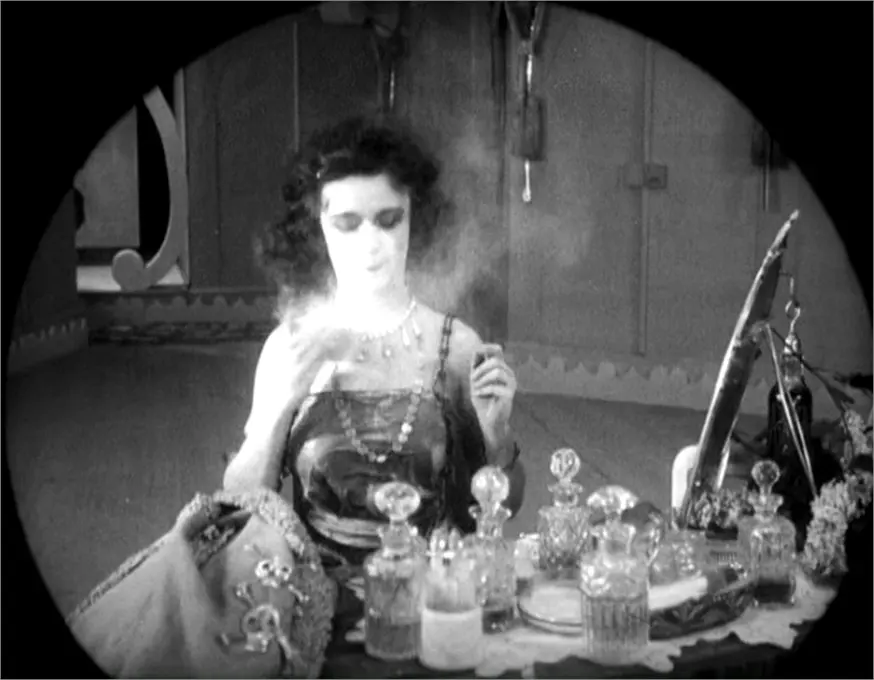
Restoration-wise, the 2018 F.W. Murnau Foundation 4K reassembly is revelatory. Prior prints, cobbled from 9.5mm Pathescope reels, looked like snowstorms inside a snowstorm; now textures emerge: wolf-pelt bristles, the glint of a brass belt buckle, frost on Negri’s eyelashes. The tinting follows premiere annotation—amber for interiors, cyan for night, rose for the climactic kiss—achieved via Desmet color separation. The original intertitles, long thought lost, were reconstructed from censorship cards stored in Kraków, reviving Lubitsch’s puns in German with optional English subtitles that rhyme, preserving meter.
Viewing it today, one senses DNA splinters in everything from Seven Brides for Seven Brothers’ barn-raising athletics to the Coens’ Raising Arizona chase chaos. Even the self-aware iris gags resurface in Deadpool’s fourth-wall quips—proof that Lubitsch invented meta before critics coined it.
So, is The Wildcat merely a curio for cine-archaeologists? Hardly. Beneath the frenetic surface lies a sophisticated manifesto: that authority is costume, desire a revolution, and cinema the mountaintop from which to jeer at both. It is also a reminder that satire need not sermonize; sometimes it just needs a waltz, a woman, and a pistol that fires confetti instead of bullets.
Seek it out, preferably on a big screen with live accompaniment. Let the brass band hit the downbeat, let the iris wink, and when the lieutenant finally salutes the bandits as they ride off into double-exposure dusk, you may find yourself grinning at the audacity of a world that refuses to take empire—or itself—seriously. In 1921 that was escapism; today, it feels like survival.
IMDb —
1917
Community
Log in to comment.