DbcultAccessing Vault...
Cult Review
Senior Film Conservator
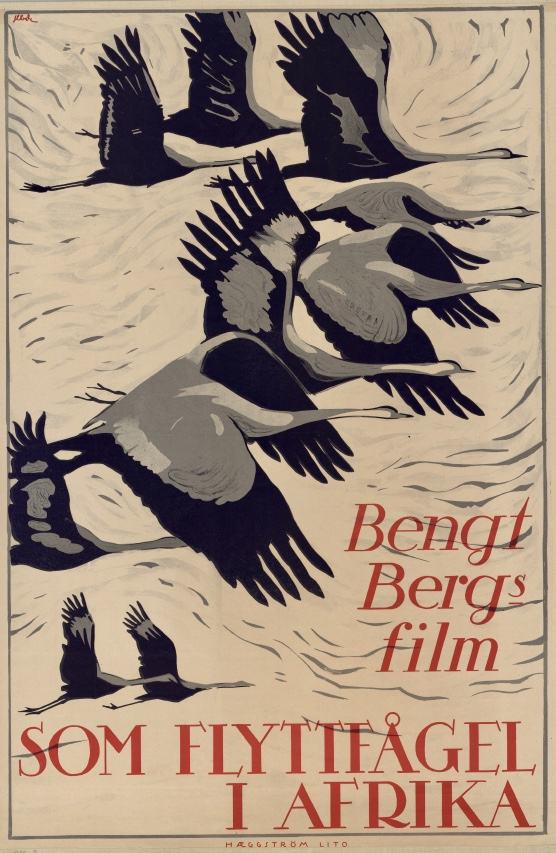
In the pantheon of early 20th-century non-fiction cinema, few figures loom as large or as enigmatic as Bengt Berg. His 1922 endeavor, Som flyttfågel i Afrika, stands not merely as a relic of colonial-era exploration but as a revolutionary piece of visual poetry that predates the modern ecological movement. Unlike the staged artifice found in contemporary dramas like The Virtuous Thief, Berg’s work seeks a raw, unvarnished truth found only in the rhythmic beating of wings and the slow churn of the White Nile.
Berg’s fascination with the migratory patterns of Swedish birds serves as the film’s central nervous system. He posits a fascinating question: what becomes of the 'Swedish' identity when it is transplanted into the heat-shimmer of the Sudanese Sudd? The film meticulously documents the common crane and the white stork, birds that represent the heralds of spring in Scandinavia, as they navigate the alien terrains of the Nile Delta. This isn't the claustrophobic tension of The Green Swamp; rather, it is a cinema of vast, breathing spaces. The camera lingers on the horizon, capturing the sheer scale of the migration with a patience that modern digital editors would find agonizing.
The technical proficiency required to capture these images in 1922 cannot be overstated. Lugging hand-cranked cameras through the alkaline dust of Egypt and the humid reeds of Sudan required a fortitude comparable to the characters in Lightning Bryce, yet Berg’s focus remains steadfastly on the fauna. There is a sequence involving the shoebill stork—a prehistoric-looking creature—that feels like a dispatch from another planet. The grain of the film stock adds a tactile, almost skeletal quality to the birds' plumage, making the viewer acutely aware of the fragility of these life forms.
While many films of the era, such as The Fixer, focused on the internal moral rot of urban society, Som flyttfågel i Afrika turns its gaze outward to the indifferent majesty of the natural world. The Nile is presented not as a romanticized mystery, but as a brutal, life-sustaining artery. Berg captures the interaction between the indigenous wildlife and the migratory visitors with a keen eye for hierarchy. The crocodiles and hippopotami of the White Nile provide a visceral counterpoint to the delicate cranes, creating a sense of constant, underlying peril that rivals the suspense of The Master Cracksman.
The cinematography utilizes the harsh African sun to create high-contrast silhouettes that feel strikingly modern. There is a specific shot of a flock taking flight at dusk near Khartoum where the wings slice through the golden hour light, creating a flickering effect that mirrors the very mechanism of the projector. This self-reflexive beauty is rare in early documentaries, which often prioritized information over aesthetic grace. Berg, however, understands that to truly respect the bird, one must capture the sublimity of its movement.
Viewing this film today requires a nuanced understanding of its historical context. Berg was a man of his time, and his interactions with the Sudanese people he encounters are filtered through a 1920s European perspective. However, unlike the melodramatic caricatures in Maddalena Ferat, there is a genuine curiosity here. The human elements are secondary to the ecological ones, yet they provide a necessary grounding for the avian odyssey. The labor involved in navigating the river, the traditional fishing methods, and the vastness of the desert all serve to emphasize the isolation of the migratory bird.
In many ways, the film acts as a silent precursor to the grand nature epics of the 21st century, yet it possesses an intimacy that big-budget productions often lack. When Berg focuses on a single bird preening its feathers by the riverbank, the silence of the medium becomes its greatest strength. Without a booming orchestral score or a didactic narrator, the viewer is forced into a state of meditative observation. It is a far cry from the narrative density of The Usurper or the frantic pacing of Amatörfilmen. Here, time is measured by the rising tide and the seasonal shift.
The legacy of Som flyttfågel i Afrika lies in its refusal to anthropomorphize its subjects. In an era where films like Bath Day used animals for comedic effect, Berg treated the wildlife with a scientific reverence that bordered on the hallowed. His editing choices emphasize the continuity of the landscape, creating a seamless flow from the Mediterranean coast down to the heart of the continent. The use of long shots allows the viewer to appreciate the flock as a single, undulating organism, a visual metaphor for the collective instinct of survival.
One cannot help but compare the ruggedness of this production to the staged grit of The Testing Block or the frontier aesthetics of Square Shooter. While those films sought to define the human spirit through conflict, Berg defines it through its capacity for wonder. The 'test' here is not one of moral fiber, as seen in The Test, but of endurance—both for the filmmaker and the birds he follows. The sheer logistical nightmare of filming in the White Nile in 1922 suggests a level of dedication that is palpable in every frame.
The middle act of the film is perhaps its most hypnotic. As the expedition moves further south, the vegetation thickens and the light changes. The water of the White Nile, often choked with papyrus, creates a textured, almost abstract visual field. Berg’s camera captures the way the birds camouflage themselves within this environment, a stark contrast to the bright, open sands of the Egyptian desert seen earlier. This transition is handled with a sophistication that rivals the narrative shifts in The Skipper's Treasure Garden.
There is a haunting quality to the footage of the abandoned nests and the skeletal remains of those who didn't survive the journey. It reminds the viewer that nature is a cycle of both birth and decay. This thematic depth elevates the film beyond a simple travelogue. It is a study of transience and permanence. The birds return every year, but the individuals change. The river flows eternally, yet its banks are constantly shifting. Berg captures this paradox with a stoic grace that avoids the sentimentality found in A Lady in Love.
To watch Som flyttfågel i Afrika in the modern age is to witness the birth of a genre. It lacks the CGI enhancements and high-definition clarity of contemporary nature documentaries, but it possesses a soul that is often missing from today’s hyper-saturated media. The film demands a level of engagement that is rarely asked of audiences anymore. It asks us to look, truly look, at the world around us. It challenges the notion that we are separate from nature, showing instead that the same impulses that drive the crane across the Mediterranean are the ones that drive the human explorer into the unknown.
While it may not have the narrative hooks of a film like Making the Grade, its educational and artistic value is immeasurable. Bengt Berg did not just film birds; he filmed the invisible threads that connect the North to the South, the winter to the summer, and the observer to the observed. The flickering images of those Swedish birds in the African sun remain a testament to the power of the cinematic image to bridge worlds. In the silence of the Nile, Berg found a universal language—one of feathers, wind, and the relentless, beautiful necessity of movement.
Note: This film is a vital piece of Swedish cinematic history and should be viewed with an appreciation for the technical constraints and cultural perspectives of the 1920s. Its restoration is a triumph for film preservationists everywhere.
IMDb —
1916
Community
Log in to comment.