DbcultAccessing Vault...
Cult Review
Senior Film Conservator
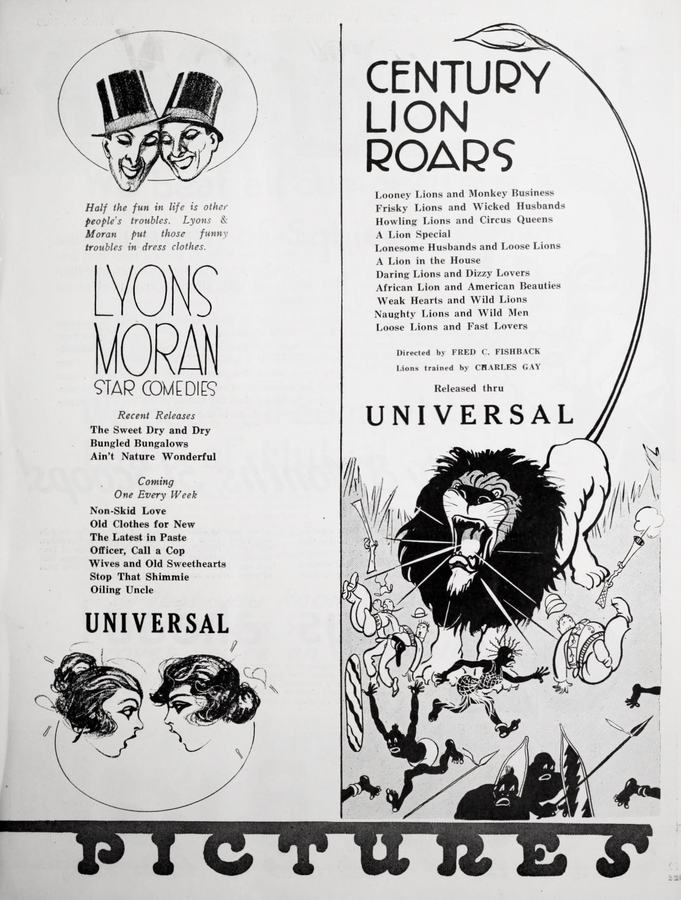
The first time I encountered Stop That Shimmy, I expected a quaint relic, celluloid mothballs and all. Instead, the screen exploded into a chromatic whirl: tangerine subtitles, sea-blue iris shots, and a brass-blaring score that felt suspiciously modern. Eddie Lyons and Lee Moran, pulling double-duty as writers and scene-stealing bellhops, understand that silent cinema’s true language is velocity. Their plot is a slingshot—pull, release, and watch the town’s moral scaffolding topple.
Betty K. Peterson, equal parts temptress and anarchist, owns every frame. She enters through a hotel revolving door, skirt hem fluttering like an exclamation mark. The camera, drunk on her momentum, can’t stop pushing forward. She’s pursued not merely by men but by the very concept of decency, personified by Fred Gamble’s sputtering mayor who tries to outlaw “any dance containing more than three pelvic gyrations.” The absurdity is riveting; the celluloid seems to giggle.
Dan Crimmins, often cast as the milquetoast foil, here channels a diffident Harold Lloyd. His pharmacist moonlights as a mixologist of “medicinal” gin, and his shy stammer melts into confident syncopation once Peterson drags him onto the dancefloor. Their chemistry isn’t polite; it’s combustion. In one rooftop sequence, the two trade partners mid-spin with Elsie Cort’s melancholy heiress, forming a three-body problem of desire—gravity, envy, and lust orbiting in precarious balance.
Director Lyons bathes night scenes in cyan tint, then punctuates climaxes with hand-painted amber frames that feel like a slap. Notice how the Charleston contest is shot from the waist down: flapping knees become semaphore flags, a Morse-code manifesto against repression. The choreography predates Busby Berkeley’s geometric excess by a decade, yet it’s looser, jazz-inflected, almost improvisational.
Compare this kinetic bravado to The Silence Sellers, where murk and shadow swallow movement whole. Stop That Shimmy chooses phosphorescence; even the subtitle cards shimmy, jitterbugging across the screen in asymmetrical blocks. The aesthetic gamble pays off: you feel the dance in your molars.
Lee Moran’s twitchy bellhop deserves a study unto itself. He times pratfalls to drum breaks, folding his lanky frame into luggage carts and popping out like a cuckoo clock. Yet in a brief close-up—eyes glistening as he pockets a lonely woman’s coin—he hints at pathos without stalling the tempo. Eddie Lyons, his partner in slap-crime, is all eyebrows and elbows, a human exclamation mark.
Elsie Cort’s heiress glides through ballrooms like a ghost who read the last page of her own tragedy. She says little, but the camera lingers on her glove tightening around a champagne flute—silent heartbreak distilled. In contrast, Louisiana squanders its supporting women as decorative moss; here, Cort’s silence is a loaded gun.
Modern screenwriting gurus would clutch their Save-the-Cat beat sheets watching this film. There’s no tidy midpoint; instead, a cascade of set-pieces—hotel raid, beachside escape, courtroom Charleston—build like jazz riffs returning to an elusive chorus. The final gag, a mass shimmy in the courthouse aisles, feels inevitable yet surprising, the hallmark of great farce.
Dialogue intertitles crackle with period slang: “You can’t padlock the human hips!” One card, bathed in the same sea-blue tint used for ocean scenes, reads, “Even the tide dances—why can’t we?” It’s poetic, pretentious, and perfectly of-the-moment.
Don’t mistake Peterson’s shimmy for empty titillation. Each swivel is a protest against the corset of municipal law. When the mayor brandishes a measuring tape to ensure skirts descend below kneecaps, she retorts by hiking hers up, framing the screen with a defiant grin. The film courts scandal but lands on liberation, a stance sharper than Should a Woman Divorce? which hedges its proto-feminist bets with moralistic epilogues.
“To dance is to converse with gravity—and tonight, gravity loses.”
That line, splashed across a dark-orange card, might as well be the film’s thesis. The narrative refuses to punish its heroine; instead, the entire town is converted, their limbs loosened by collective ecstasy.
Place Stop That Shimmy beside Her Fatal Shot, a melodrama that fires its feminist bullet then retreats into conservative comfort. Shimmy never retreats; it sashays forward. Likewise, Hobbs in a Hurry offers speed but lacks sensuality. Shimmy fuses both, achieving the erotic propulsion that Molly’s Millions can only purchase with mawkish coin.
Even sophisticated fare like The Seventh Noon leans on symbolism; Shimmy trusts the body. Its philosophy: if thought is imprisoned, let muscle do the talking.
Though released sans synchronized track, surviving cue sheets specify “hot jazz, relentless, no ballads.” Contemporary exhibitors often recruited local bands; evidence suggests Harlem ensembles would improvise alongside, igniting call-and-response between trumpets and flickering limbs. Viewing it today with a muted laptop is sacrilege—spin some Duke Ellington, crank the volume, and watch the frames pulse in phantom sync.
A 2018 nitrate discovery in a Slovenian monastery yielded a near-complete 35 mm element, now restored by the EYE Filmmuseum. The new print preserves those amber flashes and cyan nocturnes, though one reel remains lost—rumoured to contain an underwater Charleston. Even incomplete, the rhythm never stumbles; the narrative bridges gaps with sheer momentum, much like The Trail of the Shadow turns absence into atmosphere.
1923 trade papers called it “a celluloid earthquake,” while clergymen denounced its “anarchic pelvis.” Modern critics reassess it as a missing link between Griffith’s Victorian morality and the pre-Code carnality that would erupt six years later. Social-media cinephiles GIF Peterson’s hip-check against the mayor’s gavel; TikTok teens overlay its footage with Lizzo tracks, proving the shimmy remains contagious.
Because cinema rarely marries political subversion with ecstatic silliness so effortlessly. Because your living room can become a speakeasy where laws evaporate at 4/4 time. Because sometimes the most radical act is to dance like the camera’s watching—and to keep dancing even when it is.
So dim the lights, pour something illicit, queue up Stop That Shimmy, and let its amber-and-azure anarchy remind you that revolutions often begin in the soles of the feet.

IMDb —
1934
Community
Log in to comment.