DbcultAccessing Vault...
Cult Review
Senior Film Conservator
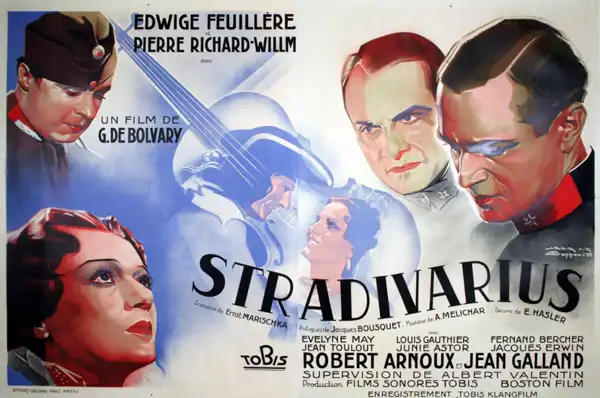
So, Stradivarius. This one’s definitely for a particular mood. If you’re into the sweeping, dramatic films of a bygone era, especially those with a touch of the supernatural or just plain bad luck, you might find something here. It’s a slow burn, for sure. Anyone looking for quick thrills or modern pacing will probably be checking their watch. 🕰️
The setup is pretty simple, really. A Hungarian officer, Pierre, played by Pierre Richard-Willm, ends up with this famous violin. It’s a Stradivarius, naturally, and it comes with whispers of a curse. Like, not just a *bad luck* kind of curse, but something that actually messes with things. And then he meets this captivating Italian woman, Anna (Edwige Feuillère), and that’s when the violin really starts to do its thing.
The film plays it a bit coy with the curse itself. Is it really the violin causing all the trouble, or is it just people’s own complicated feelings? You know, the kind of self-fulfilling prophecy thing. It’s never quite clear, and that’s actually one of its stronger points. It lets you decide.
Edwige Feuillère as Anna is really the heart of the movie. She carries so much of the emotional weight. There’s a scene early on where she’s just sitting by a window, looking out, and her face tells you everything about her longing, even before a single word is spoken. 💖
Pierre, our officer, well, he’s a bit more stoic. You feel his internal struggle, but it’s always beneath the surface. He’s torn between his duty, the pull of this new love, and the *unsettling presence* of that instrument.
The music itself is, as you’d expect, pretty central. When the violin is played, it’s often at moments of high emotion. Sometimes it’s beautiful, sometimes it sounds almost mournful, like it’s predicting future heartbreak. There’s one particular performance scene that goes on for quite a while, and the camera just focuses on the player’s hands, then cuts to the faces in the audience. You can really feel the tension building, even if nothing dramatic is happening yet.
I found myself wondering about the logistics of a cursed violin. Like, does it just make people clumsy? Or does it *whisper* bad ideas? The film leans more towards subtle interference, a kind of dark magnetism that pulls events off course. A dropped letter, a missed meeting, a conversation overheard out of context. Small things that cascade.
The pacing is very much of its time. It takes its sweet time setting up scenes, letting moments breathe. Some might call it slow, others might call it **deliberate**. I leaned towards the latter, mostly. Though, I admit, there were a few stretches in the middle where I could’ve used a bit more… movement. Not action, just *progression*.
There’s a strange moment when the violin is almost stolen, or perhaps just misplaced. The way Pierre reacts, the almost *panic* in his eyes, is quite striking. It makes you question if he’s genuinely worried about the instrument, or just terrified of what it represents for his new life.
The supporting cast does what they need to do. Blanche Denège as the older, perhaps wiser, family friend offers some good moments of quiet concern. She’s the one who subtly hints at the violin's history without ever being too overt about it. Her expressions are often more revealing than her dialogue.
Visually, it’s all very classic. Rich, detailed sets, beautiful costumes. The scenes in Italy, especially, have a certain warmth to them, a contrast to the more somber tones when the curse feels strongest. It’s not flashy, but it’s **tasteful**.
In the end, Stradivarius isn’t a grand spectacle. It’s a character study draped in melodrama, with a dash of gothic intrigue thanks to that violin. It’s less about jump scares and more about the slow, creeping feeling that something isn't quite right. If you appreciate films that let the mood and atmosphere do much of the talking, and don’t mind a story that gently unravels rather than explodes, then give it a shot. Otherwise, maybe put on something a little more upbeat. 🎻
IMDb —
1918
Community
Log in to comment.