DbcultAccessing Vault...
Cult Review
Senior Film Conservator
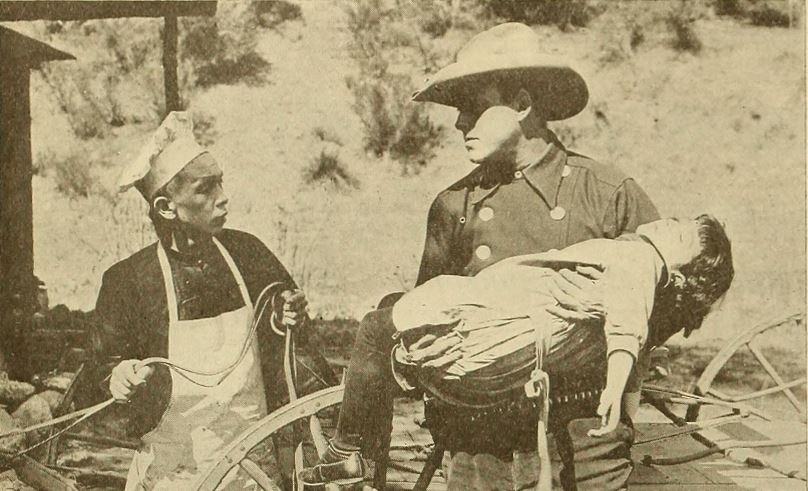
The cinematic landscape of the early 20th century, often characterized by its nascent narrative structures and evolving visual grammar, occasionally yielded gems that, even with the passage of time, resonate with a compelling simplicity and thematic depth. "Paying His Debt" stands as one such artifact, a Western melodrama that, beneath its straightforward plot, explores complex notions of identity, moral compromise, and the surprising pathways to redemption. Directed by Alan James, this film, likely from an era where narrative economy was paramount, manages to weave a surprisingly intricate tale of doppelgängers and deceit, ultimately culminating in a cathartic resolution.
At its core, "Paying His Debt" is a testament to the power of circumstance and the fragility of individual agency. We are introduced to Frank Borden, portrayed with a poignant vulnerability by Arthur Millett, a man utterly broken by ill health and destitution. His journey westward, a desperate last gamble, quickly leads to his collapse, a physical manifestation of his shattered spirit. This opening sequence immediately establishes a tone of stark realism, painting a picture of the unforgiving frontier where survival is a daily struggle. The initial encounter with Pete Morton, played by William Dyer, is pivotal. Morton's seemingly altruistic act of succor, bringing Borden back from the brink, is soon revealed to be a calculated maneuver, a prelude to a far more sinister exploitation. The moment Morton shaves Borden's mustache, uncovering an astonishing physical likeness, is the fulcrum upon which the entire narrative pivots. It’s a classic cinematic trope, yet in this context, it feels less like a contrivance and more like a cruel twist of fate, a dark mirror reflecting Borden’s lost self and Morton’s predatory ambition.
The film then accelerates into a thrilling exposition of Morton’s criminal enterprise. The bandit, recognizing the invaluable asset he has stumbled upon, forces Borden into a Faustian bargain, compelling him to act as his unwitting alibi. While Morton executes audacious stagecoach robberies, Borden, a spectral double, remains in town, his mere presence shielding Morton from suspicion. This ingenious, albeit morally repugnant, scheme highlights the era’s fascination with criminal ingenuity and the dramatic potential of mistaken identity. The tension here isn't just about the robberies themselves, but the psychological toll on Borden, trapped in a life that isn’t his, haunted by the deeds of his nefarious twin. The film deftly portrays the precariousness of Borden’s existence, always on the verge of exposure, always a breath away from being implicated in crimes he did not commit. This internal conflict, though perhaps conveyed through the more overt acting styles of the period, remains a powerful undercurrent.
The supporting cast, while not always given extensive character development, serves to ground the narrative. Dixie Doll as Nan Christy provides the crucial human connection for Borden, a beacon of kindness in a world of deception. Her character is not merely a romantic interest but a moral compass, her unwavering belief in Borden (even when he is ostensibly Morton) underscores the film's eventual theme of redemption. Walter Perkins, Roy Stewart, William Ellingford, Josie Sedgwick, and Harry Yamamoto fill out the ensemble, contributing to the vibrant, if dangerous, tapestry of the frontier town. Their interactions, however brief, help establish the community that is being duped by Morton's cunning.
Alan James, as the writer, crafts a story that, despite its potential for melodrama, maintains a certain narrative efficiency. The plot moves with a directness characteristic of early cinema, eschewing prolonged introspection in favor of brisk action and clear dramatic beats. The unraveling of Morton’s scheme is precipitated by a tragic event: the shooting of Nan Christy's father. This act of violence, a common narrative device in Westerns, serves as the ultimate catalyst for change, shattering the fragile equilibrium Morton had established. The personal connection to Nan elevates the stakes beyond mere law and order; it becomes a deeply personal quest for justice. Morton's subsequent confession, driven perhaps by a flicker of conscience or the sheer weight of his own monstrous deeds, provides the dramatic climax, a moment of profound truth that punctures the elaborate façade.
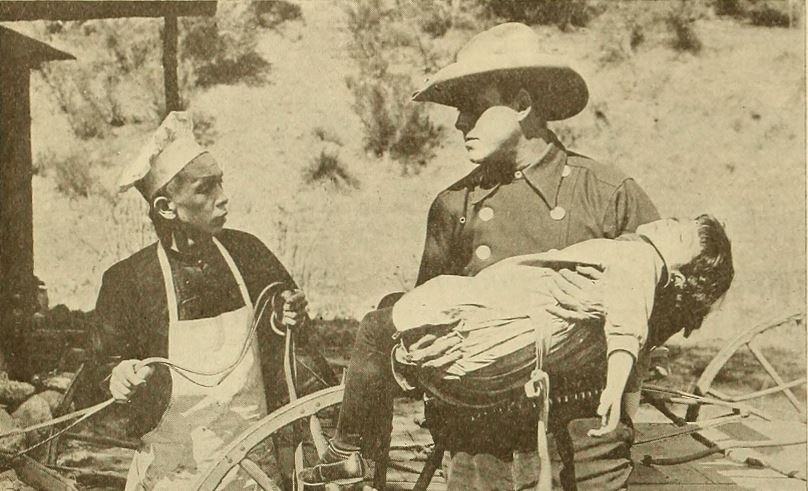
Thematically, "Paying His Debt" delves into the nature of identity. Is one defined by appearance, or by actions and character? Borden, despite looking like Morton, is fundamentally different, a distinction that Nan instinctively grasps. The film suggests that true identity transcends the superficial, and that genuine character will eventually emerge, even from under the shadow of another. This exploration of doppelgängers and mistaken identity, while not unique to "Paying His Debt," is handled with a compelling earnestness. One might draw a parallel to other films where identity is a central question, though perhaps in different contexts. For instance, while not a direct doppelgänger story, the moral ambiguities and societal pressures explored in Fires of Conscience or the hidden lives in The Unwritten Code touch upon how external circumstances or internal choices shape one's perceived and actual self. The psychological torment of living a lie, even involuntarily, is a powerful dramatic engine.
Moreover, the film can be viewed through the lens of early Western cinema, a genre often preoccupied with lawlessness, justice, and the rugged individualism of the frontier. The vast, untamed West is not just a backdrop but an active participant, a place where fortunes can be made or lost, and where identities can be forged or stolen. The stagecoach robbery, a quintessential Western image, is depicted not just as an act of crime but as a disruption of nascent order, a challenge to the emerging societal norms of the frontier. The eventual triumph of justice, even if catalyzed by personal tragedy, reaffirms the genre's enduring appeal to moral clarity.
The relationship between Nan and Borden forms the emotional core of the film's conclusion. Their "plighting their troth" is not merely a conventional romantic ending but a symbolic restoration of order and hope. Borden, having been stripped of his identity and forced into complicity, finds not only love but also a reintegration into a community that now understands his true character. It’s a narrative arc that moves from despair to deception, through tragedy, and finally to a profound sense of belonging and peace. This journey of redemption, where a man pays his metaphorical debt not through punishment but through the arduous process of reclaiming his true self and finding love, offers a satisfying emotional resolution.
In terms of cinematic technique, while specific details of the film's visual style might be lost to time or the vagaries of print preservation, one can infer certain characteristics common to its era. The emphasis would likely have been on clear storytelling through action and character blocking, with intertitles providing necessary exposition and dialogue. The performances, particularly from Millett and Dyer, would have relied on expressive physicality and clear facial cues to convey emotion, given the limitations of silent film. The pacing, though perhaps slower than modern audiences are accustomed to, would have been deliberate, allowing the dramatic tension to build steadily. The use of natural landscapes, a hallmark of the Western, would have added an authentic backdrop to the unfolding drama, enhancing the sense of scale and isolation.
Comparing "Paying His Debt" to other films of its period, one can see how it fits into the broader tapestry of early narrative cinema. While not a detective story in the vein of Mistinguett détective, it shares an interest in unraveling a mystery, albeit one of identity rather than a whodunit. Its focus on a man's journey through adversity and his eventual triumph, albeit under different circumstances, might echo the spirit of films like Jess or Ann's Finish, which often depicted resilient individuals overcoming significant obstacles. The dramatic stakes and the moral struggle could also find resonance with films exploring the darker aspects of human nature or societal challenges, such as Race Suicide or It May Be Your Daughter, though "Paying His Debt" maintains a more focused, personal narrative of crime and redemption within the Western framework. The depiction of the frontier, while perhaps less grand than epics like The Land of Long Shadows, still contributes to the iconography of the American West.
Ultimately, "Paying His Debt" is more than just a historical curiosity; it is a compact, compelling narrative that leverages a classic plot device—the doppelgänger—to explore enduring themes. It reminds us that even in the most desperate of circumstances, and under the most profound deceptions, the human spirit yearns for truth, justice, and connection. The film, through its simple yet effective storytelling, offers a glimpse into the moral complexities of a bygone era, proving that even early cinema possessed the capacity to craft narratives of profound emotional resonance and ethical inquiry. It’s a small but significant piece in the vast mosaic of cinematic history, demonstrating how foundational narrative elements like mistaken identity and the quest for personal redemption have consistently captivated audiences, regardless of the technological advancements in filmmaking. The journey of Frank Borden, from an abyss of despair to the embrace of love, serves as a timeless reminder that even the deepest debts can be paid, not always with currency, but with courage, truth, and the enduring power of human connection.
IMDb 6.6
1930
Community
Log in to comment.