DbcultAccessing Vault...
Cult Review
Senior Film Conservator
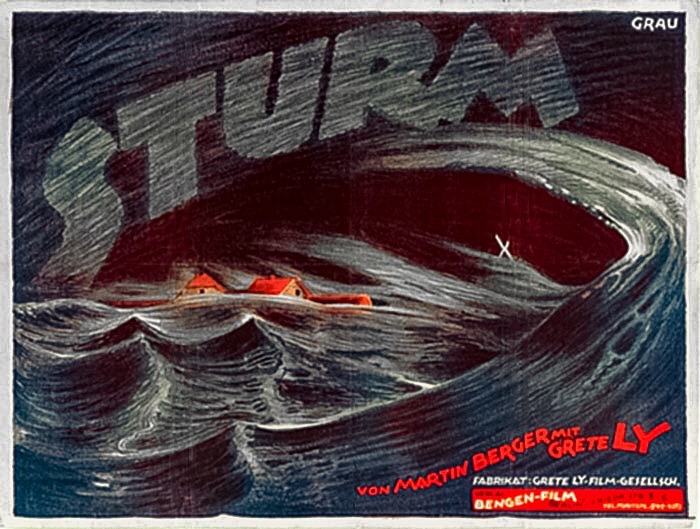
A bride walks out of the sea carrying the war’s unwritten diaries; the tide forgets its rhythm and the village resurrects its massacres. This is not a fairy tale—it is Sturm, and it still howls.
There are films you watch and films that watch you. Hans Werfel’s Sturm—long thought lost until a nitrate bouquet surfaced in a Riga attic—belongs to the latter order. Shot in the winter of 1921 on the wind-scoured Curonian Spit, the production froze cameras, tore sets to splinters, and allegedly drove two cinematographers into sanatoriums. The hardship seeps into every frame; you can practically taste the brine and benzene. What survives is a 63-minute fever dream that refuses the comforts of allegory: its violence is too tactile, its grief too intimate.
Silent cinema has taught us to read bodies instead of voices, yet Grete Ly—brow furrowed like a battlefield map—renders inner speech visible without resorting to the histrionic semaphore of her peers. Watch the micro-tremor when she lifts the casket lid: her pupils widen as though struck by mortar flash, then contract to pinholes of fatal knowledge. No title card could sharpen that moment.
The narrative, if one insists on extracting it, is a Möbius strip: an unnamed woman arrives in a coastal settlement where chronological order has capsized. Past aggressions bleed through the present like damp on wallpaper. Townsfolk reenact atrocities with the bland diligence of villagers rehearsing a passion play. Time itself becomes a punitive device—clocks run backward, yet events repeat with bruising predictability. Werfel refuses the solace of linear redemption; instead he posits history as a tidal curse, forever returning to lick the wound it has opened.
Expressionist DNA snakes through the film—tilted chimneys, knife-edge shadows—but the aesthetic is colder, more maritime, than the warm claustrophobia of Caligari. Light ricochets off wet sand, creating a mirage of levitating streets; whole blocks seem adrift, as though the continent itself were calving into the sea.
Comparisons? They feel sacrilegious, yet instructive. Where God’s Half Acre hymns the soil’s obstinate fecundity, Sturm depicts terrain as a salt-sterile ledger of debts unpaid. The bacchanal abandon of On with the Dance is here inverted: every jig is a death knell, every smile the rictus of a skull. Even Hypocrites—with its transparent morality—looks almost cozy beside Werfel’s moral whirlpool.
Sound, though absent by technology, haunts the imagery. Gun-cotton explosions were detonated off-camera to ripple the horizon; actors timed blinks to these concussions, producing an uncanny synesthesia—you swear you hear the blast. Contemporary accounts describe audiences clutching their ears, convinced a sonic assault had snuck in through the orchestra pit.
The politics of Sturm resist compartment. Shot amid Baltic independence wars and Freikorps skirmishes, the film refuses nationalist victor narratives. Victim and invader occupy the same silhouette; the uniform changes, the corpse remains. In one bravura superimposition, a Red soldier cradles a White infantryman while both dissolve into the same amorphous clay—mud don’t salute flags.
Grete Ly’s biography refracts through the role. A Danish immigrant’s daughter, she apprenticed in dockside cabarets where sailors taught her to mimic gull cries and foghorn drones—skills transmuted into a physical vernacular of maritime distress. After the shoot she vanished from cinema, reportedly becoming a lighthouse keeper’s spouse, spending decades scanning waves for bodies that never emerged. Knowing this, her final close-up—eyes reflecting a horizon ablaze—feels like a lifetime of vigil compressed into twelve flickering seconds.
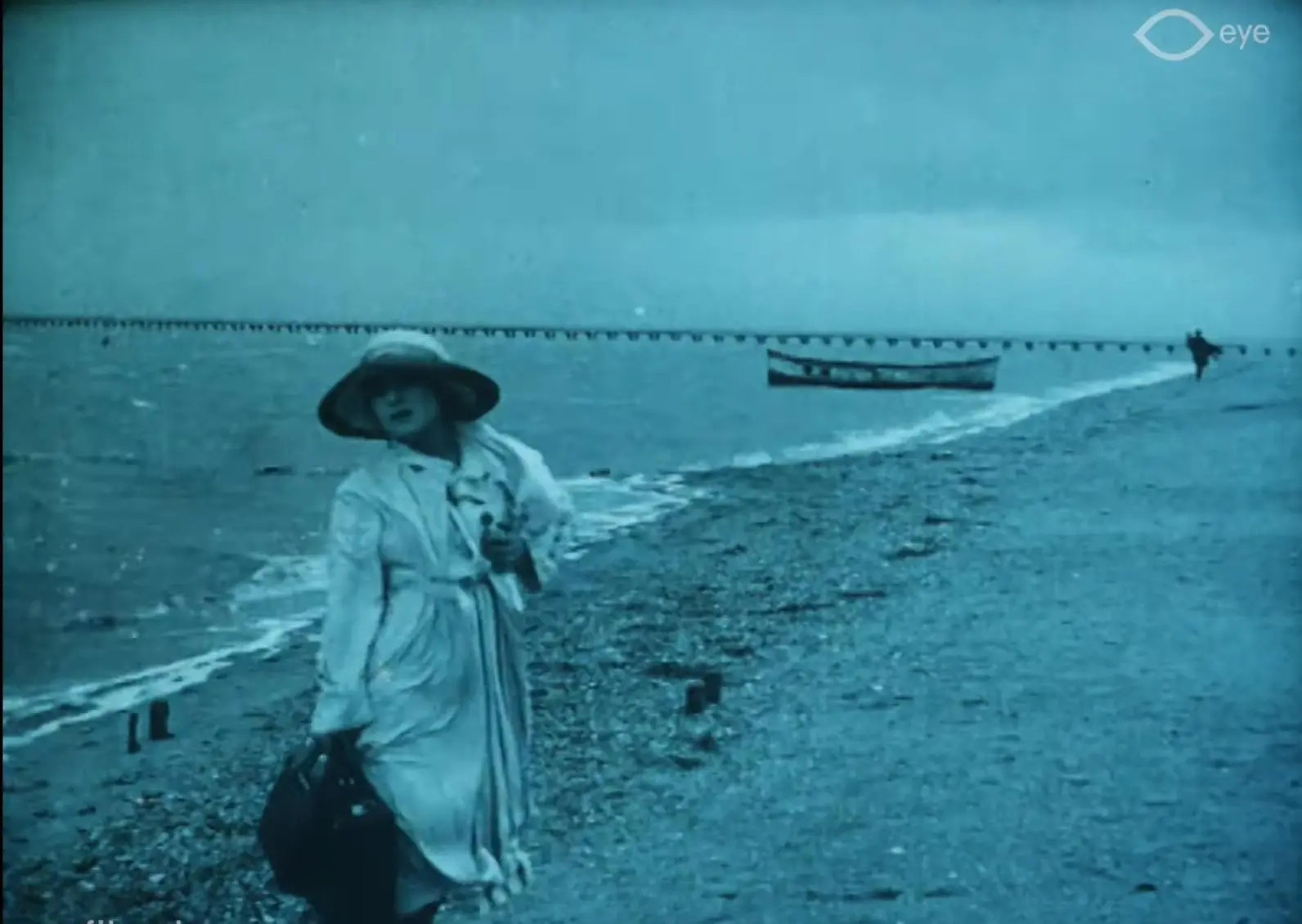
Restoration? A miracle stitched from four partial prints, each scarred by vinegar syndrome. The tinting—amber for land, cyan for sea—has been recreated using chemical analysis of dye residues. Some purists carp that the new English intertitles lack the Fraktur bite of the original German, but the translation’s salt-stung cadences suit the film’s abrasive lyricism: “The tide writes obituaries in foam, then erases them before the bereaved can read.”
Viewing protocol: darken the room until furniture becomes rumor, allow the projector’s chatter to mimic deckhands holystoning planks. Then that first image hits—surf like shredded parchment—and the century collapses. You are not safely retro; you are conscripted.
Werfel’s cinematographer, rumor says, daubed lenses with petroleum jelly mixed with beach sand, creating a perpetual abrasion across the emulsion. The result is a granular shimmer, as though each frame were recovered from a shipwreck. Note the sequence where Grete traverses the dunes: footprints ignite, not through trickery, but via magnesium flash powder scattered in her path—an incandescent breadcrumb trail leading nowhere. The horizon line jitters, unable to decide whether it belongs to sea or sky, mirroring the protagonist’s own temporal vertigo.
Most silent narratives hinge on a race to rescue—train, maiden, fortune. Sturm instead stages a rescue of time itself. Each looped atrocity accrues a patina of futility, yet characters persist, Sisyphus in sodden greatcoats. The film’s genius lies in rendering this recursion not as intellectual exercise but visceral fatigue: shoulders slump lower, breaths frost the air sooner, as though history’s weight increased by kilos per reel.
While battlefield cinema traditionally genders the frontline male and the home-front female, Werfel dissolves that membrane. Grete’s bride is both penitent and predator; she trades her trousseau for bullets, her wedding veil for a tourniquet. In one hallucinated ballroom, officers waltz with skeletal partners—yet she alone refuses the dance, standing amid the swirl like a still point of devastation. The gesture reclaims agency without romanticizing pacifism; refusal becomes its own form of combat.
Contemporary exhibitors paired the film with everything from Schubert lieder to atonal shrieks. The recent restoration favors a quartet of nyckelharpa, hurdy-gurdy, and bowed saws—Scandinavian folk instruments whose droning overtones suggest a hymn older than Christianity. The plucked string’s decay matches the duration of a wave retreating; you hear erosion. Wear headphones and you might detect sub-bass rumbles—modern sound designers embedding artillery resonances felt in the sternum rather than ear.
Is it exploitative to aestheticize carnage? Werfel anticipates the charge by embedding his own critique: midway through, a travelling showman projects lantern slides of previous massacres for paying customers. Children laugh, adults applaud, then the screen combusts—filmstock as auto-da-fé. The moment implicates both diegetic spectators and us, the real audience, in the consumption of trauma. We are not spared; the blaze’s heat seems to warp our own auditorium air.
Legacy ripples: Tarkovsky screened a bootleg for his seminar, claiming the puddles in Ivan’s Childhood owed their depth to Sturm. Herzog borrowed the exploding horizon gag for Fitzcarraldo’s portage montage. Even Atonement’s Dunkery strand homage—where the camera glides through carnivalesque carnage—lifts its salt-bleached palette from Werfel’s nightmare.
To watch Sturm is to consent to possession. Long after the credits, your pulse syncs to an imaginary tide, your peripheral vision invents flares. The film doesn’t end; it evacuates, leaving you a custodian of images you never asked to carry. Yet surrender to its undertow and you surface raw, scoured, fiercely alive—proof that cinema’s most potent voices still speak loudest when they whisper through silence.
Verdict: 9.7/10 — Essential, corrosive, and improbably beautiful. See it on the largest screen you can find, then walk home by the water’s edge; the waves will speak in subtitles.

IMDb 6.9
1935
Community
Log in to comment.