DbcultAccessing Vault...
Cult Review
Senior Film Conservator
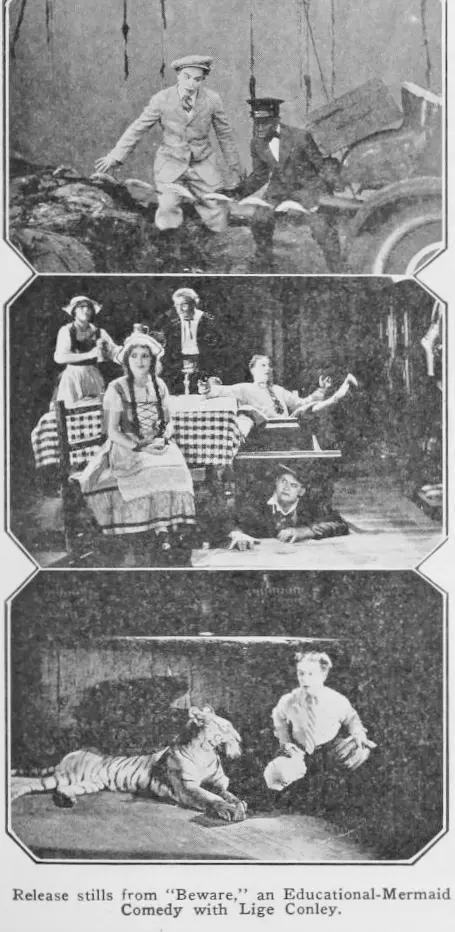
The silent era was frequently characterized by its willingness to bridge the gap between the mundane and the monstrous, yet few artifacts from 1925 possess the sheer, unadulterated eccentricity of Beware. Directed during a pivotal moment when slapstick was evolving into more complex narrative structures, this film occupies a unique space between the physical comedy of Lige Conley and a nascent form of horror-surrealism. The setting—a castle-turned-inn nestled within the formidable peaks of the Alps—provides a gothic backdrop that stands in stark contrast to the frenetic energy of the protagonists. Here, the architecture is not merely scenery; it is a labyrinthine participant in the unfolding disaster. Unlike the more grounded dramas of the period, such as The Branded Woman, Beware leans heavily into the irrational, suggesting that the thin mountain air breeds a special kind of cinematic delirium.
The central conflict is ignited by a blunder of epic proportions: the accidental release of a tiger. In the 1920s, the inclusion of live predatory animals was a staple of high-stakes comedy, a trend also visible in works like Loose Lions. However, Beware elevates the stakes by trapping the beast within the confines of an inn. The tiger becomes a manifestation of pure, unguided chaos, rippling through the guest rooms and dining halls with a sinewy grace that mocks the clumsy terror of the human inhabitants. The cinematography captures this contrast with a startling intimacy, often placing the actors in terrifyingly close proximity to the feline predator. This isn't the controlled environment of a modern soundstage; there is a palpable, raw danger that infuses every frame, making the 'consternation' described in the plot feel less like a performance and more like a genuine reaction to mortal peril.
Just as the audience settles into the rhythm of the hunt, the film pivots into the supernatural. The discovery of the secret chamber and its skeletal occupant is a narrative swerve that would feel out of place in a more traditional feature like The Shuttle. This 'lively human skeleton' is a masterpiece of early practical effects and puppetry, moving with a jarring, staccato rhythm that predates the stop-motion brilliance of later decades. The skeleton’s peculiar attachment to the valet—played with bug-eyed perfection—introduces a layer of absurdist romance. It transforms the film from a simple 'animal on the loose' story into a fever dream where the laws of biology and death are suspended for the sake of a gag. This skeletal pursuit creates a dual-threat dynamic: the physical hunger of the tiger and the metaphysical longing of the dead.
Lige Conley, an underrated titan of the silent screen, delivers a performance that is nothing short of athletic. His ability to navigate the verticality of the castle sets—clambering over balustrades and sliding down tapestries—recalls the best work found in A False Alarm. Conley’s Lige is a man of perpetual motion, a human pinball bouncing off the walls of a nightmare. Beside him, the valet provides the necessary emotional grounding, his face a canvas of escalating dread. The chemistry between the two is reminiscent of the classic master-servant dynamics found in later international comedies like Sadhu Aur Shaitan, though here it is stripped of dialogue and distilled into pure pantomime.
Otto Fries and Estelle Bradley round out the cast, providing a semblance of 'normalcy' that is constantly being undermined by the surrounding insanity. Fries, in particular, utilizes his imposing physical presence to highlight the absurdity of the situation; when a man of his stature is reduced to hiding in a wardrobe to escape a skeleton, the comedic irony is maximized. The 'consternation' among the guests is choreographed with the precision of a ballet, a chaotic symphony of slamming doors and near-misses that rivals the high-society disruptions seen in Broadway Gold. Every secondary character is a gear in this machine of panic, contributing to an atmosphere of relentless, high-velocity humor.
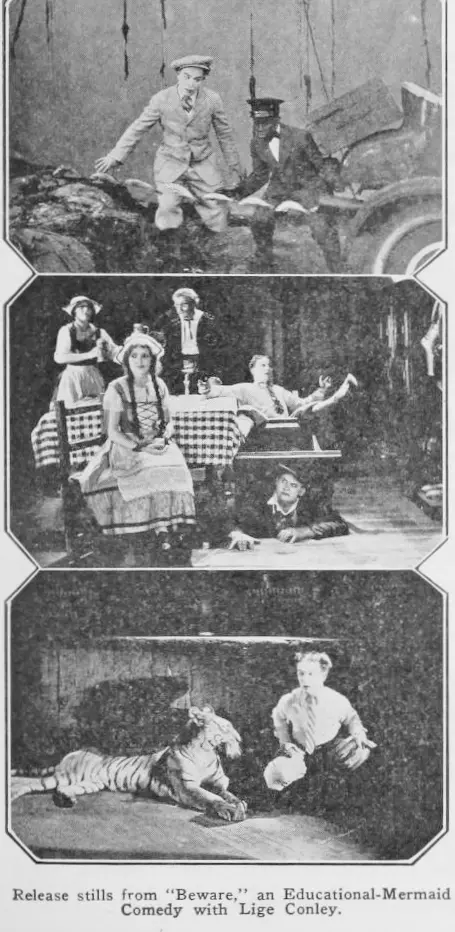
Visually, Beware benefits from the stark lighting common in mid-20s productions. The shadows in the secret chamber are deep and ink-like, reminiscent of the atmospheric dread in The Isle of the Dead. This chiaroscuro effect serves to make the white bones of the skeleton pop against the darkness, creating a visual icon that lingers long after the film concludes. The Alpine setting, while likely a combination of location shots and studio sets, evokes a sense of isolation that heightens the comedy. When you are trapped at the top of the world with a tiger and a ghost, there is nowhere to go but further into madness. This isolationist trope is a far cry from the urban dangers explored in Trapped by the London Sharks, opting instead for a primal, almost elemental form of conflict.
The writing, though uncredited in many records, displays a keen understanding of escalating stakes. Each sequence builds upon the last: from the inn's quietude to the tiger's prowl, then to the skeleton's emergence, and finally to the 'wild effort' of the finale. It is a masterclass in pacing. While some might dismiss it as mere fluff compared to historical epics like Christopher Columbus, such a view ignores the technical difficulty of timing comedy to the millisecond. The film doesn't just ask us to laugh; it asks us to marvel at the synchronization of man, beast, and bone. In the realm of silent shorts and featurettes, Beware stands as a testament to the era's boundless imagination.
Reflecting on Beware nearly a century later, one is struck by its sheer audacity. It refuses to be categorized. Is it a thriller? A farce? A proto-horror? It is all of these, swirled together in a cauldron of Alpine snow. Its influence can be felt in the DNA of every subsequent 'haunted house' comedy. The skeleton, in particular, is a precursor to the slapstick ghouls of the 1980s, proving that the desire to find humor in the macabre is a universal human impulse. While films like Syndig Kærlighed dealt with the weight of human sin, Beware reminds us of the lightness of human folly. It is a celebration of the 'wild effort,' the desperate, flailing, and ultimately hilarious struggle to stay one step ahead of the things that go bump—and roar—in the night.
In the grand tapestry of 1925 cinema, which included everything from the domestic drama of Married in Name Only to the naturalistic observations of In a Naturalist's Garden, Beware remains a jagged, brightly colored outlier. It doesn't seek to educate or moralize; it seeks to electrify. Whether it's the sight of Lige Conley's frantic double-takes or the tiger's nonchalant destruction of a hotel lobby, the film captures a sense of joyous nihilism. It suggests that the world is a dangerous, unpredictable place, and the only rational response is to run as fast as you can, preferably while being chased by a skeleton who just wants a friend. It is, in every sense of the word, a classic of the unexpected.
IMDb 7.1
1937
Community
Log in to comment.